Bitcoin tests $80,000 as crypto’s risk appetite thins
Sunday, October 25, 2026
Crypto traders woke to a familiar October sight: red screens, falling leverage and a suddenly fragile Bitcoin floor.
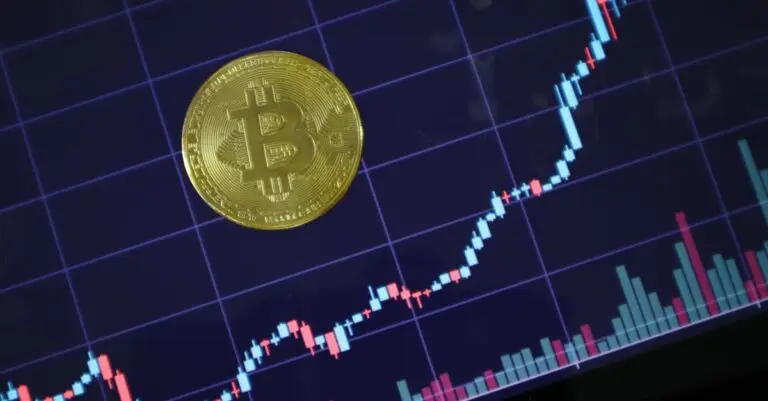
Bitcoin slipped below $80,000 on Saturday, reaching about $79,464, its weakest price since September 18.
Meanwhile, the total cryptocurrency market value fell roughly 4% to $2.72 trillion.
The move erased confidence faster than it erased value. More than $200 million in positions disappeared within an hour.
Daily liquidations reached about $837 million across more than 227,000 traders. Most of those losses came from bullish positions.
That matters because leveraged longs often turn a modest decline into a sharp, self-feeding sell-off.
Altcoins take the heavier blow
Ethereum fell 4.7% to around $2,289, while Solana dropped 5.2% to roughly $98.90.
Zcash lost more than 8%, placing it among the day’s weakest large tokens.
Cardano, Dogecoin, Chainlink and Stellar also declined as investors reduced exposure across the market.
Monero stood out as a rare exception, retaining a weekly gain despite the broader retreat.
Such divergence often appears when traders stop chasing beta and start examining liquidity coin by coin.
Bitcoin now faces a narrow technical test. Buyers need to restore $80,000 before they can argue for stability.
After that, $83,000 becomes the level that matters. A sustained move above it would weaken the immediate bearish case.
Still, a weekly close below $83,000 could keep sellers in control. Traders are watching $77,876 as the next nearby reference.
Below that, chart watchers see support between $76,700 and $72,500. It is a broad zone, not a guarantee.
- Bitcoin: about $79,464 on Saturday
- Market value: about $2.72 trillion, down 4%
- Daily liquidations: roughly $837 million
- First recovery test: $80,000
- Resistance to watch: $83,000
Corporate buyers meet an awkward price
The sell-off has also put corporate Bitcoin treasuries under uncomfortable scrutiny.
Estimated average purchase prices for corporate holdings sit near $80,000. Bitcoin’s decline therefore places many aggregate positions underwater.
That does not imply forced selling. Most public treasury buyers have financing plans and long-term mandates.
Yet the level carries psychological weight. A price below the average corporate entry point can curb fresh buying.
It can also make equity investors question whether listed Bitcoin proxies deserve their previous premium valuations.
On-chain signals offer a less straightforward picture. Large wallets have continued moving Bitcoin, with some transactions suggesting accumulation.
At the same time, exchange-traded fund outflows have weakened the market’s most visible institutional support.
Whales may buy a dip, but broad demand must absorb coins consistently. Otherwise, accumulation becomes little more than a private opinion.
Price will settle that argument more cleanly than wallet labels. Bitcoin must reclaim $80,000 and hold it through renewed trading volume.
Security risks rise alongside market stress
Price volatility is not the only hazard confronting digital-asset holders this weekend.
Electrum released version 4.8.3 after disclosing a high-severity vulnerability involving malicious public servers.
The flaw could allow an attacker to replace a wallet-history transaction with a conflicting payment.
A victim could then approve the fraudulent payment while attempting to increase its network fee.
Electrum said it had observed attacks in the wild, including two reported incidents and one confirmed loss.
Users running older software should update promptly, particularly if they connect through public Electrum servers.
Those operating their own servers do not face the same attack route, according to the wallet provider.
Meanwhile, hardware-wallet maker Keystone disclosed unauthorised access to its website. Customer names, contacts, delivery addresses and order information were exposed.
The company said payment details, recovery phrases, private keys and wallet passwords were not accessed.
The immediate danger is phishing. Criminals can use real order details to make fraudulent support messages look convincing.
No legitimate wallet provider needs a recovery phrase or private key. That rule remains pleasingly simple during a messy week.
Bitget-linked funds remain active
Wallets tied to September’s Bitget breach continue to move funds through the Bitcoin network.
Between October 21 and October 24, the attacker transferred about $19.48 million across 52 transactions.
Nearly all of that value was held in Bitcoin. Labelled remaining holdings stood near $242.5 million, including almost 2,960 BTC.
Bitget has said compromised high-level internal credentials enabled fraudulent withdrawal commands.
The exchange said customer private keys were not directly stolen and account balances remained protected after containment.
Even so, the episode exposes a persistent weakness in centralised trading venues. Custody is only one layer of exchange security.
Authorisation systems, employees and third-party tools can also fail under pressure.
Tax rules and tokenisation stay in view
South Korea may delay its planned 22% tax on virtual-asset income for a fourth time.
The proposed framework includes a 2.5 million won exemption. Another delay would extend uncertainty for investors and exchanges.
In Washington, lawmakers still disagree over broader market-structure legislation, including the stalled CLARITY Act.
Prediction markets also face increasing attention before the 2026 midterm elections. Regulatory questions keep multiplying faster than tidy answers.
Tokenisation, by contrast, continues moving into conventional finance. Securitize has reported 12 tokenised stocks live on Solana for eligible US users.
The Securities and Exchange Commission has also placed tokenisation risks on its fiscal 2027 examination agenda.
- Watch $80,000: A durable recovery above it would ease immediate breakdown fears.
- Watch $83,000: Clearing that level would give short-covering rallies a stronger foundation.
- Watch ETF flows: Continued outflows would leave spot buyers carrying more of the market’s burden.
- Watch leverage: Further liquidations could keep altcoins under sharper pressure than Bitcoin.