Creating a self-custody wallet places absolute responsibility for asset security on the user. Loss of a seed phrase or private key results in the permanent and irreversible loss of all digital funds. In 2026, sophisticated phishing attacks and ‘address poisoning‘ verifiably target even intermediate users. Past performance is not indicative of future results. Capital at risk.
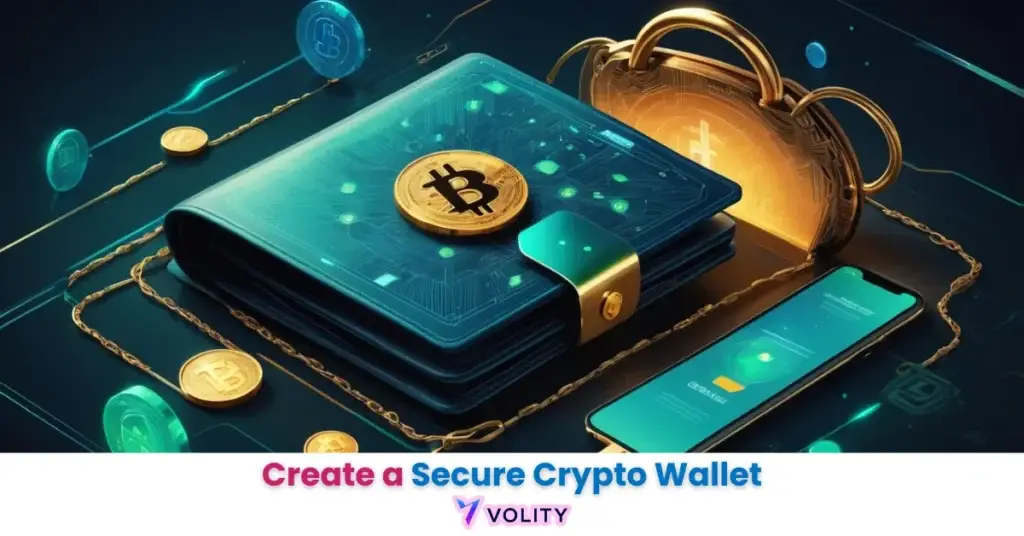
Creating a secure crypto wallet identifies the process of generating and isolating private keys from online threats. This mechanism reveals a 2026 standard defined by EAL6+ hardware security and the ’80/20′ hybrid storage rule. Identifying the shift toward clear signing and metal phrase backups reveals the path to truly autonomous and safe self-custody.
Creating a secure crypto wallet identifies the foundational step for participating in the digital asset economy while maintaining absolute control over your private keys. This procedure reveals a high-stakes environment where over $600 million was verifiably lost to wallet exploits in the first half of 2026, making standard security protocols more critical than ever. By transitioning from centralized exchange custody to self-hosted cold storage, investors eliminate the risk of platform insolvency and remote hacking.
The 2026 security landscape is defined by the rise of Multi-Party Computation (MPC) and the integration of transaction simulation tools that prevent phishing before it happens. As investors move toward a hybrid model of 80% cold and 20% hot storage, understanding the mechanics of ‘Clear Signing’ and metal phrase protection is essential. This guide identifies the step-by-step process for creating a fortress-grade wallet setup and reveals the benchmarks for choosing the right 2026 hardware.
While understanding Secure Crypto Wallets is important, applying that knowledge is where the real growth happens. Create Your Free Crypto Trading Account to practice with a free demo account and put your strategy to the test.
What is a cryptocurrency wallet and how does it work?
A cryptocurrency wallet is a digital tool that identifies your ownership of assets on the blockchain through the management of a public key for receiving funds and a private key for authorizing transfers. Private keys versus public keys follows an “Email vs. Password” analogy for the modern era, your public key is your receive address (like an email), while your private key authorizes transactions (like a password). The blockchain link reveals that your crypto is not “in” the wallet, but “at” an address the wallet controls on the distributed ledger.
Deterministic wallets (BIP39) explain how a 12/24-word seed phrase generates your entire multi-asset universe, all Bitcoin, Ethereum, Solana, and other chain addresses flow from one master key. 2026 security benchmarks establish that EAL6+ rated secure elements are now the minimum requirement for professional-grade keys. In early 2026, nearly 60% of long-term crypto investors utilize hardware-based cold storage to safeguard their primary holdings (Source: CertiK, 2026). Cold Storage Crypto: Why It’s the Only Way explores offline key management and silo strategies.
Ready to Elevate Your Trading?
You have the information. Now, get the platform. Join thousands of successful traders who use Volity for its powerful tools, fast execution, and dedicated support.
Create Your Account in Under 3 MinutesThe ’80/20′ Hybrid Rule: Balancing Security and Liquidity
The ’80/20′ hybrid rule identifies a capital management strategy where 80% of assets remain in offline cold storage while 20% are kept in hot wallets for active trading and dApp interaction. Cold storage (the vault) uses devices like Ledger Flex or Trezor Safe 5 for wealth preservation, these hardware wallets generate private keys offline and never expose them to the internet. Hot wallets (the wallet) utilize browser extensions like Rabby or mobile apps like Phantom for gas fees and token swaps.
Air-gapped advantage reveals why QR-code based signing (Ellipal/Keystone) identifies the highest tier of security for the 80% reserve, transactions are signed offline and broadcast via QR codes. Risk mitigation shows how splitting assets verifiably prevents a single smart contract exploit from draining the entire net worth. Hot Wallets: Why They’re Targeted & How to Secure Them reveals why internet-connected wallets remain vulnerable despite modern protections.
Use a ‘Watch-Only’ wallet on your smartphone. This identifies a secure way to monitor your cold storage balances and generate receiving addresses without ever exposing your private keys to an internet-connected device.
Step-by-Step: Setting Up Your First Hardware Wallet in 2026
Setting up a hardware wallet identifies a rigorous process of offline entropy generation that ensures your private keys are never exposed to a compromised computer or network. Step 1 (initializing the device) requires generating the seed phrase directly on the hardware screen, this is mandatory for security. Step 2 (verification loop) involves re-entering the words on the device itself to identify and fix transcription errors before they compromise the setup.
Step 3 (metal backups) requires writing the phrase on titanium or stainless steel, the 2026 standard moves away from paper due to fire and water vulnerability. Step 4 (firmware authentication) uses official manufacturer bridges to verify the device hasn’t been tampered with in the supply chain. Ledger Nano X: Ultimate Crypto Security explores the most popular hardware wallet models and their integration options.
WARNING: Never take a digital photo of your seed phrase. 2026 AI-driven malware can identify and transmit seed phrase images from your cloud storage or phone gallery in milliseconds, bypassing all offline protections of the device itself.
2026 Hardware Wallet Comparison and EAV Table
Hardware wallet benchmarks reveal the specific technical trade-offs between open-source transparency and high-end security elements in 2026.
| Device | Best For | Key Security Rating (Source, Date) |
| Ledger Flex | All-Rounder | EAL6+ Secure Element (Ledger, 2026) |
| Trezor Safe 5 | Transparency | Fully Open Source Hardware (Trezor, 2026) |
| Coldcard Q | Bitcoin Maxis | Air-Gapped QWERTY (Coinkite, 2026) |
| Tangem Card | Beginners | MPC Seedless Tech (Tangem, 2026) |
| Ellipal Titan | Air-Gapped | QR Code Signing (Ellipal, 2026) |
Sources: 2026 CertiK Security Audits, Official Manufacturer Disclosures
Turn Knowledge into Profit
You've done the reading, now it's time to act. The best way to learn is by doing. Open a free, no-risk demo account and practice your strategy with virtual funds today.
Open a Free Demo AccountWhat is ‘Clear Signing’ and why is it the 2026 standard?
Clear signing identifies a 2026 security standard where wallets decode smart contract data into human-readable text, verifiably preventing users from signing malicious ‘approve’ transactions. Blind signing risks reveal why signing raw hex code is the #1 cause of modern wallet draining, users have no idea what they’re authorizing. Transaction simulation shows how wallets like Rabby display the “Net Asset Change” (e.g., “-100 USDT, +1 Swap Token”) before signing.
Phishing defense is strengthened through clear signing by identifying fake dApp websites that trick users into giving permissions to “spend all your tokens.” Institutional mandate shows that 2026 regulators now recommend clear signing for all authorized retail custodians. A real trading example: A user interacted with a phishing site mimicking a popular DEX and attempted a token swap, but the wallet’s ‘Clear Signing’ feature identified a hidden ‘Approve ALL’ request instead of a ‘Swap’ request, allowing the user to decline and save $10,000. Past performance is not indicative of future results.
💡 KEY INSIGHT: Clear signing is the 2026 breakthrough for phishing defense. It identifies human-readable transaction details, verifiably preventing users from accidentally approving ‘wallet drainer’ smart contracts that mimic legitimate dApps.
How to Secure My Crypto Wallet: 2026 Checklist provides a comprehensive security audit framework.
Advanced Recovery: MPC, Social Recovery, and Inheritance
Advanced wallet recovery identifies a shift away from single-point-of-failure seed phrases toward Multi-Party Computation (MPC) and social recovery multi-sig setups. MPC technology splits security across three factors, with wallets like Zengo or Tangem eliminating the need for a written phrase. Social recovery uses trusted “guardians” (friends or legal entities) to help regain access if a device is lost, solving the inheritance problem that plague traditional self-custody.
Inheritance planning recommends 2026 standards including ‘Dead Man’s Switches’ to ensure assets pass to heirs legally. Safe (Gnosis) multisig allows large institutional-sized personal portfolios to prevent individual device loss from catastrophic failures. Centralized Exchanges: Navigating Crypto Trading Safely explores alternative custody models for comparison.
NIST: Guide to Cryptographic Key Management Standards provides the foundational PKI standards that inform modern wallet design.
CertiK: 2026 Crypto Wallet Security & Hack Report documents real-world exploit scenarios and security benchmarks.
Yubico: Best Practices for 2FA in Cryptocurrency reveals phishing-resistant authentication standards.
Key Takeaways
- Creating a secure crypto wallet identifies the isolation of private keys from all internet-connected environments.
- The ’80/20′ rule reveals the optimal balance, keeping 80% of assets in cold storage and 20% in hot wallets for activity.
- Hardware wallets in 2026 utilize EAL6+ rated Secure Elements, providing the same security grade as official government passports.
- Clear signing is identified as an essential 2026 feature that prevents phishing by displaying human-readable transaction data.
- Metal phrase backups reveal immunity to fire and water damage, verifiably outlasting traditional paper recovery sheets.
- MPC technology identifies a ‘seedless’ future, where Multi-Party Computation removes the single point of failure of a written phrase.
Frequently Asked Questions
This article contains references to hardware wallets, cryptocurrency security protocols, and self-custody solutions, and mentions Volity, a regulated CFD trading platform. This content is produced for educational purposes only and does not constitute financial advice or a recommendation to use any specific wallet or security product. Self-custody requires deep understanding of cryptographic principles and carries significant risk of permanent loss if executed incorrectly. Always test recovery procedures thoroughly before committing large amounts of capital to a new wallet setup. Some links in this article may be affiliate links.
[/coi_disclosure]
What our analysts watch: Our security desk evaluates wallet security across three vectors. First, key generation entropy and storage architecture: hardware wallets with secure-element chips and open-source firmware sit at the top tier; browser-extension hot wallets at the bottom. Second, recovery methodology, since seed-phrase loss and seed-phrase compromise are the two largest historic loss categories; metal backups, Shamir secret sharing, or MPC distribute key risk. Third, transaction-signing transparency, where blind-signing on small device screens has driven $400M+ in approval-scam losses; large-screen WYSIWYG signers materially reduce this. When all three are addressed, custodial-style risk effectively goes to zero.
Frequently asked questions
What is the safest type of crypto wallet?
Hardware wallets with secure-element chips and air-gapped signing are the consensus safest option for long-term holdings. The device generates and stores private keys offline; transactions are signed inside the secure element and only the signed payload leaves the device. Top-tier examples include the Ledger Nano series, Trezor Safe, ColdCard, and GridPlus Lattice1. For institutional use, Multi-Party Computation wallets distribute key shares across multiple parties so no single device or person holds a complete signing key. FATF guidance on virtual asset custody covers institutional-grade key-management standards.
Should I store my seed phrase on paper or metal?
Metal. Paper degrades with humidity, fades over years, and burns or floods readily. Stainless steel or titanium seed-phrase plates (Cryptosteel, Billfodl, Trezor Keep) survive fire, water, and corrosion. Always create at least two copies stored in geographically separate secure locations to defeat single-point loss. Never photograph the seed phrase, never type it into any device that has touched the internet, and never share it with support agents under any circumstance. The seed-phrase scam pattern has been documented in the FTC’s scam alerts as the dominant crypto-loss vector.
Are hot wallets ever acceptable for storage?
For amounts you would be willing to lose, yes. Hot wallets (MetaMask, Phantom, Rabby, Trust Wallet) are necessary for active DeFi use, gaming, and frequent on-chain activity. The professional rule is the spending-account analogy: hold in a hot wallet only what you intend to transact within the next 30 days, the same way you keep small cash in a wallet versus large balances in a bank vault. The remainder lives in cold storage and gets bridged in only when needed. Hot wallets connected to compromised browser extensions or malicious dApps remain the dominant 2024-2026 loss vector among retail users.
What should I do if I think my wallet has been compromised?
Move immediately. If the seed phrase may have been exposed, every address derived from that seed is permanently compromised; you must transfer all assets to a freshly generated wallet on a new, clean device, then never use the old seed again. If only a hot-wallet signing key is exposed (browser-extension wallet), revoke all token approvals via Etherscan or Revoke.cash, transfer remaining assets, and uninstall and reinstall fresh. File a report with your local cybercrime authority. On-chain recovery is rare, but reporting supports tax-loss claims and pattern-tracking for the wider ecosystem. The FBI’s IC3 is the US reporting channel.
Volity operates a trading platform and also publishes educational and analytical content about trading. The content on this page is for educational purposes only and should not be considered financial advice. Volity may benefit commercially when readers open trading accounts through links on this site.
Our content is produced and reviewed under documented editorial standards; comparison and review methodology is published here.