Investing in financial products involves risk. Losses may exceed the value of your original investment.
Bitcoin price cools is a core topic for traders in 2026. The complete guide follows.
Crypto market cools amid bearish buzz and geopolitical jitters
Bitcoin spent the weekend near $67,000, calm on the screen but noisy in the pipes. Meanwhile, bearish social chatter hit a fresh peak as prices failed to reclaim $70,000. Ethereum held around $2,050 as the Ethereum Foundation finished a sizable staking move. However, parts of the altcoin complex looked shakier, with Solana again drawing attention for exploit fears and reliability grumbles.
Bitcoin’s stubborn hold masks warning signs
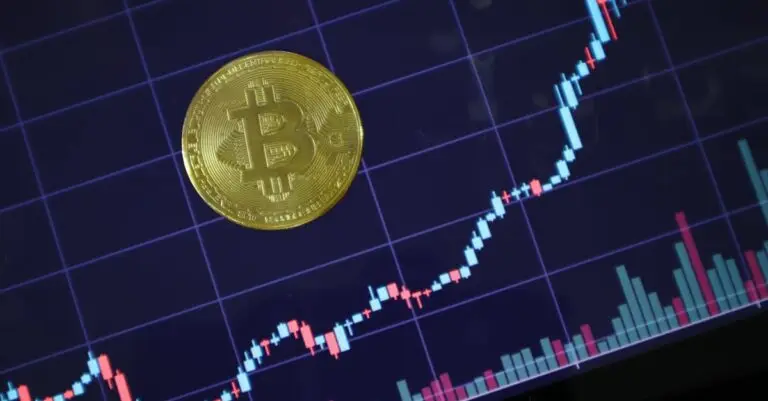
Bitcoin traded roughly between $66,650 and $67,150, easing from recent highs yet refusing to break down. However, the market’s underlying mix looks less comforting.
Spot activity has cooled faster than derivatives positioning, therefore leverage remains a bigger driver of short-term moves. Exchange reserves fell by about 66,300 BTC over the past 30 days, largely linked to OTC flows that often reflect bigger buyers.
Meanwhile, negative funding and visible downside liquidity pockets suggest shorts still see room to press.
Sentiment also turned. Santiment-style tracking showed bearish discussion across X, Reddit and Telegram rising sharply as Bitcoin slipped under $70,000.
The ratio sat around five negative comments for every four positive ones, which is not panic but it is a turn in tone. Retail traders appear more hesitant, even as open interest stays elevated.
VanEck’s Matthew Sigel again floated $100,000 as plausible within a year, yet the nearer chart argument looks more brittle. A potential bear-flag area around $66,900 has become a line traders keep tapping.
Ethereum Foundation stakes big, eyes breakout
Ethereum’s price stayed pinned near $2,046 to $2,050 as attention shifted to the Ethereum Foundation completing a staking push. Estimates put the move at roughly 45,000 to 70,000 ETH, or about $143 million at prevailing prices. Meanwhile, positioning around $2,000 has the look of a trapdoor for over-leveraged bulls, with liquidation pressure clustered on both sides. Data cited in circulation pointed to about $801 million of short liquidation risk above and $739 million of long liquidation risk below, which helps explain the sticky chop.
However, the narrative flow matters as much as the flows. Traders batted around quantum-risk anxieties tied to ECDSA signatures, ETF talk and the idea of big brokerage distribution. Chatter also swirled around Charles Schwab’s preparations for spot ETH trading across a client base often described at roughly $12 trillion of assets. A bullish four-hour MACD read has some desks eyeing $2,163, although double-top risk remains the obvious counterweight.
Solana stumbles on exploits, X fights scams
- Solana led social discussion after reports tied to a Drift Protocol exploit, with figures circulating around $270 million to $286 million, while broader complaints about outages and failed transactions resurfaced.
- Meanwhile, X rolled out an account “kill switch” feature that auto-locks certain accounts after a first crypto mention, aiming to curb phishing.
- Separately, investigator ZachXBT criticised Circle over alleged USDC compliance gaps totalling about $420 million since 2022, including disputes around reaction speed.
Market snapshots and wild cards
Across the board, total crypto market value stayed below $2.4 trillion. Pi Network’s PI steadied above $0.17 after heavy losses, while VeChain jumped about 9%.
Elsewhere, XRP traders watched a wedge pattern with $1.31 cited as a breakout level. Chainlink holders fretted over talk of a 14.3 million LINK transfer linked to Binance.
Meanwhile, Tether chatter took a more speculative turn, with talk of pausing a mooted $500 billion raise if demand softens.
Off-chain politics also bled into risk appetite. Reports of fresh geopolitical strain added a jittery edge to a market already filtering shifting Federal Reserve expectations. US payrolls were cited at 178,000, which cooled near-term cut bets. Crypto’s weekend calm felt more like a pause than a verdict.
What it means for traders
- Bitcoin: watch exchange reserves and funding together. Shrinking reserves can support price, but negative funding can amplify a squeeze either way.
- Key levels: $66,900 remains a tactical pivot, while $70,000 is the psychological unlock that would change the tone fast.
- Ethereum: Foundation staking adds a supportive backdrop. However, liquidity clusters near $2,000 to $2,163 raise the odds of stop-driven spikes.
- Solana: protocol risk and reliability headlines can swamp broader market signals. Position sizing matters more than conviction.
- Macro: geopolitics plus shifting rate-cut pricing can reprice correlations quickly, especially on Monday’s reopening flows.
By the numbers
- Bitcoin: $66,650 to $67,150 weekend range
- Exchange reserves: down ~66,300 BTC in 30 days
- Ethereum: ~$2,046 to $2,050
- Ethereum Foundation staking: ~45,000 to 70,000 ETH, about $143 million
- Total crypto market cap: under $2.4 trillion
Monday’s open will test whether this weekend’s steadiness was genuine demand or simply thin liquidity and tired button-pressing. However, if $70,000 stays out of reach, the market may find it easier to talk itself into fear than to buy its way out of it.
For more on this topic see our deep-dives on Crypto Treasury Plays: Forward on Solana, Metaplanet on Bitcoin, Bitcoin Tested by ETFs, Stablecoins and the Kraken Deal in Focus, and Bitcoin and Crypto Crashes: How US Tariff Shocks Hit Markets.
What our analysts watch: Three reads define the desk approach to post-run consolidation regimes. The exchange-reserve trend is the first; reserves declining during price weakness is structural accumulation by OTC participants, which historically precedes the next leg higher rather than capitulation.
The funding-rate term structure is the second; persistently negative funding alongside flat or rising open interest is short-crowding that frequently precedes a squeeze, while persistently positive funding into the consolidation is long-crowding that requires a flush before the next move. The third read is the cross-correlation with the Nasdaq, since consolidation regimes that decouple Bitcoin from tech equity typically resolve toward Bitcoin-specific catalysts, while regimes where the correlation tightens above 0.6 resolve toward whatever the broader risk tape does next.
The CoinDesk coverage of on-chain flows and exchange-reserve data tracks the structural read in real time, the Bank for International Settlements work on global liquidity transmission frames the macro backdrop the consolidation extends inside, and the Bank of England monetary policy H.4.1 weekly release maps the dollar liquidity context. Volity offers BTC, ETH, and major altcoin CFD access under CySEC oversight via UBK Markets (licence 186/12).
Frequently asked questions
Why do exchange reserves and price sometimes diverge during consolidation?
Exchange-reserve declines reflect coins moving to cold storage or OTC custody, which typically precede demand absorption rather than reflect immediate buy pressure. Price holds or drifts during the accumulation window because OTC flow does not hit the lit order book. The divergence resolves when accumulation completes and the OTC flow saturates, after which spot demand reasserts and price often gaps higher.
What separates a tradable consolidation from a topping pattern?
Three structural differences. In a tradable consolidation, exchange reserves decline, funding stays neutral or slightly negative, and spot volume contracts faster than derivatives volume. In a topping pattern, exchange reserves rise, funding stays elevated positive, and spot volume holds while derivatives volume builds. The latter combination is structural distribution; the former is structural absorption.
How does the Ethereum Foundation staking move actually affect ETH price?
The direct supply effect is the staked ETH (45,000 to 70,000) becomes locked liquidity, which marginally tightens float. The behavioural effect is larger; the Foundation publicly committing capital to staking signals confidence in the protocol, which supports allocator decisions to add ETH exposure. Quantitatively, large staking moves typically support a 1 to 3 percent premium for several weeks before structural flow normalises.What is the optimal sizing for adding through a consolidation regime?
Quarter-size on the first level retest, half-size on confirmed reclaim of the cluster (in this case $70,000 for BTC), full-size on a higher-time-frame breakout. The tiered structure participates in the move while limiting capital at risk during the regime in which most of the consolidation chop occurs. Sizing the full position at the first dip is the most common single error in consolidation regimes because the dip frequently extends below the obvious level before the trend reasserts.
Volity operates a trading platform and also publishes educational and analytical content about trading. The content on this page is for educational purposes only and should not be considered financial advice. Volity may benefit commercially when readers open trading accounts through links on this site.
Our content is produced and reviewed under documented editorial standards; see our comparison and review methodology.