Investing in financial products involves risk. Losses may exceed the value of your original investment.
Crypto investments trends is a core topic for traders in 2026. The complete guide follows.
The rise of crypto: new milestones and bigger stakes
The world is witnessing the digital revolution finally outgrow its adolescence. In the final quarter of 2025, cryptocurrencies have not only busted through old price barriers but also gained remarkable ground in mainstream finance-their ambitions now entwined with institutional investors, regulatory shake-ups, and tech giants. What was once the preserve of die-hard enthusiasts has become the playground of Wall Street’s titans, world governments, and millions of ordinary people. The momentum is undeniable: digital assets are reshaping how money is moved, invested, and even imagined.Despite all the innovation and hype, 2025 continues the dark tradition of crypto security breaches. This week, BNB Chain’s official X account was hijacked-a well-coordinated phishing campaign resulted in $13,000 in losses before swift intervention. The attackers promoted shady airdrops and meme coins, tricking users to click fraudulent links. Binance founder Changpeng Zhao was quick to warn the community, as scammers targeted followers in real time.The good news: BNB Chain reclaimed its account and promised full compensation for affected victims. However, the message is clear-social engineering remains the weakest link, even as blockchain networks strengthen their cryptographic armor.
Market movers: from Solana’s big bets to the rise of new stablecoins
- Solana is flashing bullish signals, with “smart money” stepping in and speculators anticipating a potential rally. This comes amid broader optimism and a flurry of new ETF products tied to altcoins, such as SUI and Polkadot ETFs listed on the DTCC website.
- Ethereum is locked in a suspenseful struggle at the $4,600 resistance mark-onlookers wager on whether ETH can push toward $5,000, especially after BitMine’s colossal $213 million buy-in supercharged sentiment.
- Stablecoin innovation continues apace. Tether is broadening distribution via new platforms, aiming to tap fresh liquidity for the USAT stablecoin. Meanwhile, Phantom has launched a new stablecoin, CASH, on Solana, and Société Générale introduces stablecoin products on both Morpho and Uniswap. ADI Chain prepares to host a UAE dirham-pegged stablecoin on the ZKsync Elastic Network.
- Token unlocks are creating volatility: ZORA faces downward pressure as a 4.8% token unlock unleashes supply, raising existential questions about the project’s future. Likewise, Pi Network braces for price swings with a huge upcoming unlock.
Global ripple effects: regulation, finance and “the Trump effect”
Crypto now sits at the centre of political and regulatory storms, especially in the United States. In an unprecedented move, President Trump doubled down on his pro-crypto credentials by launching a namesake $TRUMP token upon returning to office. This symbolic gesture highlights a seismic shift: clear regulatory frameworks are no longer a pipe dream.What’s next for regulation? U.S. agencies-spurred by executive directives-are racing to establish rules intended to both foster innovation and protect investors. Global counterparts appear poised to follow suit, laying the groundwork for crypto’s further integration into the world’s financial plumbing.Parallel to retail-facing developments, central banks are largely shelving ambitions for consumer-oriented digital currencies, turning instead to “wholesale” CBDCs designed to revolutionise cross-border settlements and institutional finance.Trends to watch: digitized assets, mining migrations, and institutional plays
- Tokenization of finance: More assets-from bonds to artwork-are being tokenized, making once-illiquid investments globally accessible. This is expected to bring deep structural change-a phase transition for global markets and payments.
- Mining boom in Brazil: Crypto miners are flocking to Brazil, leveraging the nation’s surplus of cheap, renewable energy. The shift is symbolic: green energy is increasingly pivotal to the sector’s global expansion-a hint of crypto’s attempt to rewrite its environmental narrative.
- Corporate crypto reserves: Metaplanet now ranks as the fourth-largest corporate holder of Bitcoin, recently amassing more than 30,000 BTC on its balance sheet. Such moves are emblematic of deepening institutional trust in digital assets.
Investing in the new era: opportunities and dangers
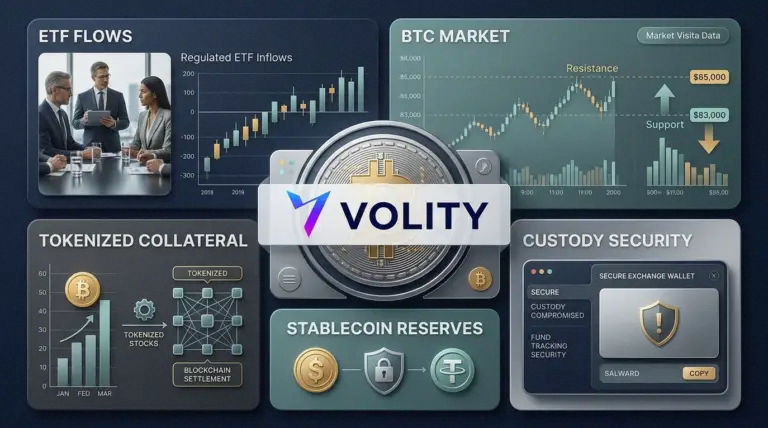
- Bitcoin and ETFs: Spot Bitcoin ETFs have recorded spectacular net inflows-$429 million in a single day-fueling optimism of a possible $115,000 BTC price breakout. This level of capital influx signals a profound shift in investor psychology, making digital assets a staple of modern portfolios.
- “Smart money” strategies: Institutions and experienced traders are increasingly selective, favouring projects with robust development teams or unique utility. AI-driven trading, tokenized treasuries, and algorithmic stablecoins are at the core of 2025’s investment narrative.
- Risks still abound: Hacking, rug pulls, and sudden regulatory twists remain omnipresent. The recent BNB Chain hack serves as a timely reminder. Meanwhile, wild price swings (like ZORA’s 60% plunge post-airdrop) underscore crypto’s inherent volatility-even as the market matures.
Quick hits: what else is moving the numbers?
- Memecoins remain circus and spectacle: The BNB Chain hacker’s own meme coin, “4,” soared 500% in minutes, illustrating that irrational exuberance is alive and well among retail traders.
- New products: XYZVerse’s presale is now brushing $16 million as appetite for token launches rebounds.
- Leadership changes matter: Ripple’s CTO exits after 13 years. The XRP price holds steady for now, but industry veterans are watching for strategic inflections.
- Government gridlock: The U.S. government’s shutdown is threatening to delay crypto legislation and SEC action, with spillover risks for sentiment and compliance.
The bottom line for investors and traders
Traders, institutions, and newcomers face a market still brimming with risk, but stronger than ever before. The mainstreaming of blockchain and digital finance is real and irreversible: from breakthroughs in global payment rails to novel regulatory milestones, from the meme coin theatre to the server racks of Brazilian hydropower dams. Survival demands vigilance, sharp judgment, and plenty of skepticism, but the opportunity for those who navigate wisely is unlike anything the financial world has seen this century.Stay tuned, question everything, and-above all-protect your keys.
For more on this topic see our deep-dives on Crypto Market Trends: Investment Themes, Tokens and Top Opportunities, Crypto News: Avantis Surge, BNB Hack, ETF and Mining Updates, and Crypto Market Volatility: Investment Trends and Security Risks Explained.
What our analysts watch: Three habits separate an account that survives a decade from one that does not. Defence-in-depth on social channels (treat any official-channel post promoting a token, airdrop, or special offer as fraudulent until verified through a second independent channel; do not click any link from a social post even when the posting account is verified). Hardware-key separation (long-term holdings sit on a hardware wallet that never connects to a hot device; the trading float on the exchange is the maximum loss tolerance, sized accordingly). Approval-and-revocation hygiene (smart-contract approvals accumulate silently as users interact with new dapps; periodic revocation of unused approvals removes the dormant attack surface that drains accounts months after the original approval). When all three are routine, the security exposure compresses to a manageable level. When any are skipped, the expected loss is bounded only by account size.
Frequently asked questions
What is the most common way retail crypto users lose funds in 2025?
Phishing and social-engineering attacks dominate the loss data, accounting for the majority of retail incidents reported to AML and law-enforcement agencies. The pattern repeats: a fraudulent message arrives through a verified-looking channel (a hijacked official account, an impersonated support team, a spoofed exchange notification), the user clicks a link to a near-perfect copy of a familiar interface, and the wallet signs an approval that drains the account. Direct exchange compromises and protocol exploits combined account for a smaller share than social engineering alone. The Investopedia reference on phishing covers the recurring patterns.
How should retail users handle hardware-wallet operational hygiene?
Three rules cover most of the practical risk. The hardware wallet seed phrase is written on durable physical media stored in a separate physical location from the device itself; cloud storage of any form is the single most common single-point-of-failure error. The device firmware is updated only through the manufacturer signed channel; firmware update prompts arriving through any other path are fraudulent without exception. The wallet connects only to dapps that are on a known-good list with verified contract addresses; new dapp interactions begin on a separate hot wallet with bounded balance, never on the cold-storage device. Disciplined use of the three rules removes the majority of theft risk.
Are stablecoins safer than volatile cryptocurrencies in a security sense?
Different risk profile. Stablecoins reduce price-volatility risk but introduce issuer credit risk (the entity backing the peg) and regulatory-action risk (frozen balances on sanctioned addresses, blocked redemptions in jurisdictional disputes). The 2025 GENIUS Act framework materially improved the issuer-quality floor for U.S.-licensed stablecoins; offshore stablecoins continue to vary materially in reserve quality and operational resilience. Treating stablecoins as risk-free cash equivalent is a category error; they are credit instruments with a peg target. The UK FCA consumer guidance on cryptoassets documents the regulatory perspective on the category.
The response has shifted from purely protocol-level defences to user-experience interventions. Wallet providers now display approval-warning prompts, integrate domain-blocklists for known phishing infrastructure, and require explicit re-confirmation for high-value approvals. Exchanges have expanded withdrawal-whitelist enforcement and time-delayed first-time withdrawals. Blockchain analytics firms publish near-real-time blocklists that wallet software increasingly consumes. The FATF guidance on virtual asset risks documents the international policy framework that drives these defences.
Related guides
Volity operates a trading platform and also publishes educational and analytical content about trading. The content on this page is for educational purposes only and should not be considered financial advice. Volity may benefit commercially when readers open trading accounts through links on this site.
Our content is produced and reviewed under documented editorial standards; see our comparison and review methodology.