Investing in financial products involves risk. Losses may exceed the value of your original investment.
Crypto bounce etf is a core topic for traders in 2026. The complete guide follows.
After weeks of capitulation, crypto rebounds on ETF buzz, whale accumulation, and easing liquidations-yet positioning and macro risk keep a bull‑trap scenario firmly on the table.Boardroom pull‑quote: “In crypto, optimism returns not when fear disappears, but when someone bigger agrees to hold the risk.”Editor’s note: All figures, levels, and dates should be timestamped at publication and re‑verified. Nothing here is investment advice.
What’s changed – and why it matters
November has delivered a sharp mood swing across digital assets. After weeks of fear‑driven sell‑offs, buyers are testing the tape again. The immediate catalysts: a wave of new ETF products, evidence of whale accumulation, and a modest revival in risk appetite. The question for traders and allocators isn’t whether we bounced-it’s what the bounce means.Bargain hunters light the fuse (but mind the trap)
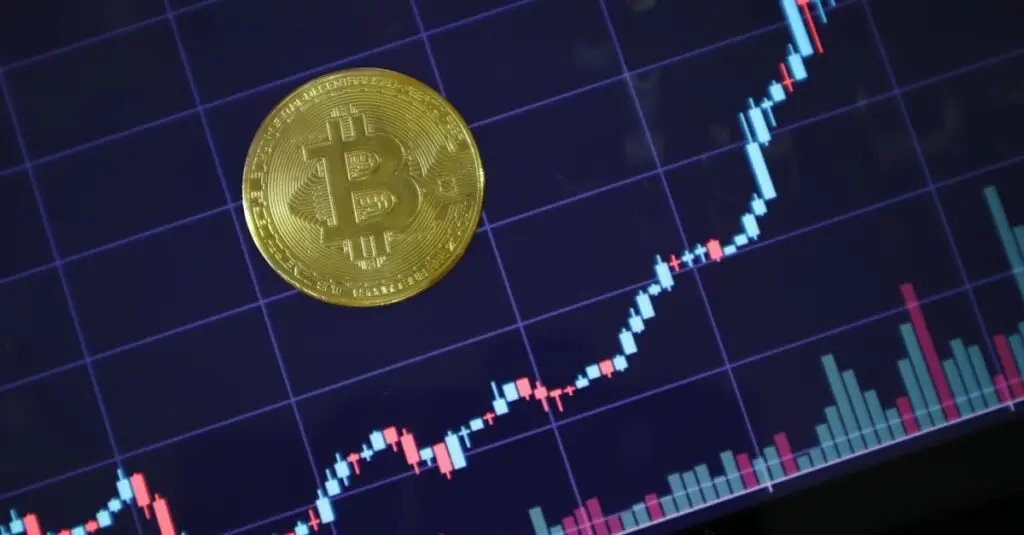
Bitcoin rebounded from recent lows to roughly $86,000 (around +8% off the trough), dragging major altcoins higher. Monero, Zcash, and Cronos printed double‑digit 24‑hour gains, while total crypto market cap hovered near $2.9T (about +3% on the day). Dip‑buyers leaned into oversold conditions-crypto’s composite RSI briefly near 25 tends to pull in systematic and discretionary strategies alike.Caution is still warranted. A relief rally with rising open interest (futures OI up ~3.3% to $125B+) and sharply lower liquidations (≈-88% over 24 hours) signals returning speculation and reduced forced selling, but not necessarily durable trend change. Translation: momentum can fade fast if liquidity thins or macro pushes back.ETF buzz: the new access rail
Wall Street’s embrace continues to reshape flows. U.S.‑listed ETFs tracking Dogecoin (DOGE) and XRP are slated for late‑November launches on a major exchange, widening the on‑ramp for both institutional and retail capital. If executed as outlined, these would mark the first high‑profile altcoin ETFs in the U.S., a symbolic step for mainstream access.- DOGE: Bulls are eyeing a path toward $0.20 (≈+40% from recent support). Watch the $0.15 and $0.17 zones; volume expansion into a listing event often sets the tone.
- XRP: Despite a slide to roughly $1.81, ETF‑linked flows reportedly approached $500M, with $118M in a single day. If sentiment stabilizes, a $2.70 retest isn’t off the table, but a support break would reset the path.
Whales vs. wallets: the bottom‑fishing dance
Macro jitters (hawkish Fed signals, tech wobble) and large‑lot selling drove Bitcoin from ~$94.6K to $86.6K earlier this week. Smaller retail wallets offloaded roughly 1.4% of circulating supply across BTC, ETH, and XRP-classic capitulation behavior. In parallel, whales reportedly accumulated $1B+ of BTC into weakness.Why that matters: The divergence between retail and whales-paired with ETF inflows-suggests institutional confidence is intact even as smaller holders de‑risk. Historically, deeply oversold momentum regimes (RSI sub‑30) have skewed to medium‑term positive outcomes, but path dependency (news/macro) dominates the next few sessions.Broader landscape: oversight, plumbing, and product complexity
- Regulation & oversight: The SEC is approving spot ETFs while stepping up warnings on excess and disclosure. Expect more scrutiny, not less.
- Liquidations: Roughly $207M liquidated in the past day-far from capitulation extremes. It lowers immediate pressure but doesn’t prove durability.
- Tech risk: A temporary Cardano chain split from a malformed transaction highlights how even mature networks face resilience/scalability challenges.
- Altcoin beta: Zcash led with a ~14% daily pop; Solana bounced off steep declines-reminding that beta cuts both ways.
- Thematics & leverage: New leveraged/thematic ETFs amplify both access and volatility. Great for tactics; hazardous for passengers.
So-bounce or bull?
As leveraged products proliferate and stablecoin balances creep higher, the market sits at a classic fork: either the start of a cyclical up‑leg or a dead‑cat bounce within a wider distribution. The center of gravity is shifting toward institutions-via ETFs and whale balance sheets-even as retail remains skittish. If momentum holds into next week’s tape, DOGE and XRP could become the visible winners of the post‑ETF narrative.Bottom line for operators: Track ETF net flows, futures basis and OI, stablecoin exchange balances, and breadth across top‑20 alts. Your risk isn’t price-it’s positioning into liquidity.For more on this topic see our deep-dives on Crypto Market Pressure: HBAR, Bitcoin, and the Recovery Playbook, How ETFs and Stablecoins Are Reshaping the Crypto Market, and Crypto Market Today: Bitcoin, Privacy Coin Bans and Altcoin Movers.
What our analysts watch: Three lenses dominate our reading of the equity tape. Sector rotation tells us where capital is moving (defensives versus cyclicals, value versus growth). Earnings revisions show whether analyst expectations are catching up to or trailing reality. Real yields and the dollar set the discount rate that valuation multiples respond to. When earnings estimates rise faster than the index price and real yields stabilise, the setup tends to favour patient longs.
Frequently asked questions
How much money do I need to start trading stocks?
Many regulated brokers now allow account opening with no minimum deposit and offer fractional shares for as little as $1. A practical starting balance for a long-only beginner is $500 to $2,000, enough to diversify across a handful of positions without paying meaningful percentage spreads. The FCA publishes investor education resources worth reading before opening an account.
What is the difference between stocks, ETFs, and CFDs?
A stock is direct ownership in a company. An ETF is a basket of stocks (or other assets) traded as a single security. A CFD (contract for difference) is a leveraged derivative that tracks the underlying price without conferring ownership. Each has different cost, tax, and risk profiles. ESMA imposes leverage caps on retail CFDs in the EU and UK.
How do I choose a trustworthy broker?
Verify regulation with a tier-one authority (FCA in the UK, CySEC in Cyprus, BaFin in Germany, ASIC in Australia, or your local regulator). Check segregated client funds, negative-balance protection, transparent fees, and a clean disciplinary record. Avoid any platform offering guaranteed returns or pressuring deposits. The FCA Financial Services Register is free to search.
Should I day-trade or invest long-term?
Most retail accounts that day-trade lose money over time. Long-term passive investing in diversified index ETFs has historically delivered competitive returns with far less effort and lower stress. Active day-trading can work, but it requires capital, an edge proven over hundreds of trades, and the time to monitor positions intraday. Start passive; layer active only after the basics are durable.
Related guides
- Bitcoin explained
- Ethereum explained
- Cryptocurrency trading
- Crypto trading platforms
- Best crypto investments
What Volity Editorial watches: The Volity desk separates “rail-driven” bounces (ETF flows) from “demand-driven” bounces (whale buying) because they decay differently. ETF flows mean revert toward zero on a weekly basis; sustained inflows demand a structural narrative shift. Whale accumulation, by contrast, persists for weeks once it begins because the wallets sized for accumulation rarely reverse without a thesis change. Bounces backed by both have the longest half-life and the cleanest follow-through.
Volity analyst FAQ
What confirms that a crypto bounce is real?
Three confirmation criteria sit on the Volity desk checklist: ETF flow turns net positive across multiple sessions, whale wallets reduce exchange inflows or increase outflows to cold storage, and perpetual-swap funding stabilises near neutral rather than spiking on the up-move. Without all three, the bounce sits in suspect-rally territory. The CoinDesk markets dashboard aggregates the live signals.
How do ETF rails actually mechanically support price?
Authorised participants create new ETF shares by delivering Bitcoin to the issuer, which mechanically takes spot supply off the market. When net creations dominate net redemptions over a window, the cumulative effect tightens float available to other buyers. The SEC ETF approval order documents the creation/redemption mechanism that converts ETF flow into spot demand.
Why do whales buy during weakness?
Large holders with multi-year horizons treat drawdowns as accumulation windows when their thesis remains intact. They have balance-sheet patience that retail does not, the cost basis flexibility to scale in over weeks, and the analytical resources to triage whether the weakness is regime-changing or noise-driven. The Investopedia whale entry covers the asymmetric timing advantage that scale provides.
Can a bounce fail even with ETF inflows and whale buying?
Yes, when macro liquidity tightens faster than the bounce can compound. Strong micro signals lose to a tightening Fed or a sharp dollar rally, because the asset class still trades inside the global liquidity envelope. The discipline is to keep the macro overlay live alongside the on-chain signals, not to treat strong micro as a standalone all-clear. Read both layers, weight the slower-moving macro layer more.
External references
- CoinDesk markets dashboard
- SEC spot Bitcoin ETF approval order
- Investopedia whale-Bitcoin entry
Volity operates a trading platform and also publishes educational and analytical content about trading. The content on this page is for educational purposes only and should not be considered financial advice. Volity may benefit commercially when readers open trading accounts through links on this site.
Our content is produced and reviewed under documented editorial standards; see our comparison and review methodology.