Investing in financial products involves risk. Losses may exceed the value of your original investment.
Crypto rally robinhood is a core topic for traders in 2026. The complete guide follows.
Crypto headlines: Token2049 Dubai delayed to 2027, Robinhood’s crypto boom, Ethereum’s bold new mandate
Crypto had one of those weeks where the headlines curled into each other. First came security fears in the Gulf. Then came a retail trading surge. Meanwhile, Ethereum’s inner government tried to make itself smaller by writing itself into stone.
Prices mostly held up. However, the story sat in the plumbing. ETFs kept inhaling coins, platforms chased volumes, and regulators widened their nets. Even the memecoins felt oddly… macro.
Token2049 Dubai pushed to 2027 as security worries hit the calendar
Token2049’s Dubai edition will not run next spring. Organisers shifted the conference from 29 to 30 April 2026 to 21 to 22 April 2027, citing regional security risks. Reports of drone attacks linked to Iran, and wider tensions, hung over travel plans.
That leaves a conspicuous gap’s crypto conference circuit. Usually, Dubai brings the founders, venture capitalists, exchanges, meme promoters, and the serious engineers into the same warm rooms. This time, dealmaking will likely scatter to smaller events and private gatherings.
Tickets will roll over to 2027. Still, the delay underlines a trading truth: location risk is not an emerging market quirk. It can hit a global hub overnight, and sentiment reprices fast.
Robinhood’s crypto volumes jump to $25bn as equities cool
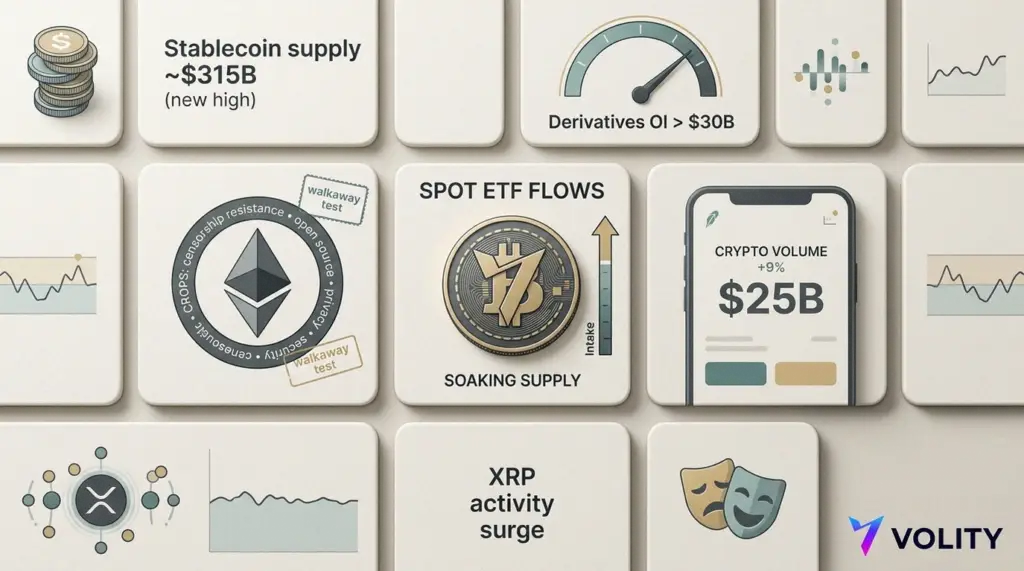
Meanwhile, Robinhood reported a fresh pop in crypto activity. Trading volumes rose 9% to $25bn as stock and options buzz faded. Retail flows have not vanished. Instead, they have rotated.
That matters for anyone trading the picks and shovels. When crypto volumes lift, spreads tighten, leverage rises, and smaller tokens start finding bids. However, it also tends to pull risk into shorter timeframes, which can turn a tidy trend into chop.
Ethereum Foundation sets “CROPS” values, and promises a walkaway future
Ethereum’s leadership class tried to formalise its role without turning into a state. The Ethereum Foundation published a 38-page mandate that sets out non-negotiables: censorship resistance, open source, privacy, security, shortened to CROPS.
The central claim was structural. Ethereum should pass a “walkaway test”, meaning the network thrives even if the Foundation disappears. The Foundation cast itself as a coordinator, not a ruler, and pushed its work towards research, tooling, and long-run resilience.
Traders treated it as a risk-on signal. ETH rose about 5% after the release, while derivatives open interest pushed above $30bn. Meanwhile, the market kept circling the same institutional question: whether crypto flows want a wide menu, or just Bitcoin and Ethereum via ETFs.
Market movers: Bitcoin ETF inflows, XRP activity, and stablecoins at a peak
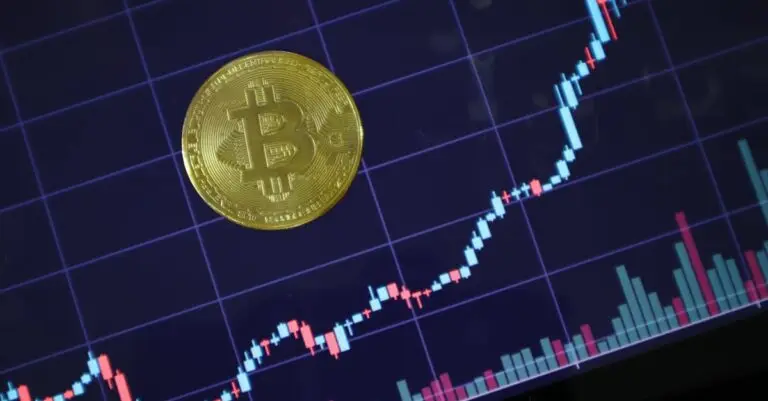
Bitcoin spot ETFs took in about $180m of inflows. BTC hovered above $73,000, supported by geopolitics, oil risk, and shifting rate expectations. However, the chart still looks like a range fight, with traders watching whether momentum fades back towards $65,000 support.
Elsewhere, XRP transactions reportedly tripled year on year, yet the price stayed heavy around $1.40. That divergence is not rare in crypto. Activity can rise faster than investors’ appetite for exposure, especially when flows leak out of the ETF narrative.
Stablecoins hit a fresh high near $315bn. That figure matters because it can act like crypto’s shadow money supply. However, it can also sit idle, waiting for the next volatility event to wake it up.
Memecoins supplied their usual theatre. Pi Network jumped roughly 30% after a Kraken listing ahead of Pi Day. TRUMP rallied about 52% as large holders chased access perks. Meanwhile, some traders flagged Solana as vulnerable to an ABC-style correction after a rejection at resistance.
Regulatory heat: sanctions, disclosure talk, and old arguments revived
Regulators also stayed busy. The US sanctioned networks tied to North Korea-linked IT scams and crypto laundering. Meanwhile, Washington lawmakers kept prodding at how enforcement should treat global exchanges and sanctions compliance.
In the background, disclosure policy moved in a familiar direction. Officials talked about “minimum effective” disclosures and pilot programmes for token markets. That language sounds technical. However, it usually signals a tug of war between speed and control.
Even the culture wars returned. Michael Saylor pushed back after a former UK prime minister called Bitcoin a Ponzi, calling the claim projection. Those arguments never die. They just change venues.
Trading edges: five-minute prediction markets and whale positioning
The short-termism got sharper. Prediction markets like Polymarket and Kalshi saw more hyper-short crypto contracts, with five-minute windows replacing longer political-style horizons. The products now resemble volatility toys as much as forecasting tools.
Whales kept telling their own story. One Matrixport-linked wallet reportedly held $300m in longs with about $26m in paper gains. Meanwhile, Binance incentives rewarded early rotation into some alts, and punished late chasers via slippage and thin books.
By the numbers
- Token2049 Dubai: moved from 29 to 30 April 2026 to 21 to 22 April 2027
- Robinhood crypto volume: $25bn, up 9%
- ETH move: about +5% after the mandate
- ETH open interest: above $30bn
- Spot Bitcoin ETF flows: about $180m inflows
Key takeaways
- Security risk can hit “safe” hubs, so price conference and tourism narratives cautiously.
- Watch retail routing: rising platform volumes often precede sharper intraday swings.
- ETH’s CROPS framing supports the long-term bull case, but leverage makes drawdowns faster.
- BTC remains a range trade until flows overpower resistance, or macro risk breaks support.
- When stablecoin supply peaks, be alert for sudden rotations into majors and higher beta alts.
Crypto looked resilient, not calm. The calendar slip in Dubai exposed geopolitical fragility. Meanwhile, Robinhood’s volumes showed retail remains in the game. Finally, Ethereum’s mandate tried to make decentralisation legible, and tradeable, at the same time.
For more on this topic see our deep-dives on Bitcoin Rewards, Ethereum at $4,000 and the Trends Driving Crypto, Crypto Market Rebound: Expert Bitcoin Forecasts After the Crash, and How Fed Rate-Cut Talk Drives Bitcoin and Crypto Rallies.
For more on this topic see our deep-dives on Crypto Market Shakeup: Bitcoin, Altcoin Surges, XRP ETFs & Mining, Solana Price Prediction: Can SOL Reclaim Key Levels in the PayFi Era?, and Crypto Market Today: BTC Range, ETH Risk, BNB Drawdowns.
For more on this topic see our deep-dives on Crypto Regulation and Bitcoin: How Policy Clarity Reshapes the Market, Kraken Pre-IPO Surge and the Crypto Investment Outlook, and Tron USDT Supply Soars: Stablecoin Volume and Counterparty Risks Explained.
What our analysts watch: Three reads turn the catalyst stack into a sized position rather than a thesis bet. Retail venue rotation pace (when Robinhood crypto volume rises into a stretched-equity tape, the historical pattern is that retail risk capacity migrates rather than evaporates, which extends the rally horizon by reducing the dependence on any single venue). XRP transactional activity against price stagnation (XRP transactions tripling year-on-year while price stays heavy near 1.40 dollars is the diagnostic that activity is rising faster than allocation appetite, which is the bearish-divergence read for altcoin majors that often precedes a sharper drawdown when the rally fatigues). Memecoin rotation pattern (Pi Network up 30 percent on the Kraken listing, TRUMP up 52 percent on access perks, Solana flagged for ABC-style correction risk; the speculative tier-three flow runs hot, which is consistent with late-cycle rally dynamics rather than early-cycle accumulation). The ESMA investor protection document the U.S. policy backdrop, the CoinDesk markets coverage tracks the live catalyst stack, and the ESMA crypto-asset markets page covers the EU MiCA implementation context. Volity offers BTC, ETH, and major altcoin CFD execution under CySEC oversight via UBK Markets (licence 186/12), with entities in Saint Lucia and Cyprus.
Frequently asked questions
How should traders interpret the CROPS mandate against the price reaction?
The CROPS mandate (censorship resistance, open source, privacy, security) functions as a constitutional document for the Ethereum Foundation rather than a near-term protocol upgrade, with the practical effect of reducing the Foundation governance risk that institutional allocators have priced into ETH through 2024. The 5 percent price reaction is consistent with positioning compression on a thesis-validation event, not fundamental rerating. The structural read is that the mandate compresses the Foundation-centralisation risk premium that capped ETH multiple expansion relative to Bitcoin, which is the more durable price effect than the single-day move. The price reaction is the early read; the structural rerating shows up over multi-quarter windows as Foundation discretionary actions decline visibly.
What does the 315 billion dollar stablecoin market capitalisation reveal about the rally durability?
It reveals that the structural shadow money supply on-chain is at the highest level the cycle has produced, which expands the volatility-event capacity of the asset class. A high stablecoin reserve base does not directly drive price (stablecoin balances can sit idle for extended periods) but it does drive the path-dependent volatility profile of the rally: when a confirmation catalyst lands, the available stablecoin capital can move into spot crypto exposure faster than the historical rally cohort. The structural read is that the rally durability is supported by the available capital, even though the activation timing depends on the next catalyst.
Why does the Token2049 Dubai delay matter beyond the conference industry?
It matters because the conference cadence functions as a signalling mechanism for institutional dealmaking, with deal announcements concentrated around the major events (Token2049, Consensus, ETHDenver). A Dubai delay scatters the dealmaking surface across smaller events and private gatherings, which compresses the announcement-driven price catalysts that typically populate the rally calendar. The structural read is that the deal-flow pace continues but the volatility footprint becomes more diffuse, which favours longer-duration rally trades over event-driven tactical positioning.
How does the XRP transactional growth versus price divergence resolve?
It resolves through one of two paths. The constructive resolution is that the transactional activity converts into structural network value through ETF approval or institutional integration, which lifts the allocator base and re-rates the price toward the activity profile. The bearish resolution is that the transactional activity proves to be cross-border payment volume that does not require XRP price appreciation to function, which keeps the price detached from the activity. The current cycle has more elements of the bearish resolution than the constructive one; the constructive read requires a U.S. spot XRP ETF approval cycle that has not yet completed.
Related guides
- Bitcoin explained
- Ethereum explained
- Cryptocurrency trading
- Crypto trading platforms
- Best crypto investments
Volity operates a trading platform and also publishes educational and analytical content about trading. The content on this page is for educational purposes only and should not be considered financial advice. Volity may benefit commercially when readers open trading accounts through links on this site.
Our content is produced and reviewed under documented editorial standards; see our comparison and review methodology.