Understanding currency exchange rates is crucial for international travelers, businesses, and investors to manage finances effectively in 2026. This guide explores the market fundamentals, reliable tools, and hidden costs of foreign currency conversion, offering practical strategies to navigate its complexities. You will learn how to accurately calculate and predict exchange rates, mitigate financial risks, and leverage emerging technologies for informed international transactions.
While understanding Currency Exchange Rates is important, applying that knowledge is where the real growth happens. Create Your Free Forex Trading Account to practice with a free demo account and put your strategy to the test.
What Drives 2026 Exchange Rates?
What is a currency exchange rate?
A currency exchange rate is the value of one nation’s currency in terms of another nation’s currency. It dictates how much one currency is worth when converted into another, facilitating international trade, investment, and tourism. This rate is dynamic, constantly shifting based on various global economic and geopolitical factors.
How are currency exchange rates determined?
Currency exchange rates are determined primarily within the Foreign Exchange Market, also known as the forex market, which is the world’s largest financial market. Supply and demand for currencies drive these rates, influenced by economic indicators, political stability, and central bank policies.
Potential shifts in major currency pairs, such as EUR/USD and USD/JPY, for 2026, driven by evolving global economic policies, are anticipated. The interplay of these forces establishes the value of currency pairs globally, impacting the interbank rate and subsequent consumer rates.
What is the difference between spot rate and forward rate?
The spot rate is the current currency exchange rate for immediate delivery of a currency pair, typically within two business days. It reflects the real-time market value for instant transactions.
Conversely, a forward rate is an exchange rate agreed upon today for a future date, used to lock in a rate and mitigate risk for future transactions. This distinction is crucial for businesses planning imports or exports in 2026.
Why do exchange rates change?
Exchange rate fluctuations are driven by a complex interplay of economic factors, political stability, and central bank policies. Key economic indicators like inflation, interest rates, GDP growth, and trade balances significantly influence a currency’s value. Political events, government policies, and geopolitical events can also introduce volatility. Central banks, through monetary policy decisions like interest rate adjustments, actively manage inflation and economic growth, directly impacting currency strength.
How to Find Reliable 2026 Exchange Rate Calculators
Where can I find official exchange rates for 2026?
Official currency exchange rates for 2026 can be found from several authoritative sources. Daily exchange rates for various currencies against the U.S. Dollar serve as a primary official source. For historical and current comprehensive data, the Federal Reserve’s H.10 release is essential for trend analysis. Commercial platforms like Oanda also offer interbank rates, which are widely recognized as a baseline for conversions.
How do I use an online currency converter?
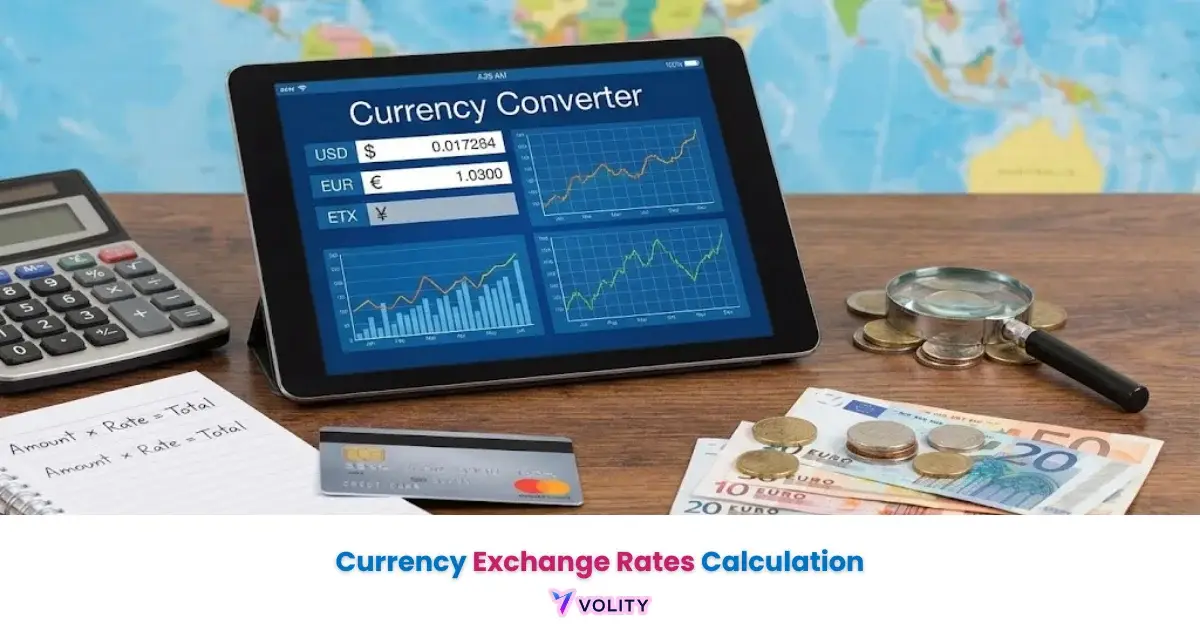
To effectively use an online currency converter, first select the base currency (the one you are converting from) and the quote currency (the one you are converting to). Input the amount you wish to convert. The converter will then display the equivalent amount based on the current spot rate. Interbank rates are provided, which are then adjusted with a spread for commercial and retail transactions.
This clarifies the “catch” users often perceive with “live” rates, as these rates typically include a small margin added by the service provider.
Learning from the Past for 2026 Trends
Analyzing historical exchange rates is crucial for understanding past volatility and identifying potential trends for 2026. The Federal Reserve’s H.10 release offers comprehensive historical foreign exchange rates, essential for trend analysis. Yearly average currency exchange rates are published, specifically relevant for tax reporting purposes, though these differ from daily spot rates.
By examining long-term patterns, individuals and businesses can better anticipate future exchange rate fluctuations and plan their foreign currency conversion strategies.
Ready to Elevate Your Trading?
You have the information. Now, get the platform. Join thousands of successful traders who use Volity for its powerful tools, fast execution, and dedicated support.
Create Your Account in Under 3 MinutesFees, Spreads, and Transparency in 2026 Currency Exchange
What are common fees or hidden costs in currency exchange?
Common fees and hidden costs in currency exchange often include commission fees, transfer fees, and a margin added to the mid-market rate. These charges can significantly reduce the amount of foreign currency received. For international card transactions, exchange rates incorporate network-specific fees and conversion charges, which can be less transparent than direct bank transfers. Understanding these various charges is key to avoiding hidden fees and ensuring transparency in your 2026 transactions.
What the Bid-Ask Spread Means for Your Exchange
The bid-ask spread is the difference between the price at which a currency can be bought (ask price) and the price at which it can be sold (bid price) in the Foreign Exchange Market. This spread represents the profit margin for the exchange provider. For consumers, a wider bid-ask spread means a less favorable exchange rate, effectively increasing the cost of conversion. This spread is a primary reason why airport exchange booths often offer less competitive rates, leading to the feeling of being “ripped off.”
Is it better to exchange money at a bank or a currency exchange service?
Deciding whether to exchange travel money at a bank or a specialized currency exchange service depends on your priorities for 2026. Banks often provide convenience and security, especially for existing customers, but their currency exchange rates might include higher spreads. Dedicated currency exchange services, particularly online platforms, often offer more competitive rates closer to the interbank rate but may have transfer fees or minimum transaction amounts. Comparing options carefully is essential to secure the best value. This choice directly influences the total cost of your foreign currency conversion.
Key Currency Exchange Providers for 2026
This table provides a concise comparison of different currency exchange provider types, helping you evaluate options for your 2026 transactions. It addresses common questions about where to find the best rates and services, considering factors like typical rates, fees, and suitability for various needs.
| Provider Type | Pros | Cons | Typical Rate (vs. Mid-Market) | Best For |
| Traditional Banks | Security, convenience for existing customers | Higher fees, less competitive rates | Mid-market + 2-5% spread | Small, infrequent exchanges; cash orders |
| Online Converters | Competitive rates, transparency, speed | May have transfer fees, online only | Mid-market + 0.5-2% spread | Large transfers, frequent conversions |
| Payment Networks | Convenience for card transactions abroad | Network fees, less transparent rates | Mid-market + 1-3% fee/spread | International travel spending |
| Specialized Services | Very competitive rates, low fees, bulk | Account setup, transfer times | Mid-market + 0.2-1% spread | Businesses, large remittances |
Mitigating Risks & Optimizing Your 2026 Currency Exchange
What are the risks of currency exchange?
The risks of currency exchange primarily stem from exchange rate fluctuations, which can lead to unexpected gains or losses. Economic factors such as inflation and interest rates, alongside political stability and central bank policies, constantly influence currency values.
Geopolitical events, including trade disputes or international conflicts, can also trigger rapid and significant shifts in rates. Key drivers and potential movements for major global currencies are identified, which inherently includes risk factors. Understanding these elements is vital for any foreign currency conversion.
Strategies for Getting the Best Exchange Rate for International Travel in 2026
To get the best currency exchange rate for international travel in 2026, several strategies can be employed:
- Avoid exchanging travel money at airport kiosks, which typically offer the least favorable rates due to high overheads and wide bid-ask spreads.
- Instead, use local ATMs abroad for withdrawals, as they often provide rates closer to the interbank rate.
- Consider pre-paid travel cards or credit cards with no foreign transaction fees.
- Timing your exchanges when your home currency is strong can also be beneficial.
- Planning ahead allows you to secure more transparent and favorable foreign currency conversion rates.
How to lock in a favorable exchange rate for future transactions?
Businesses and individuals can lock in a favorable currency exchange rate for future transactions in 2026 through financial instruments (stocks, forex, crypto) like forward contracts. A forward contract allows you to agree on an exchange rate today for a transaction that will occur at a specific date in the future, providing certainty and mitigating risk from exchange rate fluctuations.
Additionally, using limit orders with specialized forex services can help secure a target rate. A forex market outlook for 2026 can inform these strategic decisions for major currency pairs like AUD/USD and USD/JPY. These methods are crucial for managing exposure to market volatility.
Emerging Technologies & 2026 Currency Outlook
This section explores how nascent technologies will reshape the landscape. The advent of Central Bank Digital Currencies (CBDCs) and advancements in blockchain-based remittances, coupled with sophisticated predictive analytics, are set to significantly alter how currency exchange rates are calculated, transacted, and forecasted by 2026.
Central Bank Digital Currencies (CBDCs)
Central Bank Digital Currencies (CBDCs), digital forms of a country’s fiat currency issued by its central bank, are gaining traction globally. As more nations explore or implement CBDCs, they could streamline cross-border payments, potentially reducing transaction times and costs for foreign currency conversion.
This shift may also introduce new dynamics into the Foreign Exchange Market, affecting traditional currency pair outlooks and interbank exchange rate mechanisms. While their full impact by 2026 remains to be seen, CBDCs represent a fundamental change in the nature of money.
Blockchain-based Remittances
Blockchain-based remittances offer a glimpse into faster, potentially cheaper, and more transparent currency transfers for 2026 and beyond. By leveraging distributed ledger technology, these systems can bypass traditional banking intermediaries, reducing fees and speeding up the delivery of funds.
This innovation is particularly relevant for individuals sending money internationally, offering a more efficient alternative to conventional methods. Such advancements could exert downward pressure on transaction costs across the broader foreign exchange market.
Predictive Analytics
For those looking beyond simple historical trends, predictive analytics offers a cutting-edge, data-driven approach to forecasting 2026 exchange rates with greater precision. Using machine learning models and sophisticated algorithms, predictive analytics can process vast amounts of fiscal year data, quarterly exchange rates, and economic indicators to identify complex patterns.
Key price action setups for major USD currency pairs into 2026, influenced by interest rate differentials and global growth forecasts, are highlighted, demonstrating the utility of such advanced analysis. These tools move beyond basic trend analysis to offer more nuanced insights into future exchange rate fluctuations.
Turn Knowledge into Profit
You've done the reading, now it's time to act. The best way to learn is by doing. Open a free, no-risk demo account and practice your strategy with virtual funds today.
Open a Free Demo AccountPractical Conversions & Best Calculators for 2026
How to convert USD to EUR for travel in 2026?
To convert USD to EUR for travel in 2026, begin by checking the real-time exchange rates using a reliable currency exchange rate calculator like Oanda or Xe. These tools provide the current spot rate for the USD/EUR currency pair.
Once you have an understanding of the rate, compare options for conversion: using a travel-friendly credit card with no foreign transaction fees, withdrawing euros from a local ATM in Europe, or exchanging a small amount of cash at a reputable exchange service. Avoiding airport exchanges is a key strategy for securing better rates for your travel money.
What are the average exchange rates for major currencies in 2026?
Average currency exchange rates for major currencies in 2026 can be estimated by reviewing historical data and market forecasts. Yearly average exchange rates are provided specifically for tax reporting purposes, which are useful for understanding annual trends but differ from daily spot rates. Historical data for long-term analysis is also available.
It is important to remember that these averages serve as benchmarks, and real-time rates will vary significantly due to constant market movements and exchange rate fluctuations. A strategic overview of potential movements for major global currencies is available.
What is the best currency exchange rate calculator for 2026?
The best currency exchange rate calculator for 2026 depends on your specific needs, but several stand out for their accuracy and features:
- Oanda’s currency converter is highly regarded for providing interbank rates, which offer a transparent baseline.
- Comprehensive tools and market insights are offered.
- For quick, general conversions, a straightforward interface is provided.
- When choosing, consider if you need real-time exchange rates, historical data, or the ability to account for spreads and fees.
- The U.S. Treasury Fiscal Data is the primary resource for official treasury reporting rates.
Identifying Banks with the Most Competitive Exchange Rates for 2026
Identifying banks with the most competitive currency exchange rates for 2026 requires careful comparison. While many large banks, such as Bank of America, offer foreign currency conversion services and currency converters, their rates can vary significantly.
Factors to consider include whether you are an existing customer, the fees associated with the exchange, and the difference between their online rates versus branch rates. Often, banks may have wider bid-ask spreads compared to dedicated online currency exchange services. Comparing several institutions and checking their displayed rates against the mid-market rate is recommended.
Key Takeaways
- Currency exchange rates are dynamic and influenced by economic, political, and central bank factors.
- Use reliable exchange rate calculators from sources like U.S. Treasury, Federal Reserve, Oanda, and Xe.
- Always account for hidden fees and the bid-ask spread to ensure transparent foreign currency conversion.
- Strategic planning, including avoiding airport exchanges and using specialized services, can optimize your rates for travel money and business.
- Emerging technologies like CBDCs and predictive analytics are set to reshape the 2026 currency exchange landscape.