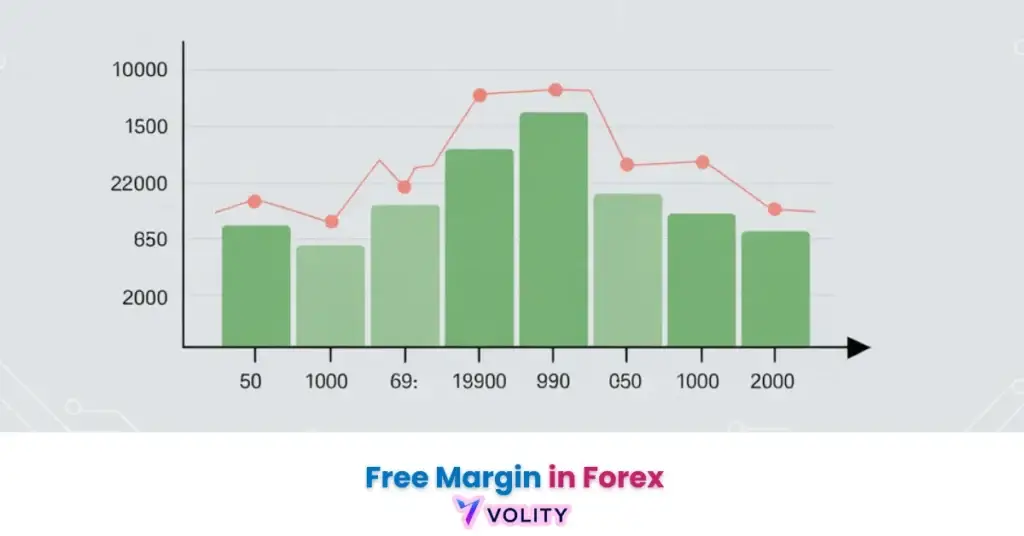
La marge libre représente le capital disponible sur un compte de trading qui n’est pas bloqué en tant que garantie pour des positions actives, et son épuisement crée un risque de liquidation immédiat. Lorsque la marge libre atteint zéro, les courtiers exécutent des stop-out automatiques qui liquident vos positions perdantes les plus importantes sans avertissement. Sur les marchés volatils de 2026, où les spreads augmentent lors des annonces économiques, un mouvement soudain de 100 pips peut drainer la marge libre plus rapidement que ne le permet une intervention manuelle. Le capital est à risque dans tout trading avec effet de levier.
La marge libre représente le capital utilisable sur un compte de trading qui n’est pas actuellement engagé comme garantie pour des positions ouvertes. Il s’agit du tampon critique qui détermine si un trader peut ouvrir de nouvelles transactions ou résister aux mouvements de marché défavorables. En 2026, maintenir une marge libre robuste est essentiel pour naviguer dans une volatilité intrajournalière accrue et éviter les protocoles de stop-out automatiques déclenchés lorsque le niveau de marge d’un compte tombe en dessous des seuils définis par le courtier.
La marge libre fonctionne comme le carburant opérationnel de tout portefeuille à effet de levier, organisant le capital du compte en segments « utilisés » et « disponibles ». Ce chiffre dynamique s’ajuste à chaque tick du marché, reflétant la santé en temps réel de vos capitaux propres par rapport à votre exposition totale. Elle sert de principale protection contre le redoutable appel de marge dans les environnements monétaires volatils.
L’environnement de trading de 2026 nécessite une approche disciplinée de la gestion de la marge, car les courtiers resserrent les seuils de liquidation pour se conformer aux changements réglementaires mondiaux. Les traders utilisent les données de marge libre pour dimensionner leurs positions avec précision et s’assurer qu’ils disposent d’une capacité de résistance suffisante pendant les périodes de repli prolongées.
Comprendre Forex est important, mais la vraie progression commence en appliquant ces connaissances. Créez votre compte de trading forex gratuit pour vous entraîner sur un compte démo gratuit et mettre votre stratégie à l’épreuve.
Qu’est-ce que la marge libre sur le Forex et pourquoi est-elle critique ?
La marge libre est la partie spécifique des capitaux propres du compte qui n’est pas bloquée en tant que garantie pour des positions actives et qui reste disponible pour l’exécution immédiate de transactions.
Les plateformes de trading modernes en 2026 mettent à jour les calculs de marge libre toutes les 50 millisecondes pour tenir compte des variations de prix à haute fréquence sur le marché interbancaire (TradeTech Review, 2026). Ce calcul en temps réel révèle si vous pouvez ouvrir de nouvelles transactions ou si votre compte a atteint son niveau d’exposition maximal.
La distinction entre Balance, Capitaux propres (Equity) et Marge libre détermine votre capacité de trading réelle :
- Balance représente votre capital de départ plus les gains et pertes cumulés des transactions clôturées
- Capitaux propres (Equity) incluent la balance plus les profits et pertes latents de toutes les positions actuellement ouvertes
- Marge libre est ce qui reste après soustraction de la garantie requise pour maintenir les transactions actives
La marge libre fonctionne comme un « tampon de volatilité » pour les transactions existantes. Lorsque les prix du marché évoluent contre votre position, les pertes latentes réduisent immédiatement vos capitaux propres, ce qui draine à son tour votre marge libre. Une fois que la marge libre atteint zéro, les courtiers initient des procédures d’appel de marge qui peuvent forcer la clôture des positions. C’est pourquoi les traders sont obsédés par les niveaux de marge libre tout au long de la journée de trading, car cela détermine votre « pouvoir d’achat » maximal à tout moment donné.
La relation entre capitaux propres et marge
Les capitaux propres représentent la valeur liquide totale d’un compte de trading, tandis que la marge libre est le montant résiduel après soustraction de la garantie requise pour les transactions ouvertes.
La manière dont les pertes latentes drainent la marge libre révèle pourquoi la discipline dans le dimensionnement des positions est critique. Un trader avec 10 000 $ de capitaux propres détenant une position de 1 lot EUR/USD utilise 3 300 $ comme marge (à un effet de levier de 1:30). La marge libre est de 6 700 $. Si la position oscille de 200 pips contre le trader, la perte latente de -2 000 $ réduit les capitaux propres à 8 000 $, ne laissant que 4 700 $ de marge libre. L’impact des transactions gagnantes sur votre capacité de trading disponible fonctionne à l’inverse : les profits latents augmentent vos capitaux propres et votre marge libre simultanément, vous permettant d’ajouter des positions supplémentaires sans déposer de nouveaux fonds.
Prêt à faire passer votre trading au niveau supérieur ?
Vous avez les connaissances. Il vous manque la plateforme. Rejoignez des milliers de traders qui choisissent Volity pour ses outils puissants, son exécution rapide et son support dédié.
Créez votre compte en moins de 3 minutesComment calculer la marge libre avec précision ?
Le calcul de la marge libre identifie le capital utilisable restant en soustrayant la marge totale utilisée des capitaux propres actuels du compte.
La formule standard est simple :
Marge libre = Capitaux propres du compte – Marge utilisée
Les capitaux propres du compte changent à chaque seconde à mesure que les prix bougent. La marge utilisée dépend de la taille de votre position et du ratio d’effet de levier de chaque paire. Une position de 1 lot EUR/USD avec un effet de levier de 1:30 nécessite 3 333 $ de marge. 1 lot GBP/USD avec le même effet de levier nécessite 3 700 $. La clé d’un calcul précis est de comprendre que la marge requise varie selon la paire de devises, car chaque paire a des exigences de marge différentes basées sur la volatilité et les mandats réglementaires.
Les exigences de marge moyennes pour les paires de devises du G7 se sont stabilisées à 3,33 % (effet de levier 1:30) chez les courtiers réglementés par l’ESMA et l’ASIC en 2026 (Regulatory Compliance Monitor, 2026). Cependant, les paires exotiques comme USD/ZAR comportent souvent un effet de levier de 1:20, nécessitant 5 % de marge. Cette distinction explique pourquoi les traders professionnels se concentrent sur les majeures : des spreads plus serrés et des exigences de marge plus faibles signifient qu’il reste plus de marge libre disponible pour les tampons de gestion des risques.
La différence entre les calculs de marge pour les majeures et les exotiques impacte directement votre coussin de marge libre. Un trader avec 5 000 $ de capitaux propres ne tradant que l’EUR/USD (exigence de marge de 3,33 %) peut ouvrir 1,5 lots (utilisant 5 000 $ de marge) et conserver zéro marge libre. Le même trader ouvrant USD/ZAR avec une marge de 5 % ne peut ouvrir qu’un lot (utilisant 5 000 $ de marge). Comprendre ces différences d’effet de levier empêche l’erreur courante du débutant consistant à supposer que toutes les paires consomment une marge identique.
Quel est un niveau de marge « sûr » pour la volatilité de 2026 ?
Un niveau de marge sûr identifie le pourcentage de capitaux propres par rapport à la marge utilisée qui fournit un coussin suffisant contre les retournements de marché soudains.
Le niveau de marge est calculé comme suit : Niveau de marge = (Capitaux propres ÷ Marge utilisée) × 100 %
Le seuil de 100 % représente la « zone d’alerte » où la marge libre disparaît entièrement. À un niveau de marge de 100 % exactement, vos capitaux propres sont égaux à votre marge utilisée : un seul mauvais tick liquide votre compte. La plupart des courtiers déclenchent des appels de marge à 100 %, envoyant des alertes avant la liquidation forcée. Les traders professionnels n’opèrent jamais près de ce seuil car les annonces économiques peuvent faire grimper la volatilité instantanément.
La raison pour laquelle les traders professionnels visent un niveau de marge de 500 % et plus lors d’événements comme le NFP révèle les oscillations extrêmes possibles sur les marchés de 2026. La corrélation du « risque de ruine » montre qu’une faible marge libre accélère les décisions de trading émotionnelles : les traders désespérés sur-tradent pour récupérer leurs pertes, aggravant les drawdowns. Un trader maintenant un niveau de marge de 500 % possède un coussin de sécurité de cinq pour un, ce qui signifie que les capitaux propres devraient chuter de 80 % par rapport aux niveaux actuels avant que la liquidation ne se déclenche.
Exemple de trading réel : Un trader ouvre 2 lots d’USD/JPY avec 5 000 $ de capitaux propres, utilisant 3 000 $ comme marge. La marge libre est de 2 000 $. Le niveau de marge est de (5 000 $ ÷ 3 000 $) × 100 % = 167 %. Un mouvement soudain de 100 pips contre le trader draine 1 400 $ des capitaux propres (chaque pip sur 2 lots = 20 $), laissant 3 600 $ de capitaux propres. La nouvelle marge libre est de 600 $ et le niveau de marge tombe à 120 %. Un mouvement supplémentaire de 50 pips draine 700 $ supplémentaires en capitaux propres, déclenchant une alerte de marge à un niveau de 85 %. Le compte est maintenant en territoire critique où une seule pointe défavorable pourrait forcer la liquidation. Les performances passées ne sont pas indicatives des résultats futurs.
L’impact psychologique de l’épuisement de la marge libre ne peut être surestimé. La proximité de la liquidation crée des décisions de panique qui accélèrent les pertes, rendant la discipline dans le dimensionnement des positions essentielle.
Que se passe-t-il si la marge libre devient négative ?
Une marge libre négative identifie un état d’insolvabilité du compte où les capitaux propres actuels sont insuffisants pour couvrir la garantie requise pour les positions ouvertes.
| Type de courtier | Niveau d’appel de marge | Niveau de Stop-Out | Action entreprise |
| Régulé UE (ESMA) | 100 % | 50 % | Fermeture auto. du plus gros perdant |
| Régulé AU (ASIC) | 100 % | 50 % | Liquidation séquentielle |
| Régulé US (NFA) | 100 % | 100 % | Liquidation FIFO |
| Effet de levier élevé (Offshore) | 80 % | 20 % | Perte totale du compte |
| Institutionnel (Prime) | 120 % | 100 % | Appel de marge immédiat |
Source : 2026 Global Broker Liquidation Standards (GBLS)
Lorsque la marge libre atteint exactement zéro, vous ne pouvez plus ouvrir de nouvelles positions. Votre courtier affiche des alertes de marge. À ce stade, tout mouvement de prix défavorable déclenche des procédures de stop-out. Les directives de protection de la marge de détail de l’ESMA imposent aux courtiers de l’UE de fermer la position perdante la plus importante en premier lorsque le niveau de marge tombe en dessous de 50 %, protégeant les traders d’une perte totale du compte. L’ASIC suit des protocoles similaires, bien que les courtiers australiens exécutent une liquidation séquentielle des positions de la plus ancienne à la plus récente.
Les courtiers réglementés aux États-Unis sous les règles de la NFA utilisent la liquidation FIFO (First In, First Out) : la transaction ouverte la plus ancienne se ferme en premier, indépendamment de sa rentabilité. Les courtiers offshore à fort effet de levier autorisent souvent une marge libre négative, ce qui signifie que les traders peuvent perdre plus que leur dépôt. C’est pourquoi le niveau de « stop-out » diffère du « niveau d’appel de marge » : l’appel vous avertit à 100 %, mais le stop-out s’exécute automatiquement à 50 % ou moins selon la juridiction.
Pouvez-vous retirer la marge libre de votre compte ?
L’éligibilité au retrait identifie la partie du solde de votre compte qui peut être transférée sans compromettre la sécurité des transactions actives.
La raison pour laquelle les courtiers n’autorisent les retraits qu’à partir de la « marge libre retirable » est d’empêcher les traders de déclencher accidentellement des stop-out par des retraits mal chronométrés. Votre courtier calcule la marge libre retirable de manière conservatrice : certaines plateformes bloquent jusqu’à 50 % de la marge libre comme coussin supplémentaire même après avoir calculé le montant standard de la marge libre.
Le risque de « retrait excessif » démontre pourquoi cette prudence est importante. Un trader avec 5 000 $ de capitaux propres, 3 000 $ de marge utilisée et 2 000 $ de marge libre pourrait retirer 1 500 $, laissant 500 $ de marge libre. Si le marché bouge de 1 % contre les positions, la perte latente de 300 $ réduit la marge libre à 200 $, dangereusement proche de la liquidation. Un mouvement ultérieur de 0,5 % liquide le compte instantanément.
La manière dont les profits latents peuvent être utilisés pour des « retraits de crédit » sur certains comptes VIP de 2026 révèle une stratégie avancée : accumuler des positions rentables et ne retirer que les gains latents (pas la balance) préserve votre coussin de capital pour les transactions actives. Certains courtiers premium proposent des « épargnes liées à la marge », où votre marge libre rapporte un taux d’intérêt passif pendant qu’elle sert de tampon pour vos transactions, une fonctionnalité qui transforme le capital inactif en revenu.
La distinction entre les appels de marge (avertissements) et les stop-out (liquidations automatiques) détermine quand vous devez agir. Un appel de marge au niveau de 100 % est un avertissement nécessitant une clôture manuelle de position. Un stop-out au niveau de 50 % est une liquidation automatique : vous perdez l’opportunité de fermer les positions vous-même.
Transformez vos connaissances en profit
Vous avez lu, il est temps d’agir. La meilleure façon d’apprendre, c’est en pratiquant. Ouvrez un compte démo gratuit et sans risque et entraînez votre stratégie avec des fonds virtuels dès aujourd’hui.
Ouvrir un compte démo gratuitGérer la marge libre sur plusieurs classes d’actifs
La gestion de marge multi-actifs identifie les complexités du partage d’un pool de marge libre unique entre les positions Forex, actions et crypto.
La marge croisée (Cross-Margining) révèle comment une transaction gagnante sur l’or peut « sauver » une position EUR/USD perdante en augmentant les capitaux propres totaux du compte, ce qui augmente la marge libre sur toutes les positions simultanément. Un trader détenant 1 lot EUR/USD (en baisse de 1 000 $) et 1 lot d’or (en hausse de 1 500 $) a un profit latent net de 500 $, ce qui protège le compte de la liquidation malgré la transaction Forex perdante.
Le danger des « drawdowns corrélés » apparaît lorsque tous vos actifs chutent en même temps, drainant la marge libre de manière exponentielle. Lors d’un événement de type « risk-off » en 2024, les actions, le Forex et la crypto ont chuté simultanément : la diversification n’a fourni aucune protection car le pool de marge libre s’est drainé sur toutes les classes d’actifs. Les traders détenant des positions significatives sur les trois marchés ont subi des appels de marge malgré la conviction que leur portefeuille était couvert.
Les traders multi-actifs doivent étendre les calculs spécifiques au Forex aux actions et à la crypto. La discipline dans le dimensionnement des positions devient non négociable lors de la gestion de la marge libre sur un portefeuille diversifié.
L’avenir de la gestion de la marge en 2026 implique une surveillance des positions pilotée par l’IA qui rééquilibre automatiquement votre allocation de marge libre en fonction d’une analyse de corrélation en temps réel entre les classes d’actifs. Les traders professionnels ne traitent plus la marge libre comme une mesure statique unique : ils prévoient des scénarios de drawdown de marge libre sur plusieurs combinaisons d’actifs pour garantir des tampons de sécurité suffisants.
Points clés
- La marge libre est le capital utilisable dans votre compte qui reste après soustraction de la marge requise pour toutes les positions ouvertes.
- Le niveau de marge est le ratio en pourcentage des capitaux propres par rapport à la marge utilisée, servant d’indicateur principal de la santé du compte en 2026.
- Les protocoles de stop-out sont automatiquement déclenchés par les courtiers lorsque la marge libre disparaît et que le niveau de marge tombe en dessous d’un seuil défini.
- Les profits latents augmentent directement votre marge libre, permettant l’expansion stratégique de votre portefeuille de trading sans nouveaux dépôts.
- Les limites de retrait sont strictement liées à vos niveaux de marge libre pour garantir que le retrait de capital ne liquide pas les transactions actives.
- Les paramètres d’effet de levier en 2026 dictent la quantité de marge utilisée requise, ce qui détermine à son tour le tampon de marge libre restant.
Questions fréquemment posées
Cet article contient des références à la marge libre dans le trading Forex et à Volity, une plateforme de trading de CFD réglementée. Ce contenu est produit à des fins éducatives uniquement et ne constitue pas un conseil financier ou une recommandation d’exécuter une stratégie de trading spécifique. Les calculs de marge libre varient en fonction de l’implémentation du courtier, des paramètres d’effet de levier et de la juridiction réglementaire ; vérifiez toujours les politiques spécifiques de marge et de stop-out de votre courtier avant de trader. Certains liens dans cet article peuvent être des liens d’affiliation.