Quick answer
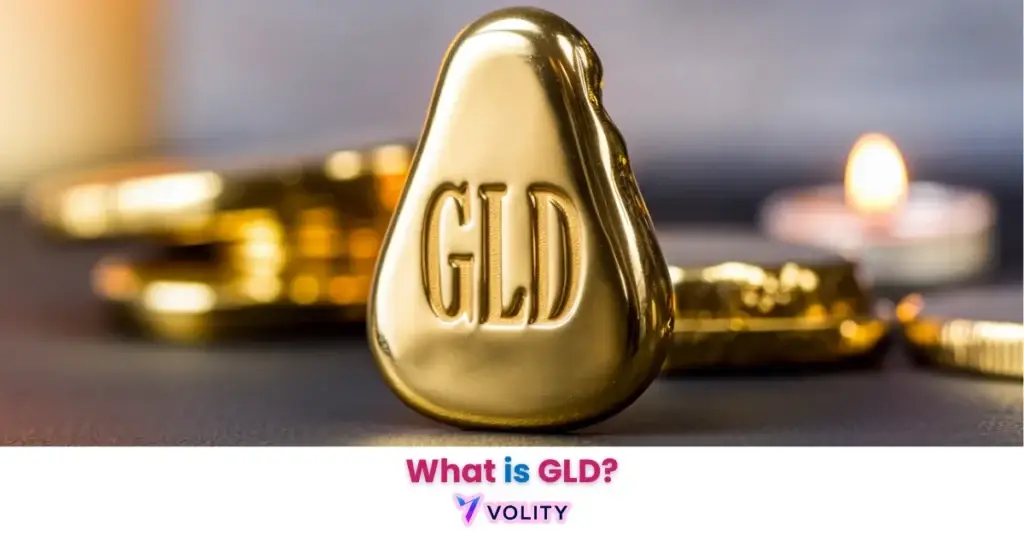
GLD is the SPDR Gold Shares ETF, the world’s largest physically backed gold fund. Each share represents a fraction of an ounce of gold stored in a secured London vault, so GLD tracks the spot gold price minus a 0.40% annual fee. It lets investors hold gold exposure in a normal brokerage account without owning or storing bullion.
SPDR Gold Shares (GLD) is an exchange-traded fund backed by physical bullion held in institutional vaults. GLD carries the inherent volatility of gold prices, a structural 0.40% annual expense ratio that creates long-term decay relative to spot prices, and minimal counterparty risk associated with the vaulting custodian’s integrity. GLD is not a substitute for understanding personal risk tolerance. Past performance is not indicative of future results. Capital at risk.
SPDR Gold Shares (GLD) is the world’s largest physically-backed gold exchange-traded fund, launched in 2004 to provide institutional and retail investors with frictionless access to precious metals. It holds allocated London Good Delivery gold bars in secure vaults, allowing shares to track the spot price without the logistical burdens of physical ownership. In 2026, GLD remains the premier vehicle for deep options liquidity, though long-term holders must account for its 0.40% annual expense ratio.
While understanding What is GLD is important, applying that knowledge is where the real growth happens. Create Your Free Crypto Trading Account to practice with a free demo account and put your strategy to the test.
SPDR Gold Shares (GLD) identifies as the foundational financial instrument that bridged the gap between physical bullion and modern equity markets. Launched in November 2004 by State Street and the World Gold Trust Services, this ETF allows investors to trade gold exposure instantly on the NYSE Arca without arranging secure transport or paying prohibitive dealer premiums. It provides a highly liquid proxy for the world’s oldest monetary asset.
The 2026 macroeconomic environment relies on GLD as a primary indicator of institutional sentiment. Analysts track the fund’s net inflows and outflows, utilizing this data to anticipate spot price movements driven by inflation fears and shifting central bank monetary policy.
What is the history and structural background of GLD?
GLD is a physically-backed trust that revolutionized the precious metals market by democratizing access to institutional-grade bullion. The 2004 launch eliminated traditional barriers to entry, storage fees, insurance costs, and physical transport logistics, that previously restricted gold ownership to ultra-high-net-worth individuals. State Street and World Gold Trust Services designed the structure to hold actual allocated London Good Delivery bars, meaning investors could access grade-A bullion through any standard brokerage account. Each share of GLD initially represented exactly 1/10th of an ounce of gold at launch, though this ratio slowly decays over time (State Street, 2026).
The innovation proved transformative: GLD’s assets under management grew from zero to over $80 billion by 2026, establishing it as the world’s premier physically-backed bullion vehicle. This growth demonstrates how frictionless equity-market access fundamentally altered the structure of precious metals ownership. Investors seeking deeper context on the distinction between holding mining equities versus direct bullion can reference Physical Gold vs Gold Funds, which explains the ownership mechanics in detail.
Ready to Elevate Your Trading?
You have the information. Now, get the platform. Join thousands of successful traders who use Volity for its powerful tools, fast execution, and dedicated support.
Create Your Account in Under 3 MinutesHow does GLD track the spot price of gold?
GLD tracking mechanics are a direct function of holding allocated physical gold bars that mirror global spot market valuations. The fund’s net asset value is published daily and reflects the exact market price of the bullion in its vaults, less accumulated expenses. HSBC Bank plc serves as the official custodian, maintaining a comprehensive list of every specific London Good Delivery gold bar held on behalf of shareholders. The mechanism is remarkably simple: when an investor buys a GLD share, they acquire fractional ownership of audited physical metal, and the price movement of that underlying bullion directly determines share price movement.
Expense ratio decay is a structural reality where the fund pays its operational costs by systematically selling fractional amounts of its gold reserves. GLD charges exactly 0.40% annually, roughly $4 per ounce of gold held. Rather than collecting cash from shareholders, the fund sells a proportional amount of its bullion daily to cover these fees, meaning the ounce-per-share ratio declines continuously. Over a 10-year holding period, a 0.40% annual decay compounds: a position worth $10,000 loses approximately $4,000 in purchasing power relative to holding physical bullion outright, even if the spot price remains flat.
Real trading example: A trader executed a long position using deep-in-the-money GLD call options to capture a breakout above $4,500/oz in early 2026. The high liquidity of GLD allowed for a frictionless exit a week later, securing a 12% options gain while avoiding the 0.40% annual drag that affects long-term holders. Past performance is not indicative of future results.
How does GLD compare to alternative gold ETFs?
Gold ETF benchmarks identify the specific cost and liquidity differences between GLD and its primary physically-backed competitors. The comparison reveals trade-offs: GLD dominates in options market depth and institutional liquidity, but competitors like SPDR Gold MiniShares (GLDM) and iShares Gold Trust (IAU) offer significantly lower expense ratios, critical advantages for long-term buy-and-hold strategies. Cost-conscious investors frequently construct barbell portfolios: holding GLD for tactical short-term positioning and deep ITM call option spreads, while maintaining core positions in GLDM for long-term wealth preservation.
| Entity | Attribute | Value |
| SPDR Gold Shares (GLD) | Expense Ratio | 0.40% Annually |
| SPDR Gold MiniShares (GLDM) | Expense Ratio | ~0.10% Annually |
| iShares Gold Trust (IAU) | Expense Ratio | 0.25% Annually |
| GLD | Options Liquidity | Highest in Class |
| HSBC Bank plc | Custodian Role | Vaults GLD bullion in London |
What factors influence GLD’s performance in 2026?
GLD performance is a direct reflection of macroeconomic variables including real interest rates, US Dollar strength, and global inflation data. Higher real yields (nominal rates minus inflation expectations) create structural headwinds for non-yielding assets like gold. When the Federal Reserve raises policy rates aggressively, investor opportunity cost of holding zero-yield bullion increases, depressing demand. Conversely, during periods of negative real yields or geopolitical instability, investors flee yield-bearing financial assets and accumulate GLD as a safe-haven hedge. The Risk Assets framework explains how GLD’s beta to equity markets fluctuates with changing monetary regimes. Investors weighing bullion against stocks can also see how gold performs versus the S&P 500 across full market cycles.
Understanding GLD’s macro drivers also requires familiarity with alternative gold vehicles. The Vanguard Gold ETF guide explains how mining equity strategies differentiate from direct bullion exposure, while the Short Gold ETF resource shows how inverse positions hedge against deflationary shocks. For foundational theory on capital cycle dynamics and institutional positioning, the Top 10 Books on Gold Trading provides essential reading.
Advanced Considerations: Authorized Participants and GLD’s Institutional Architecture
The institutional mechanics of GLD depend on Authorized Participants, large financial institutions permitted to create and redeem massive blocks of shares directly with the fund. This system ensures the GLD share price remains tethered to its underlying net asset value: if GLD shares trade at a premium to the bullion they hold, APs can arbitrage by redeeming shares for bars, then selling the bars at market prices. If GLD trades at a discount, APs can buy physical bars and deposit them to create new shares. This self-correcting mechanism has kept GLD trading within basis points of its fair value for over two decades.
Retail investors benefit from this institutional infrastructure without directly participating in it. The SPDR Gold Shares Official Prospectus provides complete transparency on the vaulting process, bar lists, and valuation methodology. The World Gold Council GLD Holdings tracks inflow and outflow data, signaling when institutional investors are accumulating or liquidating GLD. The LBMA Good Delivery Specifications details the precise metallurgical and weight standards that GLD bars must meet, ensuring quality and purity across the fund’s entire vaulted reserve.
Turn Knowledge into Profit
You have done the reading, now it is time to act. The best way to learn is by doing. Open a free, no-risk demo account and practice your strategy with virtual funds today.
Open a Free Demo AccountKey Takeaways
- SPDR Gold Shares (GLD) is the world’s largest physically-backed gold ETF, providing frictionless exposure to precious metal prices on major stock exchanges.
- Allocated bullion secures the GLD trust; every share corresponds to actual London Good Delivery gold bars held in audited institutional vaults.
- Expense ratio decay causes each GLD share to represent slightly less physical gold over time, as the 0.40% annual fee is paid in bullion.
- Options liquidity is GLD’s primary advantage over cheaper competitors, making it the preferred vehicle for institutional hedging and short-term tactical trading.
- Retail redemption of GLD shares for physical gold is practically impossible, as the mechanism is restricted to massive blocks traded by Authorized Participants.
- Macroeconomic drivers such as real yields and the strength of the US Dollar dictate the overall price trajectory of the GLD fund.
Frequently Asked Questions
This article contains references to SPDR Gold Shares (GLD), physically-backed gold ETFs, and Volity, a regulated CFD trading platform. This content is produced for educational purposes only and does not constitute financial advice or a recommendation to buy or sell any financial instrument. Always verify current regulatory status and platform details before using any trading service. Some links in this article may be affiliate links.
Want the basics first? Read our gold trading guide.