Wall street’s AI trade is spreading beyond the obvious winners
Wall Street opened the week with a crowded AI trade and a nervous macro backdrop. Yet the tradable map looks cleaner than the noise suggests.
Memory chips are becoming the pressure point. Banks are pausing near record highs. Bitcoin is coiling around a familiar stress zone. Meanwhile, analysts and dealmakers are doing plenty of the lifting in smaller names.
For traders, the trick is not to own every story. It is to know which bucket each one belongs in – momentum, mean reversion, income, M&A or structural growth.
Memory chips take the spotlight
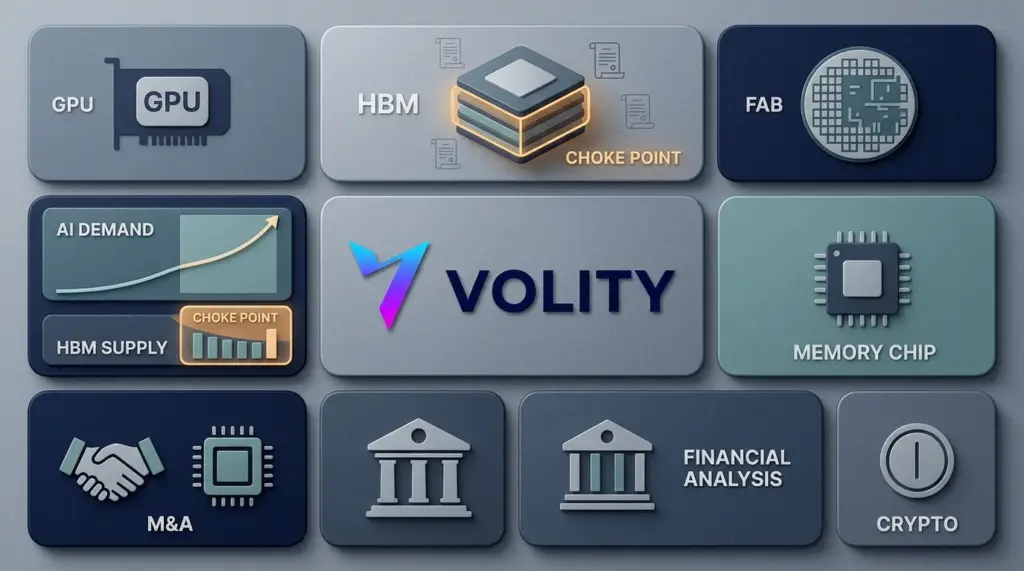
The AI trade is no longer just a question of who sells the fastest graphics processors. Increasingly, it is about who supplies the memory needed to make those processors useful.
Micron, ticker MU, has become the cleanest U.S. way to trade that shift. Demand for high-bandwidth memory, or HBM, keeps outrunning supply. Every fresh shortage headline now matters for the stock.
Customers, including Nvidia, have locked in roughly $22 billion of long-term take-or-pay memory arrangements. In plain English, buyers are paying to secure capacity before rivals grab it.
That changes the tone around Micron. This is no longer just a cyclical chip stock waiting for the next PC replacement cycle. Instead, traders now treat it as an AI infrastructure bottleneck.
However, that brings risk. Shares have already made a huge move, and sharp gains invite profit-taking. The next phase depends on whether memory pricing keeps rising faster than expectations.
Nvidia, ticker NVDA, still anchors the whole ecosystem. Yet its next leg also depends on suppliers such as Micron, SK Hynix and Samsung delivering enough HBM for future platforms.
Meanwhile, Taiwan Semiconductor Manufacturing, ticker TSM, remains the foundry spine of the trade. It makes advanced chips for Nvidia, Apple and other giants. It also carries geopolitical risk in one ticker.
As a result, TSM trades on more than earnings. U.S.-China headlines, smartphone demand and AI capex all push the shares around.
- MU: a memory shortage trade, but vulnerable after a steep run.
- NVDA: still the anchor, though supply constraints now matter more.
- TSM: structural AI exposure with a geopolitical premium attached.
Jpmorgan pauses near the summit
JPMorgan, ticker JPM, gives traders a different problem. The story is strong, but the chart is no longer cheap.
The stock has pushed from the low $200s in 2024 into the mid-$300s. Recently, it has been carving out fresh highs while investors continue to reward scale, capital strength and loan discipline.
Management also offered real support. JPMorgan has authorised a $50 billion buyback and lifted its dividend to $1.65 a share.
Still, technicals look stretched. The stock trades roughly 7 to 8 percent above its 20-day moving average and about 10 percent above its 200-day line.
That does not mean the rally must end. However, it does argue against chasing every green candle. For short-term traders, JPM now looks more like a digestion setup than a clean breakout.
The better question is simple. Can it hold above prior breakout levels while rates and growth expectations wobble?
Bitcoin tests its pressure zone
Bitcoin remains a volatility instrument first and a macro argument second. At the moment, both roles matter.
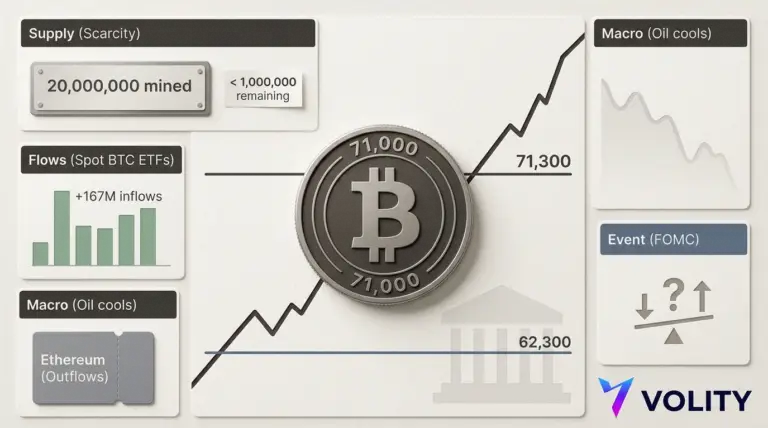
The $59,000 to $60,000 area has become the key pocket for traders. Around that zone, leverage tends to reveal itself quickly. Liquidations can turn orderly selling into a hard flush.
However, the same area can also produce sharp snap-backs. When positioning gets too one-sided, even a mild macro relief move can force fast covering.
So the better trade may not be a heroic directional call. Instead, Bitcoin looks suited to range trades, failed breakdowns and option-driven intraday reversals.
Watch the dollar, real yields and risk appetite in the Nasdaq. Together, they still decide whether crypto gets oxygen or another squeeze lower.
Deal flow lifts the semiconductor middle
Away from the mega-cap AI crowd, mid-cap semiconductors are moving on a more old-fashioned force: M&A.
Synaptics, ticker SYNA, has an all-stock transaction in focus with ON Semiconductor, ticker ON. That puts SYNA into deal-premium territory, where the spread matters more than the latest product pitch.
For SYNA, traders will watch timing, approvals and any hint of execution risk. Even small doubts can widen the spread.
ON Semiconductor faces a different test. Investors must decide whether the deal improves long-term economics or merely adds dilution and integration work.
Analyst support has helped the acquirer’s case. Still, ON needs buyers to believe the strategic fit is worth the near-term complexity.
- SYNA: trades like a deal-spread and approval story.
- ON: trades on strategic fit, dilution and analyst confidence.
Retail momentum finds new fuel
Speculative pockets are still alive, even with macro nerves high.
Robinhood, ticker HOOD, continues to sit at the junction of stocks, options and crypto. A bullish analyst initiation has added attention, but the real driver remains retail risk appetite.
When speculative volumes rise, HOOD usually responds quickly. Conversely, weak breadth and falling crypto prices can drain the trade just as fast.
DraftKings, ticker DKNG, has a different catalyst. Its DKeX prediction-markets platform pushes the company beyond traditional sports betting and into a more controversial growth lane.
That creates upside if investors treat DKeX as a serious new vertical. However, regulatory risk could cap enthusiasm. Prediction markets do not sit quietly inside existing betting rules.
The quantum corner is even more combustible. One small-cap, INFQ, has been flagged by Wedbush as meaningfully mispriced, with about 25 percent upside. Another space-adjacent name has drawn attention because of a board-approved SpaceX stake.
These are not core holdings for the cautious. They are headline tickets, built for traders who accept gaps, thin liquidity and sudden reversals.
Energy names look overbought
Energy has been quieter than AI, but several names now flash short-term heat.
Excelerate Energy, ticker EE, Archrock, ticker AROC, and World Kinect, ticker WKC, have all shown RSI readings above 70. That usually signals overbought conditions.
Importantly, overbought does not mean broken. Strong stocks can stay stretched when the sector has a bid.
Traders should still watch for failed highs, weak closes and intraday reversals. These setups often reward patience more than fresh breakout buying.
If crude and gas-linked sentiment stay firm, sideways digestion may be enough. If macro risk worsens, these become mean-reversion candidates.
Income trades regain attention
Not every opportunity needs a shouting match. Some of the more useful setups now sit in dividend and rate-sensitive names.
AllianceBernstein, ticker AB, Ladder Capital, ticker LADR, and Artisan Partners, ticker APAM, have drawn renewed attention from investors looking for income.
These are not usually fast-money charts. Instead, they work when markets reward cash flow, distributions and balance-sheet steadiness.
Meanwhile, upgrades across Essex Property, ticker ESS, American Homes 4 Rent, ticker AMH, Americold, ticker COLD, and Barnes & Noble Education, ticker BNED, offer a different angle.
Those names can catch relative-strength bids when rate expectations soften. However, they remain sensitive to Treasury moves, especially at the long end.
Macro dashboard still rules the tape
The day’s real referee remains the macro board.
SPY tracks broad equity risk. QQQ shows whether tech concentration is helping or hurting. DIA gives a cleaner read on old-economy demand.
Meanwhile, GLD shows how seriously investors are hedging inflation and policy risk. TLT captures duration appetite, which matters for banks, REITs, dividend stocks and speculative growth.
When QQQ rises and TLT steadies, traders usually reach for momentum. When TLT falls hard and GLD rises, the tape turns more defensive.
Key takeaways
- AI has widened: memory suppliers now matter almost as much as GPU leaders.
- JPM looks stretched: strength is intact, but the better setup may be consolidation.
- Bitcoin is tactical: the $59,000 to $60,000 zone is built for volatility trades.
- M&A matters: SYNA and ON are driven by deal mechanics and strategic belief.
- Speculation remains alive: HOOD, DKNG and quantum names need tight risk control.