Quick answer
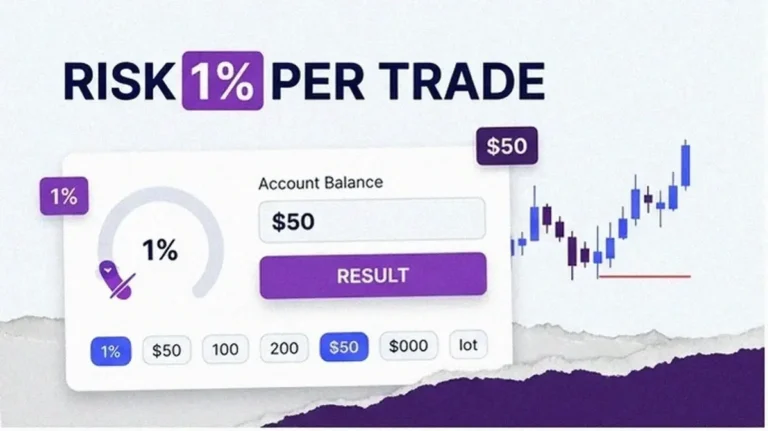
To avoid blowing up your trading account, risk only a small percentage, often 1 to 2%, per trade, always use a stop-loss, avoid excessive leverage, and never revenge-trade after a loss. Most accounts are destroyed by oversized positions and emotional decisions, not bad analysis. Protecting capital so you can keep trading matters more than any single winning trade.
Investing in financial products involves risk. Losses may exceed the value of your original investment.
How Not to Blow Up Your Account in the First Month: 3 Survival Rules for New Traders
Most beginners step into trading with grand expectations. They dream of overnight profits, financial independence, and finally breaking free from the 9-to-5 grind.
But reality hits hard: almost 9 out of 10 new traders wipe out their first account within a month.
It’s not because trading is unwinnable. It’s because rookies keep stumbling into the same traps-betting too much on a single idea, skipping the plan, and letting emotions call the shots.
The good news? You don’t have to be another cautionary tale. With a bit of discipline, you can protect your money, learn with less stress, and actually give yourself a fighting chance to succeed long-term.
This guide lays out three simple survival rules plus a pre-trade checklist to keep you steady.
By Volity Editorial, Volity research desk.
What our analysts watch: Three behavioural metrics separate accounts that survive month one from accounts that do not. Average risk-per-trade as a percentage of equity, measured across the first 20 trades, predicts blow-up risk far more reliably than any directional accuracy figure. Position-sizing variance (the ratio of largest to smallest position) flags revenge trading and martingale behaviour before the equity curve does. And stop-loss discipline rate, measured as the fraction of trades closed at the pre-defined stop versus moved or removed mid-trade, is the single most diagnostic figure on a new trader’s journal. These three filter most of the structural risk before the market gets a chance to.
Frequently asked questions
What does the regulatory data actually say about retail trader losses?
European regulators require brokers to publish CFD account loss percentages every quarter, and the figures consistently sit between 70 and 85 percent of accounts losing money over the disclosed period. The ESMA product intervention framework for retail CFDs introduced the standardised disclosure that drives those figures, and the headline is consistent across regulated venues. The structural takeaway: most of the gap between the winning minority and the losing majority is risk management, not market timing or system selection.
How much capital should a new trader actually start with?
Enough that one percent risk-per-trade is a meaningful absolute number, which usually means at least 1,000 dollars or euros for a serious learning account, and ideally 2,000 to 5,000 to absorb a normal early drawdown without forcing leverage. The Investopedia coverage of the one percent risk rule walks through the maths with worked examples. Smaller accounts can work for demo and paper-trading, but the psychology of trading meaningful absolute amounts is part of the skill, and starting under-funded usually compounds the leverage problem rather than solving it.
How do I find a regulated broker for the first live account?
Verify regulation against a tier-one authority before anything else. The FCA ScamSmart warning list publishes firms operating without authorisation, and equivalent registers exist for CySEC, ASIC, BaFin, and SEC/FINRA. Check segregated client funds, negative-balance protection, transparent fee disclosure, and a clean disciplinary record. Volity, accessed via UBK Markets and supervised by CySEC under licence 186/12, applies the ESMA retail CFD framework with segregated funds and negative-balance protection by default.
The Nightmare of the First Month
Ask almost any trader with scars and stories, and you’ll hear something like this:
“I started with $1,000. Within weeks, it was down to fifty bucks. I felt duped by the market-and by myself.”
Why does this play out so often?
- Overconfidence: “This setup can’t lose.”
- Greed: “If I go all in, I’ll double my account tonight.”
- Fear: “It’s going against me… but maybe it’ll bounce.”
- No structure: “Eh, looks good enough, let’s buy.”
Markets are ruthless toward those mistakes. The first month becomes a cemetery of deposits.
But dodge these traps early, and you don’t just save money-you spare yourself years of bitterness.
Rule #1: Don’t Risk the Farm on a Single Trade
Anchor on forex risk management; for the reward-to-risk math, our reward-to-risk ratio guide.
This is the top account killer. The rookie logic goes: “If I bet it all on the right setup, I’ll score big.”
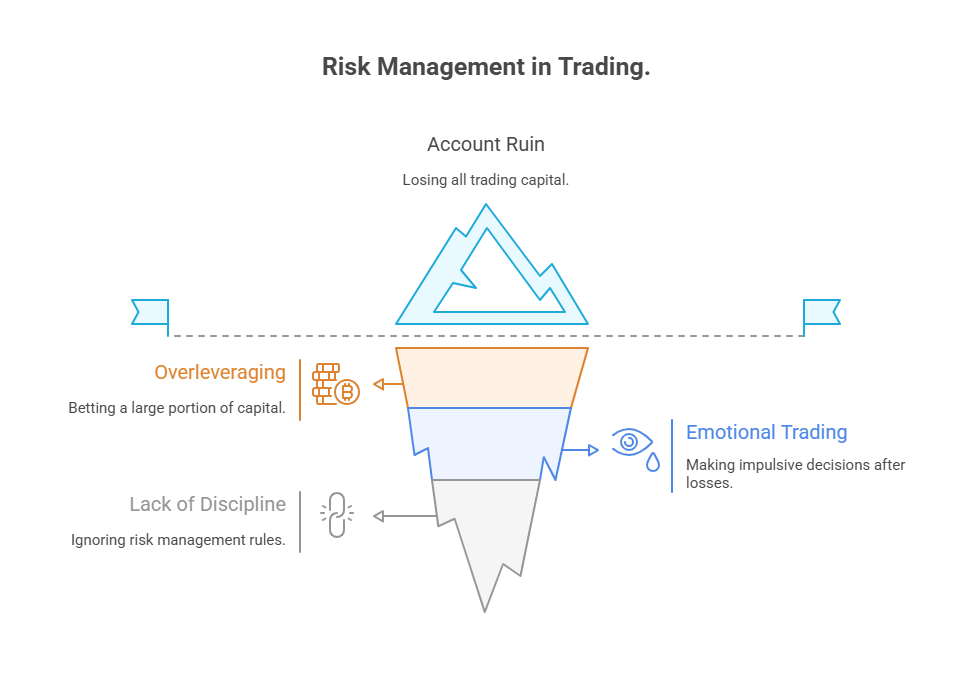
But even the cleanest setups fail. If you’ve staked 50%, 70%, or your whole account, one bad move = instant ruin.
Professional traders never wager more than 1-2% on a single trade.
Imagine this:
- Account size: $1,000
- Max risk per trade: $20
Five losses in a row? You’re down only $100, still in the game.
Now flip it. Risk $500 on one trade, and a single loss guts half your capital. Emotions flare, you chase, and the downward spiral begins.
📌 Takeaway: Your primary job isn’t winning big. It’s staying alive long enough to learn.
Rule #2: Always Use a Stop-Loss
For stop placement that doesn’t get hunted, see how to set a stop loss.
The second big rookie error: trading without a stop.
The thought goes, “I’ll just hold-it’ll come back.” Sometimes it does. Usually, it doesn’t.
Without a stop, what should’ve been a small, controlled hit mutates into a disaster.
Pros decide their exit before they even enter.
Example:
- You buy gold at $1900.
- Stop-loss at $1880.
- If wrong, you lose $20 (2% of your $1,000).
No big deal.
Without the stop? Gold slides to $1870. Suddenly, you’re down $30.
📌 Takeaway: Every pro takes losses. The difference is, they know the size of the wound before it happens.

Rule #3: Trade Your System, Not Your Nerves
Markets are designed to mess with your head.
Price rockets upward, your pulse spikes: “I have to jump in!” You buy the top. Minutes later, it reverses.
Or, you’re in small profit but anxious: “Better grab it before it vanishes.” You exit too early-and then watch the trade run in your favor without you.
Pros don’t wing it. They follow systems.
A system doesn’t need to be complex:
- Enter only if price breaks key support/resistance.
- Confirm with an indicator (say RSI > 50 for buys).
- Always use stop-loss with fixed risk.
- No signal = no trade.
📌 Takeaway: Gamblers chase feelings. Traders execute rules.

Pre-Trade Checklist
(Stick This Next to Your Screen)
Before clicking Buy or Sell, ask yourself:
☑ Am I risking 2% or less of my account?
☑ Did I set entry, stop, and take-profit?
☑ Is my risk/reward at least 1:2?
☑ Does this match my system’s rules?
☑ Am I calm-not trading out of fear or FOMO?
☑ Did I check the news calendar?
It may feel tedious. But this list is what separates the survivors from the blown-up accounts.
A Beginner’s Story
Take Alex, a 35-year-old IT guy in Berlin. He opened a CFD account with €2,000-smart, motivated, eager.
Week 1: He tripled his position size on EUR/USD because it “looked obvious.” Lost €400.
Week 2: Determined to win it back, he doubled down. Another loss. Now down 50%.
Week 3: Panicked, he held a Gold Trading Leverage 2026: Margin Calls & Risk Guide" data-tooltip-desc="Leverage in gold trading 2026: 1:20 retail limits, margin calls, forced liquidation risk, and safe leverage strategies for profitable position..." class="internal-link" href="https://volity.io/gold/using-leverage-in-gold-trading-pros-and-cons/">gold trade without a stop. Overnight move cleaned out nearly everything.
By week 4, Alex quit-convinced trading was a scam.
But it wasn’t trading that scammed him. It was his approach.
If Alex had stuck to the three rules, his account would’ve survived. He could’ve kept learning instead of walking away bitter.
👉 The market didn’t crush Alex. His lack of discipline did.
The Better Path
Now imagine the flip side.
End of month one: your deposit is intact. Losses are small and managed. Wins feel steady, not like a lottery ticket.
By month six, you’re not “trying strategies” at random-you’re following a clear plan. The account is growing slowly, but safely.
That’s not a fantasy. That’s what happens when survival comes before shortcuts.
Why Beginners Need This
Searches like:
- how not to blow trading account
- beginner trading mistakes
- risk management in trading
- CFD trading tips
…all circle back to one truth. New traders don’t really want a jackpot. They want to avoid catastrophe.
This guide answers that need, in plain language, with relatable examples-and a free checklist to boot. That’s how you win trust, not just clicks.
The Bottom Line
Blowing up your first account isn’t some rite of passage. It’s a mistake-and a preventable one.
Remember the rules:
- Risk ≤ 2% per trade.
- Always use a stop.
- Trade the system, not emotions.
And check yourself before every entry.
👉 Do that, and your first account won’t be a casualty. It’ll be the start of a career.
Volity operates a trading platform and also publishes educational and analytical content about trading. The content on this page is for educational purposes only and should not be considered financial advice. Volity may benefit commercially when readers open trading accounts through links on this site.
Our content is produced and reviewed under documented editorial standards; see our comparison and review methodology.