Investing in financial products involves risk. Losses may exceed the value of your original investment.
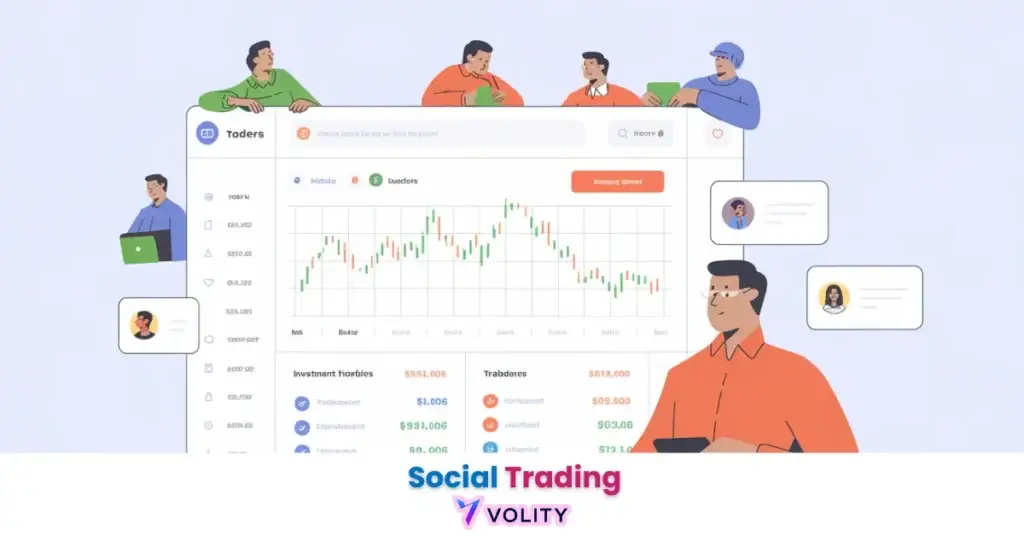
Social trading changes how you invest. It uses the collective wisdom of online trading communities.
It gives you a chance to see what expert traders do. You see real-time market data and proven strategies.
Do you want to learn from skilled traders? Social trading makes investing simple.
It connects you to a community of traders. You gain insights and make better decisions.
It joins education and automation into one platform.
Do you feel ready to start your market journey? Social trading is a type of investing that lets traders copy the strategies of other traders. It’s a way to learn about trading and investing by observing and replicating the actions of more experienced traders.
This article explains social trading. It shows how the system works and points out its benefits and challenges. You get clear steps and useful tips. Join the conversation and explore a new way to trade.
While understanding Social Trading is important, applying that knowledge is where the real growth happens. Create Your Free Forex Trading Account to practice with a free demo account and put your strategy to the test.
How Social Trading Works?
Social trading connects you to expert traders. The platform copies their trades directly. You watch your portfolio update in real time. Data appears on your screen.
According to FOREX.com, social trading attracts many beginners. A study by one competitor shows social trading holds only 3% of the total forex traded volume.
Do you see the potential of this growing market? An example may help you understand.
John copied trades from Michael, a skilled trader. He earned profits on a successful stock trade.
The system shows clear performance metrics.
Exness displays profit, loss, and risk details on screen. The platform updates you with each trade. Do you value a transparent trading experience? Social trading offers a fast and clear view of the market.
Social Trading Strategies
Social trading offers multiple strategies. You choose based on risk tolerance and goals. A clear plan helps maximize profits. What approach suits you best?
Copy Trading
This method allows you to replicate another trader’s moves. eToro reports that 78% of new traders prefer copy trading. A beginner selects a skilled trader, copies trades, and watches results. Success depends on choosing the right expert.
Mirror Trading
This strategy automated trade execution. The system follows pre-set strategies.
Forex.com states that professional traders often use mirror trading for consistency. The system removes emotional decisions and ensures discipline.
Many platforms now integrate algorithmic systems to automate copy execution, combining human expertise with AI precision.
Signal-Based Trading
Traders receive real-time trade alerts. Experts share insights, and you decide when to execute.
According to Exness, traders using signals improve decision-making by 60%. Do you prefer flexibility in trade execution?
Signal-based trading provides control with expert guidance.
Every strategy carries risks. Performance varies based on market conditions. A clear plan and ongoing learning improve chances of success. Which strategy aligns with your trading style?
Ready to Elevate Your Trading?
You have the information. Now, get the platform. Join thousands of successful traders who use Volity for its powerful tools, fast execution, and dedicated support.
Create Your Account in Under 3 MinutesGetting Started With Social Trading
If you are starting social trading, it requires careful planning. A structured approach helps minimize risks and maximize potential gains. Where should you begin?
So, choose a Reliable Platform
Not all social trading platforms offer the same benefits. eToro, ZuluTrade, and NAGA rank among the top choices. According to Statista, eToro had over 30 million users in 2024. Research platform fees, security, and available trading options before signing up.
Select Experienced Traders to Follow
Success depends on choosing the right traders. You look for traders with consistent profits, low drawdowns, and transparent strategies. Forex.com states that 65% of profitable social traders follow experts with at least three years of experience. You need to check their past performance and risk level before copying trades.
Start with a Demo Account
A demo account allows risk-free practice. Many platforms offer virtual funds to test strategies. According to IG Group, traders who use demo accounts before live trading have a 40% higher success rate. Are you ready to test different strategies before investing real money?
Monitor and Adjust Your Trades
Markets change constantly. If you are reviewing your copied trades ensures long-term success. Experts at Investopedia recommend checking performance weekly and adjusting as needed. Avoid blindly following traders without assessing risks.
Understand the Risks
Social trading simplifies investing but carries risks. Even top traders experience losses. According to BabyPips, 80% of new traders fail due to poor risk management. Set stop-loss limits and diversify investments to reduce exposure.
No doubt, starting with the right approach increases the chances of success. Have you identified a platform and a trader to follow? Taking the first step wisely makes all the difference.
Benefits of Social Trading
Social trading provides easy access to the market, even for beginners.
You don’t need years of experience to get started. Simply follow experienced traders and copy their trades.
- Learn through observation. Watch expert traders in real time to see their strategies in action.
- Social trading helps you learn faster. Forex.com reports that 70% of new traders pick up skills more quickly.
- Save time by copying successful traders. No need to spend hours analyzing charts or news.
- Diversify your investments. If you follow multiple traders, it spreads risk and enhances long-term growth. Investopedia highlights this benefit. You’ll even find active precious metals discussion among social traders who explore gold, silver, and platinum as part of their diversified strategies.
- Become part of a community. Engage with other traders, get advice, and boost your confidence.
- So, get started with a small investment. Some platforms allow you to trade for as little as $10.
- Increase your chances of profits. Statista notes that 60% of social traders earn higher returns than independent traders.
- Reduce emotional trading. Follow proven strategies and avoid impulsive decisions that can hurt your trades.
Risks and Challenges
| Risk/Challenge | Explanation | Mitigation |
| Dependence on Others | See, relying on another trader’s strategies can backfire if they make poor decisions. | Always research the traders you follow. Choose those with consistent success. |
| Limited Control | You lose some control over your trades since you copy others’ actions. | Diversify your portfolio and follow multiple traders for a balanced approach. |
| Potential Scams | Not all traders or platforms are trustworthy, and scams can occur. | You should choose regulated brokers and platforms with a good reputation. |
| Emotional Decisions | You see, following others’ trades can sometimes lead to impulsive or emotional decisions. | Stick to a set plan, avoid panic, and never make hasty trade decisions. |
| Market Volatility | Sudden market changes can affect all traders, including those you follow. | You should stay informed about market trends and set realistic goals. |
| Fees and Commissions | Some platforms charge additional fees for copying other traders, reducing overall profits. | Compare platforms for fees before committing. |
| Past Performance Isn’t Indicative | Just because a trader was successful in the past doesn’t guarantee future profits. | Regularly review the strategies you follow and adjust as necessary. |
Real-Life Examples
eToro reported that 78% of copied trades ended in profit in 2023. Many beginners earned steady returns by following experienced traders.
Jay Edward Smith, a well-known trader on eToro, attracted thousands of followers. His strategy focused on risk management, which helped many copy his trades successfully.
Some followers saw double-digit percentage gains. ZuluTrade shared data showing that top-ranked traders achieved an average return of 25% annually.
A trader named “The Trader’s Mind” built a strategy that reduced losses during market crashes. Many followers avoided significant setbacks by copying his trades.
A Financial Times study in 2022 found that social traders who followed diversified portfolios performed 30% better than those relying on single assets. This kind of collective pattern analysis bridges social and quant trading, where crowd sentiment feeds into data-driven predictive models.
Many investors gained higher returns by copying multiple traders instead of just one. Some traders faced challenges. A Reddit user shared his experience of losing $5,000 after copying a high-risk trader without checking their track record. Many traders make similar mistakes by following trends without proper research.
Social trading offers opportunities, but smart decisions matter. If you are researching traders, diversifying strategies, and tracking market trends, it can improve success. Are you ready to explore social trading and find strategies that work for you?
Turn Knowledge into Profit
You have done the reading, now it is time to act. The best way to learn is by doing. Open a free, no-risk demo account and practice your strategy with virtual funds today.
Open a Free Demo AccountConclusion
Social trading makes investing easier for beginners. Many traders gain insights, follow experts, and reduce risks.
Platforms like eToro and ZuluTrade offer opportunities to learn and earn without deep market knowledge. Many investors succeed by choosing experienced traders and managing risks.
Some face losses by copying high-risk strategies without research. Smart decisions matter.
Success in social trading depends on strategy and awareness. Moreover, learning market trends, analyzing expert traders, and diversifying investments improve results. Are you ready to explore social trading and make informed choices?
FAQs
What our analysts watch: Three filters separate copy-worthy leaders from drawdown traps. Track record duration, where anything under 12 months is too short to distinguish skill from luck (24 months across multiple regimes is the realistic minimum).
Maximum drawdown relative to return, since a 50 percent annual return paired with a 40 percent drawdown is far less attractive than a 25 percent return with a 12 percent drawdown. Position sizing consistency, where a leader scaling up dramatically after a string of wins is signalling overconfidence rather than process.
Apply those three before allocating.
Related guides
- Copy trading
- Automated forex trading
- Best forex trading platforms 2026
- Risk management in forex trading
- Mobile trading
Quick takeaways
Here is what matters most for this guide.
- Disciplined traders build edge from setup, sizing, and exit rules.
- Risk per trade, daily loss caps, and journal review separate pros from amateurs.
- Furthermore, multi-asset exposure compounds skill across forex, crypto, and indices.
Therefore, read on for the full breakdown below.
Volity operates a trading platform and also publishes educational and analytical content about trading. The content on this page is for educational purposes only and should not be considered financial advice. Volity may benefit commercially when readers open trading accounts through links on this site.
Our content is produced and reviewed under documented editorial standards; see our comparison and review methodology.