Investing in financial products involves risk. Losses may exceed the value of your original investment.
The Crypto Trading Starter Kit
A plain-English PDF: what to check before you trade, how orders and risk really work, and the mistakes to skip. Get it free.
While understanding Hot Wallet is important, applying that knowledge is where the real growth happens. Create Your Free Crypto Trading Account to practice with a free demo account and put your strategy to the test.
Understanding Hot Wallets: The Basics
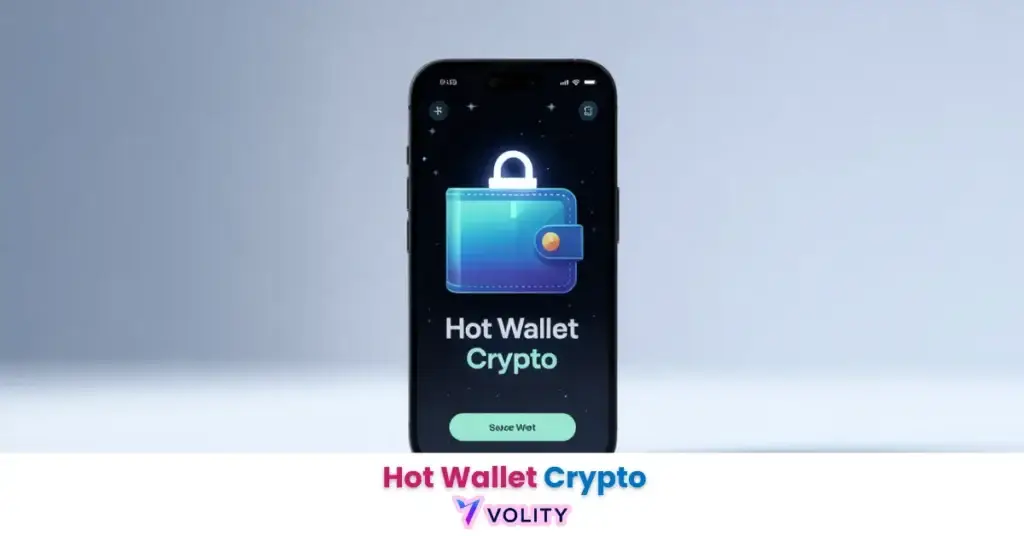
A hot wallet is a cryptocurrency wallet that is consistently connected to the internet, allowing for convenient and fast transactions. It stores the private keys to your digital assets online, making it readily accessible for trading and everyday use. While offering convenient storage, its internet connectivity necessitates robust security practices.
In the fast-paced world of cryptocurrency, choosing the right storage solution for your digital assets is paramount. Understanding hot wallets is crucial for anyone looking to engage with crypto, from daily trading to managing decentralized applications.
What is a Hot Wallet?
Always Online, Always Ready
For DeFi access, hot wallets connect to protocols like Aave for lending and borrowing.
A hot wallet is a cryptocurrency wallet that is consistently connected to the internet. This online connection allows for immediate access and rapid execution of crypto transactions, making it a popular choice for active traders. It is termed “hot” due to its constant online presence, which facilitates quick interaction with the blockchain.
These wallets hold the private keys necessary to access and manage your digital assets. Unlike traditional bank accounts, a crypto wallet does not store the cryptocurrency itself but rather the cryptographic information that proves ownership. This allows users to send and receive various cryptocurrencies, including Bitcoin (BTC) and Ethereum (ETH).
Public Keys, Private Keys, and the Blockchain
Every cryptocurrency wallet, including hot wallets, operates using a pair of cryptographic keys: a public key and a private key. The public key functions as your wallet’s address, similar to an email address, allowing others to send digital assets to you. It is safe to share this address.
Conversely, the private key is a confidential string of characters that grants access to spend the cryptocurrency associated with your public address. This key must be kept secret and secure at all times.
When you initiate a transaction, your hot wallet uses your private key to cryptographically sign the transaction on the blockchain, verifying your ownership before funds are transferred. This process ensures the integrity and security of the decentralized ledger.
Mobile, Desktop, and Exchange-Based
Hot wallets come in several forms, each offering distinct advantages in terms of convenience and accessibility. Mobile wallets are smartphone applications that provide on-the-go access to your digital assets. They are highly convenient for daily transactions and often integrate with decentralized applications (DApps).
Desktop wallets are software programs installed directly onto your computer, offering a secure environment if the device itself is protected. Browser extension wallets integrate directly into web browsers, providing seamless interaction with Web3 applications. Finally, exchange wallets are custodial wallets hosted by cryptocurrency exchange platforms, where the exchange manages your private keys.
Ready to Elevate Your Trading?
You have the information. Now, get the platform. Join thousands of successful traders who use Volity for its powerful tools, fast execution, and dedicated support.
Create Your Account in Under 3 MinutesHot Wallets vs. Cold Wallets: Key Differences
Online vs. Offline
The primary distinction between a hot wallet and a cold wallet lies in their connectivity to the internet. Hot wallets are always online, facilitating instant transactions and interactions with the blockchain. This constant connectivity, while convenient, inherently exposes them to online threats.
In contrast, cold wallets are offline storage solutions that keep your private keys isolated from the internet. This includes hardware wallets and paper wallets. Their offline nature makes them significantly more resistant to online security breaches, positioning them as a preferred option for long-term, large-sum storage of digital assets.
A Detailed Comparison
Hot wallets prioritize convenient storage and accessibility, ideal for frequent trading or small amounts of crypto. However, they are generally considered less secure than cold wallets for long-term, large-sum storage due to their constant internet connection. This makes them targets for hackers and phishing attempts.
Cold wallets offer superior security by keeping private keys offline, minimizing exposure to cyber threats. This comes at the cost of immediate accessibility, as transactions require bringing the device online. The choice often depends on a user’s specific needs: frequent transactions versus long-term HODLing.
Custodial wallets, often found on cryptocurrency exchange platforms, mean a third party manages your private keys. Non-custodial wallets, like many mobile or desktop hot wallets, give you full control over your seed phrase and private keys, embodying the “not your keys, not your crypto” principle.
| Feature | Hot Wallet | Cold Wallet |
| Connectivity | Online | Offline |
| Security | Lower (online risk) | Higher (offline isolation) |
| Convenience | High (instant access) | Lower (manual steps) |
| Use Case | Active trading, small sums | Long-term storage, large sums |
| Key Control | User or exchange | User only |
| Cost | Mostly free (software) | Hardware cost |
Hot Wallet Risks, Best Practices & Safeguards
Why Hot Wallets Require Vigilance?
While convenient, hot wallets are susceptible to various security risks due to their internet connection. Phishing attacks and malware are constant threats, aiming to steal private keys or wallet credentials. This inherent vulnerability means users must remain vigilant and proactive in their security measures.
Exchange wallets, being custodial, also carry the risk of a centralized cryptocurrency exchange being hacked, leading to potential loss of user funds.
Essential Security Practices for Hot Wallet Users
To safeguard your digital assets in a hot wallet, several crucial practices are recommended. Always use strong, unique passwords for your wallet and any associated accounts. Additionally, implementing Two-Factor Authentication (2FA) significantly reduces the risk of unauthorized access to custodial hot wallets, such as those on cryptocurrency exchange platforms.
For non-custodial wallets, the seed phrase is your ultimate recovery key. Losing a seed phrase typically means irreversible loss of funds, as there is no central authority to restore access. Store your seed phrase offline in a secure, private location, never digitally.
Regularly update your wallet software to benefit from the latest security patches.
Multi-Signature and Social Recovery Options
Beyond basic security, advanced users can explore more robust protective measures. Multi-signature wallets, or multi-sig wallets, require multiple private keys to authorize a transaction. This means that even if one key is compromised, funds remain secure, as additional signatures are needed. Multi-sig setups are particularly useful for organizations or individuals managing substantial digital assets.
Another innovative security layer is Social Recovery. This method allows users to designate trusted “guardians” who can help regain access to a wallet if the seed phrase is lost or forgotten. Unlike traditional recovery, it doesn’t grant guardians direct access to funds but rather helps approve a recovery process.
Choosing a Hot Wallet: Factors & Recommendations
Key Factors to Consider Before Choosing
Selecting the ideal hot wallet involves evaluating several critical factors to match your specific needs. Security features should be paramount, including encryption, Two-Factor Authentication (2FA) options, and audit history. The user interface and overall convenient storage also play a significant role; a wallet that is intuitive and easy to navigate improves the user experience.
Consider the range of supported cryptocurrencies; some wallets specialize in specific ecosystems, while others offer broad support for various digital assets. For those engaging with decentralized finance (DeFi) or NFTs, DApp compatibility and Wallet Connect integration are essential. Finally, transparent transaction fees and responsive customer support are vital for a reliable wallet experience.
Top Hot Wallets for Beginners and Specific Use Cases
- For beginners, user-friendly mobile wallets like Trust Wallet or Coinbase Wallet often provide an excellent starting point.
- Their intuitive user interface simplifies the initial learning curve.
- For active trading, exchange wallets on platforms like Binance or Kraken offer deep liquidity and integrated trading tools.
- However, remember these are custodial.
- Choosing the “best” wallet depends entirely on your primary use case and comfort with self-custody.
How to Set Up & Manage Your Hot Wallet
Step-by-Step Hot Wallet Setup
Setting up a hot wallet typically involves a few straightforward steps, especially for software wallet applications. First, download the official wallet application from a trusted source, such as the app store or the developer’s website. Next, choose to “Create a new wallet” and follow the prompts.
You will then be presented with your seed phrase, a sequence of 12 or 24 words.
CRITICAL: Write down your seed phrase on paper and store it in multiple secure, offline locations. Never take a screenshot or store it digitally. After verifying your seed phrase backup, you will set a strong password. This password encrypts your wallet locally, providing a layer of protection on your device.
Sending and Receiving Crypto with Your Hot Wallet
To receive digital assets into your hot wallet, locate your public address within the application. This is typically found under a “Receive” or “Deposit” section and often includes a QR code for easy scanning. Share this address with the sender. Always double-check that the address is correct and matches the cryptocurrency you intend to receive.
Sending crypto involves selecting the asset, entering the recipient’s public address, and specifying the amount. Be mindful of transaction fees, also known as network fees, which are paid to validators on the blockchain and not to the wallet provider. On Ethereum and other EVM-compatible chains, these are specifically called Gas Fees.
Always review all transaction details before confirming to prevent irreversible errors.
Common Hot Wallet Challenges & Solutions
Many beginners struggle with the psychological and practical aspects of securing and managing hot wallets, leading to common (and avoidable) pitfalls. Users frequently ask, “I lost my crypto because my hot wallet got hacked, how to prevent this?” This fear often stems from a lack of understanding regarding comprehensive security strategies.
Those questions have concrete answers, and they are worth stating plainly.
One common challenge is the fear of losing access to funds if a device with a mobile wallet is lost or stolen. Users ask, “What happens if I lose my phone with my hot wallet on it?”
The answer lies in the seed phrase; as long as your seed phrase is securely backed up offline, you can recover your wallet on a new device.
Another significant pain point revolves around the perceived vulnerability of hot wallets to security breaches. To prevent hacks, adopting robust practices like unique passwords, Two-Factor Authentication (2FA), and being wary of phishing attempts is crucial.
For improved protection, users can consider integrating their hot wallet with a hardware wallet for signing transactions, creating a hybrid security model.
Turn Knowledge into Profit
You have done the reading, now it is time to act. The best way to learn is by doing. Open a free, no-risk demo account and practice your strategy with virtual funds today.
Open a Free Demo AccountHybrid Strategies & Advanced Hot Wallet Integration
Optimal crypto security often involves a hybrid approach, leveraging the convenient storage of hot wallets with the robust protection of cold storage or advanced features. This strategy, sometimes referred to as a “warm wallet” approach, balances accessibility with security. It allows users to keep a small portion of their digital assets in a hot wallet for daily transactions and trading, while the majority remains in more secure cold storage.
Hardware wallet integration exemplifies this hybrid model. Many popular hot wallets, such as MetaMask, can be connected to hardware wallets like Ledger or Trezor. This allows users to initiate transactions through their hot wallet’s familiar user interface, but the crucial step of signing the transaction is performed offline by the hardware wallet. This means the private keys never leave the secure, offline environment of the hardware device, significantly mitigating online risks.
Revisiting Multi-Signature Wallets in a practical context reveals their value for collaborative asset management or improved personal security. For instance, a family might require two out of three private keys to authorize significant transfers, preventing a single point of failure.
Bottom Line
Hot wallets are essential tools for interacting with the cryptocurrency ecosystem, offering unparalleled convenience for managing digital assets through their constant internet connection. While their online nature introduces inherent risks, these can be effectively mitigated through diligent security practices such as strong passwords, Two-Factor Authentication (2FA), and crucially, the offline safeguarding of your seed phrase. Understanding the distinctions between hot wallets and cold wallets is fundamental for making informed decisions about asset allocation. By adopting a hybrid security approach and exploring advanced features like Multi-Signature Wallets or hardware wallet integration, users can confidently navigate the crypto landscape, balancing accessibility with robust protection for their investments.
Key Takeaways
- Hot wallets are online cryptocurrency wallets offering convenient storage and quick access to digital assets.
- They are generally less secure than cold wallets due to their internet connection, making robust security practices essential.
- Safeguarding your seed phrase offline is paramount for non-custodial wallets to prevent irreversible loss of funds.
- Implementing Two-Factor Authentication (2FA) is a critical security layer, especially for custodial exchange wallets.
- Hybrid strategies, like hardware wallet integration, can combine hot wallet convenience with cold wallet security.
Frequently Asked Questions
What our analysts watch: We treat hot wallets as spending accounts, never savings. Three rules apply on every Volity desk: keep the hot balance below one week of trading needs, rotate hardware-key 2FA away from SMS, and audit dApp connections monthly inside the wallet’s permissions panel. Compromise rarely starts at the chain, it starts at a stale token approval.
Volity operates a trading platform and also publishes educational and analytical content about trading. The content on this page is for educational purposes only and should not be considered financial advice. Volity may benefit commercially when readers open trading accounts through links on this site.
Our content is produced and reviewed under documented editorial standards; see our comparison and review methodology.