Understanding margin calls and stop outs does not eliminate the risk of rapid account liquidation. Market gaps during overnight sessions or major news releases can trigger stop outs without triggering a margin call first. Leverage amplifies both profits and losses on every trade regardless of account health. Negative balance protection is not guaranteed in all jurisdictions. Past performance is not indicative of future results. Capital at risk.
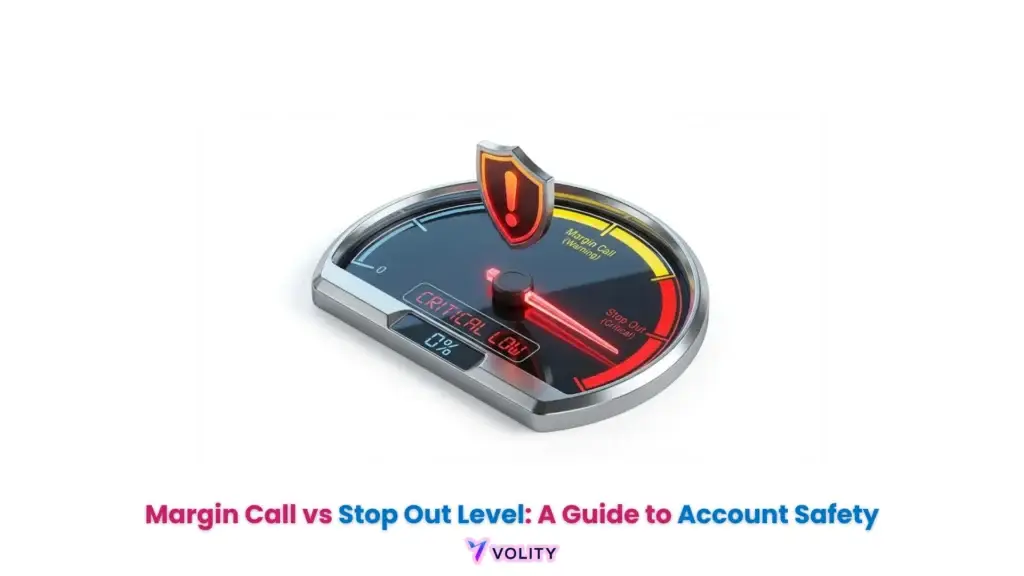
A margin call is a broker’s notification that your account equity has fallen below the required maintenance level, necessitating an immediate capital injection or position reduction. A stop out is the subsequent automatic liquidation of your trades when equity reaches a critically low percentage, preventing your account from falling into a negative balance. In 2026, understanding the gap between these two events is the most vital component of professional capital preservation.
The relationship between a margin call and a stop out identifies the different stages of account distress in a leveraged market. This framework allows brokers to protect their own capital while providing traders a final opportunity to rectify a failing position. It serves as the ultimate “Circuit Breaker” for individual trading accounts.
The 2026 trading landscape requires a proactive approach to monitoring account health due to increased market volatility. Mastering the technical triggers for these events enables participants to navigate rapid price swings without losing total control of their portfolio.
While understanding Forex is important, applying that knowledge is where the real growth happens. Create Your Free Forex Trading Account to practice with a free demo account and put your strategy to the test.
What is a margin call and how does it trigger?
A margin call is a notification sent by a broker when a trader’s account equity identifies a failure to meet the minimum maintenance margin requirement. This alert serves as your first warning that account distress is approaching. The margin call provides a grace period to deposit funds or close losing positions before forced liquidation occurs. Our Margin Jargon Cheat Sheet provides a detailed breakdown of the terminology used in these alerts.
Three core mechanics define margin call triggers:
- The Warning Signal: Why brokers notify you before they liquidate. This advance warning gives traders time to rectify the situation strategically.
- Maintenance Margin: The minimum amount of capital required to keep a trade live. This level is set by the broker and typically represents 50% of the initial margin requirement.
- Actionable Options: Depositing more funds vs. closing losing trades. Traders can respond by adding capital or reducing position exposure to restore the required margin level.
Most 2026 retail brokers issue an automated margin call when the “Margin Level” hits exactly 100%. At this threshold, no new trades can be opened and the account sits at maximum vulnerability. Immediate action is mandatory to avoid the second stage of liquidation.
The Margin Level Calculation: Your Risk Gauge
The margin level is a percentage-based metric identifying the ratio of total equity to the margin currently being used for open positions. This single number tells you how much financial cushion remains before forced liquidation. Real-time monitoring of margin level is the cornerstone of professional risk management. Understanding how to calculate margin in forex is essential for maintaining these safety buffers.
The formula is straightforward: Margin Level = (Equity / Used Margin) × 100. A 200% margin level means you have twice as much equity as the margin needed to support your positions. A 50% margin level means equity barely covers half the required margin.
Ready to Elevate Your Trading?
You have the information. Now, get the platform. Join thousands of successful traders who use Volity for its powerful tools, fast execution, and dedicated support.
Create Your Account in Under 3 MinutesWhat is a stop out and why is it automatic?
A stop out is an automated liquidation event that identifies the point where a broker closes a trader’s positions to prevent a negative account balance. This mechanism protects both the broker and the trader from catastrophic losses. Once triggered, stop out is instantaneous and irreversible.
Three characteristics define stop out mechanics:
- Forced Closure: Why you lose control over your exit price during a stop out. The broker executes the liquidation at market prices, regardless of slippage.
- Liquidation Priority: Brokers typically close the most unprofitable trade first to restore margin compliance. This prioritization minimizes the total realized loss.
- The “Mark-to-Market” Reality: Floating losses become realized losses when positions close. Unrealized drawdowns transform into permanent capital loss.
Standard stop out levels for 2026 ESMA-regulated brokers are set at 50% of the required margin. Managed Forex Accounts explains how professional managers maintain margin levels above 200% to avoid this risk entirely.
The critical distinction lies in control, margin calls allow trader choice while stop outs remove all discretion. A trader receiving a margin call can strategically exit one position and preserve others. A stop out forces the closure of all positions or the most underwater ones, eliminating selectivity.
Margin Call vs. Stop Out: The Key Differences
Comparative risk analysis identifies the margin call as a manual intervention phase and the stop out as a terminal automated execution. Understanding this distinction prevents panic decisions and enables proactive account management. The sequence of events matters for survival.
Margin calls and stop outs differ across three critical dimensions:
- Control: Trader choice during a call (Call) vs. Broker control during a stop out (Stop Out). The call gives you authority; the stop out removes it entirely.
- Result: Notification (Call) vs. Realized Loss (Stop Out). A call is a warning; a stop out is execution.
- Sequence: A call usually precedes a stop out, but not always. During extreme volatility, price can gap directly from healthy margin to stop-out levels without triggering a margin call alert.
Real trading example:
A trader held a 1.0 lot long position on GBP/JPY with only $1,000 in equity. Price dropped 50 pips in seconds. The margin level skipped from 120% directly to 45% during the crash. No margin call was issued; the trade was instantly stopped out at a $600 loss. Past performance is not indicative of future results.
The temporal gap between call and stop out varies dramatically based on price movement speed. During slow market drift, hours separate the two events. During news releases, the two can occur within milliseconds. Professional traders set internal “Risk Alarm” thresholds at 150% to maintain maximum control.
Common Causes of Account Liquidation in 2026
Account distress identifies the primary risk factors that lead to margin events, ranging from excessive leverage to poor position correlation. Multiple causes often combine to trigger liquidation. Understanding Margin vs Leverage helps clarify why these events occur so rapidly on small accounts.
| Risk Factor | Impact on Margin | Typical Scenario | 2026 Prevention Tool |
| Over-Leverage | Rapid Equity Decay | Trading 1:500 on $100 | Smart Position Sizing |
| News Gaps | Instant Stop Out | NFP/CPI Spikes | Guaranteed Stops |
| Correlation | Multi-Pair Loss | Long EUR/USD + Long GBP/USD | Correlation Matrix |
| No Stop Loss | Terminal Drawdown | “Hope” Trading | Mandatory Stop-Loss Scripts |
| Rollover/Swap | Slow Margin Drain | High-Interest Costs | Swap-Free Accounts |
Over-leverage represents the single largest cause of account liquidation. Traders using 1:500 leverage on micro-accounts burn through equity in seconds during adverse moves. Conservative position sizing and leverage ratios prevent this failure mode. How to Set Stop Loss explains protective mechanisms for every trade. News gaps during NFP or CPI releases create instant price dislocations that skip stop-loss orders. Weekend gaps create similar hazards when markets reopen Sunday evening.
How to avoid margin calls and stop outs
Proactive Risk Management identifies the technical and capital buffers required to survive periods of extreme currency volatility. Prevention requires discipline and systematic adherence to preset rules. Reactive management after a margin call triggers rarely succeeds.
Four strategies prevent margin liquidation events:
- The 2% Rule: Risking only 2% of equity on any single trade. This cap ensures that even five consecutive losses leave 90% of capital intact for recovery.
- Internal Margin Thresholds: Treating 150% margin level as your “personal” zero. Close trades when you hit this buffer rather than waiting for the broker’s 100% margin call.
- Diversification: Avoiding the trap of “all-in” bets on a single currency pair. Spreading capital across uncorrelated assets reduces simultaneous drawdown risk.
- Guaranteed Stops: Using broker-guaranteed stop-loss orders during high-impact news releases. These orders ensure fills at your specified price even during extreme slippage.
Adding more funds to a “Losing” account to avoid a margin call is often a mistake; if your trade thesis is wrong, adding capital just increases your total loss potential. Professional traders in 2026 utilize “Equity Guards” – automated scripts that close all positions if total account drawdown hits a predefined limit (e.g., 10%). Knowing How to Set Stop Loss provides the final layer of defense for individual positions.
Turn Knowledge into Profit
You have done the reading, now it is time to act. The best way to learn is by doing. Open a free, no-risk demo account and practice your strategy with virtual funds today.
Open a Free Demo AccountPsychological Impact: Recovering from a Stop Out
Psychological resilience identifies the steps required to rebuild trading confidence after the emotional trauma of a forced liquidation. Stop outs trigger intense emotional reactions that often lead to revenge trading and further losses. Mental recovery is as important as technical recovery.
Forced liquidation creates immediate emotional damage through loss of control and realized losses. The sudden discovery that you’re stopped out, rather than closing on your own terms, creates psychological injury. Many traders abandon the market after experiencing a stop out, missing recovery opportunities.
Analyzing the post-mortem after a stop out reveals why the event occurred. Review your leverage, position correlation, and stop-loss placement. Identify which risk management failures led to the liquidation. This analysis prevents repetition. Forex Trading for Beginners provides foundational psychology for managing leverage safely. Types of Traders explains how different trading profiles manage emotional risk differently.
Key Takeaways
- A margin call is a broker’s notification that your account equity has dropped to the minimum level required to support your trades.
- A stop out is an automated execution where the broker closes your losing positions to prevent a negative account balance.
- The margin level percentage is the critical real-time gauge of your account health, typically monitored at 100% and 50% triggers.
- Leverage management is the most effective way to avoid liquidation, as high leverage accelerates the rate of equity depletion.
- Forced liquidation usually targets the trade with the largest floating loss first to restore the account’s required margin level.
- Risk-to-reward discipline and the use of stop-loss orders are the primary defenses against ever receiving a margin call in 2026.
Frequently Asked Questions
This article contains references to margin calls, stop outs, and Volity, a regulated CFD trading platform. This content is produced for educational purposes only and does not constitute financial advice or a recommendation to buy or sell any financial instrument. Margin calls and stop outs can occur during volatile sessions with minimal warning. Always maintain a high margin level buffer and use protective stop-loss orders on every trade. Some links in this article may be affiliate links.