Understanding margin vs leverage does not eliminate the risk of rapid account liquidation. Even proper leverage usage can result in total loss during gap opens or extreme volatility. High leverage magnifies both profits and losses without proportional increase in trading skill. Negative balance protection may not apply to all account types or jurisdictions. Past performance is not indicative of future results. Capital at risk.
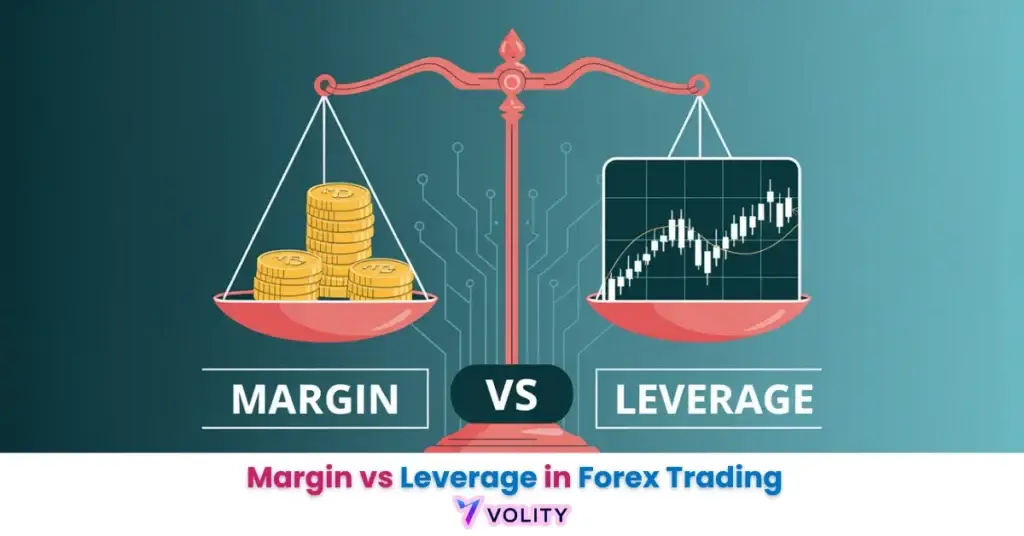
Margin and leverage are the two core mechanisms of amplified trading. Margin represents the collateral deposit required to open a position, while leverage is the ratio that magnifies the notional market exposure. In the 2026 regulatory environment, understanding the interaction between these tools is essential for maintaining account equity and avoiding forced liquidation during periods of high volatility.
Margin vs leverage function as the primary drivers of capital efficiency in the global financial markets. These tools allow traders to control substantial notional positions with a fraction of the total required capital. Mastering their distinction is the first step in constructing a professional-grade risk management framework.
The 2026 trading landscape is characterized by strict regulatory caps and enhanced transparency requirements for leveraged products. Investors must navigate these constraints to maximize returns while protecting against the rapid drawdowns inherent in amplified market exposure.
While understanding Forex is important, applying that knowledge is where the real growth happens. Create Your Free Forex Trading Account to practice with a free demo account and put your strategy to the test.
What are margin and leverage in trading?
Margin is the collateral deposit required to maintain an open position, while leverage is the ratio that determines the total notional value a trader can control. These concepts work together, margin is the security deposit, leverage is the multiplier. Learning how to calculate margin in forex reveals the true cost of every entry. Confusing the two leads to dangerous over-leveraging and forced liquidation.
The distinction matters operationally:
- Good Faith Deposit: Margin represents this collateral. It’s your skin in the game, the amount you stand to lose if the trade moves against you immediately.
- Buying Power: Leverage is your buying power. A 30:1 leverage means every dollar of margin controls $30 of market exposure.
- Notional Exposure: This is the total market value you control. A $3,333 margin with 30:1 leverage controls $100,000 in notional currency.
Margin requirements for major currency pairs in the EU and UK are capped at 3.33% (30:1 leverage) as of May 2026 (ESMA Regulatory Report, 2026). This regulatory cap applies uniformly across all brokers. Non-EU traders may access higher leverage ratios depending on their broker’s jurisdiction.
The Mechanics of Borrowed Capital
Leveraged trading is a form of secured lending where the broker provides the majority of the trade’s value in exchange for a margin deposit. The broker acts as a lender, funding most of the trade while you provide the collateral. This arrangement creates financing costs you must pay.
The role of the broker as a liquidity provider is fundamental. Brokers maintain capital reserves to provide instant leverage to millions of traders. In exchange, they collect margin and charge financing costs (swap fees) for maintaining leveraged positions overnight.
Ready to Elevate Your Trading?
You have the information. Now, get the platform. Join thousands of successful traders who use Volity for its powerful tools, fast execution, and dedicated support.
Create Your Account in Under 3 MinutesHow is margin calculated for a $100,000 position?
The margin requirement is the quotient of the total position size divided by the specific leverage ratio provided by the broker. This simple formula reveals exactly how much capital you must deposit to control any position. Understanding this calculation prevents accidental under-capitalization. Our Margin Jargon Cheat Sheet clarifies the terminology used in these calculations.
The calculation is straightforward: Position Size ÷ Leverage = Margin. A $100,000 position at 30:1 leverage requires $3,333.33 in margin. A $100,000 position at 10:1 leverage requires $10,000. The same position at 2:1 leverage requires $50,000. Leverage directly determines how much capital is needed.
Standardized margin calculators on major platforms in 2026 now include real-time “Margin Buffer” alerts to prevent accidental over-leveraging (Platform Review, 2026). These tools automatically calculate required margin as you adjust position size or leverage. Most platforms warn you when free margin approaches zero.
Pip Calculator vs Margin Calculator explains how position sizing tools prevent excessive leverage before entry.
Why do traders use leverage in 2026?
Capital efficiency and profit magnification are the primary motivations for utilizing leverage in high-liquidity markets. Without leverage, small price movements generate minimal profit. Leverage transforms micro movements into meaningful returns.
Three strategic benefits motivate leverage usage:
- Small Price Movements: A 50-pip EUR/USD move equals $500 profit on an unleveraged $100,000 position (0.5% return). With 30:1 leverage, that same move equals $15,000 profit on $3,333 margin (450% return).
- Diversification: Using leverage to spread capital across multiple non-correlated assets. Rather than concentrating all capital in one trade, leverage enables simultaneous exposure to five currencies.
- The “Double-Edged Sword”: How a 1% market move can result in a 30% account gain or loss at max leverage. A 30-pip EUR/USD move against a 1.0 lot position with $3,333 margin equals a $1,000 loss (30% drawdown).
Real trading example:
A trader opens a $100,000 long position at 1.0800 with 1:30 leverage ($3,333 margin). The price moves to 1.0900 (100 pips). The $1,000 profit represents a 30% return on the margin deposit, whereas an unleveraged trade would have yielded only 0.9%. Past performance is not indicative of future results.
Comparison: Margin vs Leverage across Asset Classes
Regulatory frameworks identify the maximum allowable leverage ratios across different asset classes in the 2026 financial ecosystem. Different assets carry different volatility profiles, requiring different leverage caps. These regulations protect retail traders from excessive risk exposure.
| Asset Class | Max Retail Leverage (2026) | Margin Requirement | Volatility Profile |
| Major Forex | 30:1 | 3.33% | Low to Moderate |
| Major Indices | 20:1 | 5.00% | Moderate |
| Gold (XAU) | 20:1 | 5.00% | High |
| Equities | 5:1 | 20.00% | Very High |
| Crypto | 2:1 | 50.00% | Extreme |
Source: Data sourced from the 2026 Global Securities and Markets Authority (GSMA) Compliance Handbook.
Major forex pairs receive the highest leverage (30:1) because they exhibit the lowest volatility. Crypto assets receive the lowest leverage (2:1) because they exhibit extreme volatility. The progression reflects broker risk management. Higher volatility assets require larger margin buffers to prevent cascade liquidations.
What is a margin call and how do you avoid it?
A margin call is a protective alert triggered when account equity falls below the maintenance margin threshold required to keep positions open. Understanding the critical distinction in Margin Call vs Stop Out enables strategic prevention. This warning provides an opportunity to rectify the situation before forced liquidation.
Prevention requires three parallel strategies:
- Maintenance Margin: The difference between initial margin and maintenance margin matters. Initial margin (3.33%) triggers trades; maintenance margin (50%) triggers warnings.
- Forced Liquidation: The 50% margin-close-out rule applies uniformly across regulated brokers. When equity falls to 50% of initial margin, brokers force-close positions automatically.
- Risk Management Tools: Stop-losses, take-profits, and the “1% Rule” prevent equity erosion. Knowing How to Set Stop Loss is the most fundamental way to protect your account.
Professional traders rarely use more than 5:1 “effective” leverage, regardless of what the broker allows, to ensure a wide safety buffer. This self-imposed cap is far more restrictive than regulatory limits. They deliberately maintain excessive margin to survive multiple consecutive losses.
How to Set Stop Loss provides detailed mechanics for optimal stop placement.
Turn Knowledge into Profit
You have done the reading, now it is time to act. The best way to learn is by doing. Open a free, no-risk demo account and practice your strategy with virtual funds today.
Open a Free Demo AccountThe Psychology of Leveraged Trading
Cognitive biases often intensify when traders use high leverage, leading to emotional decision-making and rapid capital depletion. The human brain responds differently to amplified P&L swings. Applying institutional Risk Management frameworks is essential for maintaining emotional discipline during volatile sessions.
Two psychological failures occur with high leverage:
- The “Gambler’s Fallacy” in High-Leverage Environments: Traders overestimate their probability of recovery after initial losses. They increase position size to “make back” losses faster. This acceleration compounds drawdowns.
- Stress Management: The impact of P&L magnification on the human brain. A $1,000/day swing on unleveraged capital feels manageable. A $1,000/hour swing on leveraged capital triggers anxiety and impulsive decisions.
Risk Management in Trading explains frameworks for maintaining emotional discipline. Common Trading Mistakes to Avoid identifies the most destructive behavioral patterns.
Key Takeaways
- Margin is the collateral deposit required to open and maintain a leveraged position in the market.
- Leverage is the multiplier that increases a trader’s buying power relative to their actual account balance.
- Margin calls occur when account equity falls below the minimum maintenance level, leading to potential liquidation.
- Capital efficiency is the primary benefit of leverage, allowing for diversification across multiple asset classes.
- Regulatory caps in 2026 limit retail leverage to 30:1 for major forex pairs to protect against extreme volatility.
- Negative balance protection ensures that retail traders cannot lose more than their initial deposit during market shocks.
Frequently Asked Questions
This article contains references to margin, leverage, and Volity, a regulated CFD trading platform. This content is produced for educational purposes only and does not constitute financial advice or a recommendation to buy or sell any financial instrument. Leverage usage carries substantial risk and can result in rapid losses exceeding your initial deposit in non-protected scenarios. Always verify negative balance protection status with your broker before using high leverage. Some links in this article may be affiliate links.