VIX trading means taking a position on where stock market volatility is heading. The VIX, published as the Cboe Volatility Index, measures the 30-day volatility the market expects from the S&P 500, read from option prices. You cannot buy the VIX itself, so traders reach it through futures, ETFs, or CFDs that track it.
What is the VIX in trading?
The VIX is an index that captures how much movement traders expect in the S&P 500 over the next 30 days. Cboe builds it from the prices of a wide range of S&P 500 options, following a set calculation method. The logic is simple enough: option prices climb when the market braces for bigger swings, so a rising VIX tells you traders are paying up for protection. This is implied volatility turned into a single number. A high VIX means the market is pricing in uncertainty; a low VIX means it expects calm.
That is why the VIX picked up the nickname the market calls the fear gauge. It sits low while markets drift higher and spikes when they drop hard. As a rough guide, readings in the low teens point to complacency, the twenties to rising nervousness, and anything above thirty to real stress. In the worst panics it has jumped toward eighty. One more feature matters more than any single level: the VIX is mean-reverting. Extreme spikes fade as conditions settle, and that pull back toward normal shapes how every VIX product behaves.
| VIX level | What it usually signals |
| Below 15 | Calm, complacent markets |
| 15 to 20 | Normal conditions |
| 20 to 30 | Rising nervousness |
| Above 30 | Stress and fear |
| 50 and above | Crisis-level panic (rare) |
Why can’t you buy the VIX directly?
The VIX is a calculation, not a security. There are no VIX shares to hold, any more than you can hold a temperature reading. What you can hold instead are financial products built on top of the VIX, and each one behaves a little differently from the headline number you see quoted. Getting your head around that gap is the first real step before any VIX trading, because most of the surprises that catch traders out live in it.
How is VIX exposure traded?
Trading the VIX index is done through a handful of instrument types. These are the broad tools that exist across the market, and not all of them are offered on every platform.
- VIX futures are the foundation of the volatility market. They are exchange contracts that settle against the VIX on a set future date, so their prices reflect where the market expects volatility to be then, not where it is today. VIX futures trading is where the whole complex gets its pricing.
- VIX options, which are options on those futures, let a trader position for a spike or a fall with risk capped at the premium paid.
- A VIX ETF or ETN holds or tracks VIX futures inside a share-like wrapper, so you can buy volatility exposure the way you would a stock. These are convenient, but they carry the roll cost covered below.
- Volatility CFDs, where a platform offers them, let you go long or short on a volatility index with margin and leverage up to 1:500 (product-dependent), using the same contract-for-difference mechanics as any other index CFD.
Notice what they share. Every one of these tracks the VIX indirectly, through futures rather than the spot index. That indirect link is exactly what trips traders up, and it is worth understanding before you commit money.
Why do VIX products lose value over time?
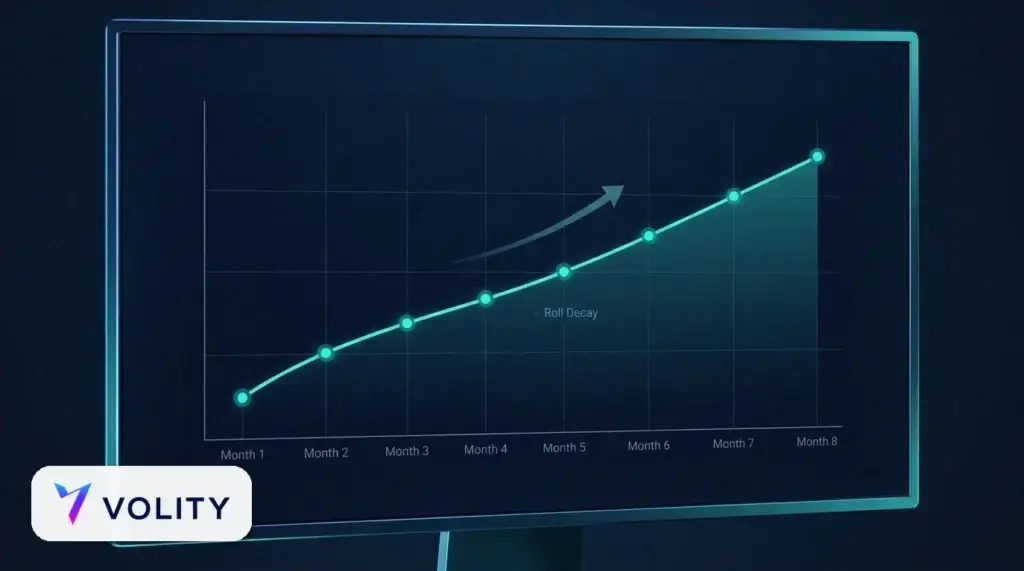
Because most VIX products are built on futures, they live and die by the shape of the futures curve. In calm markets, VIX futures dated further out usually cost more than near-term ones, a condition called contango. As a fund rolls out of an expiring contract into a pricier later one, it bleeds a little value each time, even when the VIX itself has not moved. That steady drag is roll decay, and it is the reason long volatility ETFs grind lower month after month. Treat them as short-term tactical tools, not something to buy and forget.
How does the VIX relate to the indices you trade?
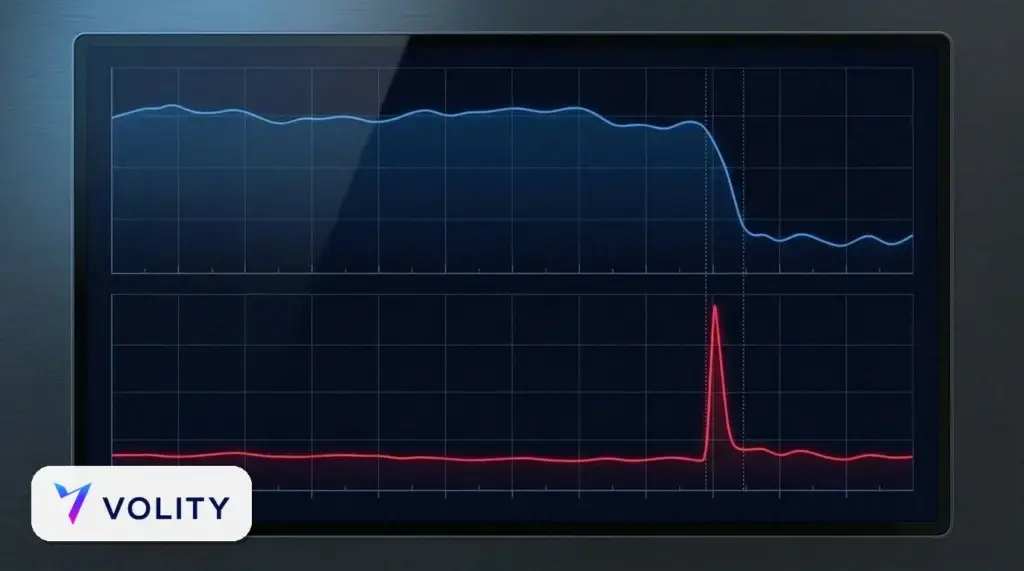
The VIX and the S&P 500 spend most of their time moving in opposite directions. When equities sell off, expected volatility jumps; when they rally quietly, it fades. Central-bank research on market stress, such as the financial-stability commentary from the Federal Reserve, tends to track the same spikes. That inverse link is the practical heart of volatility trading, because it means a view on volatility is really a view on market direction and stress dressed up in different clothes.
On Volity you can act on that view directly through index CFDs. A trader who expects a volatility spike is usually expecting equities to fall, which they can express by going short the US500 or the NAS100 as a CFD. A trader who expects continued calm can go long the same instruments. Volity offers these global index CFDs alongside forex, commodities and crypto in one account, with CySEC-regulated execution under UBK Markets (licence 186/12), and the freedom to trade either side of a move.
How to trade a volatility view on Volity
This guide stays on the concepts. The full step-by-step routine for placing a volatility trade, and volatility index trading in the wider sense, are covered separately, so what follows is the short version applied to an index CFD.
- Open a Volity account and clear the quick KYC checks, or start on a free demo to test the idea with no money at risk. Opening the account costs nothing.
- Fund your wallet by card, SEPA or crypto. You can invest from $1 and start trading from $1.
- Form your volatility thesis. Are you expecting a stress event and falling equities, or continued calm and a slow grind higher?
- Express it with an index CFD, for example a short US500 for expected stress or a long position for expected calm, sizing from the margin shown on the order ticket.
- Attach a stop-loss before you sit back, because volatility spikes move fast and punish the wrong side quickly. Then review how the trade played out.
Volatility trading is unforgiving of oversized positions. Moves arrive suddenly, so keep the risk on each trade small, lean on stops, and treat leverage as something that magnifies losses as readily as gains. The same discipline across the major benchmarks is laid out in our guide on how to trade indices, and full pricing sits on the charges and fees page.
What is the difference between long and short volatility?
Volatility traders sort into two camps, and the split matters because the two sides face very different odds.
- Long volatility positions for a spike, betting that fear rises and equities fall. It pays off rarely but sharply, in the middle of a selloff, and it bleeds the rest of the time through roll decay. In practice it works like buying insurance, a steady cost in exchange for a big payout when things break.
- Short volatility positions for calm, betting the VIX fades back toward its long-run range. It earns a little most days and can lose a great deal in a sudden crash. That makes it the mirror image, more like selling insurance: regular income with the rare, severe claim.
Neither side is right by default. The real danger is misjudging which one you are on, and that happens most often when a long stretch of calm makes short volatility feel safe right before a spike proves it was not.
What mistakes catch VIX traders out?
Most errors in VIX trading come from treating volatility products like ordinary shares, when they are nothing of the sort.
- Holding a long-volatility product too long. Roll decay chips away at it steadily, so it belongs in a tactical trade, not a long-term holding.
- Ignoring the futures curve. The headline VIX and the futures a product actually holds can move apart, so the number on the screen can quietly mislead you.
- Oversizing into a spike. Volatility moves fast, and a position that looked small at rest can swing hard in minutes.
Expressing a volatility view through a directional index CFD, such as a short US500 for expected stress, sidesteps some of the roll-decay problem, but it still demands disciplined stops because the underlying moves just as suddenly. Leverage magnifies a volatility spike in both directions, which is a fair cue to size every position with care.
Frequently asked questions
What is VIX trading?
VIX trading is positioning for changes in expected stock market volatility. The VIX measures the 30-day volatility the market expects from the S&P 500. Since you cannot buy the VIX directly, traders use futures, ETFs, or CFDs, or express the same view through index positions that move inversely to volatility.
Can you buy the VIX?
No. The VIX is a calculated index rather than a security, so there is nothing to buy directly. Exposure comes from products built on VIX futures, including VIX futures themselves, VIX options and a VIX ETF, each of which tracks the index indirectly and can behave differently from the headline number.
Why do VIX ETFs keep falling?
Because they hold VIX futures and have to roll from cheaper expiring contracts into more expensive later ones during calm markets, a drag known as contango. This roll decay erodes value over time even when the VIX is flat, which is why a long VIX ETF is treated as a short-term tactical tool.
How does the VIX relate to the S&P 500?
They usually move in opposite directions. When the S&P 500 falls sharply, the VIX spikes; when equities rise calmly, it fades. That inverse link means a volatility view can often be expressed by trading an index CFD such as the US500 long or short, which you can do on Volity.