Is uranium a good investment? It can be, but only if you understand what you are buying. Uranium sits at the centre of a real structural story: a nuclear power revival, surging electricity demand from AI data centres, and a supply deficit that has run for years. It is also one of the most violently cyclical commodities in the market, with a record of spectacular booms and long, painful busts. This guide weighs both sides. It is general information, not personal advice.
Key points
- The bull case rests on nuclear’s comeback: a global pledge to triple capacity by 2050, roughly 74 reactors under construction, and fresh demand from AI data centres.
- The bear case is uranium’s boom-bust record. Spot reached about $137 a pound in 2007, then collapsed toward $18 in the years after Fukushima.
- Most investors get exposure through miners’ shares, uranium ETFs, or physical trusts such as Yellow Cake, rather than the metal itself.
- Uranium pays no income, can be illiquid, and is exposed to politics, accidents and long project timelines.
Is uranium a good investment right now?
Uranium suits a particular kind of investor: someone who wants energy-transition exposure, can tolerate sharp swings, and is using money they will not need for years. The metal pays no dividend and no coupon, so your return depends entirely on the price rising and on you selling well. What changed after the quiet decade following Fukushima is demand: utilities are buying again, governments have turned pro-nuclear, and technology firms now want round-the-clock power for AI.
The case for uranium
Start with demand. At COP28, more than 20 countries, among them the United Kingdom, France, Japan, Canada and the United Arab Emirates, signed a declaration to triple nuclear energy capacity by 2050. That points to decades of reactor building, not a single year of enthusiasm.
The construction is already visible. The IAEA counts around 74 reactors under construction worldwide, with China building the largest share, one of the highest levels in three decades according to the World Nuclear Association. Each needs uranium to start up and years of fuel to keep running.
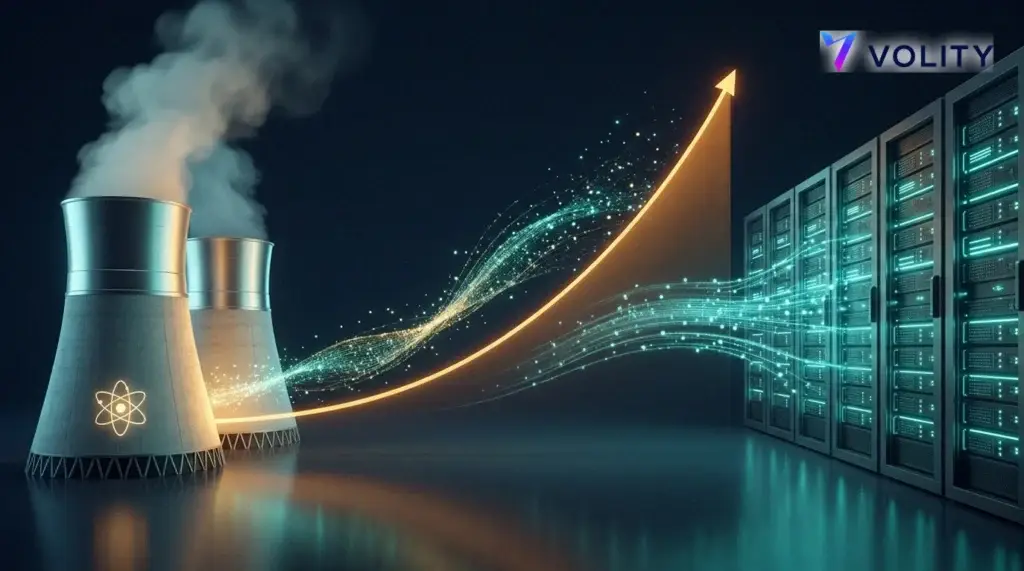
The newest driver is artificial intelligence. Large AI models need vast, uninterrupted electricity, and nuclear runs day and night regardless of weather. Microsoft signed a twenty-year deal to restart a reactor at Three Mile Island for its data centres, while Amazon and Google have backed small modular reactors, the compact plants the industry hopes to deploy through the 2030s. Big technology firms buying nuclear power was almost unthinkable a few years ago.
Against that demand sits a supply problem. Mines have not covered reactor requirements from primary production for years, and the secondary stockpiles that filled the gap are now thin, as the World Nuclear Association supply data shows. Kazatomprom, the world’s largest producer, has guided for lower output, and a new mine can take a decade to open. When demand climbs while supply lags, price tends to follow. That is the heart of the bull case.
The case against uranium
Now the other side, and it deserves equal weight. Uranium’s price history is a warning. In the 2007 bubble the spot price reached about $137 a pound, the highest in a generation, before the financial crisis and the 2011 Fukushima accident sent it into a long slide. By 2016 it traded near $18, a fall of more than 70 percent, and it stayed depressed for years, as the uranium market record shows. Anyone who bought the 2007 top waited more than a decade just to break even.
A few features make this market harder than most:
- Extreme cyclicality. Uranium can do nothing for years, then move violently, so timing is genuinely difficult.
- Accident and political risk. A single incident anywhere can turn opinion and policy against nuclear, as Fukushima did worldwide.
- No income. Physical uranium and holding trusts pay you nothing while you wait, so the position carries a real opportunity cost.
- Concentration. Supply is dominated by a few countries, notably Kazakhstan, so one disruption moves the whole market.
- Long lead times. New reactors and mines take many years, so demand and supply can stay out of step for a long stretch.
The FCA treats single-commodity and leveraged plays as high-risk investments for good reason. A structural story can be genuine and still lose you money if you buy at the wrong price or are forced to sell at the wrong time.
What is the uranium price forecast?
Be sceptical of anyone quoting a precise target. Uranium surged past $100 a pound in early 2024 for the first time since 2007, then cooled and spent much of 2026 in the $80s, according to Trading Economics spot data. Forecasts beyond that diverge sharply. Bulls such as Sprott argue the supply deficit supports higher prices over time, while cautious voices note that high prices tend to restart idled mines and cool demand. Treat any specific number as an opinion, not a promise.
How to invest in uranium
You will rarely buy physical uranium yourself, since it is a controlled nuclear material rather than something you store like gold bars. Most people use one of four routes, each with a different risk profile. If commodity investing is new to you, our guide to how to buy gold covers the same trade-offs between an asset, a fund and a derivative.
Shares in producers such as Cameco or Kazatomprom, or developers like Paladin Energy and NexGen, give leveraged exposure to the uranium price. Miners can outrun the metal in a rising market and fall harder in a falling one, and each carries its own operational and country risk. For a worked example of how one uranium equity is analysed, see our UEC stock outlook.
Uranium ETFs
Funds spread the risk across many companies. The Global X Uranium UCITS ETF and the Sprott Uranium Miners UCITS ETF both list in London, giving investors outside the United States a diversified way in without picking a single miner. The US-listed URA and URNM funds are the better-known originals, but non-US investors will hold the UCITS versions. Our comparison of gold ETFs versus futures explains why fund structure matters for costs.
Physical uranium trusts
A few vehicles hold the metal directly. Yellow Cake plc, listed in London, buys and stores physical uranium under a long-term deal with Kazatomprom, and the Sprott Physical Uranium Trust does the same on the Canadian market. These track the spot price closely without mining risk, though they can trade at a premium or a discount to the uranium they hold.
CFDs and the wider energy complex on Volity
Uranium itself is not a standard retail CFD, so you will not find a spot-uranium ticker on most platforms, Volity included. What you can trade on Volity are CFDs on the surrounding energy and commodity markets, such as oil and natural gas, and on major stock indices, a more liquid way to express a view on the broader energy cycle. Where UBK Markets Ltd provides your trading service, trade execution and client-money handling are governed by its applicable client agreement and policies. The arrangements for each account or service are identified in its client documentation. Opening an account is free, you can fund from $1, and start trading from $1, with leverage of up to 1:500 depending on the instrument. Leverage cuts both ways, so size positions carefully and check the charges and fees first.
Should you invest in uranium?
Uranium can suit someone who believes in the nuclear revival, wants energy-transition exposure, and can hold through years of volatility without needing the money. It is a poor fit for anyone chasing income, stability or a quick result. Most investors treat it as a small satellite position rather than a core holding, sized so a sharp drawdown would not derail the wider plan. Practising on a free demo account first costs nothing and teaches you the rhythm of the market. Whatever you decide, this is general information rather than personal advice.
Frequently asked questions
Is uranium a good long-term investment?
Uranium has a credible long-term demand story, built on nuclear’s revival, reactor construction and new power demand from AI. The multi-year trend looks supportive, but the price is highly cyclical, so even a sound thesis can suffer large drawdowns. It suits patient investors who can tolerate volatility.
Should I invest in uranium stocks or physical uranium?
Miners’ shares offer leveraged exposure and can outperform the metal in a bull market, but they carry company and country risk and fall harder in downturns. Physical trusts such as Yellow Cake track the spot price with less operational risk but no upside from company growth. Many investors blend the two, or hold a uranium ETF that covers a basket of miners at once.
How much of my portfolio should be in uranium?
There is no single right answer, and this is not personal advice, but single-commodity plays are usually held as a small satellite position rather than a core holding, sized so a sharp fall would not damage your overall plan. The FCA classes this kind of investment as high-risk, so only commit money you can afford to lose.
Can I trade uranium on Volity?
Uranium spot is not offered as a retail CFD on Volity or most other platforms. You can trade CFDs on related energy and commodity markets, such as oil and natural gas, and on major indices, a more liquid way to gain exposure to the wider energy cycle. For direct uranium exposure, most investors use miners’ shares, an ETF or a physical trust.