Copper can be a sound investment for people who want exposure to global growth and the shift to electric power, but it is a cyclical commodity that swings with the economy and pays no income while you hold it. Whether copper is a good investment for you comes down to your time horizon, your appetite for volatility, and how you hold it. This guide sets out the case for and against, and the practical ways to get exposure, including copper CFDs on Volity.
The short answer
- Copper is nicknamed Dr Copper because its price tends to track the health of the world economy.
- The bullish argument rests on electrification: electric vehicles, power grids, renewables and data centres all use far more copper than what they replace, while new supply is slow to arrive.
- The bearish argument is cyclicality, sensitivity to recessions, the lack of any yield, and the risk that manufacturers switch to cheaper aluminium.
- You can get exposure through mining shares, copper ETFs, or copper CFDs, and each route carries a different risk profile.
Why is copper called Dr Copper?
Traders call it Dr Copper because the metal is wired into almost everything the economy builds, from motors and electronics to plumbing and power generation. Demand rises when factories and construction are busy and falls when they slow, which gives copper a reputation as a leading indicator: a climbing price often signals expected growth, a falling one a slowdown.
Copper is a commodity, priced on the London Metal Exchange in US dollars per tonne, and it behaves differently from a share or a bond. If commodity trading is new to you, our guide to what commodity trading is covers the basics first.
Why might copper be a good investment?
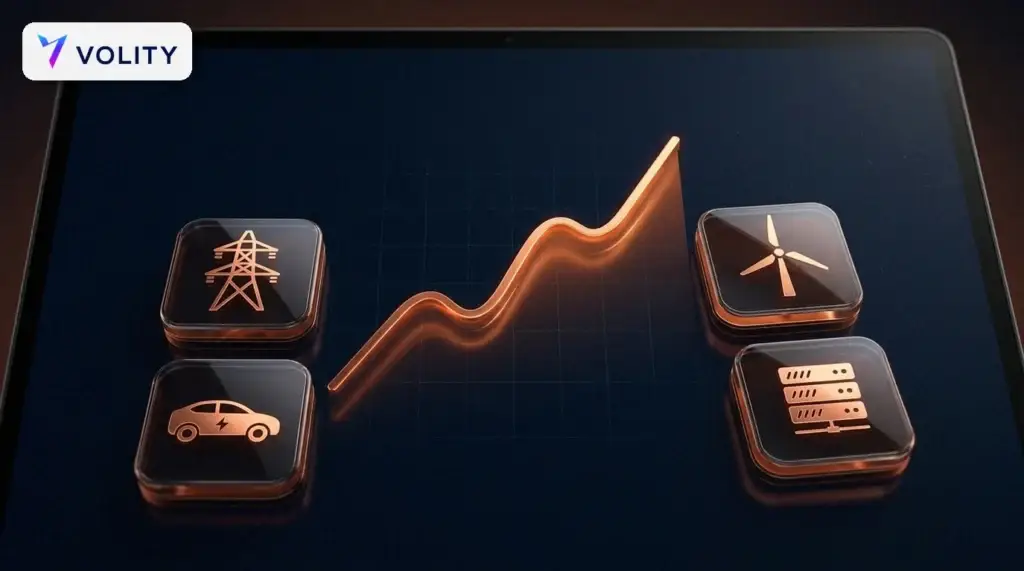
The long-term bull case is electrification: the world is swapping fuel-burning engines for electric motors, and copper carries that current. A conventional car holds around 20 to 23 kilograms of copper, while a full battery electric vehicle can hold up to about 83 kilograms, according to the International Copper Association, and each one needs charging points and heavier grid connections behind it.
The pattern repeats across clean energy. The International Energy Agency notes that solar and wind use several times more copper than fossil-fuel power for the same capacity, and its copper analysis projects demand for grid lines alone more than doubling by 2040. Add the power appetite of AI data centres, and copper sits at the centre of several long-run trends that Sprott and others call a structural demand story rather than a passing cycle.
Supply is the other half. New mines can take five to ten years to move from discovery to production, and ore quality has been falling, from grades of one to two percent decades ago toward well below one percent today. The International Copper Study Group has flagged the market tightening toward deficit as production growth slows. When demand rises and mines cannot respond, the price does the adjusting, which is what makes copper interesting to those who believe the shortfall is real. Wood Mackenzie has argued the energy transition cannot happen without much more copper out of the ground.
What are the risks of investing in copper?
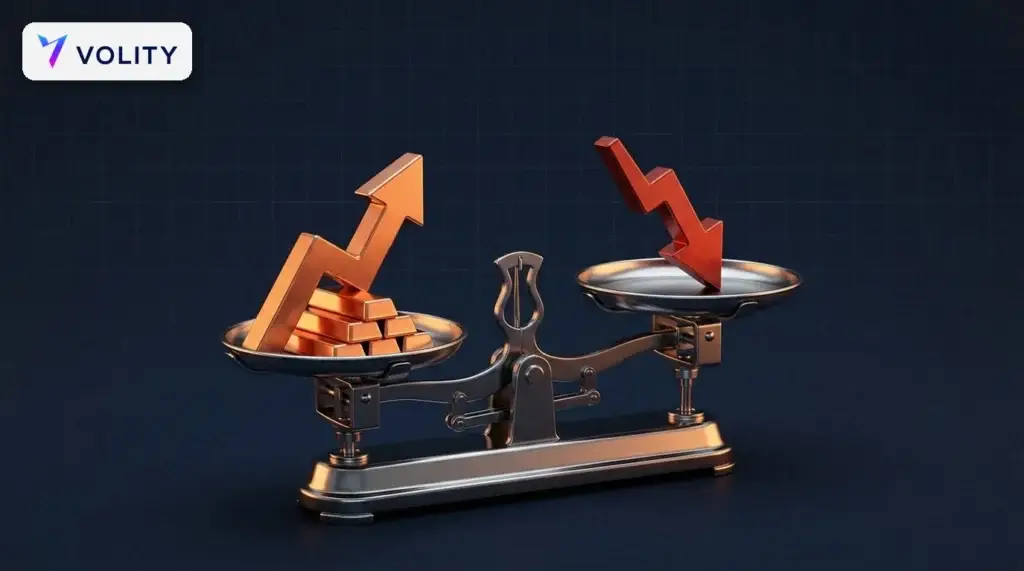
The same quality that makes copper a growth play also makes it fragile. Because it is tied to industrial activity, its price falls hard in a recession, and if manufacturing stalls, orders dry up and the metal can drop faster than broad equity markets. Anyone holding it for the long-term story still has to sit through those downturns.
Copper also pays you nothing to wait. A share can pay a dividend and a bond pays interest, but a lump of metal just sits there, so your return depends on selling it for more than you paid. Demand is concentrated too, because China accounts for well over half of global refined copper use, so a property slump or policy shift there can move the whole market, a point the World Bank tracks in its commodity work.
Then there is substitution. When copper gets expensive relative to aluminium, engineers redesign products to use the cheaper metal. Fastmarkets has reported aluminium adoption speeding up as prices climb, and Wood Mackenzie has warned that a sustained high price can quietly erode demand through this switching, so a shortage can plant the seeds of its own correction. Copper trading, like any leveraged or commodity exposure, carries real risk of loss, which the Financial Conduct Authority sets out for high-risk investments.
How do you invest in copper?
Few people can practically store tonnes of physical metal, so exposure usually comes through one of three routes, each with a different mix of risk, cost and directness.
| Route | What you own | Things to weigh |
| Copper mining shares | Stock in producers such as major diversified miners | Can pay dividends, but company risk and costs sit on top of the copper price |
| Copper ETFs | A fund tracking copper futures or a basket of miners | Simple to hold; futures-based funds can drift from the spot price over time |
| Copper CFDs | A contract tracking the copper price, long or short | Direct and flexible with leverage, which magnifies both gains and losses |
Mining shares give you a business as well as a metal, which is why a copper ETF spread across producers appeals to people who want the theme without single-stock risk. Our explainer on commodity ETFs and how CFD trading compares walks through that trade-off. The third route deserves its own note.
A CFD is an agreement to exchange the difference in copper’s price between opening and closing a position, with no delivery of metal. On Volity you can trade copper as a CFD through the Volity MT platform, going long if you back the deficit story or short if you expect a slowdown, with leverage of up to 1:500 depending on the instrument. You can open an account for $0, practise on a demo, invest from as little as $1, and start trading from $1. Leverage cuts both ways, so a small move against you can wipe out a large share of your stake. Volity Trade Ltd acts as an introducing broker where clients are referred to and accepted by UBK Markets Ltd. The provider and terms for each account or service are identified in the relevant client documentation. To see how copper’s cousins behave, compare our pages on silver trading and the wider Volity markets.
What is the copper price forecast?
Honest answer: nobody knows, and any forecast is an opinion with a spreadsheet attached. What most analysts agree on is the shape of the problem. The IEA has estimated that mining projects already announced are enough to meet less than three-quarters of the copper the world will need by 2035 if countries hit their climate goals. A gap that size argues for firm prices over the long run, though every projection gets revised whenever the data shifts.
The near term is messier. Prices react to Chinese factory data, interest rates, the dollar, mine disruptions and trade policy, so copper can swing sharply even when the ten-year story looks intact. You can follow the live price on trackers such as Trading Economics, but treat any single target with caution: the useful signal is direction and drivers, not a number on a calendar.
So, should I invest in copper?
Copper suits an investor who believes in the electrification trend, can stomach sharp drawdowns, and treats it as one holding among several rather than the whole portfolio. Because it rides the industrial cycle, copper is often read next to other cyclical commodities, so it is worth comparing whether silver is a good investment, whether platinum is, and how oil stacks up as an economic barometer. It looks less appealing if you need income, have a short horizon, or would be forced to sell into a deep drop.
This article is general information, not personal advice. Copper is volatile, and trading it with leverage can lead to losing more than you expect, so only commit money you can afford to lose and consider your own circumstances first. A sensible way to learn the mechanics without risking capital is to open a free Volity demo account and watch how a copper position moves before you fund anything.
Frequently asked questions
Is copper a good long-term investment?
Over the long run copper is backed by strong demand from electric vehicles, power grids and renewables, with supply that struggles to keep pace. That supports the bull case, but copper is cyclical and pays no income, so returns depend on the price you sell at. It tends to work best as part of a diversified mix rather than a single bet.
How is copper different from gold as an investment?
Gold is mainly a store of value that investors buy for safety, while copper is an industrial metal whose price tracks economic activity. Gold often holds up in a downturn, whereas copper usually falls with it, which makes copper a growth play and gold a defensive one.
Can I invest in copper without buying physical metal?
Yes, and most investors do. You can buy shares in copper miners, hold a copper ETF, or trade a copper CFD that follows the price with no delivery of metal. On Volity, copper is available as a CFD through the Volity MT platform, which lets you go long or short with leverage.
What moves the copper price the most?
Chinese demand is the single biggest factor, since China uses well over half the world’s refined copper. After that come the global growth outlook, interest rates and the dollar, supply shocks such as mine strikes, and the structural pull of electrification. With so many forces at once, copper can be volatile short term even when its long-term outlook looks steady.
Risk warning: CFDs are complex instruments and come with a high risk of losing money rapidly due to leverage. Copper and other commodities are volatile, and past performance is not a guide to future results. This content is general information and not personal investment advice.