Ai’s wild ride, earnings gap risk and the Dow’s quiet defence
The market is offering two very different tapes today.
On one side, AI and semiconductor stocks are still throwing punches. Nvidia, AMD, Micron, Super Micro and their satellites remain capable of 3% moves before lunch. Meanwhile, steadier Dow names are doing the quieter work of holding indices together through earnings season.
For traders, that split matters. Some tickers are clean event trades. Others are trend vehicles. A smaller group is just noise in a nice suit.
The task today is not to chase everything green. Rather, it is to separate catalysts from chatter, then trade the clock in front of you.
Earnings names carry the gap risk
The first bucket is simple: earnings, guidance and post-print dislocations.
Coca-Cola (KO) sits in the defensive camp after a strong earnings reaction. It is not a high-speed scalp. However, it has a useful swing setup if the stock holds its gap. A move back into the old range would weaken the trade quickly.
Ford (F) is more dangerous. The share chart has flashed a golden cross, which gives bulls a clean technical story. Still, auto earnings can punish confidence in one session. Any pre-earnings long should be treated as speculative, not conservative.
Options traders should also be careful. Elevated implied volatility can make calls and puts expensive before the print. So, spreads may offer cleaner risk than outright premium buying.
F5 (FFIV) and Amkor (AMKR) belong in the post-earnings mispricing file. F5 delivered solid numbers and guidance, yet the stock sold off sharply. Amkor beat for the latest quarter, but weaker guidance hit sentiment.
These are not casual dip buys. Instead, they are tests of whether sellers overreacted. If the first-hour low holds, mean-reversion traders may get a shot. If that low breaks, momentum shorts stay in control.
Bloom Energy (BE), Visa (V), Seagate (STX) and General Dynamics (GD) also sit near major catalysts. Yet they carry very different kinds of risk.
Bloom and Seagate have become AI-infrastructure favourites. That makes their earnings reactions more fragile. When expectations stretch, even decent guidance can disappoint.
Visa is cleaner as a consumer-spending read. General Dynamics is a defence-spending bellwether. However, both can still gap hard if management tone shifts.
Ai and chips are volatility instruments
The second group is the market’s current engine room: NVDA, AMD, MU, INTC, SMCI, CORZ, STX and BE.
These stocks should not be treated as safe growth at today’s speeds. They trade more like leveraged instruments. Meanwhile, every large data-centre headline now feeds directly into chip, storage and power names.
Nvidia remains the centre of the AI capital-spending cycle. Demand for advanced GPUs still looks deep. However, financing structures, customer concentration and margin questions now matter more than they did earlier in the rally.
AMD, Micron and Intel move with the same broad infrastructure theme. Yet their setups are not identical. AMD is a competitive AI accelerator story. Micron is a memory-pricing story. Intel remains a turnaround and foundry execution story.
Super Micro adds another layer of risk. It can rally hard when server demand feels urgent. However, it can also drop quickly when traders question margins or governance.
Core Scientific is more speculative still. The market is rewarding its shift from crypto-mining roots toward AI data-centre capacity. Still, execution risk remains high, and the stock suits smaller, faster trades.
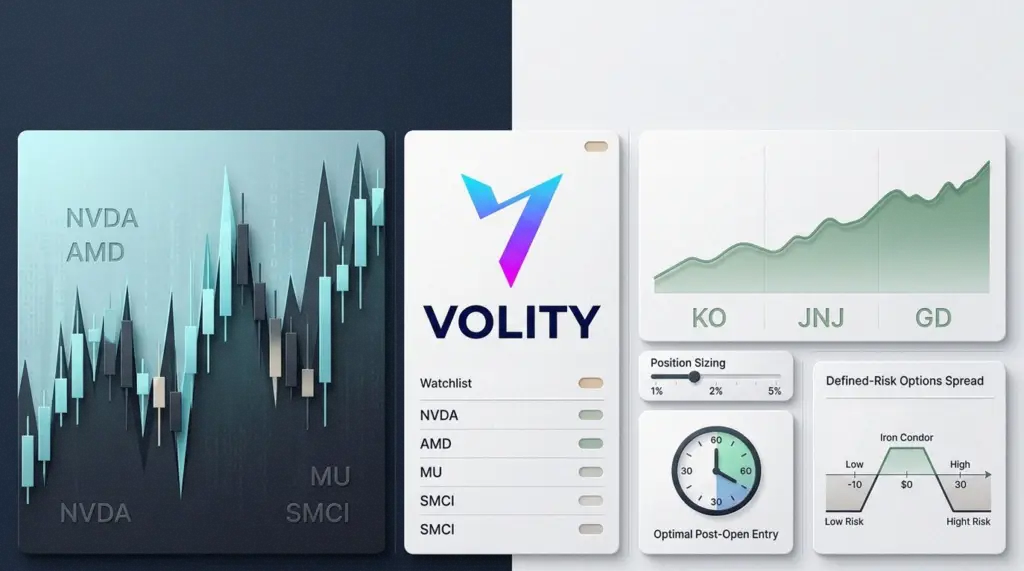
For this group, position size is the first risk tool. Many active traders cap single-trade risk near 1% to 2% of capital. That limit matters more when a stock can erase a week’s gains in one morning.
Direction-neutral options may also make sense. Straddles, strangles, calendars and vertical spreads can define risk around binary moves. However, rich premiums mean traders need a sharp view on timing.
Analyst calls can move tape, but only briefly
A third cluster is moving on opinion: upgrades, initiations, price-target changes and television mentions.
CrowdStrike (CRWD) benefits from fresh bullish coverage in cybersecurity. That theme still fits the broader AI and data-protection trade. Still, traders should demand volume confirmation before chasing strength.
Agilysys (AGYS) has a cleaner re-rating profile after a beat and stronger long-term guidance. If liquidity supports the move, the stock can attract multi-day momentum. However, thin trading can widen slippage.
Twilio (TWLO) sits in the valuation-upside bucket. Analyst enthusiasm may support a swing trade, not a five-minute scalp. The better test is whether buyers defend pullbacks, not whether the open is hot.
Clorox (CLX) offers the opposite setup after a downgrade in a supposedly steady consumer-staples name. Sentiment shocks in defensives can create short opportunities. However, staples often find buyers near long-term support.
Media-driven ideas in ServiceNow (NOW), Meta (META) and eBay (EBAY) need stricter filters. NOW has institutional momentum. Meta remains a mega-cap technology proxy. eBay has post-earnings credibility if buyers keep paying higher prices.
Still, a television mention is not an entry signal. Price, volume and levels must do the real work.
Dow defensives are doing quiet work
The fourth bucket matters because it explains index behaviour.
KO, Johnson & Johnson (JNJ), Boeing (BA) and General Dynamics (GD) give traders lower-beta exposure. They also help explain why the Dow can look firmer than QQQ on choppy AI days.
These names rarely offer the adrenaline of Nvidia or Super Micro. However, they can serve a useful purpose in pairs trades. One version is long defensives and short AI beta. Another is long quality Dow components and short weaker cyclicals.
Meanwhile, blockchain headlines around IBM patents and Circle matter more as background. They may shape the stablecoin and USDC narrative. But they do not yet create a clean listed-equity trade for today.
By the numbers
- 1% to 2% – common maximum risk per single trade in volatile earnings setups.
- 30 to 60 minutes – the key window for judging post-open gap continuation.
- 1 to 3 days – typical follow-through window for analyst-driven momentum trades.
- 4 clusters – earnings, AI volatility, analyst momentum and Dow defensives.
- 2 tapes – high-beta tech swinging hard, defensives grinding steadily.
Actionable watchlist
- Event-driven earnings: F, BE, GD, V, STX, FFIV, AMKR, KO.
- AI and semiconductor volatility: NVDA, AMD, MU, SMCI, CORZ, INTC, STX, BE.
- Analyst and media momentum: CRWD, TWLO, AGYS, CLX, NOW, META, EBAY.
- Defensive and Dow balance: KO, GD, JNJ, BA.
Key takeaways
- Treat earnings names as reaction trades, not valuation debates.
- Reduce size in AI names when volatility rises.
- Use spreads when options premiums look stretched.
- Fade media-driven moves unless volume confirms them.
- Use Dow defensives to balance high-beta technology exposure.
Today’s opportunity sits in discipline, not drama. The best trades have a catalyst, a time frame and an exit before the order goes in.
Related coverage on Volity
- What Is a P/E Ratio and How to Use It
- Fundamental Analysis in Stock Trading: A Working Definition
- Growth Investing vs Value Investing: Which Style Fits You?
- Fractional Shares Explained: How to Start Investing With $50
- How to Start Stock Trading: A 2026 Beginner Guide
- Dividend Investing for Beginners: How to Start