Market mood: a tired rally meets a nervous tape
Bitcoin is drifting below $63,000, and the tape has lost its summer swagger.
However, this is not a quiet market. Whales are moving, custody assumptions are cracking, and regulators are busy. Meanwhile, traders face a week where wallets, Washington and macro data matter as much as candles.
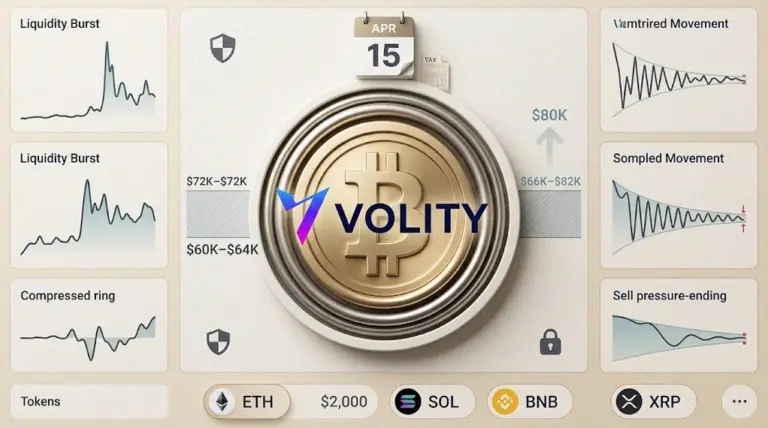
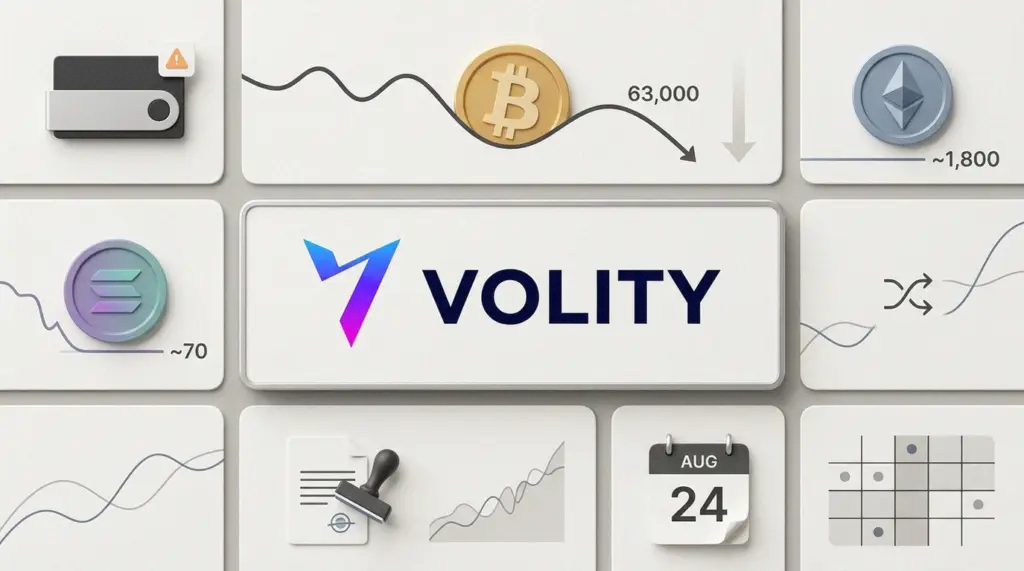
Across the majors, the tone looks cautious rather than panicked. Bitcoin is holding the low-$60,000s after a choppy July close near $63,000. Ethereum trades in the mid-$1,800s, with sellers eyeing the $1,700 zone. Solana, meanwhile, is leaning towards support that technicians place near $70.
Macro gives bulls little comfort. The Federal Reserve held rates at 3.50% to 3.75% in late July. Traders still lack the clean easing signal that risk assets wanted. Treasury yields remain firm, and futures positioning shows less appetite for heroic leverage.
Bitcoin custody: the cold storage shock
Cold storage has long been crypto’s comfort blanket. This week, it looks less comforting.
Reports of attacks involving Coldcard hardware wallet users have rattled a market built on the idea that offline custody is close to sacred. The alleged losses approach $90 million, with several batches of coins reportedly drained from wallets thought to be air-gapped.
That figure is not large enough to break Bitcoin. However, it is large enough to dent confidence. It also strikes at the most emotional corner of the market: the belief that self-custody always beats trusted intermediaries.
- Security teams are calling for tougher independent audits of hardware wallet makers.
- Some holders are moving BTC back to exchanges, reversing years of cold-storage evangelism.
- ETF supporters are using the episode to argue for regulated Bitcoin exposure.
- Traders are watching exchange inflows for signs of forced selling or nervous repositioning.
The lesson is blunt. Hardware wallets are not magic boxes. Supply chains, firmware, backups and physical security all matter. So does spreading risk across more than one custody setup.
Bitcoin tests: options, data and policy
Bitcoin also faces a crowded calendar. Fresh US data, central-bank speeches and ETF flow numbers all arrive into thin August liquidity.
Meanwhile, the SEC’s review of Nasdaq’s proposed Bitcoin options listing has an August 24 deadline. Approval would deepen the derivatives market and could improve liquidity. However, it could also sharpen intraday swings, especially around expiry dates.
Options have a habit of changing market behaviour. They attract hedgers, volatility funds and basis traders. Approval would mark another step in Bitcoin’s migration from internet money to Wall Street instrument.
Altcoins: whales move while majors wobble
Cardano: whales buy 240 million ADA
Cardano has produced the cleaner bullish story. ADA rose about 22% as large holders added roughly 240 million tokens.
The bid comes as developers continue work on Ouroboros Leios, a scaling upgrade that supporters see as important for throughput. Still, the near-term trade looks simpler. Spot demand has improved, leverage appears contained, and whales are voting with size.
That does not make ADA immune to a broader sell-off. However, accumulation by larger addresses often gives traders an early read on where narratives may rotate next.
Solana and Ethereum: support comes into view
Solana and Ethereum look less comfortable. Solana buyers need to defend recent support, or the $70 area comes into view quickly.
Ethereum has its own problem. It remains the second-largest crypto asset, with a market value near $233 billion. Yet price action still feels heavy. If ETH loses current support, the $1,700 region becomes the market’s next obvious magnet.
That level matters because too many traders can see it. A clean break could trigger mechanical selling from stops and momentum systems.
Outside the largest tokens, Orbs has opened a community vote to create a DAO framework. The proposal would give holders more influence over protocol direction and resources.
It is not a market-moving headline by itself. Still, it fits a wider pattern. As regulation tightens, projects lean harder on decentralisation as a defence and a selling point.
Policy watch: the Clarity Act clock ticks
In Washington, the CLARITY Act has entered a narrow legislative window before the August recess.
The bill aims to set a broader framework for digital assets, including token classification and exchange supervision. However, even a Senate push would not deliver instant clarity. The House would still need to act after returning in September.
Markets have learned not to chase every procedural twist. Still, the bill matters. It could shape which tokens trade as commodities, which face securities rules, and how DeFi platforms deal with US law.
Political money is also flowing. Crypto-aligned groups have already committed seven-figure sums in selected House races, including a Michigan contest. Digital assets are no longer a niche lobbying issue. They are becoming campaign infrastructure.
Global rules: South Africa, Britain and Japan tighten up
Regulators outside the United States are moving too. South Africa has proposed reporting rules for cross-border crypto transfers. Exchanges and wallet providers would face deeper anti-money laundering obligations.
Meanwhile, Robinhood has secured UK crypto registration before tougher FCA rules take effect. That gives the broker a regulated foothold in a market where retail access is narrowing.
Japan continues to press global exchanges as well. At least one large platform is preparing to wind down services for Japanese residents after local warnings. The message is consistent across jurisdictions: scale now requires paperwork.
Stablecoins are also back in the policy conversation. Anchorpoint, backed by Standard Chartered, is preparing a Hong Kong dollar-pegged coin. Canada and Israel are sketching early frameworks for tokenised payments and stablecoin oversight.
Institutional flows: balance sheets still buy
The price tape looks uneasy, yet some balance sheets remain committed.
The Smarter Web Company added 11.89 BTC, lifting its treasury to 2,712 bitcoin. Strategy, still the market’s best-known listed Bitcoin proxy, continues to manage leverage while maintaining a double-digit dividend policy.
However, the accounting picture is harsh. American Bitcoin reported a $57.2 million hit while still growing its BTC stack. ZeroStack, meanwhile, warned that its ability to keep operating is in doubt.
That split matters. Owning Bitcoin does not make a company sound. Capital structure, cash flow and debt maturity still count.
Prediction markets: speculation finds new rails
While spot crypto drifts, event markets are roaring. Crypto-enabled prediction venues recorded $50.6 billion in July volume, a fresh monthly high.
That burst shows speculative appetite has not vanished. It has migrated. Traders are betting on elections, court cases, economic prints and policy outcomes with the same energy once reserved for meme coins.
Legal fights are following the money. Kalshi and Polymarket remain tangled in state-level disputes, with Minnesota losing an early round and New York drawing fresh attention.
Tokenised traditional assets are gaining share as well. A tokenised QQQ product reportedly took nearly three times its usual July volume share on one platform. Robinhood’s emerging chain is also leaning into tokenised stocks and funds.
This is the quiet frontier. Crypto is not only an asset class now. Increasingly, it is becoming a rail for trading familiar assets.
By the numbers
- $63,000 – Bitcoin’s recent ceiling as momentum fades.
- $1,700 – Ethereum’s key downside area if current support breaks.
- 240 million – ADA tokens added by large Cardano holders.
- $50.6 billion – July volume across crypto-enabled prediction markets.
- August 24 – SEC deadline for Nasdaq’s proposed Bitcoin options listing.
Trader’s guide
- Respect the obvious levels. BTC near $59,000 to $63,000, ETH near $1,700, and SOL near $70 matter.
- Watch custody flows. Exchange inflows after wallet scares can quickly become sell pressure.
- Do not overtrade Washington. Trade implementation risk, not every legislative rumour.
- Track whale accumulation. ADA’s move shows large holders can still lead rotation.
- Use event-market volume as sentiment. Prediction markets often show where risk appetite is hiding.
This market is not offering a clean bull or bear script. Instead, it is testing plumbing, politics and patience. For active traders, that can still pay. But the chart is only half the story now.
Related coverage on Volity
- How to Avoid Crypto Scams: A Beginner Safety Checklist
- How to Choose a Trading Platform: A 10-Point Checklist
- Demo vs Live Trading Account: A 7-Step Checklist Before You Go Live
- How to Size a Trade: Position Sizing and Risk Per Trade for Beginners
- Risk-Reward Ratio Explained: How to Set It and Why It Matters
- ETF vs Index Fund: The Difference and Which to Pick