Crypto market digest: regulation, red flags and one loud test
Crypto starts the day in two minds. Prices look tired, yet the industry keeps pushing into regulation, derivatives and settlement plumbing.
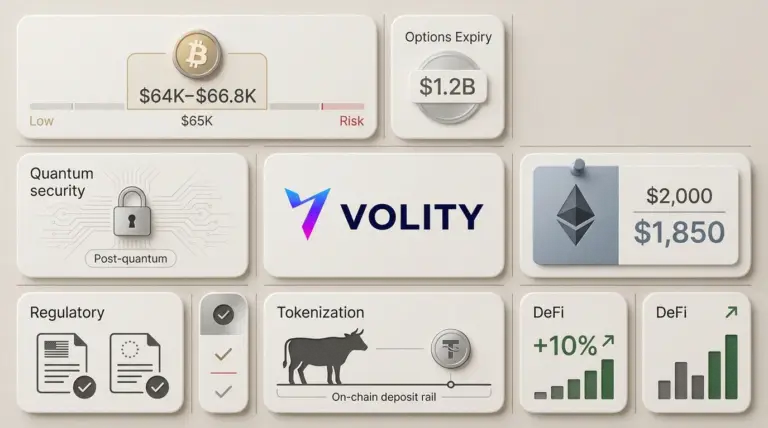
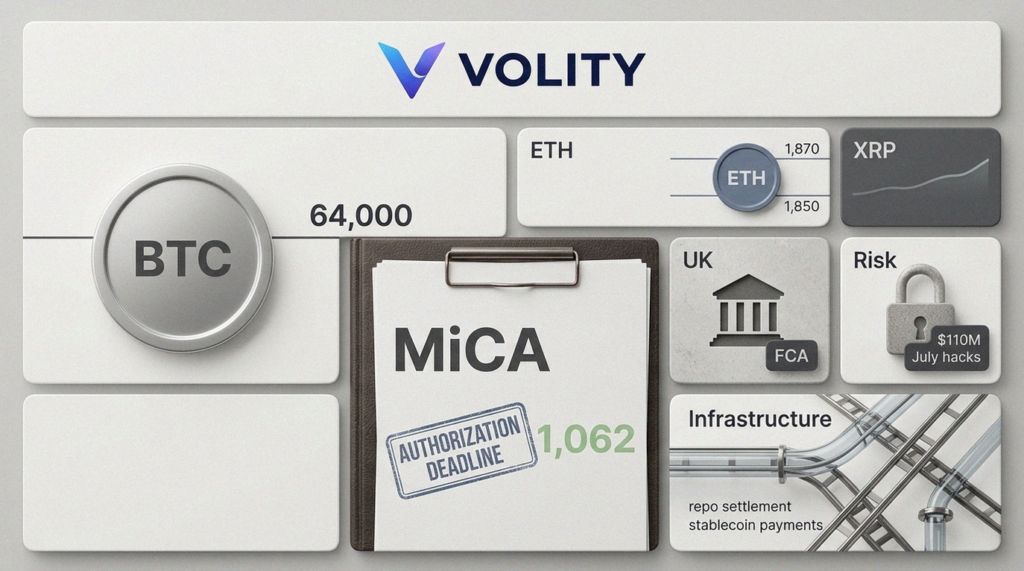
Bitcoin slipped back below the $64,000 area, with traders watching support near $63,900. Meanwhile, Ethereum hovered around $1,850 to $1,870, leaving little room for complacency.
Altcoins looked weaker still. XRP and Cardano were among the laggards, while the broader tape carried that familiar August feel: thin conviction, fast moves and little patience.
However, the mood is not simply bearish. Large wallets appear to be adding BTC, ETH and XRP during the pullback. That matters because spot weakness can hide slower accumulation beneath the surface.
The market’s message is awkward rather than clean. Momentum traders see lower levels. Longer-horizon buyers see a chance to build positions while noise rises.
Policy calendar gets crowded
Regulation remains the loudest force on the tape. In Washington, the White House is still pressing for the CLARITY Act to move in September.
However, the bill’s path through Congress remains uncertain. Crypto lobbyists want speed, while sceptics still want tighter guardrails around exchanges, stablecoins and token listings.
The Securities and Exchange Commission has also set an Aug. 14 meeting on crypto offering rules. For traders, that keeps U.S. policy risk firmly in play.
Meanwhile, Europe is already showing what a harder regime looks like. Under MiCA, 1,062 European Economic Area crypto firms missed the authorisation deadline.
That is not a clerical hiccup. It is a sorting event. Some firms will adapt, some will sell, and some may simply vanish.
In Britain, Coinbase is moving the other way. The company is rolling out crypto derivatives for professional investors, with leverage of up to 50 times.
At the same time, lawmakers are pressing banks over crypto account access before the new Financial Conduct Authority regime takes fuller shape.
So the United Kingdom now has two stories running together. Sophisticated clients want more products. Still, parts of the banking system remain wary of the whole trade.
By the numbers
- $64,000 – Bitcoin’s recent pressure zone after the latest macro wobble.
- $1,850 to $1,870 – Ethereum’s recent trading band in market snapshots.
- 1,062 – EEA crypto firms that missed the MiCA authorisation deadline.
- $110 million – Reported crypto hack losses in July.
- 50x – Maximum leverage on Coinbase’s new UK professional derivatives products.
Security still taxes the trade
The security headlines remain stubborn. Crypto hacks cost roughly $110 million in July, even as bug reports continued to rise.
BTCPay Server supporters backed a bounty to recover stolen Bitcoin after a reported exploit. Elsewhere, an XRP bridge lost 200,000 XRP.
That bridge incident involved a relayer logic flaw, the kind of small technical failure that can become expensive very quickly.
Ravencoin also fell sharply after a consensus flaw split the network. For investors, that is the problem with infrastructure risk. It rarely arrives politely.
Crypto’s risk premium still includes much more than volatility. It includes code risk, bridge risk, custody risk and operational habits that are hard to audit from a chart.
This matters most when leverage grows. A 50-times product can make sense for a professional desk. However, it also turns small market gaps into balance-sheet events.
Infrastructure keeps moving
Even so, the pipes are getting bigger. Broadridge reportedly processed $8 trillion in July throughput on its blockchain repo platform.
That figure is useful because it separates the speculative story from the plumbing story. Tokens wobble daily. Settlement systems, meanwhile, keep looking for cost savings.
Decta’s use of USDC settlement points in the same direction. Stablecoins remain controversial in policy circles, but companies keep testing them for faster movement of money.
For traders, this creates a split market. The public coins face macro pressure and regulatory scrutiny. Behind the scenes, financial infrastructure keeps absorbing blockchain tools.
That does not guarantee higher token prices. However, it does help explain why institutional interest does not disappear during sell-offs.
Companies search for new angles
Brokerage consolidation is also worth watching. eToro plans to buy TradeZero, while crypto trades are reportedly down 73 per cent year over year.
That combination tells a simple story. Retail enthusiasm is softer, so platforms want scale, wider product shelves and cheaper customer acquisition.
KuCoin, meanwhile, earned ISO 22301 certification for operational resilience. That may sound dry, but exchanges now sell trust as much as access.
After several brutal sector scandals, a resilience badge is not decoration. It is part of the pitch to customers, banks and regulators.
Corporate treasuries remain active too. Trump Media reportedly holds 14,139 BTC while posting a quarterly loss.
Strategy, the company still widely associated with Michael Saylor’s Bitcoin bet, sold Bitcoin to fund a STRC buyback.
That is notable because Strategy built its reputation on buying, not selling. Even small shifts in its capital structure invite close reading.
Miners are also broadening their story. Riot Platforms surfaced with a reported $9.1 billion artificial intelligence deal, showing how power-heavy businesses are chasing AI demand.
That is logical. Bitcoin mining rewards can tighten after halvings, while data-centre demand remains fierce. Still, investors should ask what these companies are becoming.
Key takeaways
- Bitcoin needs to hold the $63,900 area to avoid another round of momentum selling.
- Ethereum remains vulnerable if the $1,850 level turns from support into resistance.
- XRP carries mixed signals: large-wallet interest, weak flows and fresh bridge-security concerns.
- Policy is now a direct trading variable, with U.S., UK and EU decisions moving in parallel.
- Infrastructure adoption remains stronger than spot sentiment suggests, especially in settlement and repo markets.
For now, crypto has three markets at once. Prices are soft, rulebooks are hardening, and institutional plumbing keeps expanding.
That mix rewards patience more than bravado. Meanwhile, the next break in Bitcoin will probably decide whether traders treat this dip as value or warning.
Related coverage on Volity
- How to Avoid Crypto Scams: A Beginner Safety Checklist
- How to Choose a Trading Platform: A 10-Point Checklist
- Demo vs Live Trading Account: A 7-Step Checklist Before You Go Live
- How to Size a Trade: Position Sizing and Risk Per Trade for Beginners
- Risk-Reward Ratio Explained: How to Set It and Why It Matters
- ETF vs Index Fund: The Difference and Which to Pick