Crypto’s new fault lines: ETF money returns as regulators redraw the map
Thursday, September 24, 2026
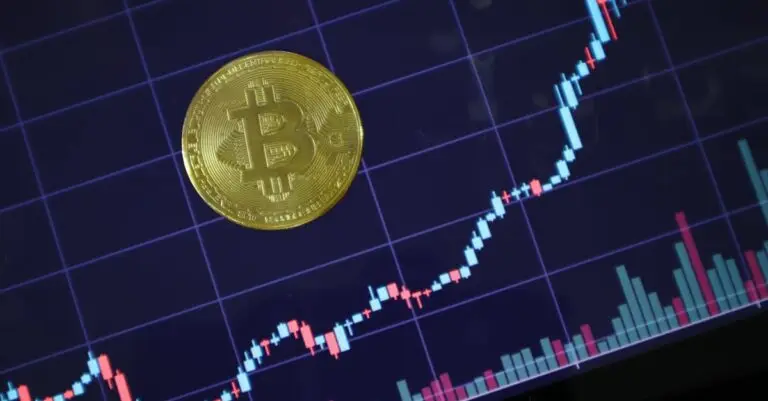
Crypto opened stronger on Thursday, though the market’s foundations look increasingly complicated. Bitcoin traded near $84,000, supported by five straight sessions of inflows into US spot Bitcoin exchange-traded funds.
Meanwhile, regulators in Europe and America sharpened their focus on lending, stablecoins and tokenised securities. Institutional money is arriving faster, but the rulebook is catching up.
Bitcoin buyers return after Fed sell-off
Bitcoin’s recovery came after a Federal Reserve rate increase rattled risk assets. Spot Bitcoin ETFs suffered roughly $746 million of withdrawals on September 15 and 16.
Funds lost nearly $296 million on the Fed decision day alone. Yet the mood reversed quickly after the initial shock.
Over the following five sessions, investors put about $2.65 billion back into those funds. The latest daily tally reached roughly $347 million.
That demand lifted Bitcoin towards $84,000 after sellers rejected it near $87,000. It also suggests large buyers still view sharp declines as opportunities.
The next obvious test sits around $85,000. A firm break above that level could revive momentum trades.
A drop below the low-$80,000 range would tell a less cheerful story. Traders would then question whether ETF flows, rather than lasting conviction, drove September’s rebound.
Europe targets lending’s grey areas
The European Banking Authority wants crypto lending brought closer to the MiCA regulatory framework. Its attention extends to decentralised-finance protocols accessed through regulated providers.
That distinction matters because exchanges and wallets often provide the practical front door. Customers may experience the service as ordinary lending, even when smart contracts handle the transaction.
Officials are discussing suitability checks, leverage limits and fuller risk disclosures. They are also considering certification requirements for DeFi lending protocols.
European central banks have pressed for wider restrictions on stablecoin-linked yield products. Their concern includes indirect returns from lending, borrowing and staking arrangements.
The MiCA review remains open until September 30. No automatic rule change arrives on October 1, despite the growing political pressure.
Traditional finance is not waiting for every legal question to be settled. The New York Stock Exchange has explored tokenised US stocks and possible round-the-clock trading.
British banks have also tested tokenised deposit transactions. Barclays, Lloyds and NatWest have each shown interest in programmable bank money.
The appeal is easy to understand. Digital rails could shorten settlement, cut reconciliation work and move assets outside conventional market hours.
Still, a token is not automatically a share. Investors need answers on dividends, voting rights, legal ownership and custody.
Continuous trading creates another awkward question. A tokenised stock may trade at 3am, but its underlying exchange and issuer may not.
Thin overnight liquidity could widen spreads and create fragmented prices. A fast market can still be a poor market.
Real-world assets gain volume, and risk
Deposits tied to real-world-asset platforms have reportedly tripled to around $7.4 billion. Perpetual decentralised exchanges focused on such assets have generated about $365 billion in trading volume.
Stocks have led much of that activity. Credit products, government debt and fund units are also moving onto blockchain rails.
These markets offer traders more than familiar crypto cycles. They can now chase equity or bond exposure through platforms built for digital assets.
Yet volume does not prove quality. Collateral, redemption terms and price-oracle design can matter more than a glossy trading interface.
Buyers should also examine the token’s legal status. A claim on an asset is not always ownership of that asset.
Stablecoins become a policy tool
Stablecoins now attract attention far beyond crypto exchanges. Survey data showed interest rising to 56% when respondents received stronger consumer protections.
US officials see another potential benefit. Dollar stablecoins could lift demand for Treasury bills if issuers hold short-dated government debt as reserves.
That prospect gives stablecoins geopolitical weight. They could distribute dollar liquidity across borders without traditional banking networks.
It also raises the stakes when reserves look weak or redemptions slow. Regulators will scrutinise issuers, custodians and their banking relationships much more closely.
Security reaches the boardroom
Security has moved beyond a specialist concern for protocol developers. Industry groups and law-enforcement agencies are focusing on scams, hacks and North Korean cyber operations.
Quantum computing poses a more distant, but serious, infrastructure challenge. Future machines may eventually undermine cryptography protecting wallets and custody systems.
Coinbase is preparing post-quantum Bitcoin custody technology. That work remains early, yet it signals a longer planning horizon.
Thursday’s market offers a clear contrast. Bitcoin is drawing institutional capital while banks build tokenised alternatives around it.
Regulators are deciding which activities need traditional protections. Platforms with liquidity, transparent ownership and resilient security may hold the stronger hand.
Related coverage on Volity
- How to Avoid Crypto Scams: A Beginner Safety Checklist
- How to Choose a Trading Platform: A 10-Point Checklist
- Demo vs Live Trading Account: A 7-Step Checklist Before You Go Live
- How to Size a Trade: Position Sizing and Risk Per Trade for Beginners
- Risk-Reward Ratio Explained: How to Set It and Why It Matters
- ETF vs Index Fund: The Difference and Which to Pick