Crypto’s two-speed market: Policy builds while prices wobble
October 10, 2026 – Crypto investors face a market split between shrinking risk appetite and expanding institutional infrastructure.
Bitcoin closed near $82,546 on October 9 after a volatile week. Meanwhile, US spot Bitcoin exchange-traded funds suffered $729 million of net outflows across two sessions.
Traders are reducing immediate exposure, although longer-term buyers still cite debt, currencies and monetary policy. The result is a market where prices look nervous while regulation and product development continue apace.
Bitcoin trades inside a tightening range
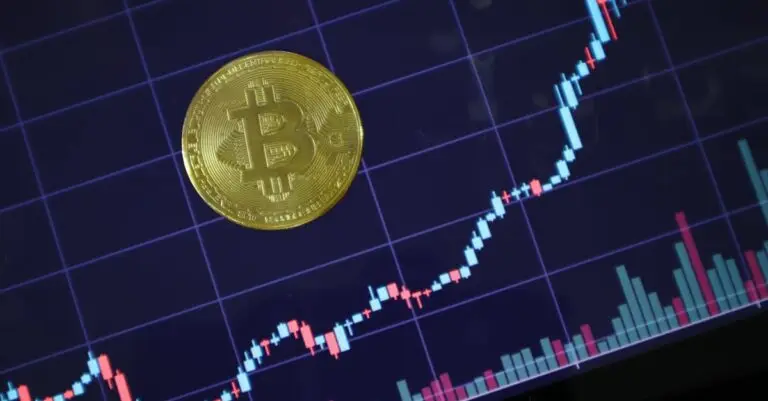
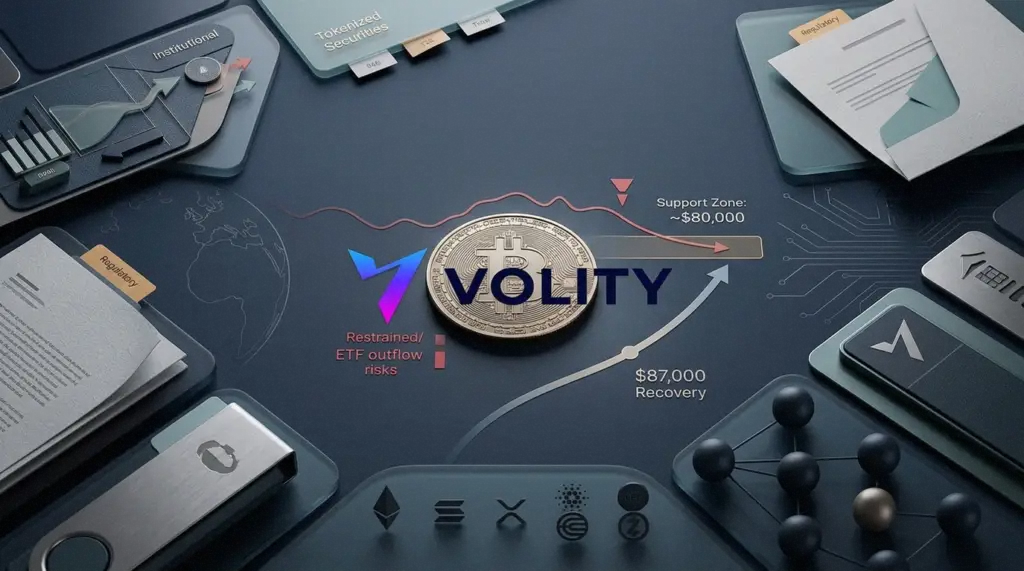
Bitcoin now needs to recover $87,000 to rebuild short-term momentum. However, a fall below the low-$80,000 area could trigger another round of liquidations.
Geopolitical headlines have amplified every move. Bitcoin dropped as investors cut risk, then recovered when fears around Iran eased.
That bounce did not change the market’s defensive tone. Derivatives traders remain sensitive to funding costs, ETF flows and sudden shifts in dollar liquidity.
Longer-term bitcoin advocates point to historical returns. One industry study estimated a 633% real return over its measured period, ahead of gold and equities.
Those figures offer little comfort during a rapid drawdown. For traders, positioning and liquidity matter far more than a decade-old performance chart.
ETF selling turns selective
Crypto exchange-traded products lost $1.29 billion as bitcoin and ether led withdrawals. Yet US spot Bitcoin ETFs drew $21.1 million on October 9.
The reversal followed an earlier outflow and suggests institutions have not abandoned the market. Instead, many investors appear to be trading around volatility rather than building immediate positions.
Tokenisation is opening another front. Robinhood is exploring a tokenised ETF with T. Rowe Price, while tokenised Apple shares have appeared on Solana.
The technology may widen access, but ownership terms remain the real test. Buyers need clear answers about legal claims, asset custody, redemptions and platform failure.
European regulators have raised similar concerns about tokenised assets during market stress. The Commodity Futures Trading Commission is also shaping rules for blockchain records and tokenised collateral.
Its focus includes liquidity, valuation, custody and enforceable legal rights. Those details may sound dry, yet they determine whether a token behaves like a security or merely resembles one.
China backs networks, not open token markets
China has announced plans for a national blockchain network and an integrated computing grid. Officials want the systems to support manufacturing, data ownership and digital commerce.
The plan does not signal a reopening of cryptocurrency trading. Beijing still treats blockchain as state-managed infrastructure, not a licence for privately issued tokens.
That distinction matters for investors. Governments can embrace distributed records while remaining deeply suspicious of open financial networks.
Hong Kong is tightening its financial perimeter as well. Authorities have warned unlicensed payment platforms that enforcement may follow.
The warning arrives during a weak period for the city’s securities industry. Trading-fee revenue fell 13.5% to HK$99.3 million during the first half of 2026.
Leverage returns at alarming scale
Papertrade plans to offer positions with leverage of up to 1,000 times after reporting $85.3 million in deposits. The proposal shows that crypto’s taste for risk remains intact.
At that level, a small adverse move can erase a trader’s margin. Fees may rise quickly, but so can liquidations and losses.
Regulators increasingly focus on this financing layer. The CFTC’s work on leveraged retail commodity transactions reflects concern about products that magnify modest price swings.
Prediction markets face their own legal battle. The CFTC has proposed classifying sports-event contracts as swaps.
Legal disputes may soon reach the Supreme Court. The eventual ruling could define these markets as derivatives, gambling products or something entirely new.
XRP gains a listed treasury vehicle
Evernorth completed its merger holding 473 million XRP ahead of a Nasdaq debut. The deal puts XRP at the centre of a public-company treasury strategy.
A listing could give equity investors a new route to XRP exposure. Still, the shares may trade far above or below the value of their digital holdings.
Management quality, financing terms and custody arrangements will shape that premium. So will the wider appetite for crypto-treasury companies.
XRP has not escaped the broader market weakness. The token lost support near $1.43, leaving $1.28 as the next closely watched downside level.
A Nasdaq listing may generate attention, but it cannot manufacture market liquidity. Nor can it reverse a weak chart without sustained demand.
Security fears and quantum questions
An attacker connected to the Triple-A incident moved $12.4 million of ether into Tornado Cash. The transfer again exposed the difficulty of containing stolen digital assets.
In Thailand, robbers reportedly took about $820,000 in crypto during a raid on a luxury home. Physical coercion remains an uncomfortable risk for visible token holders.
Quantum computing has also moved into policy debates. President Trump unveiled a $215 million quantum-computing plan, while Zcash is preparing a quantum-safe upgrade.
Bitcoin does not face an immediate cryptographic collapse. Yet old public keys and outdated address practices could become attractive targets if quantum systems advance sharply.
Altcoins hunt for a fresh catalyst
Worldcoin’s WLD is testing resistance around $0.61 after a technically stronger run. Pyth Network rose 14%, showing how quickly infrastructure tokens can attract speculative money.
Solana is preparing a faster-block upgrade while SOL remains under price pressure. Ethereum, meanwhile, is fighting to hold $2,500 after its Supertrend indicator turned bearish.
Cardano looks fragile below $0.24, with $0.21 in focus. Pi Network fell 10%, while Zcash has attempted a recovery towards $1,300.
NFTs offered one brighter corner. Weekly sales reached $39.85 million, and Pudgy Penguins sales climbed 125%.
Liquidity remains far below the boom years. Even so, traders are returning to collections with strong branding and recognisable communities.
What traders should watch
- Bitcoin: $87,000 remains the near-term upside test, while the low-$80,000 range marks key support.
- Fund flows: Daily ETF data now carries as much weight as many technical indicators.
- Leverage: Extremely high margin products can turn calm trading into a liquidation event.
- Tokenisation: Legal ownership and redemption rights matter more than the blockchain used.
- Regulation: Rules on collateral, swaps and payment platforms will shape which businesses survive.
Crypto no longer trades on one grand narrative. Bitcoin acts like a macro asset, XRP is becoming a treasury vehicle, and tokenised securities are probing traditional finance.
That makes the market more mature, but also harder to read. Blockchain adoption may not lift token prices, while a listed vehicle may bring attention without lasting demand.
Investors should watch flows, leverage, legal language and support levels together. In this market, the pipes beneath the tokens increasingly matter as much as the tokens themselves.
Related coverage on Volity
- How to Avoid Crypto Scams: A Beginner Safety Checklist
- How to Choose a Trading Platform: A 10-Point Checklist
- Demo vs Live Trading Account: A 7-Step Checklist Before You Go Live
- How to Size a Trade: Position Sizing and Risk Per Trade for Beginners
- Risk-Reward Ratio Explained: How to Set It and Why It Matters
- ETF vs Index Fund: The Difference and Which to Pick