Crypto under pressure as Bitcoin tests $80,000 and institutional adoption keeps expanding
Monday, October 26, 2026. Bitcoin began the week below $80,000, as traders cut risk before the Federal Reserve’s October meeting.
The retreat arrived alongside a familiar contradiction. Token prices weakened, while financial firms kept building products, funds and settlement systems around digital assets.
Bitcoin faces a macro test
Bitcoin fell to roughly $79,600 during Asian trading before recovering towards $80,000. It had traded near $84,000 last Thursday.
Oil prices rose, Asian equities softened and inflation worries returned. Those forces pushed investors away from volatile assets before the Fed’s October 27-28 decision.
Rate futures still indicated a strong chance of unchanged policy. The Fed’s target range stands at 3.75% to 4%.
However, traders care more about the language around future cuts. A cautious Fed could prolong the market’s defensive mood.
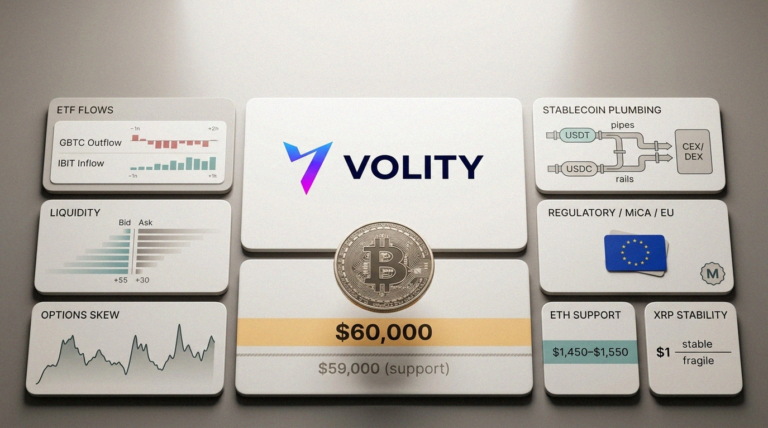
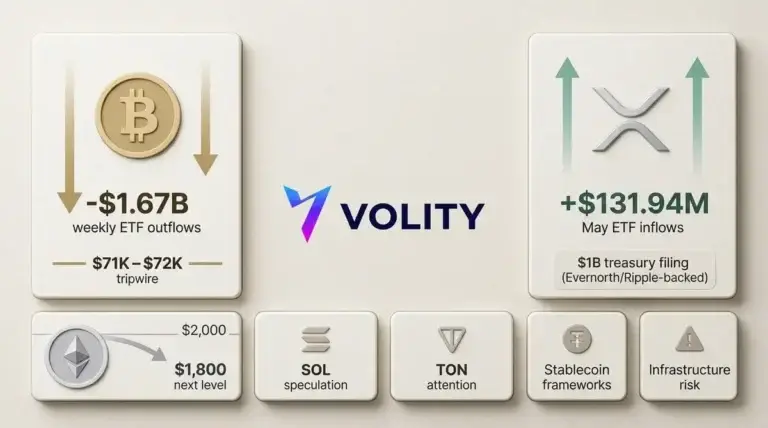
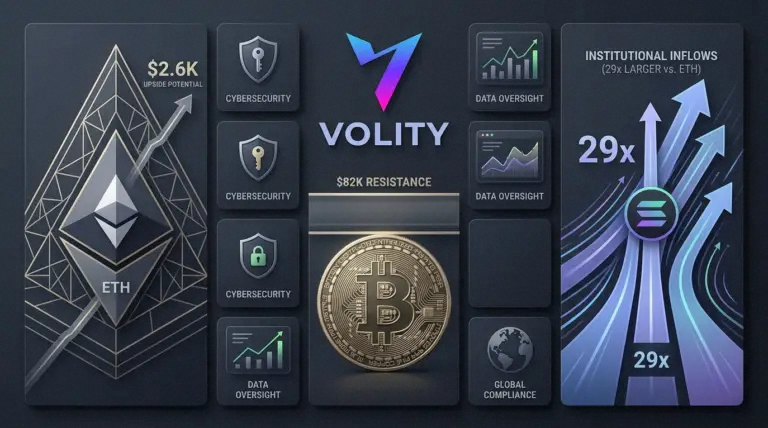
Bitcoin needs to regain $83,000 to calm immediate technical concerns. A sustained break below $80,000 could trigger another round of forced selling.
Earlier liquidations showed the danger clearly. About $191 million in long positions disappeared during a previous move beneath that level.
Altcoins suffered more sharply over the weekend. XRP, Solana and Zcash all faced steep declines as leverage unwound.
- Bitcoin low: about $79,600 in Asian trading
- Near-term resistance: $83,000
- Long liquidations: roughly $191 million during an earlier break below $80,000
- Fed meeting: October 27-28
CoinDCX exposes the danger of old wallet infrastructure
India’s CoinDCX said it lost $15.99 million in USDT from deprecated deposit wallets. The episode stemmed from a failure in its internal transfer process.
Customers had continued sending funds to older wallet addresses. CoinDCX credited those deposits, but its automated sweeping service did not move them into primary wallets.
The assets remained in ageing infrastructure until attackers drained about 40 TRON addresses. One wallet reportedly contained $15.82 million from 88 deposits.
CoinDCX said customer balances and active trading systems were unaffected. It also said it would absorb the loss itself.
Yet the disclosure raises difficult questions about retired addresses and failed-transfer monitoring. An address does not stop carrying risk simply because a company labels it obsolete.
Tether reportedly froze $2.21 million connected to the theft. Still, that leaves most of the loss outside immediate reach.
Traditional finance keeps widening its crypto links
Bitmine added 10,452 ETH as its share-buyback programme approached $400 million. The company is pairing Ethereum accumulation with capital-market support for its stock.
Meanwhile, Vanguard was reported to have bought about $7.5 million of Metaplanet shares. The purchase would offer indirect exposure to one of Bitcoin’s most visible corporate treasury strategies.
Franklin Templeton is planning two ETFs that would convert stock dividends into Bitcoin exposure. The structure targets investors who prefer funds over direct coin ownership.
Aviva Investors also placed a share class of its £22 billion fund on the XRP Ledger. Distribution restrictions still limit access, particularly for retail investors.
Even so, the move matters. Tokenisation is shifting from small demonstrations towards regulated financial products with established managers behind them.
Stablecoins become a fight over payments
Hong Kong’s licensed stablecoin issuers are taking different routes towards retail adoption. Anchorpoint is weighing a consumer launch after HSBC introduced RedCoin.
Regulators, however, want issuers to prove reserves, governance and compliant distribution first. That standard could slow launches, but it may also separate payment products from speculative tokens.
The stakes extend beyond crypto trading. Stablecoins compete for control of the payment and settlement layer beneath everyday commerce.
European officials have made a similar argument for the digital euro. They want Europe to retain influence over payments, data and financial access.
For markets, wider stablecoin use could lift demand for short-term government debt and regulated custody. It also raises the price of operational mistakes.
Network growth does not guarantee token gains
Sony-backed Soneium is preparing a native token around entertainment intellectual property. Its strategy leans on music, games and media rather than pure financial speculation.
Fhenix has launched encrypted smart-contract computation on Ethereum and Arbitrum. The service aims to process sensitive information without exposing it on public blockchains.
Solana’s tokenised-stock user base reportedly rose fivefold, while SOL declined. That split offers a useful warning for investors.
Usage can grow while native tokens fall. Traders may still be reducing risk, hedging exposure or shifting cash into safer assets.
Security problems also kept attention on the industry’s weak points. Foundation warned Passport users after a Cloudflare API-key breach.
BloomTrading promised refunds after a Solana wallet drain worth roughly $954,000. Electrum released a security fix after a flaw was linked to stolen Bitcoin.
Those cases differ in detail, but they share one lesson. Custody depends on every tool surrounding the private key.
What traders should watch
- Watch whether Bitcoin holds $80,000 after the Fed’s statement.
- Track liquidation data if prices revisit last week’s low.
- Separate token-price weakness from genuine growth in funds, payments and tokenisation.
- Treat old wallet addresses and third-party services as active security risks.
The market enters the week short on confidence but rich in development activity. Prices may dictate the next few days, while infrastructure spending may shape the next cycle.