Crypto markets enter defensive mode as regulation and tokenisation move to the front line
November 24, 2026 – Crypto markets opened with sellers firmly in charge. Bitcoin hovered near $60,000 as investors withdrew money from exchange-traded funds.
Altcoins fell harder, while Ethereum struggled around $1,700. Yet banks, regulators and trading venues kept building the systems behind tokenised finance.
Bitcoin hits a selling wall
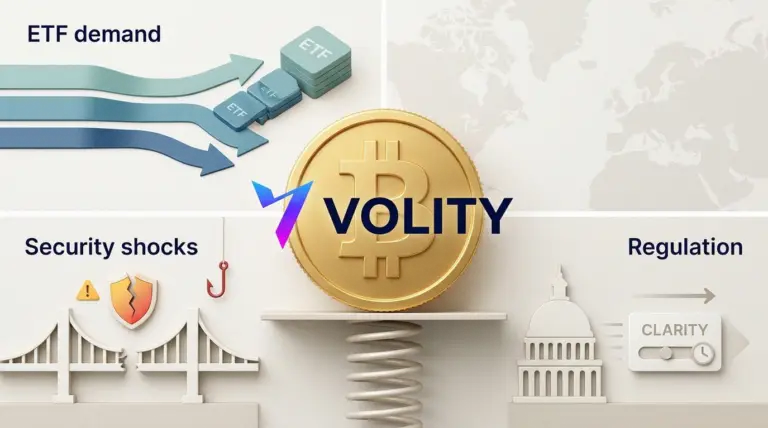
Bitcoin’s latest recovery attempt ran out of buyers before it reached convincing territory. US spot Bitcoin ETFs recorded roughly $3.47 billion of net November outflows.
That figure dwarfed October’s estimated $515 million of withdrawals. Combined Bitcoin and Ethereum fund redemptions reached $728 million in one recent reporting period.
BlackRock funds featured among the larger redemptions. That does not signal an institutional retreat from crypto, but it removes a reliable source of demand.
Fund outflows force market makers to absorb more selling. In thin conditions, that mechanical pressure can turn a modest decline into a sharp move.
Ethereum funds also saw further withdrawals, adding pressure near $1,700. That level now matters because traders recently treated it as a launchpad.
Meanwhile, memecoin enthusiasm has faded quickly. The wider altcoin market shed hundreds of billions of dollars in value during the retreat.
Macro concerns have made the mood worse. Investors are weighing potential US tariffs affecting China and the European Union.
Trade restrictions can lift inflation and curb growth. As a result, investors often cut technology shares and crypto at the same time.
Bitcoin’s supporters call it an alternative monetary asset. However, its behaviour during sudden risk-off sessions still resembles a volatile technology trade.
Gold retains the defensive edge
Gold has again taken centre stage in the argument over digital scarcity. Central banks hold it, institutions understand it, and its market structure has endured for centuries.
Bitcoin offers easier transport, fine-grained divisibility and transparent issuance. Its 21 million-coin ceiling also appeals to investors wary of monetary expansion.
Still, investors buy gold more readily when markets become unsettled. Bitcoin must first persuade holders that it can retain value during the stress.
ETF outflows show that conviction remains conditional. The next test is whether buyers defend $60,000 with sustained spot demand.
South Korea sketches a new crypto bargain
South Korea has unveiled a draft digital-asset bill with a more open, but more demanding, approach. The proposal would permit won-denominated stablecoins through bank-led consortiums.
Banks would initially hold majority stakes in those ventures. Issuers would need approval, at least 5 billion won of capital, and full reserve backing.
Holders would have a right to redeem tokens at face value. That provision addresses the central question facing every stablecoin: whether a digital promise remains dependable during a rush for exits.
The bill would also reopen domestic initial coin offerings. South Korea restricted ICOs in 2017 after a wave of opaque fundraising.
Projects would need white papers and clear risk disclosures before offering tokens. The proposal aims to keep founders and capital at home without reviving the market’s least disciplined habits.
Exchange shareholders would face tighter limits too. Major stakes would generally stop at 20%, although regulators could approve holdings up to 34%.
Platforms would also carry stronger responsibility for hacks and failures involving customer assets. For exchanges, growth now comes with a larger compliance bill.
Swiss institutions test tokenised settlement
Switzerland offered a calmer counterpoint to the day’s falling prices. The Swiss National Bank launched an exploratory project around a Swiss Financial Ledger.
UBS, SIX, Zürcher Kantonalbank, PostFinance, Banque Cantonale Vaudoise, Basler Kantonalbank, Sygnum Bank and Seturion joined the work.
The group will test settlement of tokenised assets using central-bank money. It will examine Swiss transactions and cross-border activity linked with Project Agorá.
Such projects rarely excite short-term traders. Yet settlement finality, usable collateral and legal certainty decide whether tokenisation can reach mainstream securities markets.
Finance’s blockchain push has therefore moved away from spectacle. Firms now focus on payments, collateral movements and the machinery beneath ordinary investing.
Stablecoins push into everyday finance
Circle’s reported discussions with Turkish exchange Paribu highlight the contest for stablecoin distribution. Turkey’s investors have long sought dollar-linked assets amid currency pressure.
A broader USDC presence could support remittances, savings and trading. Local rules and competition from rival dollar tokens will shape its prospects.
Exchanges are widening their ambitions at the same time. Binance plans to provide real-time US equity-market data through Cboe.
Other platforms are extending tokenised access to shares, commodities and longer trading hours. The line between crypto exchange and global brokerage is thinning.
That convenience has a cost. Binance expects to suspend crypto withdrawals across networks on November 25 for maintenance.
Routine outages still matter during volatile sessions. They remind users that access to decentralised assets often depends on centralised systems.
Security remains expensive
Authorities are pursuing about $1.1 billion in crypto linked to a Binance-related hack. Binance is cooperating with efforts to recover the stolen assets.
Blockchain records can help trace funds across wallets. Recovery, however, relies on exchanges, investigators and timely freezes before assets reach obscure venues.
The Ethereum Foundation also plans to enlarge its security team. It is preparing for risks linked to artificial intelligence and quantum computing.
Bitcoin Core developers recently fixed a bug that could stall nodes for several seconds. These repairs rarely move markets, but price discovery depends on them.
What traders are watching
- Bitcoin: $60,000 remains the immediate test of spot demand and market confidence.
- Ethereum: $1,700 has become a key level after continued ETF withdrawals.
- Fund flows: Stabilising ETF subscriptions would ease a major source of mechanical selling pressure.
- Regulation: South Korea’s proposal favours stablecoins and fundraising, while demanding reserves, disclosure and accountability.
- Infrastructure: Swiss settlement tests may matter longer than the week’s price swings.
For now, crypto trades defensively and rallies are meeting sellers. Beneath the red screens, though, regulated tokenised finance continues to gain structure.
Related coverage on Volity
- How to Avoid Crypto Scams: A Beginner Safety Checklist
- How to Choose a Trading Platform: A 10-Point Checklist
- Demo vs Live Trading Account: A 7-Step Checklist Before You Go Live
- How to Size a Trade: Position Sizing and Risk Per Trade for Beginners
- Risk-Reward Ratio Explained: How to Set It and Why It Matters
- ETF vs Index Fund: The Difference and Which to Pick