Investing in financial products involves risk. Losses may exceed the value of your original investment.
The Crypto Trading Starter Kit
A plain-English PDF: what to check before you trade, how orders and risk really work, and the mistakes to skip. Get it free.
Accurately calculating your crypto profit is fundamental to managing your investments and fulfilling tax responsibilities. This guide will walk you through the essential methods, hidden costs, and tax considerations, making sure you have a clear picture of your financial standing in the dynamic cryptocurrency market.
While understanding Crypto is important, applying that knowledge is where the real growth happens. Create Your Free Crypto Trading Account to practice with a free demo account and put your strategy to the test.
What is crypto profit?
Crypto profit is the positive financial gain achieved when you sell, trade, or spend cryptocurrency for a value higher than its original cost basis. It represents the net gain on your initial investment amount after accounting for all associated expenses. This calculation is essential for investors to assess their trading success and determine their tax liabilities.
Why is it important to calculate crypto profit?
Profit math drives the crypto tax filing, and CARF reporting depends on accurate cost-basis tracking.
Calculating your crypto profit is essential for several reasons, primarily for tax compliance, performance tracking, and making informed investment decisions. Accurate calculations help you understand the true profitability of your strategies and avoid potential legal issues with tax authorities. It provides a clear financial overview of your crypto activities.
What is ROI in crypto?
For when to actually book those gains, see our guide on how to sell crypto and converting crypto to cash.
Return on Investment (ROI) in crypto measures the profitability of an investment relative to its initial cost. It is expressed as a percentage, indicating the efficiency of your investment. While absolute crypto profit shows the dollar amount gained, ROI provides a standardized metric to compare the performance of different investments, regardless of their size. The formula is:
ROI = ((Current Value − Initial Investment) ÷ Initial Investment) × 100%
How do I know if I made a profit on my crypto?
If you’re still building the fundamentals, our cryptocurrency primer covers the asset class basics.
You know you have made a profit on your crypto when the value of your assets at the time of sale, exchange, or spending exceeds their cost basis. This is specifically known as a realized profit.
Manual Crypto Profit Calculation
For a wider toolkit, see our guide to best crypto trading tools, many calculate P&L automatically across exchanges.
The core principle behind calculating crypto profit is simple: Selling Price - Buying Price = Gross Profit. For instance, if you bought 1 Ethereum (ETH) for $1,500 and later sold it for $2,000, your gross profit would be $500. This basic calculation forms the foundation for understanding your gains before considering fees and other complexities.
Cost basis is the original value of an asset for tax purposes, adjusted for commissions, fees, and other expenses. For crypto, it includes the purchase price of the asset plus any transaction fees incurred during acquisition. A precise cost basis calculation is fundamental because it directly impacts your net profit and subsequent capital gains tax liability.
Choosing a Cost Basis Method: FIFO, LIFO, or Average Cost?
Selecting the correct cost basis method is crucial for accurate crypto profit calculation, especially when you make multiple purchases at different prices, and the method is set by your own tax authority rather than by your software. In the UK, HMRC does not allow you to pick: identical tokens are pooled into a single section 104 pool and the pooled average cost is used on disposal. See CRYPTO22200: Capital Gains Tax: pooling. Other jurisdictions differ sharply, and some require per-wallet tracking instead.
- Pooling (section 104, UK): All units of the same token form one pool with a single average cost. HMRC applies this by default and it is not optional.
- FIFO (First-In, First-Out): Assumes the first assets you bought are the first sold. The most common default where pooling does not apply.
- Specific ID: Lets you choose which units you are selling, where the rules permit it and your records support it.
- HIFO (Highest-In, First-Out): Sells the most expensive units first. Permitted in some jurisdictions and not in others.
Ready to Elevate Your Trading?
You have the information. Now, get the platform. Join thousands of successful traders who use Volity for its powerful tools, fast execution, and dedicated support.
Create Your Account in Under 3 MinutesHow Fees Impact Your Crypto Profit?
Transaction fees are often overlooked but significantly reduce your net crypto profit. Every time you buy, sell, or transfer cryptocurrency, various fees apply. Accurately tracking these buy and sell fees is essential for determining your true profitability.
Key Types of Transaction Fees to Track
Several types of transaction fees can impact your crypto profit:
- Gas Fees: Payments to miners/validators on decentralized networks.
- Exchange Fees: “Maker” or “taker” fees charged by platforms like Binance or Coinbase.
- Withdrawal Fees: Costs associated with moving crypto to a hardware wallet.
Including Fees in Your Cost Basis
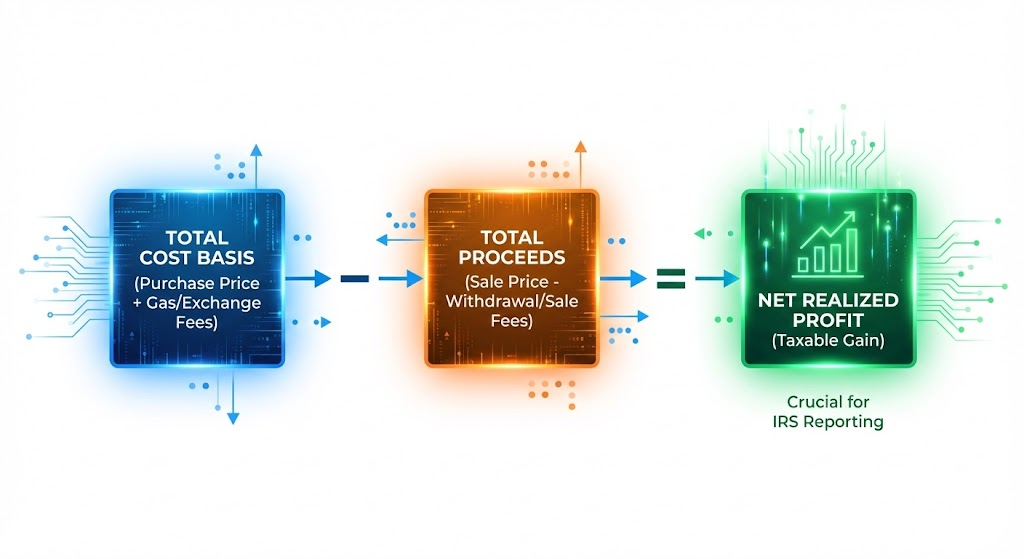
For accurate profit calculation, transaction fees incurred during acquisition should be added to the buying price. Conversely, fees incurred during a sale reduce your proceeds.
Net Profit = (Sale Price − Sale Fees) − (Purchase Price + Purchase Fees)
Is Crypto Profit Always Taxable?
Yes, crypto profit is generally taxable. HMRC and most tax authorities treat crypto as a taxable asset, meaning every swap (e.g., BTC to ETH) or spend is a disposal that can trigger Capital Gains Tax. From 2026, exchanges are required to report your gross proceeds to tax authorities under the OECD Crypto-Asset Reporting Framework (CARF).
Holding Period and Tax Treatment
How long you hold a cryptocurrency can change its tax treatment, and the rules vary widely by country. Some jurisdictions apply lower rates or exemptions to assets held for more than a year (Germany, for example, can exempt gains after 12 months), while others such as the UK apply Capital Gains Tax at the same rate regardless of holding period, on gains above the annual exempt amount. Always check the rules of your own tax authority.
Crypto Profit Calculators for Accuracy
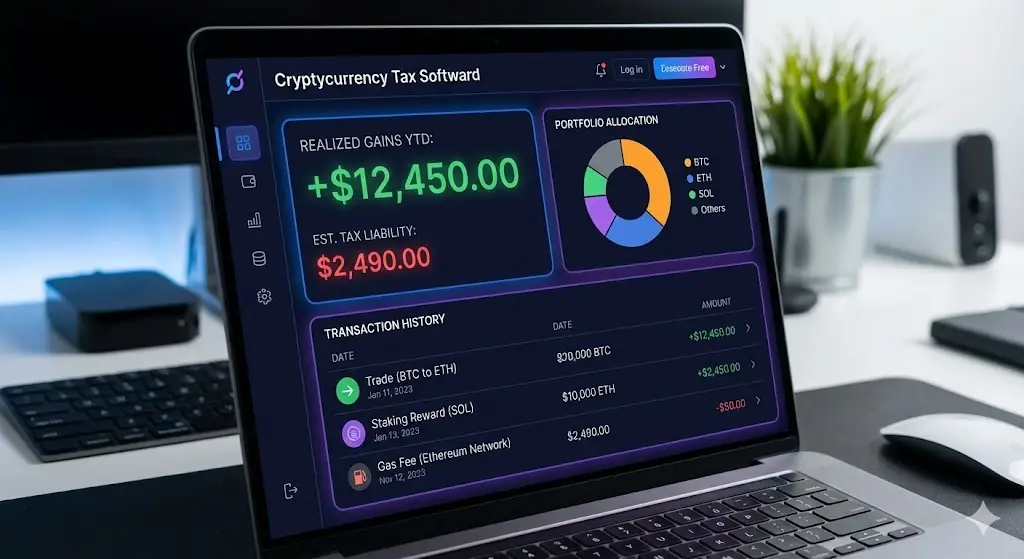
Using a crypto profit calculator is essential for any investor with more than a few trades. Manual spreadsheets quickly become unmanageable when dealing with transfers across multiple exchanges and wallets. Dedicated crypto tax software will import an exchange history and produce a capital-gains report for your return. Check before you buy that the tool implements the accounting method your own tax authority requires, because a tool built around a different rule will produce a confident and wrong number.
How to Effectively Use a Profit Calculator
To get accurate results, connect your exchanges via read-only API keys or upload CSV files. The software will automatically match transfers between your own wallets to ensure you aren’t taxed on simple moves and will correctly identify “income” events like staking.
Turn Knowledge into Profit
You have done the reading, now it is time to act. The best way to learn is by doing. Open a free, no-risk demo account and practice your strategy with virtual funds today.
Open a Free Demo AccountCalculating Profit for DeFi, Staking, & NFTs
Calculating profit from advanced crypto activities requires moving beyond the simple capital gains bucket.
- Staking & Airdrops: Most tax authorities treat these as income at the market value on the day you gain control of the tokens, and that value then becomes the cost basis for any later disposal.
- DeFi & Liquidity Pools: These can be complex due to impermanent loss, where the value of your deposited assets changes relative to each other.
- NFT Sales: Profit is calculated the same as crypto trades, but be aware that some jurisdictions may tax NFTs as “collectibles” at a higher rate.
BOTTOM LINE
Calculating crypto profit is no longer just a matter of “selling high”; it is a mandatory exercise in precise financial record-keeping. In the 2026 landscape of CARF reporting and tighter cost-basis evidence, the difference between a successful investor and an audited one often comes down to tracking every gas fee and cost-basis adjustment. By treating your transaction history as a professional ledger, and utilizing automated tools to handle the heavy lifting, you can protect your gains from both market volatility and avoidable tax penalties.
Key Takeaways
- The Profit Formula: Your profit is (Sale Price – Sale Fees) minus (Purchase Price + Purchase Fees).
- 2026 Reporting Rules: the OECD Crypto-Asset Reporting Framework (CARF) is now standard, and investors must track cost basis on a per-wallet basis.
- Income vs. Gains: Staking, mining, and airdrops are taxed as ordinary income upon receipt, whereas selling assets triggers capital gains tax.
- Holding Period Matters: How long you hold crypto can change the rate, allowance, or exemption that applies to your gains, and the rules differ by country.
- Hidden Costs: Always include exchange, withdrawal, and gas fees in your calculations to avoid overpaying on your taxes.
FAQ
Frequently Asked Questions
References
- Free Crypto Profit Calculator – CoinLedger
- Crypto Profit Calculator – CoinStats
- HMRC: Cryptoassets
- HMRC Cryptoassets Manual CRYPTO22200: Capital Gains Tax: pooling
- HMRC: Capital Gains Tax overview
- HMRC: share-matching rules (same-day and 30-day)
What Alexander Bennett watches: Profit calculations look simple until the tax position arrives. Three habits separate clean records from year-end pain. Cost-basis methodology consistency (pooling, FIFO or specific identification, applied uniformly and matched to what your own tax authority requires rather than mixed across the portfolio). Fee inclusion at both legs of every trade (most retail tools forget gas costs and exchange fees on the basis side, which inflates apparent profit). Disposal-event awareness (every trade, swap, bridge, and on-chain conversion is potentially a taxable event in most jurisdictions, not only fiat sales). Build the habit early; reconstructing a year of unlogged trades is harder than logging them in real time.
Volity operates a trading platform and also publishes educational and analytical content about trading. The content on this page is for educational purposes only and should not be considered financial advice. Volity may benefit commercially when readers open trading accounts through links on this site.
Our content is produced and reviewed under documented editorial standards; see our comparison and review methodology.