Quick answer
Rekt meaning: rekt is crypto slang for “wrecked”, used to describe a trader who has taken heavy, often unrecoverable losses. It usually points to someone whose leveraged position got liquidated after the market moved against them. The word came from gaming trash-talk and now stands as shorthand for what happens when position sizing and discipline break down.
The Crypto Trading Starter Kit
A plain-English PDF: what to check before you trade, how orders and risk really work, and the mistakes to skip. Get it free.
Spend ten minutes in a crypto Telegram group and you will see the word rekt fly past. Someone posts a chart that fell off a cliff, and the replies come in fast: “lol, rekt”. It sounds like a joke, and often it is meant as one. Underneath the mockery sits a real event that costs people real money, and it repeats in every cycle.
This guide walks through what rekt actually means, where the word came from, and why it is tied so tightly to leverage and liquidations. More usefully, it covers how experienced traders keep themselves off the rekt list in the first place, with a worked example you can copy.
Key points
- Rekt is a slang spelling of “wrecked” and means a trader who has suffered severe losses.
- It started as gaming trash-talk and moved into crypto because both worlds are fast, volatile and high-stakes.
- Most people who get rekt were over-leveraged, so a small price move was enough to trigger a liquidation.
- The antidote is boring on purpose: size positions small, set a stop-loss, and keep leverage modest.
What does rekt mean?
Rekt is an intentionally misspelled version of “wrecked”. In trading talk it describes someone who has been financially flattened by a bad position. If a trader buys near the top, watches the market collapse, and ends up closing at a large loss, the community says they got rekt. The word carries a shrug of dark humour, because most people using it have been there at least once. Glossaries from CoinMarketCap Academy and Binance Academy both define it the same way: to be rekt is to be ruined on a trade, often beyond easy recovery.
The term stretches a little wider than a single trade. A coin that drops 80 percent in a week can be called rekt. A protocol drained by an exploit is rekt. Even a whole portfolio can be described that way after a brutal month. As Ledger Academy notes, the common thread is heavy damage with no quick way back.
Where did the word rekt come from?
The word did not start in finance at all. Its early roots trace to online slang for being extremely drunk, a slurred way of typing “wrecked”. Gamers then adopted it as pure trash-talk. According to Inverse, a World of Warcraft forum post from a player called Balrogboogie in 2012 helped lock in the modern usage, and by 2014 it had spread across Reddit and 4chan into the wider internet.
In shooters and multiplayer titles, “rekt” was what you typed after destroying an opponent. A headshot in Counter-Strike, a knockout in a fighting game, a blowout in FIFA, all of it earned a quick “rekt” in chat. Slang.net traces this competitive, mocking tone that the word still keeps today. Crypto traders picked it up naturally, since the feeling of getting crushed by a chart is not far off from getting crushed in a match.

What does rekt mean in crypto?
In crypto, rekt almost always points back to leverage. A trader borrows against their collateral to open a position several times larger than their own cash, the market turns, and the exchange force-closes the trade. That forced close is a liquidation, and the trader walks away rekt. Crypto is a natural home for the word because volatility runs hot and many venues offer 50x, 100x or higher multiples, which turns a small move into a total loss.
The word also does cultural work. Calling yourself rekt is a way to laugh at a painful moment and move on. Calling someone else rekt can be a jab at reckless behaviour, the kind that ignored every warning sign. It sits alongside other slang in the same family. The degen chases wild risk on purpose, the jeet panic-sells too early, and the rekt trader is often the degen who ran out of luck.
What does “getting rekt” mean, and how does it happen?
Getting rekt is the active version of the word. It describes the moment the loss actually lands, usually through a liquidation. Here is the mechanism. When you trade with leverage, the exchange sets a maintenance margin, a minimum equity you must keep to hold the position open. If the price moves against you and your equity drops below that line, the position is closed automatically to stop your balance going negative. Our explainer on crypto leverage trading and the deeper walk-through of margin mechanics cover the maths in full.
The higher the leverage, the smaller the move needed to wipe you out. At 100x, a price change of roughly one percent against you is enough. This is why liquidation cascades are so violent. As positions get force-closed, the selling pushes the price further, which triggers the next round of liquidations. On a bad day these wipeouts can run into billions of dollars across hundreds of thousands of traders, with long positions usually taking the worst of it. Live dashboards like CoinGlass track the damage in real time.
A quick worked example shows how easily leverage does the damage. Say you hold £2,000 and open a position with 50x leverage, giving you £100,000 of exposure. A move of just 2 percent against you erases £2,000, the whole account. The same £2,000 traded without leverage would need a 100 percent collapse to reach zero. Nothing about the market changed. The leverage setting alone decided whether a normal dip left you bruised or rekt.
What is rekt.news and the liquidation culture around it?
The slang got its own newsroom. Rekt.news is an anonymous publication that documents the biggest hacks, exploits and rug pulls in decentralised finance, mixing on-chain forensics with sharp commentary. Its running Leaderboard ranks the largest losses by dollar value and reads like a hall of shame for protocols that got rekt. For a plain-language tour of how these exploits work, Finematics has a well-known breakdown of DeFi hacks.
The wider culture treats liquidations as spectacle. Traders share screenshots of their own blown accounts, half as confession and half as content. It can look like entertainment, and it partly is. The risk is that the joking tone makes catastrophic loss feel normal, even aspirational, which is exactly the mindset that keeps feeding the leaderboard. The same mindset leaves survivors as bagholders nursing dead positions, and it is often an over-leveraged punt on a shitcoin with no floor that does the damage.
How do disciplined traders avoid getting rekt?
Staying off the rekt list is not glamorous, and that is the point. The traders who last treat risk as the first decision, not an afterthought. Three habits do most of the work.
- Size every position so a single loss is survivable. A common guideline is to risk no more than 1 to 2 percent of your account on any one trade, a rule Binance Academy walks through with a clear formula.
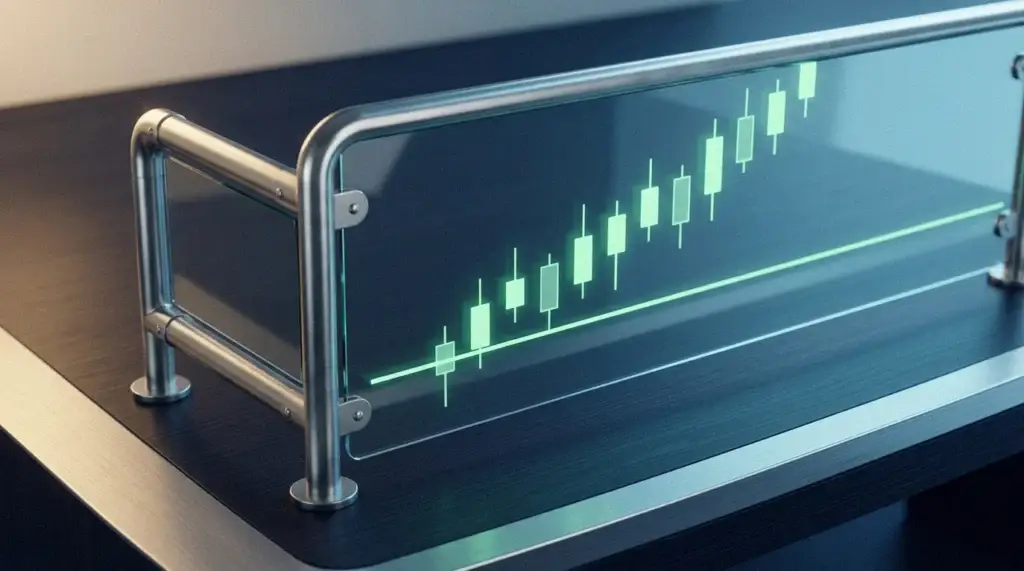
- Set a stop-loss before you enter, so the trade has a defined exit instead of an open-ended one. Without it, a losing position has no floor.
- Keep leverage modest. Regulators cap retail CFD leverage precisely because high multiples are dangerous, and the European Securities and Markets Authority restricts crypto CFD leverage to 2:1 for retail clients.
Put numbers on it. With a £2,000 account and a 1 percent risk limit, you are risking £20 per trade. If your stop-loss sits 5 percent below your entry, the position that respects that limit is £400, not the whole account. Get rekt-proofing right and one bad call costs you £20, not £2,000. That single discipline is what separates a rough week from a blown account. Our position-sizing framework applies the same logic across markets, and the guide to day trading crypto shows how it fits an active style.
This is where practice matters more than theory. On Volity you can open an account for $0 and rehearse the whole loop on a demo account before a penny of real money is at stake. When you go live you invest from as little as $1 and start trading from $1, with leverage available up to 1:500 depending on the product. The point of a demo is not to feel clever when a trade wins. It is to feel what a stop-loss and a sensible size do for you when a trade goes wrong, so getting rekt stays a word you read about rather than one you live. Volity Trade Ltd acts as an introducing broker where clients are referred to and accepted by UBK Markets Ltd. The provider and terms for each account or service are identified in the relevant client documentation. UK regulator the Financial Conduct Authority warns that people should be prepared to lose all the money they put into cryptoassets. This article is general information, not personal advice.
Frequently asked questions
What does rekt mean in simple terms?
Rekt is slang for “wrecked”. It describes a trader who has lost a large amount of money on a position, most often after a leveraged trade was liquidated. It can also describe a coin or a project that has collapsed in value.
Is getting rekt the same as being liquidated?
They overlap closely. Liquidation is the technical event where an exchange force-closes a leveraged position because your margin ran out. Getting rekt is the plain-language way traders describe the painful result. Most people who say they got rekt were liquidated, though the word can also apply to any heavy loss.
Can you get rekt without using leverage?
Yes, but it is harder. Without leverage your losses are limited to what you put in, so a token has to fall very far to wreck you. Leverage is what turns an ordinary dip into a full liquidation, which is why over-leveraged traders dominate the rekt stories.
How can beginners avoid getting rekt?
Start on a demo account, keep leverage low or off, size each position so one loss costs a small slice of your balance, and always set a stop-loss. Learning the mechanics of margin and liquidation before you trade live removes most of the ways new traders blow up.