The Crypto Trading Starter Kit
A plain-English PDF: what to check before you trade, how orders and risk really work, and the mistakes to skip. Get it free.
A shitcoin is crypto slang for a coin or token with little or no value, utility, or credibility behind it. That is the plain shitcoin meaning: a cryptocurrency that trades on hype rather than on anything real, whether that is a low-effort meme coin, a pump-and-dump token, or a project the founders quietly walked away from. Traders use the word as a blunt quality label, a way of saying a coin has no serious reason to exist.
This is general educational information about a piece of market slang and the risks behind it, not personal advice. Below is what the term actually describes, where it comes from, how shitcoins differ from real altcoins, the warning signs to look for, and the habits that protect your money.
What is a shitcoin?
A shitcoin is a token whose price is almost entirely detached from any product, revenue, or genuine use. Established cryptocurrencies aim to do something, such as settle payments, run smart contracts, or secure a network. A shitcoin usually does none of that. There is no working application, the development has stalled or never began, and the only real activity is people buying in the hope that someone else will buy higher. According to the CoinMarketCap glossary, the label is reserved for coins that offer no obvious value or utility, which is why the word carries such a heavy dose of contempt.
The word is a judgement, not a technical class. A coin can be called a shitcoin because it was built as a joke, because its supply runs into the trillions, or because it was engineered from the start as a way to separate latecomers from their money. What these coins share is fragility. When the attention moves on, the price tends to collapse and rarely recovers, and the people who bought near the top are the ones left carrying the loss.
Where does the term “shitcoin” come from?
The term simply fuses “shit” with “coin”, and it grew out of the early Bitcoin communities. As documented in the Wiktionary entry, it appeared on Bitcoin discussion forums in the early 2010s, when traders needed a quick way to dismiss the flood of low-quality coins launching in Bitcoin’s wake. As it became trivial to copy an existing codebase and mint a new coin, the number of these launches exploded, and the slang stuck.
Two later waves cemented the word in everyday use. The 2017 boom in the initial coin offering raised billions for tokens that often shipped nothing, and many of those names went to zero when the crypto bubble deflated. The meme coin surge that followed pushed thousands more joke tokens onto the market. Each cycle gave the community fresh reasons to reach for the word, and it is now one of the most-used insults in crypto.
Shitcoin vs altcoin: what is the difference?
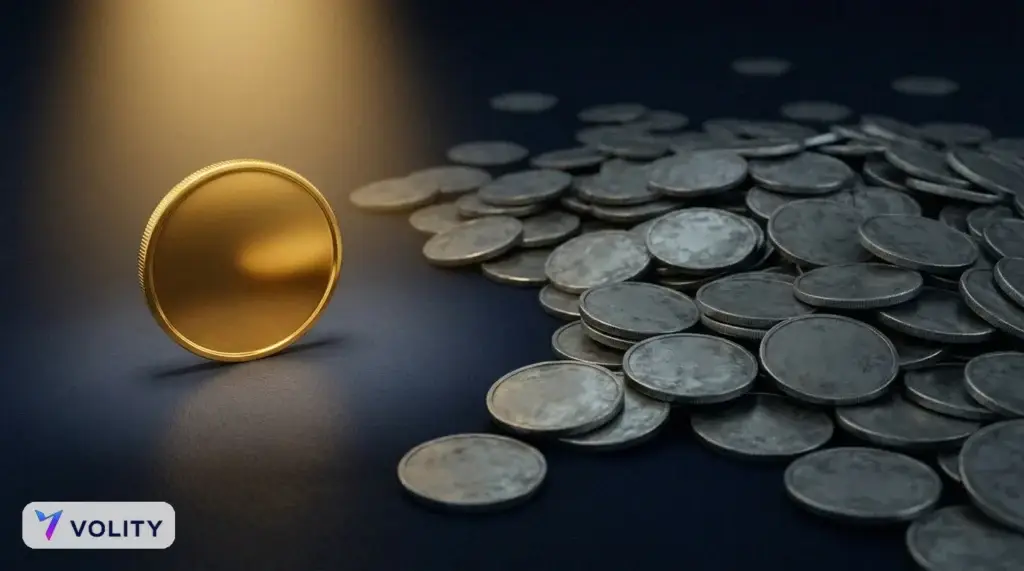
This is where people get tripped up, because the two words are not opposites. An altcoin is any cryptocurrency that is not Bitcoin. That is a neutral, factual category that includes serious networks with real users, active development, and years of track record. “Shitcoin” is a value judgement layered on top. Every shitcoin is technically an altcoin, but the vast majority of altcoins are not shitcoins. Our explainer on altcoins covers the wider group in more depth.
The dividing line is substance. A credible altcoin can point to what it does and who relies on it. A shitcoin leans on marketing and price talk because there is nothing else to point at. The table below shows the traits that usually separate the two.
| Trait | Established altcoin | Shitcoin |
| Purpose | Clear use case and working product | Little beyond “number go up” |
| Team | Public and accountable | Often anonymous |
| Development | Active, visible code updates | Stalled or non-existent |
| Supply | Transparent and defensible | Vast or manipulated |
| Liquidity | Deep across major venues | Thin and easy to move |
What are the red flags of a shitcoin?
No single signal proves a coin is worthless, but several appearing together should stop you cold. An anonymous team is the first. When the founders will not put their names to the project, no one carries the reputational cost if it collapses, and almost every documented exit scam shares that trait. A missing use case is the second. If the pitch is all price predictions and slogans with no explanation of what the token is actually for, there is usually a reason for the silence.
Supply and liquidity fill out the picture. A hyper-inflationary supply running into the trillions, often with a large slice sitting in a handful of insider wallets, sets up a heavy sell into any rally. Thin liquidity means a small pool of money can send the price up fast and, more painfully, straight back down, and unlocked liquidity lets the developers drain the pool in a rug pull. The last flag is the marketing itself: armies of paid influencers, guaranteed returns, and manufactured urgency are the fuel behind most pump and dump schemes and a fair share of wider crypto crime.
| Red flag | Why it matters | How to check |
| Anonymous team | No one is accountable if it fails | Look for named, verifiable founders |
| No real use case | Price is the only thing being sold | Read the whitepaper for actual utility |
| Hyper-inflationary supply | Insiders can dump on buyers | Check supply and top wallet holdings |
| Thin or unlocked liquidity | Easy to pump, and to pull | Confirm the liquidity pool is locked |
| Paid-shill marketing | Hype substitutes for substance | Be wary of promised or guaranteed gains |
It helps to place the shitcoin buyer next to the other characters in crypto slang. The degen chases the riskiest new tokens for the thrill, and is the most likely to end up holding one. The jeet panic-sells at the first wobble, while the buyer who rides it to zero becomes a bagholder, and an over-leveraged punt on one is the fastest way to get rekt. Many low-quality tokens sit in the same family as the broader meme coins, though a meme coin with a real community and honest supply is not automatically a shitcoin. The label is earned by behaviour and substance, not by theme alone.
Why do due diligence and risk management matter?
Because the whole model of a shitcoin depends on the greater fool theory, the belief that a buyer willing to pay more will always turn up. When that buyer stops appearing, the price falls to what the coin is really worth, which is frequently close to nothing. A little due diligence is your best defence: read the whitepaper, look for real code and named people, and treat any coin that reaches you through a fear-of-missing-out pitch with extra suspicion. Regulators are blunt about the stakes. The UK’s FCA classes crypto as a high-risk investment where you should be prepared to lose all your money, and the EU’s ESMA warns that many crypto-assets are highly speculative and carry limited consumer protection.
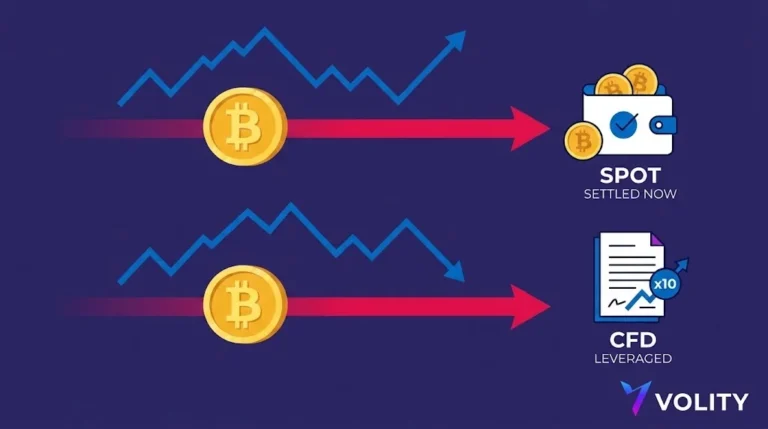
Discipline is the other half. Position your stakes so that a coin going to zero is an annoyance rather than a disaster, and decide your exit before you enter. You can practise that discipline on the Volity trading platform, where major crypto sits alongside indices, commodities and forex in one account, traded as a contract for difference on Volity MT. Because you trade the price rather than owning the coin, you can go short as well as long, and built-in stop-loss and take-profit orders turn your exit plan into something automatic. A wider risk management routine, sensible position sizing, and a disciplined stop-loss do far more for your results than any single coin ever will. A free demo account lets you rehearse before real money is involved, and the Volity education hub is there for the groundwork. Keep the health warning in view: CFDs are leveraged, with leverage up to 1:500 depending on the product, so prices can move for or against you quickly.
Getting started is light by design. You can open a Volity account for $0, invest from $1, and start trading from $1. Volity’s trading execution is regulated by CySEC under UBK Markets, licence 186/12, with client funds held in segregated accounts.
Frequently asked questions
What does shitcoin mean?
Shitcoin is crypto slang for a coin or token with little or no value, utility, or credibility behind it. It usually has no working product, little or no development, and a price driven by hype rather than by anything real. The word is a quality judgement traders use to dismiss a coin they think has no serious reason to exist.
Is a meme coin a shitcoin?
Not always. Many meme coins are shitcoins, because they launch with no utility and rely on hype, but a meme coin with a genuine community, honest supply, and a public team is not automatically one. The shitcoin label is earned by a lack of substance and by red flags such as anonymous founders or manipulated supply, not by the meme theme on its own.
What is the difference between a shitcoin and an altcoin?
An altcoin is any cryptocurrency that is not Bitcoin, which is a neutral category that includes plenty of serious projects. A shitcoin is a value judgement about a coin with no real use or credibility. Every shitcoin is an altcoin, but most altcoins are not shitcoins, so the two words are not opposites.
How do you spot a shitcoin?
Look for red flags stacking up: an anonymous team, no real use case, a supply running into the trillions concentrated in a few wallets, thin or unlocked liquidity, and marketing built on paid influencers and promised returns. Read the whitepaper, check the code and the founders, and confirm the liquidity is locked. Several of these signals together are a strong reason to stay away.