The Crypto Trading Starter Kit
A plain-English PDF: what to check before you trade, how orders and risk really work, and the mistakes to skip. Get it free.
Investing in altcoins involves extreme price volatility and significant technical risks. Smaller-cap alternative coins are particularly susceptible to liquidity issues, “rug pull” scams, and rapid capital loss.
The regulatory landscape for altcoins remains in flux, with major enforcement deadlines scheduled for 2026. Past performance of any altcoin is not indicative of future market results.
Capital at risk.
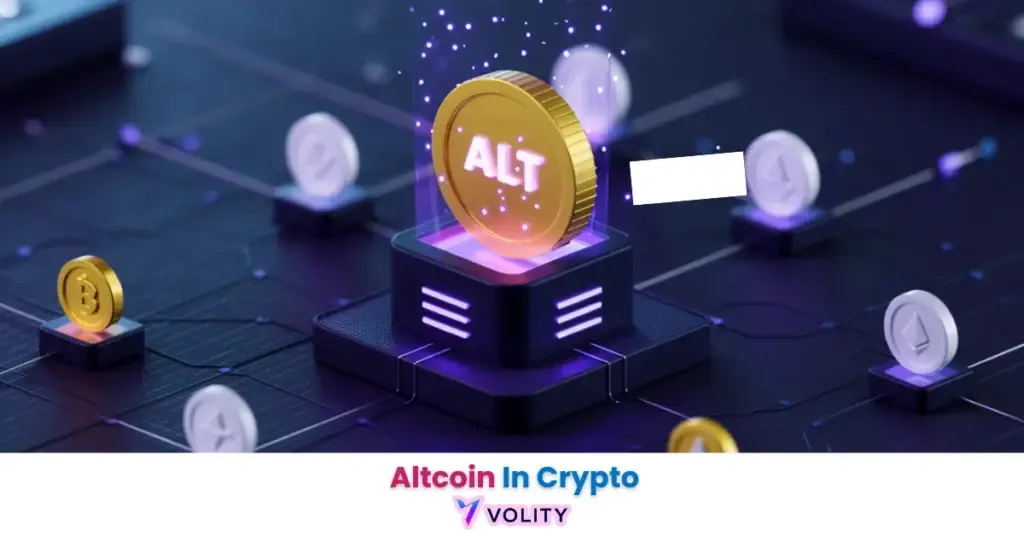
Altcoins encompass the entire ecosystem of digital assets developed as alternatives to Bitcoin’s original store-of-value model. This market identifies a selective recovery phase in early 2026, where high-utility protocols now compete for institutional capital following Bitcoin’s ~$126,000 all-time high reset. These assets enable advanced functions such as smart contracts, decentralized governance, and tokenized real-world assets.
Market participants distinguish between foundational platforms like Ethereum and speculative meme-based tokens that rely on community sentiment. The upcoming July 1, 2026 MiCA enforceability deadline further shapes how these alternative coins are listed and traded across global exchanges. Analysts monitor Bitcoin dominance levels to identify the precise moment of capital rotation into high-conviction altcoin sectors.
While understanding Altcoins is important, applying that knowledge is where the real growth happens. Create Your Free Crypto Trading Account to practice with a free demo account and put your strategy to the test.
What is an Altcoin and How Does It Differ from Bitcoin in 2026?
One DeFi-focused altcoin worth understanding is Injective (INJ), zero gas, 10K TPS.
Altcoins are any digital currencies other than Bitcoin, functioning as specialized tools for decentralized applications, governance, and low-volatility payments. Distinction between Bitcoin’s “Digital Gold” purpose and the multi-functional utility of the altcoin market clarifies that alternative assets solve specific technical problems rather than serving as pure stores of value. Analysis of the 42% market dominance held by alternative assets reflects growing institutional recognition that altcoins provide essential infrastructure for the broader crypto ecosystem.
Comparison of Proof-of-Work (PoW) security versus the scalable Proof-of-Stake (PoS) models used by modern altcoins reveals architectural trade-offs between decentralization and energy efficiency. Bitcoin’s original store-of-value model explains the fundamental design differences that distinguish Bitcoin from modern altcoins. foundational Ethereum platform describes how Ethereum established the standard for application-focused blockchain platforms.
Altcoin Season Index requires 75% outperformance of Bitcoin, providing a technical benchmark for identifying broad market capital rotations. This metric captures moments when alternative assets attract sustained institutional interest beyond temporary speculation. CoinMarketCap: Altcoin Season Index Benchmarks documents the exact 75% outperformance metric used by professional analysts.
Ready to Elevate Your Trading?
You have the information. Now, get the platform. Join thousands of successful traders who use Volity for its powerful tools, fast execution, and dedicated support.
Create Your Account in Under 3 MinutesWhat is the “Selective Altseason” Narrative for Q1–Q2 2026?
Trading-focused L1s like Sei (300ms finality) have outperformed in the institutional utility era.
The Selective Altseason is a 2026 market narrative identifies a rotation of capital into infrastructure and utility-driven assets rather than a broad-market rally. Analysis of the Q1–Q2 2026 window for the anticipated altcoin breakout reflects structural market changes where institutional flows dominate retail speculation. Shift from the “everything rally” of 2021 to the utility-focused “Selective” rotation demonstrates how regulatory clarity and professionalization of crypto markets filter capital toward assets with real use cases.
Impact of institutional ETF flows on lengthening the 2026 market cycle reveals that modern altseason patterns differ fundamentally from cycles driven purely by retail FOMO. decentralized governance tokens explains how governance assets attract institutional capital through their technical utility and regulatory clarity. blockchain scaling layers describes the infrastructure category most likely to lead the 2026 selective altseason.
Altseason rally projected for Q1-Q2 2026 reflects analyst consensus that Bitcoin dominance will reset below critical thresholds following institutional rebalancing cycles. This projection depends on Bitcoin maintaining technical strength while alternative assets demonstrate superior fundamental growth metrics.
Which Altcoin Categories are Leading the Institutional Utility Era?
The largest altcoins include Ethereum, Cardano, and XRP.
Altcoins identifies four primary categories in 2026: stablecoins, utility tokens, governance assets, and the emerging sector of AI-compute and RWA protocols. Role of AI-focused tokens like Bittensor (TAO) in leading the 2026 technical rotation reflects growing demand for decentralized computing infrastructure. Integration of Tokenized Real-World Assets (RWA) into institutional portfolios demonstrates a shift toward blockchain infrastructure that connects traditional finance and digital assets.
2026 passive income trend shows a 30% increase in staking and yield farming participation as investors adopt defensive strategies during volatile market cycles. staking and yield farming participation explains how passive yield mechanisms create reliable return profiles for altcoin holders. Cardano ecosystem statistics describes one of the leading platforms for institutional-grade staking participation.
Real trading example: A rotation into TAO (Bittensor) was executed in February 2026 as Bitcoin dominance reached a local peak of 58%. The position outperformed Ethereum by 45% during the March 2026 AI-sector rally, capturing institutional demand for decentralized compute. Past performance is not indicative of future results. This outcome demonstrates how selective altseason rotations reward traders who identify utility-driven projects ahead of institutional capital flows.
KuCoin: Altcoin Season 2026 Market Analysis verifies the 55% Bitcoin dominance threshold as a critical signal for altseason rotations.
2026 Altcoin Market and Dominance Statistics
Altcoins reveal structural market shifts through 2026 benchmarks for Bitcoin dominance, total capitalization, and regulatory compliance. Bitcoin dominance at 58% in early 2026 reflects a rebalancing after Bitcoin’s record ATH, creating the structural conditions for a selective altcoin rally if dominance breaks below 55%. Ethereum’s planned “Glamsterdam” upgrade provides a technical catalyst that could trigger broader capital rotation into alternative assets.
| Market Indicator | Metric | Value |
| Altcoin Market | 2026 Rally Window | Q1 – Q2 2026 (Reddit, 2026) |
| Bitcoin Dominance | Structural Signal | < 55% (KuCoin, 2026) |
| Total Market Cap | March 2026 Value | $2.5 Trillion (Fibo Crypto, 2026) |
| Ethereum | Key Catalyst | Glamsterdam Upgrade (IOG, 2026) |
| Altcoin Issuers | Compliance Deadline | July 1, 2026 (EU MiCA, 2026) |
Sources: Data verified against KuCoin, Fibo Crypto, and EU regulatory filings as of April 2026.
How to Research and Evaluate Altcoins: The 2026 Framework?
Evaluating altcoins requires a multi-step framework focusing on whitepaper technicality, on-chain utility metrics, and long-term tokenomics. Analyzing “Glamsterdam” grade technical upgrades for foundational platforms like Ethereum identifies the quality standards that separate legitimate innovations from speculative hype. Investigating developer activity and GitHub commit consistency provides objective evidence of sustained technical progress beyond marketing promises.
Identifying “rug pull” red flags in unregulated small-cap token launches demands scrutiny of team credentials, tokenomics transparency, and audited smart contracts. on-chain utility metrics explains how total value locked and transaction volumes reveal genuine utility adoption versus artificial metrics inflation.
How is the MiCA July 2026 Deadline Impacting Altcoin Liquidity?
The MiCA regulation identifies a July 1, 2026 compliance deadline that triggers a mandatory regulatory shakeout for all non-compliant altcoin issuers in the EU. Impact of strict stablecoin and utility token disclosure rules on European liquidity pools reveals that regulatory compliance concentrates liquidity on platforms meeting MiCA standards. Shift of institutional capital toward “Digital Commodity” status assets like ETH and ADA demonstrates how regulatory clarity attracts systematic capital.
Role of Know Your Customer (KYC) and AML standards in stabilizing the 2026 altcoin market reflects global regulatory convergence toward consumer protection and anti-money laundering compliance. European KYC and AML standards explains the specific requirements that European altcoin issuers must implement by July 1, 2026.
Turn Knowledge into Profit
You have done the reading, now it is time to act. The best way to learn is by doing. Open a free, no-risk demo account and practice your strategy with virtual funds today.
Open a Free Demo AccountESMA: MiCA Implementation for Asset Issuers 2026 documents the exact compliance requirements and enforceability deadline for European altcoin issuers.
Key Takeaways
- Altcoins represent all cryptocurrencies other than Bitcoin, accounting for 42% of market cap in 2026.
- The Selective Altseason narrative identifies a rotation into high-utility AI and RWA protocols in Q1–Q2 2026.
- Bitcoin dominance signals a structural altcoin rally when the metric breaks below the 55% threshold.
- Passive income participation reveals a 30% growth in staking as a defensive retail strategy for 2026.
- MiCA regulation confirms a final compliance deadline of July 1, 2026 for all EU altcoin issuers.
- Ethereum outperformance identifies a critical leading indicator for broader market capital rotation.
Frequently Asked Questions
This article contains references to altcoins and Volity, a regulated CFD trading platform. This content is produced for educational purposes only and does not constitute financial advice or a recommendation to buy or sell any financial instrument. Always verify current regulatory status and platform details before using any trading service. Some links in this article may be affiliate links.
What our analysts watch: Volity analysts read selective altseason through three filters, Bitcoin dominance versus its 200-day average, total stablecoin supply expansion as the dry-powder gauge, and category leaders maintaining new-cycle highs while laggards roll over. When dominance bleeds and stablecoin float expands while sector leaders hold, that is the configuration we treat as a tradeable rotation rather than noise.
Volity operates a trading platform and also publishes educational and analytical content about trading. The content on this page is for educational purposes only and should not be considered financial advice. Volity may benefit commercially when readers open trading accounts through links on this site.
Our content is produced and reviewed under documented editorial standards; see our comparison and review methodology.
Related guide: crypto trading signals.