Die Analyse von Risikodifferenzialen umfasst makroökonomische Prognosen und geopolitische Bewertungen, die beide von Natur aus unsicher sind. Historische Beziehungen zwischen Risikodifferenzialen und Währungsbewegungen können in Krisenzeiten oder bei Politikumkehrungen zusammenbrechen. Eine Währung, die aufgrund einer hohen Risikodifferenzial-Exposition hohe Renditen bietet, kann eine plötzliche Kapitalflucht erleben, die die Zinskompensation überwältigt. Hebel verstärkt Verluste, wenn geopolitische Schocks oder Rating-Herabstufungen eine schnelle Abwertung auslösen. Kapital ist bei jedem gehebelten Trading einem Risiko ausgesetzt.
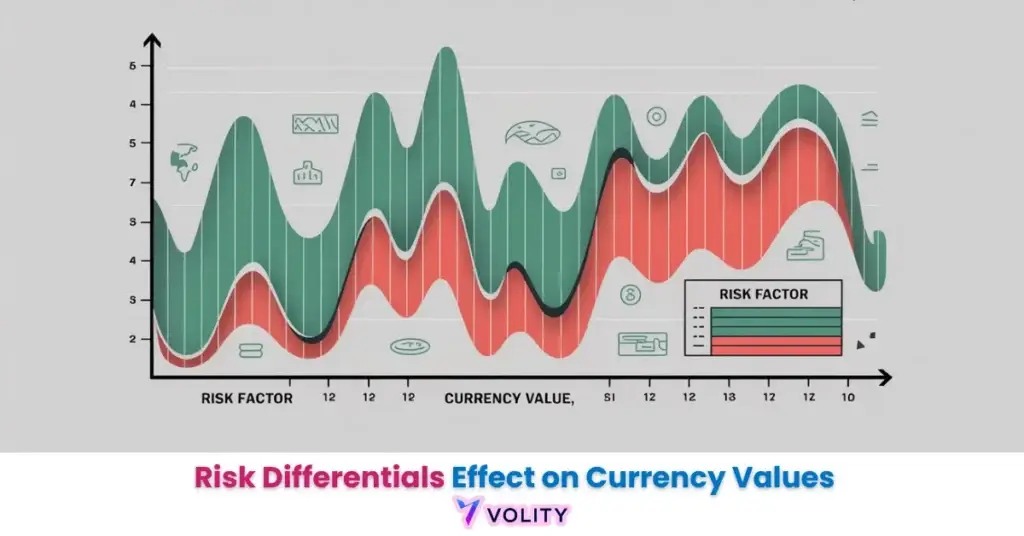
Risikodifferenziale beschreiben die Lücke im wahrgenommenen wirtschaftlichen und politischen Risiko zwischen zwei Nationen und dienen als primäres Filterkriterium für internationale Kapitalflüsse. Wenn sich das Risikodifferenzial gegen eine Währung ausweitet, verlässt Kapital die lokale Wirtschaft zugunsten von „Safe Havens“, was zu einer sofortigen Abwertung führt. 2026 werden diese Differenziale durch Klimaresilienz und geopolitische Schuldenlasten neu definiert.
Risikodifferenziale fungieren als globales „Filtersystem“ für institutionelles Kapital, das Safe-Haven- oder wachstumsstarke Umgebungen sucht. Diese Variationen in der wahrgenommenen Stabilität bestimmen, ob eine Währung Kapitalflucht oder Akkumulation erlebt. Es bleibt der einflussreichste Faktor bei der Bestimmung der langfristigen Richtung von Wechselkursen.
Die makroökonomische Landschaft von 2026 wird zunehmend durch den Übergang zur klimaorientierten Kredit-Neubewertung nach Basel III definiert. Infolgedessen verengt sich die Risikolücke zwischen fortgeschrittenen Volkswirtschaften und Schwellenmärkten, was das traditionelle „Safe-Haven“-Narrativ grundlegend verschiebt.
Das Verständnis von Risk Differentials ist wichtig, doch echtes Wachstum entsteht erst durch die Anwendung dieses Wissens. Kostenloses Forex-Handelskonto erstellen, um mit einem kostenlosen Demokonto zu üben und Ihre Strategie zu testen.
Was sind Risikodifferenziale und wie treiben sie die Währungsnachfrage?
Risikodifferenziale sind die messbaren Variationen in wirtschaftlicher, politischer und fiskalischer Stabilität zwischen zwei Ländern, die die relative Attraktivität ihrer Währungen bestimmen. Dieses fundamentale Prinzip erklärt, warum bestimmte Währungen in Krisenzeiten stärker werden, während andere kollabieren. Das Differenzial erzeugt eine Asymmetrie in der Kapitalnachfrage.
Der Mechanismus der „Flucht in Qualität“ offenbart, warum Kapital während Volatilität von Hochrisiko- zu Niedrigrisiko-Regimen wandert. Wenn geopolitische Spannungen steigen oder sich Wirtschaftsdaten verschlechtern, verlassen institutionelle Investoren systematisch riskantere Währungen und akkumulieren Safe-Haven-Währungen wie den US-Dollar, den Schweizer Franken und den japanischen Yen. Dieses mechanische Verhalten ist vollständig vorhersehbar, Krisenzeiten lösen stets diesen Exodus aus.
Zu den Bestimmungsfaktoren des Risikos gehören Inflationsinstabilität, politische Unsicherheit und Haushaltsdefizite. Ein Land mit einer VPI-Volatilität über 8 % (wie einige Schwellenmärkte) sieht sich einer höheren Risikoprämie gegenüber als ein stabiles Umfeld von 2-3 %. Politische Unruhen erhöhen die Regime-Unsicherheit. Haushaltsdefizite über 10 % des BIP signalisieren wachsende Schuldenlasten. Diese Faktoren verbinden sich zum gesamten Risikodifferenzial.
Die Perspektive von 2026 identifiziert, wie das „Sicherheitsrisiko“ durch geopolitische Wiederaufrüstung den Euro neu bewertet. Die öffentliche Verschuldung der Eurozone soll 2026 aufgrund historischer Erhöhungen der Verteidigungsausgaben auf 89,8 % des BIP steigen (QuantBeckman Macro Analysis, 2026). Diese strukturelle Verschlechterung weitet das Risikodifferenzial gegen EUR/USD aus und übt Abwärtsdruck auf die Währung aus.
Das Filterkriterium von 123 Billionen Dollar
Risikodifferenziale stellen das primäre Hindernis für die 123 Billionen US-Dollar an Investitionen dar, die bis 2035 für globale Nachhaltigkeitsziele erforderlich sind. Die „SDG-Finanzierungslücke“ spiegelt die Zurückhaltung der Investoren wider, Kapital von stabilen fortgeschrittenen Volkswirtschaften in Schwellenmärkte zu verlagern. Politische Instabilität, schwache regulatorische Rahmen und Klimaverwundbarkeit erzeugen Risikodifferenziale, die diesen Kapitaltransfer verhindern.
Warum der im Norden konzentrierte Wohlstand zögert, sich in den globalen Süden zu verlagern, offenbart die Beständigkeit der Risikoaversion. Investoren fortgeschrittener Volkswirtschaften verlangen Risikoprämien (hohe Renditen), um die Schwellenmarkt-Exposition zu kompensieren. Wenn diese Renditeprämien nicht eintreten, fließt kein Kapital. Das Risikodifferenzial wirkt als Barriere, nicht weil Schwellenmarkt-Volkswirtschaften von Natur aus riskanter sind, sondern weil Investoren sie als solche wahrnehmen.
Bereit, Ihr Trading auf das nächste Level zu bringen?
Sie haben das Wissen. Jetzt fehlt die Plattform. Schließen Sie sich Tausenden erfolgreichen Tradern an, die Volity für leistungsstarke Tools, schnelle Ausführung und engagierten Support nutzen.
Erstellen Sie Ihr Konto in unter 3 MinutenWie wirken sich souveräne Risikodifferenziale 2026 auf den EUR/USD aus?
Divergierende fiskalische Toleranzen zwischen den EU-Mitgliedstaaten identifizieren ein sich ausweitendes souveränes Risikodifferenzial, das Abwärtsdruck auf die globale Bewertung des Euro ausübt. Die Eurozone ist keine einheitliche fiskalische Einheit, ihre 20 Mitgliedsnationen haben sehr unterschiedliche Schuldenlasten und politische Stabilität. Diese strukturelle Heterogenität erzeugt das Risikodifferenzial, das die Währung untergräbt.
Italien vs. Deutschland veranschaulicht die Auswirkung von Schulden-zu-BIP-Disparitäten auf die EU-Einheit. Italien trägt Schulden in Höhe von 140 % des BIP, während Deutschland 60 % hält. Wenn geopolitischer Stress entsteht (wie der Wiederaufrüstungs-Pivot), unterscheiden Investoren zwischen diesen Volkswirtschaften. Kapital fließt von italienischen zu deutschen Vermögenswerten und erzeugt eine Risikoprämie, die den EUR/USD-Spread ausweitet. Der Euro, als gemeinsame Währung, spürt den gewichteten Durchschnitt aller Mitgliedsrisiken.
Wiederaufrüstungskosten offenbaren, wie NATO-Verteidigungsausgaben die nationalen Budgets belasten. Deutschland hat sich zu 2 % des BIP an Verteidigungsausgaben verpflichtet, etwa 80 Milliarden Euro jährlich. Frankreich sieht sich ähnlichen Lasten gegenüber. Diese Ausgaben erhöhen die Haushaltsdefizite und treiben die Schuldenquoten höher. Die Last fällt ungleich auf Volkswirtschaften mit bereits erhöhten Schuldenlasten und weitet das Risikodifferenzial innerhalb der Eurozone selbst aus.
Der geldpolitische Pivot zwischen den USA und der Eurozone erzeugt kontrastierende Risikoprofile. Die USA halten Zinssätze „länger höher“ und stützen die Dollar-Stärke durch die Überlegenheit der realen Rendite. Die Eurozone verfolgt einen „Stagnationspuffer“, akzeptiert niedriges Wachstum mit moderaten Zinsen, um das Auslösen von Schuldenkrisen zu vermeiden. Diese Politikdivergenz weitet das Risikodifferenzial aus, da Investoren höhere Dollar-Renditen verlangen, um das niedrigere Wachstum der Eurozone zu kompensieren.
Der Anteil der USA am globalen BIP ist seit 1970 um 14 % gefallen, während Europa um 7 % zurückging, was das langfristige Risiko-Wachstums-Differenzial verschiebt (Force for Good, 2026). Doch paradoxerweise stärkt sich der US-Dollar während Krisen trotz des relativen wirtschaftlichen Rückgangs. Dieser scheinbare Widerspruch löst sich durch die Liquidität und den Reservewährungsstatus, den der Dollar unabhängig von seiner vergleichbaren wirtschaftlichen Leistung beibehält.
Klimarisiko und die Verengung der EA-vs.-EM-Differenziale
Klimabezogene Risikodifferenziale identifizieren, dass fortgeschrittene Volkswirtschaften zunehmenden fiskalischen Schocks ausgesetzt sind, die das relative Risikoprofil von Schwellenmarkt-Währungen stabilisieren. Dies stellt eine fundamentale Umkehr des historischen Musters dar, bei dem EM-Währungen stets zu breiteren Risikospreads gehandelt wurden als EA-Währungen.
Die Basel-III-Integration zwingt Banken, das Risiko „grün vs. nicht grün“ neu zu bewerten. Banken weisen kohlenstoffintensiven Sektoren und „braunen“ Vermögenswerten nun höhere Kapitalanforderungen zu. Dieser regulatorische Wandel bestraft traditionelle Industrien fortgeschrittener Volkswirtschaften, fossile Infrastruktur, Automobilherstellung, industrielle Produktion, die unverhältnismäßig in EAs konzentriert sind. EM-Volkswirtschaften mit weniger entwickelten braunen Sektoren sehen sich niedrigeren Kapitalstrafen gegenüber, was das Risikodifferenzial verengt.
Klimaresilienz entsteht als neues Kriterium für die Währungsbewertung. Nationen, die verifizierbare grüne Wasserstoffrahmen, Verpflichtungen zu erneuerbaren Energien und ESG-orientierte Staatsanleihen umsetzen, ziehen Kapital gerade deshalb an, weil sich ihr Risikoprofil im Vergleich zu klimaexponierten fortgeschrittenen Volkswirtschaften verbessert. Einige EM-Währungen werden zu „Safe Havens“ für ESG-Kapital, während Investoren aus klimabelasteten EA-Sektoren fliehen.
Reales Trading-Beispiel: Australien setzte 2026 einen verifizierbaren grünen Wasserstoffrahmen um, während die USA in Florida/Texas mit einer Reihe klimabedingter Versicherungskrisen konfrontiert waren. Das sich verengende Risikodifferenzial führte zu einem 300-Pip-Rally des AUD, da Kapital eine „resiliente“ Rohstoff-Exposition suchte. Vergangene Performance ist kein Indikator für künftige Ergebnisse.
Transitionskosten beeinflussen die lokale Liquidität, während kohlenstoffintensive Sektoren neu bewertet werden. Japans Stromversorger sehen sich massiven Umrüstungskosten gegenüber. Deutschlands industrielle Basis steht vor den Lasten der Energiewende. Diese Kosten zeigen sich in fiskalischem Stress und Währungsschwäche. Im Gegensatz dazu sehen Länder mit reichlich erneuerbaren Ressourcen und Vorreitervorteilen Währungsstärke, da Kapital zu diesen sichereren Expositionen rotiert.
Die Auswirkung von Bank- vs. Nichtbank-Risiko auf die Marktliquidität
Sich verengende Risikodifferenziale zwischen traditionellen Banken und Nichtbank-Einlageninstituten (NBDTs) identifizieren einen sich verschärfenden Wettbewerb um Retail-Liquidität im Jahr 2026. Dieser Wandel hat tiefgreifende Auswirkungen auf Währungs-Carry-Trades und institutionelle Finanzierungskosten.
| Risikoindikator | Globale Benchmark 2026 | Hochrisiko-Signal | Niedrigrisiko-Signal | Auswirkung auf Währung |
| Souveräner CDS | 45 – 85 BP (Major) | > 150 BP | < 25 BP | Bärisch bei Anstieg |
| Schulden-zu-BIP | 89,8 % (Eurozone) | > 120 % | < 60 % | Bärisch bei > 100 % |
| VPI-Inflation | 2,5 % – 3,5 % | > 8,0 % | < 2,0 % | Volatil |
| Realer Zinssatz | 1,5 % – 2,5 % | Negativ | > 4,0 % | Bullisch bei Stabilität |
| ESG-Risikoscore | 70/100 (Durchschn.) | < 40/100 | > 90/100 | Bullisch (langfristig) |
Quelle: Daten zusammengestellt aus dem Schroders Global Risk Outlook (2025) und den Kapitalfluss-Audits von Wellington Management (2026).
Souveräne CDS-Spreads bieten das liquideste Maß für das Kreditrisiko. Wenn sich CDS-Spreads über 150 Basispunkte ausweiten, werden institutionelle Kapitalgeber zögerlich, diese Währung zu halten, außer bei extrem hoher Renditekompensation. Ein sich verengender Spread unter 25 Basispunkten signalisiert Niedrigrisiko-Vertrauen und zieht Kapital an.
Nichtbank-Einlageninstitute konkurrieren nun direkt mit traditionellen Banken um Retail-Einlagen. Diese Demokratisierung der Finanzen reduziert die traditionelle „Bank-Sicherheitsprämie“, die die Risikodifferenziale des Bankensystems aufgebläht hatte. Während die NBDT-Finanzierung akzeptiert wird, verengt sich das wahrgenommene Risiko traditioneller Währungsregime und beeinflusst internationale Kapitalflüsse.
Wann erklären Risikodifferenziale die Preisaktion nicht?
Marktsentiment und Liquiditätsumschichtung identifizieren Fälle, in denen kurzfristige Kapitalflüsse die fundamentale Logik der Risikodifferenziale überlagern. Zu verstehen, wann die Fundamentalanalyse zusammenbricht, ist für Trader entscheidend.
Das „Safe-Haven-Paradoxon“ beschreibt, warum der USD manchmal steigt, selbst wenn das US-Risiko zunimmt. Während extremer Panik (wie der Finanzkrise 2008) kümmerten sich Investoren nicht um das US-Risiko, sie brauchten Liquidität. Der US-Dollar, als global liquidester Vermögenswert, zog Kapital unabhängig von der fundamentalen Verschlechterung an. Dieses Paradoxon besteht 2026 fort, wann immer akute Stressphasen entstehen.
Geopolitische Schocks wie der „Wiederaufrüstungs-Pivot“ von 2026 erzwingen Kapitalbewegungen unabhängig von Renditeüberlegungen. Wenn militärische Spannungen unerwartet eskalieren, verlassen institutionelle Trader Risikoanlagen in Echtzeit und geben die fundamentale Risikodifferenzial-Logik auf. Die Neubewertung geschieht in Minuten, getrieben von Schlagzeilen statt von Tabellenkalkulationen.
Zukunftserwartungen erklären, warum der Markt manchmal eine Zinssenkung für 2027 einpreist, während der heutige Risikospread bullisch für die Währung erscheint. Wenn Trader glauben, dass die Zentralbank 2027 die Zinsen senken wird, kümmern sie sich nicht um die Renditevorteile von 2026, sie antizipieren eine Abwertung. Dieses vorausschauende Verhalten entkoppelt die kurzfristige Preisaktion von den gegenwärtigen Risikodifferenzialen.
Strategische Trading-Tipps für das Risikoumfeld 2026
Effektive Trading-Strategien 2026 identifizieren die Ausrichtung souveräner Kredit-Updates an technischen Preisniveaus für Einstiege mit hoher Überzeugung. Die Kombination makroökonomischer Risikobewertung mit technischer Analyse erzeugt Trades mit höherer Wahrscheinlichkeit.
Das Verfolgen der souveränen Rating-Zyklen von S&P Global und Moody’s bietet eine Vorwarnung vor großen Währungsverschiebungen. Rating-Agenturen veröffentlichen Überprüfungen nach festen Zeitplänen. Wenn eine Rating-Herabstufung unmittelbar bevorzustehen scheint, kommen versierte Trader der Entscheidung zuvor. Diese systematische Überwachung der Rating-Kalender ergänzt die preisbasierte technische Analyse.
Das Abbilden globaler Renditespreads auf institutionelle Geldflüsse offenbart das Ausmaß der Kapitalumschichtung. Wenn sich die Renditespreads zwischen Staatsanleihen substanziell ausweiten, beschleunigt sich die institutionelle Umschichtung. Der Forex-Wirtschaftskalender hebt die wichtigsten Wirtschaftsveröffentlichungen hervor, die die Risikowahrnehmung verschieben.
Das Filtern von Risiko-Setups mit RSI und Kreuzungen gleitender Durchschnitte stellt sicher, dass Sie Bewegungen nicht allein auf Basis makroökonomischer Ideologie hinterherjagen. Wenn das Risikodifferenzial eine Währung begünstigt, der RSI aber überkauft ist und der Preis über dem 20-Perioden-gleitenden Durchschnitt liegt, ist der Trade wahrscheinlich verspätet. Die technische Bestätigung verhindert den Einstieg auf Erschöpfungsniveaus.
Wissen in Gewinn verwandeln
Sie haben gelesen, jetzt ist es Zeit zu handeln. Der beste Weg zu lernen ist durch Praxis. Eröffnen Sie ein kostenloses, risikofreies Demokonto und üben Sie Ihre Strategie noch heute mit virtuellem Guthaben.
Kostenloses Demokonto eröffnenWichtige Erkenntnisse
- Risikodifferenziale sind die primären Treiber der Kapitalflüsse und bestimmen die relative Stärke einer Währung gegenüber einer anderen im Markt von 2026.
- Die geopolitische Wiederaufrüstung hat die Sicherheitsrisikoprämie für die Eurozone ausgeweitet, mit Schulden-zu-BIP-Quoten, die sich in mehreren Schlüsselökonomien 90 % nähern.
- Klimaorientierte Rahmen nach Basel III erzwingen eine Neubewertung des Kreditrisikos und verengen die Lücke zwischen Währungen fortgeschrittener und aufstrebender Märkte.
- Souveräne CDS-Spreads bieten ein Echtzeitmaß für die Kreditwürdigkeit eines Landes und sind ein Frühindikator für eine bevorstehende Währungsabwertung.
- Die Dollar-Smile-Theorie erklärt, warum der US-Dollar während globaler Krisen der führende Safe-Haven-Vermögenswert bleibt, unabhängig vom inländischen US-Risikoniveau.
- Institutionelle Geldflüsse werden zunehmend durch ESG- und Nachhaltigkeitsscores gefiltert, was Klimaresilienz zu einer Kernkomponente der Bewertung von 2026 macht.
Häufig gestellte Fragen
Dieser Artikel enthält Verweise auf Risikodifferenziale und Währungsbewertung mit Volity, einer regulierten CFD-Trading-Plattform. Dieser Inhalt wird ausschließlich zu Bildungszwecken erstellt und stellt keine Finanzberatung oder Empfehlung dar, eine bestimmte Trading-Strategie auszuführen. Makroökonomische Analyse und geopolitische Bewertung sind von Natur aus unsicher; prüfen Sie stets die Broker-Regulierungen und wahren Sie eine angemessene Risikomanagement-Disziplin, bevor Sie traden. Einige Links in diesem Artikel können Affiliate-Links sein.