Investing in financial products involves risk. Losses may exceed the value of your original investment.
Bitcoin bollinger band is a core topic for traders in 2026. The complete guide follows.
The Crypto Market’s Turning Point: Bitcoin Consolidates While a Gaming Billionaire Rewrites the Founder Playbook
Bitcoin has slipped into something. A tense holding pattern near $95,000. After rebounding from lows. Around $87,600. Price is no longer falling. Yet it is not convincingly rising. Therefore, the tape reads like patience. Not conviction.
Meanwhile, a very different kind of risk story is gaining traction. A gaming entrepreneur matters. Gurhan Kiziloz. He is telling markets something. He built a $1.7BN fortune. Without dilution. He claims 100% ownership. Of Nexus International. And he is spending his own cash. On expansion.
However, concentrated control cuts both ways. Just like concentrated leverage. In crypto.
Bitcoin’s Quiet Looks Loud
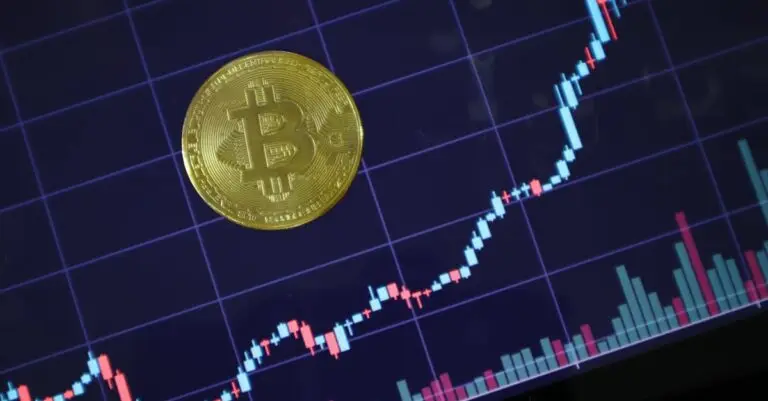
The most tradable feature on the Bitcoin chart is something specific. The Bollinger Bands squeeze. Volatility has compressed. Into a tight coil. Historically, that often precedes something. A sharp move. Why? Because liquidity stacks on both sides.
Yet the squeeze does not pick a direction. It only warns that calm may not last.
Key Resistance and Support Levels
Resistance sits at roughly $99,500. Where the 100-day EMA has turned into something. A recurring ceiling. If buyers can force acceptance above that line? Then, the market will stare straight at $100,000 to $102,000. That zone matters. For psychological reasons. Although it also marks prior churn. Therefore, a clean break could set off something. Stop runs. Additionally, momentum bids.
On the downside, traders keep circling $94,000. As near-term support. Bulls have defended it more than once. This adds significance. However, repeated tests can weaken a floor. Below that? $92,000 looks like the next line. In the sand. If that fails? Then, a retest of $87,600 comes back into view. With $85,000 as an obvious magnet.
Momentum is Improving, But It Still Needs Proof
The MACD has crossed into positive territory. And the histogram has started to expand. That shift suggests something. Selling pressure is fading. Meanwhile, the crossover gains weight. Why? Because it arrives during the volatility squeeze.
Even so, trend reversals need follow-through. Not just a single indicator. Therefore, bulls still need something. Higher closes. To turn “could” into “is.”
Three Paths, One Problem: Timing
The next few weeks look like a choice. Between three scripts.
Scenario 1: Bullish Breakout
A decisive move through $99,500. Then, acceptance above $100,000 to $102,000. Could reopen upside targets. Some desks will talk about $110,000 to $125,000. Into early 2026.
Scenario 2: Range Grind
Price stays boxed. Volatility stays cheap. And both sides bleed. In that case? Options sellers keep collecting. Until they don’t.
Scenario 3: Bearish Breakdown
A loss of $94,000. Then, $92,000. Could trigger a faster slide. Into the mid-$80,000s.
Market Context
Sentiment gauges still run hot. Which can support price. Until it suddenly doesn’t. Meanwhile, cross-asset signals look messy. Gold strength has pulled attention. While crypto flows rotate. Additionally, hesitate. Therefore, Bitcoin’s consolidation feels less like boredom. Rather, more like positioning.
The Founder Trade: Control Versus Cushioning
Against that market backdrop, Kiziloz’s pitch is almost quaint. He argues something. That the modern startup machine overpays for growth. By giving away control. He says he did the opposite. Keeping Nexus International fully owned. While scaling to around $1.2BN. In annual revenue.
The Freedom of Full Control
That structure buys freedom. He can deploy capital quickly. Avoid investor demands. Additionally, run long-term projects. Without quarterly theater. He says he is putting $200M. Of his own money. Into expanding Spartans.com. Described as a crypto-first casino platform.
He also points to involvement. With BlockDAG. A Layer-1 project. As another founder-led bet.
The Risk of Concentration
However, the same structure removes shock absorbers. If Nexus stumbles? His wealth does not rebalance itself. If regulation shifts? He cannot spread the hit. Across a wider portfolio.
Therefore, his story is not a morality tale. It is a risk profile. Unusually clean. Additionally, unusually binary.
By the Numbers
Bitcoin spot: About $95,000. Recent low near $87,600
Key resistance: $99,500. Next zone $100,000 to $102,000
Key supports: $94,000. Then $92,000
Kiziloz stated net worth: $1.7BN
Nexus International stated revenue: $1.2BN. Stated expansion spend: $200M
Key Takeaways
Volatility compression often precedes sharp moves. So risk sizing matters more. Than conviction.
A break above $99,500 changes the conversation. While a loss of $94,000 changes the trade.
MACD improving supports the bull case. Yet price still needs confirmation. Above resistance.
Founder-control stories can be compelling. Although they often hide something. A single point of failure.
Both Bitcoin and Kiziloz’s strategy share one theme. Concentration can amplify gains. Additionally, losses.
Volity: Building Your Foundation for Global Financial Mastery
In today’s complex financial environment, world-class infrastructure creates decisive competitive advantages. Consequently, Volity delivers one comprehensive account for complete international capabilities. Specifically, you can invest, hold, and pay across borders with professional excellence. In essence, it’s an advanced financial platform engineered for superior global performance.
Notably, Volity combines regulatory mastery with cutting-edge innovation. Therefore, these pillars enable strategic execution in international markets. Moreover, Volity transforms complex cross-border transactions into streamlined experiences. As a result, the platform provides comprehensive financial control with sophistication and security. Ultimately, with Volity, borderless finance becomes efficient, powerful, and accessible for visionary professionals worldwide.
For more on this topic see our deep-dives on Bitcoin Bounce vs Risk: ETF Inflows, XRP Breakouts and What to Watch, Bitcoin Bottom Signals: ETF Outflows and Options Expiry Explained, and Resolv DeFi Exploit and Bitcoin Price: How Smart-Contract Risk Bites.
By Volity Editorial, Volity markets desk
What our analysts watch: Three reads convert a squeeze configuration into a defensible position thesis. Bandwidth percentile rank (the bandwidth value at the lowest percentile of the trailing 252-day distribution defines the squeeze quality; the deeper the percentile rank, the more reliable the magnitude expansion that follows resolution). Volume divergence into the squeeze (declining volume into the compression confirms genuine equilibrium, which raises the magnitude expectation; rising volume into the compression suggests accumulation or distribution that may already be deciding the direction). Cross-timeframe alignment (a daily squeeze that overlaps with a weekly squeeze produces a substantially larger range expansion than a daily squeeze alone; the cross-timeframe configuration is the highest-conviction setup the framework produces). When the three align, the position size scales for the expanded range; when they diverge, the trade thesis defers.
Frequently asked questions
How does the squeeze configuration differ on the daily versus the weekly timeframe?
The daily timeframe produces the squeeze roughly two to four times per year on Bitcoin, with the typical resolution range expanding to two to three times the trailing thirty-day average true range. The weekly timeframe produces the squeeze less frequently (roughly once per year on average) but the resolution range expansion runs to four to six times the trailing weekly average true range. The cross-timeframe overlap, where a daily squeeze sits inside a weekly squeeze, is the rare configuration that historically produces the multi-month directional leg rather than the multi-week resolution. The Investopedia Bollinger Bands reference covers the underlying methodology.
Why is the squeeze a magnitude signal rather than a direction signal?
Because the volatility-compression mechanism that produces the squeeze is symmetric with respect to direction: equilibrium between buyers and sellers can resolve in either direction, and the historical hit-rate for guessing the direction from the squeeze configuration alone sits near 50 percent. The magnitude side is asymmetric: the expansion that follows the squeeze consistently exceeds the trailing average range regardless of direction, which is the feature that makes the squeeze tradable through volatility-sensitive structures rather than through directional spot positioning. The discipline is to trade the volatility expansion rather than the direction guess.
What does volume behaviour into the squeeze reveal?
Declining volume into the squeeze is the classical configuration that confirms genuine equilibrium; the participants on both sides have stepped back, leaving the next directional move to the participant who breaks the deadlock. Rising volume into the squeeze is the alternative configuration where one side is accumulating or distributing through the compression, which often telegraphs the resolution direction without changing the price action. The interpretive discipline is to read the volume series alongside the bandwidth percentile rank rather than in isolation. The CoinDesk Bitcoin volatility coverage publishes the volume context that supports the read.
How should the squeeze inform options structuring around the resolution?
Long-volatility option structures (straddles, strangles, calendar spreads weighted to the front month) historically capture the squeeze resolution at favourable risk-reward when implied volatility on the same series is trading near the realised-volatility floor. The structuring discipline is to verify that implied volatility is not pricing the resolution before entering the long-volatility position; an implied volatility level that already prices a four-times-average-range resolution removes the structural edge from the trade. The BIS volatility regime reference covers the cross-asset volatility framework that anchors the structuring discipline.
Related guides
- Bitcoin explained
- Best forex trading strategies
- Day trading platforms
- Swing trading platforms
- Risk/reward ratio explained
Volity operates a trading platform and also publishes educational and analytical content about trading. The content on this page is for educational purposes only and should not be considered financial advice. Volity may benefit commercially when readers open trading accounts through links on this site.
Our content is produced and reviewed under documented editorial standards; see our comparison and review methodology.