Investing in financial products involves risk. Losses may exceed the value of your original investment.
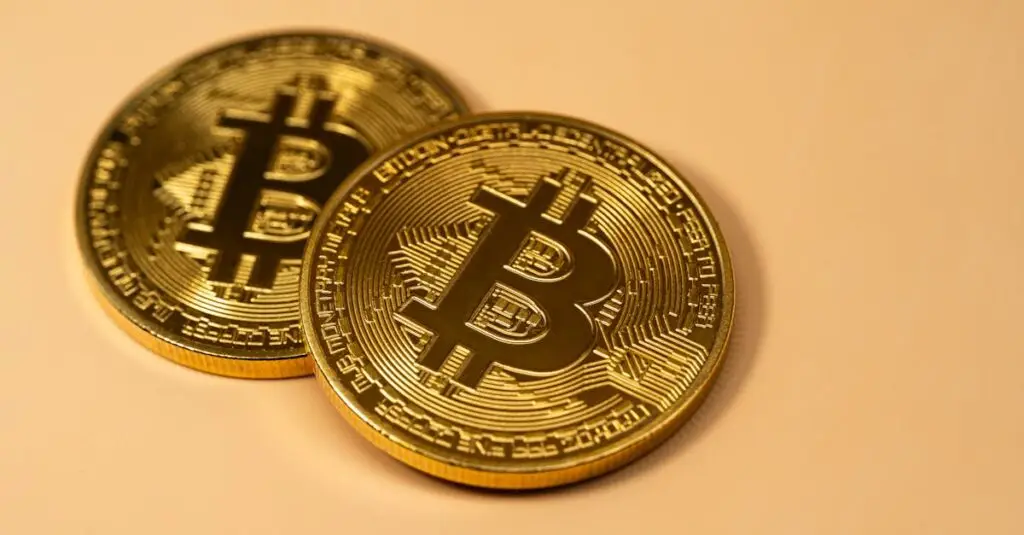
Bitcoin options expiry is a core topic for traders in 2026. The complete guide follows.
Crypto market digest: options storm, dogecoin drama, and the trust crisis nobody names
All eyes on Bitcoin’s historic $18B options expiry
As Friday dawns, the crypto world faces what analysts are calling a “volatility trap”. Nearly $18 billion in Bitcoin options-the largest weekly expiry in the asset’s history-are set to expire, igniting tension across trading desks worldwide. A surge of 146,000 contracts is poised to settle, with Bitcoin itself staggering below the $110,000 mark following a sharp rejection at $117,000 earlier in the week.The mechanics driving this high-stakes scenario hinge on two figures: the Put-to-Call Ratio (PCR) at 1.23, indicating slightly more bearish positioning, and the crypto options’ maximum pain point-$114,000-for this expiry. This “max pain” price is where options sellers profit most and buyers feel the pinch, often acting as a magnet for price action near major expiries.While bullish bets dominate overall open interest, bulls must hold the $110,000-$112,000 support band to keep bears at bay. Deribit, the mammoth of crypto options, claims most of this open interest, dwarfing traditional rivals OKX and CME.- The expiry’s timing-early European Friday trading-sets the stage for heightened volatility and possible sharp moves in both directions.
- Ethereum also faces options expiry pressures, with $800M on the line and a max pain at $4,500-right below current trading levels, ensuring ETH isn’t spared the crosscurrents.
Why is the market crashing? Macro shadows and cross-asset risk
Behind the wild options flows lurks a broader unease: global macro conditions. Crypto’s sell-off this week accelerated after hot US inflation data and shifting expectations for Federal Reserve rate cuts, fueling outflows from risk assets. Add to this a $4.9 trillion global stock options expiry-amplifying cross-market swings-and you get a cocktail for spiking volatility and nervous hands across all asset classes.Seasoned traders have started shifting their tactics, bracing for wide intraday swings and false breakouts. “The sheer notional value at risk means price swings of 5-8% aren’t off the table,” notes one institutional analyst. The options expiry is not just a footnote on the calendar-it’s the market’s drumbeat, for better or worse.Dogecoin: wrestling with gravity, but is a reversal brewing?
Spotlight casualty of the week: Dogecoin. After being pounded below $0.25, DOGE now clings to life at $0.226, having fallen out of its bullish uptrend and deep into descending channel territory. Sellers struck when DOGE failed to hold above its major moving averages (50 EMA at $0.239, 200 EMA at $0.249), solidifying resistance above and ushering in a technical correction.- Support levels: $0.2208 is the immediate line in the sand; breach this and DOGE could spiral to $0.2104 or even $0.1981-both prior accumulation zones.
- Oversold signals: The Relative Strength Index flirts with 33, flagging a market potentially “tired” of selling and ripe for a bounce if a bullish reversal pattern forms (watch for a hammer candle or bullish engulfing near $0.220).
Across the altcoin arena: fear, flush, and flashes of hope
The current market rout hasn’t spared the altcoin space. Avalanche, Aster, XRP, and Solana all suffered double-digit drops following Bitcoin’s slide, as correlations tighten during panic phases. However, major support levels on Solana ($195) and Aster ($1.70) are being watched closely for signs of stabilization.XRP, once the darling of speculative surges, finds itself below $2.80, triggering debate about whether regulatory setbacks or broader risk-off sentiment are to blame. For each “crash,” opportunistic traders are mapping potential reversals and watching for whale footprints.The elephant in the room: trust crisis and the future of crypto
In the cacophony of price action, an undercurrent runs deeper-a mounting “trust crisis” that industry veterans say few want to talk about. Recent high-profile rug pulls, suspicious exchange volume spikes, and disputes over on-chain data have made even crypto’s diehards more cautious. “Crypto does not just have a volatility problem. It’s facing a trust drought that risk models can’t solve alone,” argues one recent opinion piece.Meanwhile, in regulatory circles, global authorities are closing ranks. Europe eyes a joint euro stablecoin, Hong Kong raises alarms about yuan-based products, and Australia signals “bank-style” rules may be on the horizon. Institutions hungry for “on-chain refunds” and safer stablecoin rails will accelerate this maturation-even if it means short-term pain.What’s next: tactical roadmap for traders and investors
- Option expiry aftershocks: Expect jagged moves, potential short squeezes, and liquidity gaps into Friday’s US close. Patience, risk management, and not chasing the first move remain essential. Let the dust settle.
- Watch for whale activity: Follow on-chain data, especially in oversold assets like Dogecoin. Aggressive accumulation can foreshadow a reversal despite bearish headlines.
- Cross-market impacts: The intersection of crypto, equities, and macro is more real than ever. Directional bets must respect these interconnected currents and sudden regime shifts.
- Regulatory vigilance: The rulebook is rewriting itself week by week-keep tabs on stablecoin developments, ETF news, and scandals that can swing sector sentiment overnight.
In summary: the drama is far from over
As one of the most consequential expiries in crypto history unfolds, all bets are off-for now. The next chapter will be written not just by the price charts, but by the delicate dance of trust, regulation, and capital flows in a market growing bigger and wilder by the hour.For more on this topic see our deep-dives on Crypto Market Rebound: Expert Bitcoin Forecasts After the Crash, Spot Bitcoin ETFs: How Inflows Move the BTC Price, and Bitcoin and Ethereum Outlook: How Regulation Shapes Crypto Prices.
For more on this topic see our deep-dives on XRP, NFTs, RLUSD Stablecoin and VC Bets: Crypto Market Pulse, Crypto News: Cardano Midnight Mainnet and Binance Prediction Markets, and Crypto Investment Snapshot: Ethereum Prices, Bitcoin News, DeFi Updates.
What our analysts watch: Three filters convert expiry mechanics into a tradable read rather than headline drama. Open-interest concentration by venue (Deribit retains roughly 80 percent of crypto options open interest, with CME and OKX splitting the remainder; the same expiry can pull price toward different magnets if venue concentration shifts materially in the final week).
Dealer gamma exposure (short-gamma dealer positioning amplifies moves in either direction; long-gamma positioning dampens them, and the intraday range frequently inverts when the gamma sign flips). Cross-asset macro overlap (a Bitcoin expiry coinciding with a major equity-options expiry or a Federal Reserve event compounds the volatility, because position cuts in one venue propagate to the others through risk-parity overlays).
When all three are read together, the expiry-week playbook becomes structural. Read in isolation, max pain is a half-truth.
Frequently asked questions
What is max pain and why does price gravitate toward it?
Max pain is the strike price at which the largest aggregate dollar value of open options contracts expires worthless. The gravitational effect is mechanical, not mystical.
Options dealers running a delta-neutral book hedge their exposure continuously, and as expiry approaches the gamma profile concentrates around large open-interest strikes. To remain hedged into settlement, dealers buy futures into dips and sell into rallies precisely around the strikes that minimise their inventory at expiry.
The Investopedia reference on the max pain theory covers the mechanics in detail.
How big is the typical Bitcoin monthly expiry in 2026?
The monthly expiry on the last Friday typically settles between 40 and 80 billion dollars in notional open interest, with quarterly expiries reaching 100 billion dollars or more. The eighteen-billion-dollar weekly expiry referenced in this article would be a record-class event by 2025 standards but is plausibly a typical large weekly by mid-2026 as the category matures. The CME Group Bitcoin futures and options page publishes the weekly open-interest data alongside settlement statistics.
Why does volatility spike around the expiry window?
Three structural reasons. Short-gamma dealer positioning forces dealers to chase price (selling into weakness, buying into strength), which amplifies any nascent move.
Liquidity thins in the hours immediately before settlement as participants finalise hedges, leaving smaller incremental flow capable of moving price further than usual. Cross-venue arbitrage between Deribit, CME, and OKX produces brief dislocations that look like volatility but are actually basis convergence.
The combined effect is a window where intraday moves of 3 to 5 percent are routine and 8 percent moves not unprecedented. The CoinDesk markets coverage tracks the recurring expiry-window patterns.
Should retail traders trade through the expiry or sit it out?
For most retail accounts, sitting out the final 24 hours before a major expiry has historically produced better risk-adjusted returns than trading through it. The combination of dealer hedging flow, thin liquidity, and macro-event overlap produces a path-dependent regime that punishes the symmetric directional bets retail traders default to. Expiry-week strategy survives only when the trader has a specific edge in either dealer-flow modelling, surface-relative-value trading, or news catalyst overlap, which excludes most retail setups. Disciplined position management around the window beats clever expiry-day directional bets in nine years out of ten.
Related guides
- Bitcoin explained
- Option trading platforms
- Cryptocurrency trading
- Risk management
- Risk-reward ratio explained
Quick takeaways
Here is what matters most for this story.
- Markets price news the moment it lands, often within milliseconds.
- Central banks, geopolitics, and earnings releases drive the largest moves.
- Therefore, the trader's edge is reading positioning, not the headline.
Read on for context, data, and what changes next.
Volity operates a trading platform and also publishes educational and analytical content about trading. The content on this page is for educational purposes only and should not be considered financial advice. Volity may benefit commercially when readers open trading accounts through links on this site.
Our content is produced and reviewed under documented editorial standards; see our comparison and review methodology.