ICT trading is a price-action method built on the idea that markets are engineered by large institutions to reach liquidity. It reads charts through order blocks, fair value gaps, liquidity pools and market structure shifts, timed around specific sessions, so a retail trader can align an ICT trade with institutional flow instead of reacting to lagging indicators.
What is ICT trading?
ICT stands for the Inner Circle Trader, the brand under which a large body of trading education was published. The method argues that price does not wander randomly. It moves from one pool of liquidity to the next, and the market makers who move it leave a repeatable trail. They sweep the obvious highs and lows to fill large orders in specific zones, and they leave imbalances that price later comes back to rebalance. An ICT trade is simply an entry that reads that trail. The framework overlaps heavily with the broader smart money concepts community, which drew much of its vocabulary from the same source.
Who is Michael J. Huddleston, the Inner Circle Trader?
Michael J. Huddleston is the trader and educator behind the Inner Circle Trader name. Over many years he published an extensive library of free lessons on market structure, liquidity and institutional order flow, and the Michael Huddleston ICT material is where most of today’s terminology originates: killzones, the judas swing, the silver bullet, optimal trade entry, breaker blocks and more. You do not need to follow any one teacher to use the ideas, and it is healthy to test them yourself rather than take them on faith, but crediting the source matters. The concepts in this cluster trace back through the Inner Circle Trader to Richard Wyckoff’s century-old work on how professional money operates.
What are the core ICT concepts?
ICT has a wide vocabulary, but a beginner only needs a handful of building blocks to place a coherent ICT trade.
- Liquidity is the resting stop and breakout orders above highs and below lows that price is drawn to take.
- An order block is the last opposing candle before a strong move, marking where institutions positioned.
- A fair value gap is the imbalance a fast move leaves behind, often revisited before the trend resumes.
- A market structure shift is the break of short-term structure that confirms control has changed hands.
- Optimal trade entry looks for a fill inside a specific retracement band of the prior move.
- Killzones are the session windows when these moves are most likely to unfold.
How does an ICT trade setup work?
A classic ICT trade stacks several of those concepts into one sequence. The steps below describe a long; mirror them for a short.
- Set a directional bias from the higher-timeframe structure and the daily range.
- Identify the liquidity that is likely to be taken first, usually the low sitting below an obvious support.
- Wait inside a killzone for price to sweep that liquidity with a sharp spike.
- Watch for a market structure shift, where price rejects the sweep and breaks short-term structure upward.
- Enter as price retraces into the order block or fair value gap left by that shift.
- Place the stop beyond the swept low, and target the opposing liquidity above.

What are ICT killzones and why does session timing matter?
ICT weights when you trade almost as heavily as what you trade. Killzones are windows around the major session opens when volatility and institutional activity concentrate. The table gives approximate times in GMT; they shift by an hour with daylight saving, so confirm against your platform clock.
| Killzone | Approx. time (GMT) | Character |
| Asian range | 23:00 to 06:00 | Quiet accumulation, sets the range to be swept |
| London open | 07:00 to 10:00 | First major expansion, frequent sweeps of the Asian range |
| New York AM | 12:00 to 15:00 | High-volume continuation or reversal |
| London close | 15:00 to 16:00 | Late-session moves and profit-taking |
The exact clock matters less than the principle. Liquidity is most reliably engineered when the major dealing desks are active, so an ICT trade taken inside a killzone tends to resolve faster than one taken in a dead session.
How is ICT different from smart money concepts?
ICT and smart money concepts are close relatives. ICT is the original, detailed body of teaching from the Inner Circle Trader, complete with session timing, named models and strict entry rules. Smart money concepts is the broader, community-simplified version that keeps the core tools of structure, liquidity, order blocks and fair value gaps, and drops some of the more elaborate models. If you learn ICT you already understand smart money concepts, and the reverse is largely true too.
Is there an ICT trading strategy PDF?
Many traders search for an ICT trading strategy PDF to study offline, and plenty of community summaries exist. The catch is that a static document cannot teach you to read a live chart, which is where the real skill sits. A more useful approach is to write your own one-page plan: your bias rules, the liquidity you target, the killzone you trade, your entry trigger, and your stop and target logic. Then screenshot real setups and grade them against that plan. Your own annotated charts will teach an ICT trade faster than any downloaded PDF.
What is the judas swing?
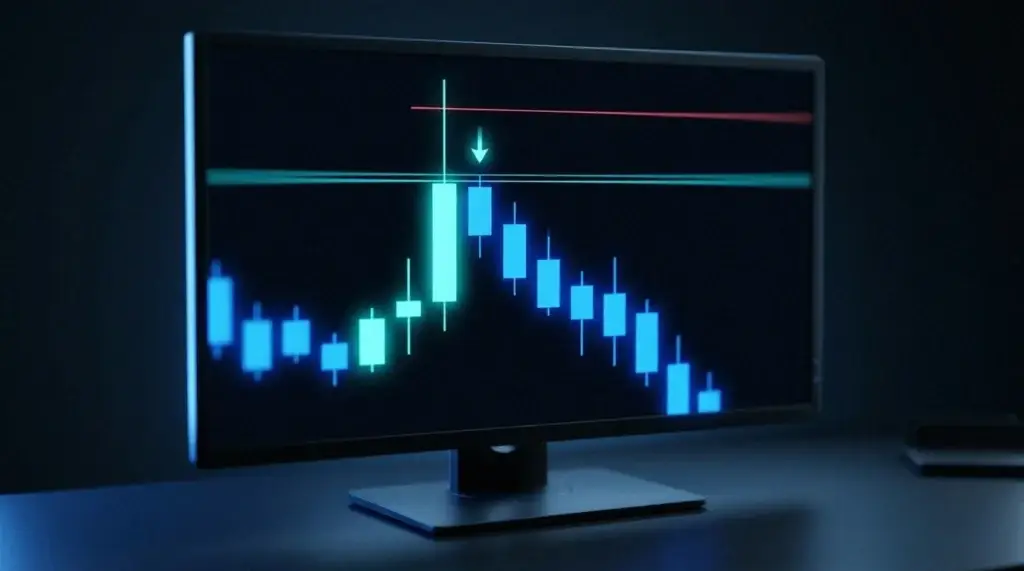
The judas swing is one of the most useful ICT models for intraday traders. Named after the biblical betrayal, it is a false move at the start of a session that lures traders in the wrong direction before price reverses into the real move. Early in the London or New York killzone, price pushes up to run the buy stops above an obvious high, tricking breakout buyers into going long, then sharply reverses down for the genuine sell. The swing betrays everyone who chased the first move. To trade it, you wait for that early spike to sweep liquidity, watch for a market structure shift against it, and enter in the direction of the reversal with a stop beyond the judas high or low. The model works because the session open concentrates orders, giving large participants a rich pool of liquidity to trade against exactly when retail attention is highest.
What are the risks, and where can you place an ICT trade?
ICT is detailed, and that cuts both ways. It is easy to over-fit rules in hindsight and see perfect setups that were never tradeable in real time, so keep it simple, backtest a fixed model, and journal every trade. Market risk sits on top of that. ICT setups are usually traded with leverage through contracts for difference, and leverage magnifies losses as readily as gains. Regulators including ESMA and the FCA treat retail leverage as high-risk and restrict how these products are sold, which tells you how carefully to size every position. On Volity you can apply the whole ICT toolkit across forex, indices, crypto and commodities on Volity MT, with spreads from 0.6 pips, 99.6% of orders filled in under a second, and leverage up to 1:500 on selected forex pairs, all regulated by CySEC through UBK Markets (licence 186/12). Check the published charges and fees and rehearse on a free demo before trading live.
Frequently asked questions about ICT trading
What does ICT stand for in trading?
ICT stands for the Inner Circle Trader, the education brand created by Michael J. Huddleston. It describes a price-action approach centred on institutional liquidity, order blocks, fair value gaps and session timing, rather than on traditional lagging indicators.
Is ICT trading good for beginners?
The core ideas are approachable, but the full framework is dense and easy to overcomplicate. Beginners do best starting with market structure and liquidity, adding one concept at a time, and practising on a demo account until the reads are consistent before risking real capital.
Which markets suit an ICT trade?
ICT was developed largely on forex, which is deep, liquid and driven by the institutions the method describes, so major pairs give the cleanest examples. The same logic applies to indices, gold and liquid crypto, though thinner instruments can produce messier, less reliable sweeps.
Do I have to trade during killzones?
No, but session timing improves the odds. Killzones concentrate the volatility and liquidity that ICT setups depend on, so trades taken while the major desks are active tend to resolve more cleanly than those taken in quiet hours. Many traders focus on one killzone that fits their schedule.