Margin calls and stop outs are critical risk events in leveraged trading that every trader must understand to protect capital. A margin call is a broker’s warning, while a stop out is an automatic liquidation of positions. This guide clarifies their differences, explains how they trigger, and provides strategies to avoid account liquidation and master risk management.
While understanding Margin Call Vs Stop Out is important, applying that knowledge is where the real growth happens. Create Your Free Forex Trading Account to practice with a free demo account and put your strategy to the test.
What is a Margin Call?
A margin call is a crucial notification from your broker, alerting you that your trading account’s equity has fallen below the required maintenance margin. This alert necessitates immediate action, either by depositing additional funds or closing existing positions, to restore your account to acceptable levels. It acts as a warning, signaling substantial unrealized losses and providing an opportunity to prevent further damage.
How Margin Trading and Margin Levels Work
Margin trading allows you to control larger positions with a smaller amount of capital, known as the initial margin. Your margin level is a key metric calculated as (Equity / Used Margin) * 100%.
Equity represents the current value of your trading account, including all deposits, withdrawals, and the unrealized profit or loss from open positions. Free margin is the amount of equity available to open new positions or absorb losses. Leverage amplifies both potential gains and losses, making your margin level more vulnerable to market movements.
The required margin includes both the initial margin needed to open a trade and the maintenance margin required to keep it open. If the equity falls below the maintenance margin requirement, a margin call is triggered.
What Happens After a Margin Call?
Upon receiving a margin call, traders typically face two primary options: either deposit more funds into their trading account to increase the equity and thus the margin level, or close some of their open positions to reduce the used margin.
Failure to take either of these actions within a specified timeframe can lead to more severe consequences, often culminating in a stop out. A margin call is a chance to reassess and adjust before automated actions are taken.
What is a Stop Out Level?
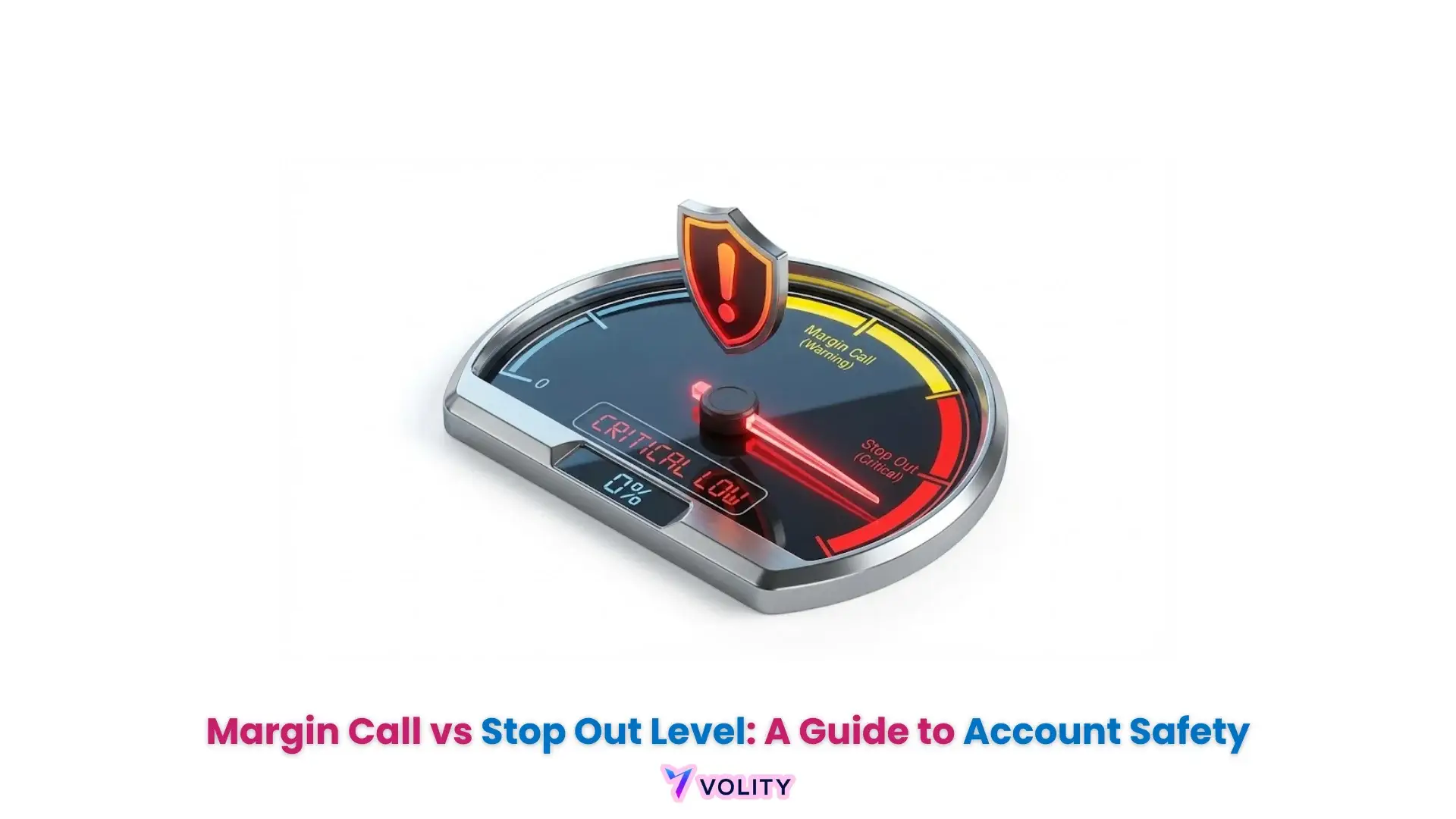
The stop out level is the ultimate safety net for brokers, automatically closing a trader’s open positions when the account’s margin level reaches a critically low, pre-defined threshold. This automatic liquidation mechanism protects the broker from absorbing losses beyond the client’s available equity. Unlike a margin call, which is a warning, a stop out is an irreversible action that signifies significant capital loss, often starting with the most unprofitable position until the margin level recovers.
How Stop Out is Triggered (and Why it Matters)
A stop out is specifically triggered when your margin level falls to a percentage set by your broker (e.g., 20% or 50%).
- Rapid market volatility can quickly erode equity, causing the margin level to drop precipitously and trigger a stop out, sometimes even before a margin call can be issued.
- This is why beginners often get stopped out; insufficient margin combined with sudden price swings can lead to quick liquidation.
- Understanding this trigger is crucial because it represents the point of no return where control over your positions is lost.
The Immediate Impact of a Stop Out
The immediate impact of a stop out is the forced liquidation of your open positions, usually starting with the trade incurring the largest floating loss.
- This process continues until your trading account margin level rises above the broker’s stop out threshold.
- Once positions are closed via a stop out, the losses are realized, and the capital is permanently gone.
- There is no opportunity to recover those specific positions, and the account balance will reflect the significant reduction in equity.
Ready to Elevate Your Trading?
You have the information. Now, get the platform. Join thousands of successful traders who use Volity for its powerful tools, fast execution, and dedicated support.
Create Your Account in Under 3 MinutesKey Differences & Interplay
Understanding the distinct roles of a margin call and a stop out is fundamental for any leveraged trader. While both relate to insufficient margin, they represent different stages of risk and require different responses.
Broker-specific policies regarding margin call percentages and stop out levels can vary significantly, impacting a trader’s exposure and the timing of these events.
| Feature | Margin Call | Stop Out |
| Nature | Warning/Notification | Automatic Liquidation |
| Trigger | Equity < Maintenance Margin | Margin Level < Stop Out % |
| Action Required | Deposit funds or close positions | None (broker takes action) |
| Control | Trader retains control (for a period) | Trader loses control |
| Consequence | Opportunity to prevent further losses | Realized losses, forced position closure |
| Purpose | Protects broker and warns trader | Primarily protects the broker |
| Timing | Precedes stop out (usually) | Final stage, can occur without prior call |
A margin call is not necessarily a bad thing; it acts as a critical warning. It provides an opportunity for the trader to intervene and manage their risk proactively, either by adding more capital or reducing exposure. In contrast, a stop out is the final, automatic action taken by the broker, resulting in forced liquidation.
While a margin call typically precedes a stop out, rapid market movements or extreme market volatility can sometimes cause the margin level to drop directly to the stop out level, bypassing the margin call entirely. This interplay highlights the need for constant monitoring and proactive risk management strategy.
Factors Influencing Margin Call & Stop Out Levels
The likelihood of encountering a margin call or stop out is not solely dependent on market movements but also on several critical factors related to your trading setup and broker’s policies. Understanding these elements can help you better calculate and manage your exposure.
The Role of Leverage in Margin Events
Leverage, while amplifying potential profits, also significantly increases the risk of margin calls and stop outs by magnifying losses on adverse price movements. For example, with 1:500 leverage, a 0.2% price drop can wipe out a significant portion of your capital, making ‘high leverage risks’ a constant concern for traders. Calculating the precise impact requires understanding how your position size interacts with your chosen leverage.
Broker Policies & Account Types
Broker-specific policies regarding margin call percentages and stop out levels can vary significantly, impacting a trader’s exposure and the timing of these events. Different trading account types offered by brokers, such as standard, ECN, or micro accounts, often come with distinct margin requirements and stop out percentages. For instance, one broker might issue a margin call at 80% margin level and a stop out at 50%, while another might set these thresholds at 100% and 30%, respectively. Always review your broker’s specific ‘account types and conditions’ to understand these critical thresholds.
Asset Classes and Margin Requirements (Forex, Crypto, Indices)
Margin requirements also vary significantly across different asset classes due to their inherent volatility and liquidity differences. For example, highly volatile assets like cryptocurrencies typically demand higher margin requirements compared to more stable Forex currency pair trades. Indices and commodities also have their own specific margin rules.
A risk management strategy must account for these variations, as trading a volatile crypto pair with the same margin approach as a major Forex pair could lead to unexpected margin calls or stop outs.
How to Avoid Margin Calls and Stop Outs?
Avoiding margin calls and stop outs is central to long-term trading success and hinges on disciplined risk management. Effective risk management, including the use of stop-loss orders and appropriate position sizing, is crucial in preventing margin calls and stop outs. Implementing robust strategies can safeguard your capital and improve your trading longevity.
Implementing Robust Risk Management Strategies
Robust risk management strategies are the cornerstone of preventing margin events.
- Key among these is the consistent use of stop-loss orders, which automatically close a trade if the price moves beyond a pre-determined level, limiting potential losses.
- Equally important is proper position sizing, ensuring that the amount of capital risked on any single trade is a small percentage of your total trading account balance (e.g., no more than 1-2%).
- Managing leverage effectively, opting for lower leverage where appropriate, also reduces the sensitivity of your margin level to adverse market movements.
- These combined strategies directly address the question of ‘how much should I risk per trade?’ by setting clear boundaries for capital exposure.
Monitoring Your Margin Level & Equity Regularly
Actively monitoring your margin level, equity, and free margin is an essential preventive measure. Your trading platform typically displays these metrics in real-time. A declining margin level, especially one approaching your broker’s maintenance margin percentage, serves as an early warning sign.
Regularly checking your account status allows you to identify potential issues before they escalate into a margin call. This proactive vigilance enables timely adjustments, such as reducing position sizes or closing less promising trades, to maintain a healthy margin buffer.
Contingency Planning for Worst-Case Scenarios
This proactive approach involves having emergency funds readily available to deposit into your trading account if needed. While some brokers offer ‘negative balance protection’, which prevents your account from going into debt beyond zero, it should be considered a final safety net, not a primary risk management strategy. Relying on this feature can build complacency, undermining the discipline required to avoid margin events through active management and preparedness.
Staying Resilient After Margin Events
Beyond the financial implications, experiencing a margin call or especially a stop out can have a significant psychological impact on a trader. The sudden loss of capital and control can trigger a range of intense emotions, affecting future trading decisions and overall confidence.
Many users ask, ‘How do you recover mentally after getting stopped out multiple times?’ Addressing this human element is crucial for long-term resilience in the markets.
Navigating Emotional Responses to Trading Losses
Significant trading losses, particularly those resulting from a stop out, can evoke powerful emotions such as fear, anger, regret, and frustration. These emotional responses can cloud judgment, leading to impulsive and irrational trading decisions, often referred to as ‘revenge trading’. Recognizing these feelings is the first step.
Developing emotional resilience means acknowledging losses as part of the trading landscape, rather than personal failures. It requires stepping away from the charts when emotions run high and avoiding immediate, reactive trades that could compound losses.
Rebuilding Confidence and Learning from Experience
Rebuilding confidence after a major loss involves a structured approach. Take a break from trading to gain perspective. Conduct a thorough review of the trades that led to the margin event, identifying specific mistakes in your risk management or analysis. This objective review, free from emotional bias, transforms a setback into a learning opportunity.
Reinforce your commitment to disciplined position sizing and stop-loss orders. Start trading again with smaller position sizes, gradually increasing them as confidence and consistent profitability return. Frame each experience, even a stop out, as a lesson that contributes to becoming a more disciplined and resilient trader.
Turn Knowledge into Profit
You've done the reading, now it's time to act. The best way to learn is by doing. Open a free, no-risk demo account and practice your strategy with virtual funds today.
Open a Free Demo AccountCommon User Challenges & Misconceptions
Traders, particularly beginners, often grapple with specific challenges and misconceptions surrounding margin calls and stop outs. Addressing these directly provides clarity and helps prevent recurring mistakes.
‘My Broker Didn’t Give Me a Margin Call!’
This phenomenon explains why some traders feel their broker liquidated them without warning. While brokers are generally required to attempt a margin call, their primary responsibility is to protect their own capital. If the market move is too fast, the system will automatically close positions at the liquidation level to prevent the trading account from going into a negative balance. It’s not that the broker didn’t want to give a call, but that the market didn’t allow it.
‘Margin Calls are Always a Sign of Failure’
While undesirable, a margin call should not always be viewed as a sign of complete failure. It is, in fact, an integral part of active risk management.
A margin call acts as a warning, providing the trader with a final opportunity to adjust their positions or add funds to prevent a more severe outcome like a stop out. It signals that your current risk management strategy needs immediate review and adjustment. Unlike a stop out, where control is lost, a margin call offers a chance to regain control and minimize further damage.
‘I Just Need More Capital to Avoid These Issues’
A common misconception, especially among beginners, is that simply adding more capital to a trading account will solve margin-related issues. While increasing capital provides a larger buffer, it does not address the underlying causes of margin calls and stop outs, such as poor risk management, excessive leverage, or inappropriate position sizing.
Without rectifying these core issues, a larger account balance will merely allow for larger losses. The key to avoiding these problems lies in disciplined trading practices, not just more money.
Master Your Margin, Master Your Trading
Understanding the critical distinction between a margin call and a stop out is non-negotiable for any trader using leverage. A margin call serves as a crucial warning, offering a chance to intervene, while a stop out represents the final, automatic liquidation of positions.
Proactive risk management, including disciplined position sizing, strategic stop-loss orders, and vigilant monitoring of your margin level, is the most effective defense against these events. Moreover, developing emotional resilience and having a clear contingency planning strategy are vital for navigating the inevitable challenges of leveraged trading.
By mastering these concepts, traders can protect their capital, minimize losses, and cultivate a sustainable path to long-term success.
Bottom Line
A margin call is a broker’s alert that your account equity has fallen below the maintenance margin, requiring you to deposit more funds or close positions. In contrast, a stop out is the automatic closure of your trades by the broker when your margin level hits a critical percentage, preventing further losses for the broker. While a margin call offers a chance to react, a stop out is a final, irreversible action. Effective risk management, including proper position sizing and disciplined stop-loss orders, is essential to prevent both events and maintain control over your trading account.
Key Takeaways
- Margin calls are broker warnings to add funds or close positions when equity falls below maintenance margin.
- Stop outs are automatic liquidations by the broker when your margin level hits a critical threshold.
- A margin call offers a chance to intervene, while a stop out is an irreversible, forced closure of trades.
- Effective risk management, including stop-loss orders and proper position sizing, is crucial to avoid both events.
- Monitoring margin levels and having a contingency plan are vital for protecting capital in leveraged trading.