Crypto’s uneasy weekend: Ripple dreams, Saylor risk, and a market that refuses to panic
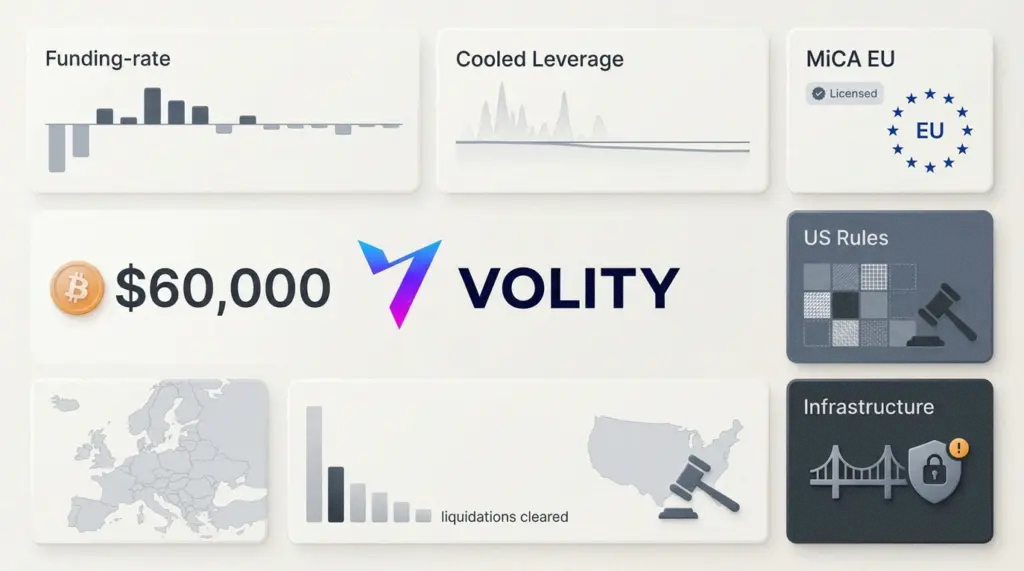
Crypto entered the weekend looking bruised, not broken. Bitcoin held near $60,000, leverage thinned out, and traders kept one eye on Washington, Brussels and Michael Saylor’s balance sheet.
Meanwhile, the market’s loudest stories are becoming less useful for token buyers. Ripple can win banking headlines without lifting XRP. Binance can lose Europe without killing global volumes. Strategy can wobble without forcing Bitcoin into free fall.
That is the new shape of crypto in late June 2026. The trade is no longer just price, hype and hope. It is structure, flows, regulation and plumbing.
By the numbers
- $60,000 – Bitcoin’s key support area after the latest liquidation wave.
- $1.8 billion – estimated crypto liquidations on the month’s sharpest flush.
- July 1 – the date MiCA enforcement tightens across much of Europe.
- 42% – rough market odds now assigned to near-term CLARITY Act progress.
- $2.4 million – reported size of the SecondFi wallet exploit on Cardano.
Ripple makes noise, but XRP waits
Ripple has regained the spotlight. The company is talking up institutional settlement tests, IPO chatter and RLUSD, its dollar stablecoin on the XRP Ledger.
However, XRP holders should read the fine print. In recent treasury settlement pilots, the cash leg ran through RLUSD. XRP mainly paid tiny network fees.
That distinction matters. Ripple equity is not XRP. RLUSD adoption is not XRP demand. An IPO would not automatically reward token holders.
Traders need to separate three assets that often get blurred together. There is Ripple the company, RLUSD the stablecoin, and XRP the volatile token.
Two forces still weigh on XRP. First, Ripple’s escrow releases create a steady supply overhang. Second, banks prefer stable dollars over a token that can move several percent before lunch.
So, each new banking headline tends to spark the same move. XRP jumps, momentum accounts chase, and sellers fade the rally.
The token is not irrelevant. The XRP Ledger still has speed, liquidity and a loyal user base. Yet the current institutional story favours rails over the coin.
Bitcoin holds the line
Bitcoin looks weak on a chart and stubborn in the order book. That combination is uncomfortable for both bulls and bears.
Earlier this month, a sharp washout wiped out roughly $1.8 billion in leveraged positions. Longs were hit hardest, while funding cooled quickly.
Still, spot BTC did not lose the $60,000 area for long. Buyers appeared as soon as forced selling eased.
That resilience matters because the macro backdrop is hardly friendly. Rate worries linger. The dollar remains firm. Geopolitical risk has also kept traders defensive.
Meanwhile, the post-ETF glow has faded. Bitcoin no longer rises simply because Wall Street can buy it in a cleaner wrapper.
Yet the ETF era has changed market behaviour. Pension-style allocations, corporate treasuries and model portfolios do not trade like offshore leverage accounts.
As a result, Bitcoin now absorbs shocks differently. It can still fall hard. However, each panic has more natural buyers beneath it.
The old four-year halving script also looks less tidy. The drawdown has been deeper and slower than many expected. Some traders now call the cycle delayed, not dead.
Saylor is the market’s stress point
No crypto balance sheet attracts more scrutiny than Michael Saylor’s Strategy, the former MicroStrategy and still the market’s loudest Bitcoin proxy.
Saylor built a machine that borrowed, issued stock and bought BTC. For years, that machine turned corporate finance into a Bitcoin amplifier.
Now, however, investors are testing the other side of the trade. Strategy’s market value has slipped closer to the value of its Bitcoin holdings.
That narrows the premium that once made the model so powerful. When the premium falls, issuing stock becomes less attractive.
Critics argue that Saylor has become a sentiment risk. If the market ever fears forced selling, Bitcoin could face a sudden air pocket.
However, the bearish case can be overstated. Strategy’s debt ladder is not one giant margin call. Its holders also knew the bet from the start.
Still, the debate is important. If Strategy survives a deep drawdown, corporate Bitcoin treasuries gain credibility. If it cracks, boards will avoid the model for years.
Europe tightens the gate
Regulation is no longer background noise. In Europe, MiCA is becoming the market’s operating system.
From July 1, Binance faces a tighter path across much of the European Union after failing to secure timely authorisation. That leaves room for licensed rivals.
Coinbase and OKX are already courting displaced users with migration tools, fee offers and smoother compliance documents.
For traders, the message is practical rather than philosophical. Liquidity will follow licences, banking access and stablecoin approvals.
European users should watch spreads, withdrawal routes and leverage limits. The best-looking price means little if the exit door narrows.
Washington loses speed
In the United States, the CLARITY Act has lost momentum. Market odds now put near-term progress around 42%.
That matters for XRP, exchanges and DeFi desks. Courts have answered some questions, but Congress has not built a full rulebook.
The American market remains patchy. Spot ETFs enjoy a defined path. Stablecoins and crypto credit still sit in murkier territory.
Traders should treat legislation as upside, not a base case. Agencies and courts still drive most near-term risk.
The plumbing is creaking
While price traders watched Bitcoin, crypto infrastructure delivered another warning. The pipes still leak.
Coinbase’s Base network reported two outages on June 25 and 26 tied to the same sequencer bug. That raised fresh questions about single-sequencer systems.
Meanwhile, Taiko outlined a restart plan after a June 21 bridge exploit. Bridges remain among crypto’s most fragile structures.
Cardano-based SecondFi also entered a two-week recovery process after a $2.4 million wallet exploit. Users are now waiting on triage and reassurance.
The shared lesson is concentration risk. One sequencer, one bridge, one upgrade key or one weak wallet can freeze a promising ecosystem.
For larger investors, due diligence now means more than token supply charts. It means asking who can pause the system, upgrade it or save it.
How to trade the moment
- Separate story from token. A Ripple banking win may boost confidence, but it may not require XRP demand.
- Respect real buyers. ETF flows and treasury holders can matter more than retail chat during sell-offs.
- Follow licensed liquidity. In Europe, MiCA will reward venues with paperwork and banking access.
- Price regulatory delay. In the US, assume slow lawmaking unless Congress proves otherwise.
- Audit the pipes. Sequencer bugs and bridge exploits are recurring risks, not rare shocks.
Crypto is not in full euphoria, and it is not in collapse. It is entering a more discriminating phase.
Leverage has been cut. Regulation is firmer. Infrastructure is being tested in public. Meanwhile, token economics are finally catching up with corporate narratives.
That makes the market harder, but also cleaner. The easy slogans are worth less now. The real edge sits in flows, structure and who actually benefits when the headline hits.
Related coverage on Volity
- How to Avoid Crypto Scams: A Beginner Safety Checklist
- How to Choose a Trading Platform: A 10-Point Checklist
- Demo vs Live Trading Account: A 7-Step Checklist Before You Go Live
- How to Size a Trade: Position Sizing and Risk Per Trade for Beginners
- Risk-Reward Ratio Explained: How to Set It and Why It Matters
- ETF vs Index Fund: The Difference and Which to Pick