Crypto’s stress test: bitcoin clings to $76,000 as Binance rebuilds trust
Sunday, November 8, 2026 – Crypto investors ended the week like passengers hearing a distant fire alarm. Nobody is running, yet everyone is checking the exits.
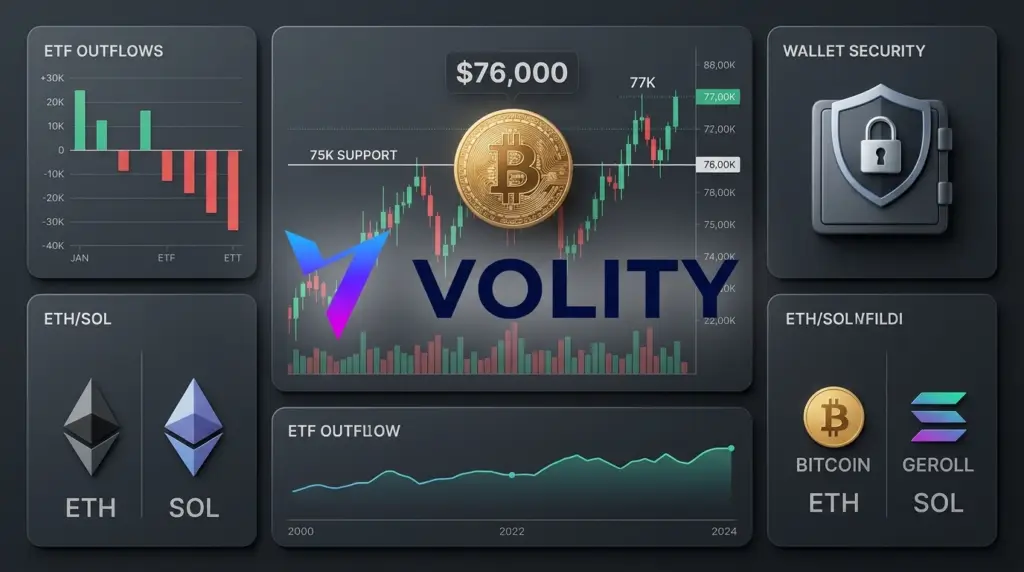
Bitcoin regained $76,000, but the recovery still looks brittle. US spot Bitcoin exchange-traded funds recorded $1.28 billion of net withdrawals between November 2 and 6.
Friday alone brought $411.9 million of outflows. BlackRock’s IBIT accounted for about $403 million, while Fidelity’s FBTC drew $42.8 million.
Across Bitcoin and Ether funds, weekly withdrawals reached roughly $1.65 billion. BlackRock’s products posted outflows in every session during the period.
That reverses a pattern of dependable institutional buying. Bitcoin is holding a headline price level, but the bid beneath it has thinned.
Bitcoin’s $75,000 fault line
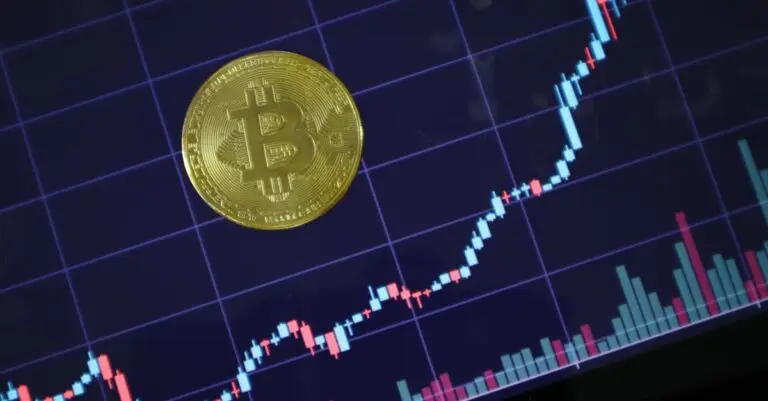
Trading now revolves around the $75,000 to $76,000 range. Bitcoin slipped below $76,000 after ETF selling accelerated and US technology shares weakened.
Buyers returned quickly, although they have not produced convincing follow-through. The next test is simple: can $75,000 act as support rather than a trapdoor?
A sustained move above $77,000 would ease immediate pressure. Conversely, a decisive loss of $75,000 could trigger another rush towards stablecoins and cash.
Altcoins have already taken the harder hit. Several large tokens posted double-digit weekly losses as traders reduced risk across thinner markets.
XRP traded near $1.16 in the latest market snapshot. Interest in Ripple and the XRP Ledger remains lively, while the token’s price action remains defensive.
- Bitcoin support: $75,000
- Bitcoin resistance: $77,000
- Spot Bitcoin ETF outflows, November 2-6: $1.28 billion
- Friday IBIT outflow: about $403 million
Binance reopens withdrawals, asset by asset
Binance has restored withdrawals for HYPE and APT following its October 29 security breach. The exchange is bringing systems back in stages after checks on individual networks and assets.
The breach has been described as a $6.3 billion incident. Binance said attackers used fake job interviews, malicious software and a compromised internal artificial-intelligence tool.
The attackers allegedly reached wallet systems through those routes. Binance said it froze or intercepted about $2.85 billion and would cover affected customer assets.
Bitcoin withdrawals began returning on November 1. Ethereum and Solana services followed, while HYPE and APT now join the restored list.
Still, an open withdrawal route for one asset does not mean every network works normally. Traders should check the exact token and chain before sending funds.
The recovery has become a public test of exchange controls. Reserves matter, but wallet permissions, incident reports and service restoration also shape confidence.
Yi He, Binance’s co-founder, warned users against accepting questionable USDT from informal sellers. Funds linked to suspicious channels can trigger freezes or law-enforcement scrutiny.
Cheap USDT may carry an expensive risk. A small discount can end with funds stuck inside an account review.
Ethereum searches for a broader investment case
Ethereum co-founder Vitalik Buterin has backed ETH as a store of value. That view places less weight on fee burning as the primary support for the asset.
Lower network fees and scaling improvements have reduced the amount of ETH destroyed through transactions. Investors now face a different valuation question.
ETH may need to prove its worth as collateral, settlement infrastructure and a reserve asset for decentralised applications. Staking demand and durable network activity may matter more than scarcity alone.
Meanwhile, the Glamsterdam upgrade faces delays after developers identified eight smart-contract risks. The delay may frustrate traders, but rushed upgrades can cost much more.
Solana’s volume brings attention, not proof
Solana briefly surpassed the New York Stock Exchange in weekly trading volume, according to Fidelity research. The comparison is striking, although the venues measure very different activity.
Solana’s chain can produce intense bursts of trading and liquidity. However, speculation alone cannot establish a lasting investment case.
The next challenge is turning busy markets into durable applications and institutional use. A busy chain is not automatically valuable, but a quiet chain rarely captures capital.
Security returns to centre stage
Binance was not the week’s only security concern. Keplr suspended Google and Apple logins after a wallet drain reportedly cost Cosmos users about $6 million.
BNB Chain urged users to install a BSC-Reth security update. It also promoted its Red Alarm monitoring tool after fresh worries over wallet and infrastructure safety.
South Korean exchange GOPAX halted trading and withdrawals after a hacking threat. Gnosis Pay also disclosed a customer-data breach before closing its legacy card system.
These events expose an awkward reality. Sophisticated blockchains can still fail at weaker points, including devices, third-party tools and unsafe approvals.
Users should treat recovery notices as operational updates, not guarantees. Check the asset, network and withdrawal status before moving money.
Avoid routing crypto for strangers or informal brokers. Familiar logins can also become unsafe after a breach.
The week ahead
- Bitcoin: Watch whether $75,000 holds while ETF withdrawals continue.
- Ethereum: Look for evidence of demand beyond the fee-burn narrative.
- Binance: Monitor restored withdrawal routes and any signs of renewed pressure.
Bitcoin remains close enough to recent highs to attract dip buyers. Yet outflows and security failures suggest that risk appetite has become selective.
In this market, the loudest trade may not be the best one. Position size and exit discipline matter more when the next headline can move prices in minutes.
Related coverage on Volity
- How to Avoid Crypto Scams: A Beginner Safety Checklist
- How to Choose a Trading Platform: A 10-Point Checklist
- Demo vs Live Trading Account: A 7-Step Checklist Before You Go Live
- How to Size a Trade: Position Sizing and Risk Per Trade for Beginners
- Risk-Reward Ratio Explained: How to Set It and Why It Matters
- ETF vs Index Fund: The Difference and Which to Pick