Crypto took a rare breath on Wednesday, 15 July 2026, as softer inflation, firmer prices and a rush of rule-making pulled attention away from the casino floor.
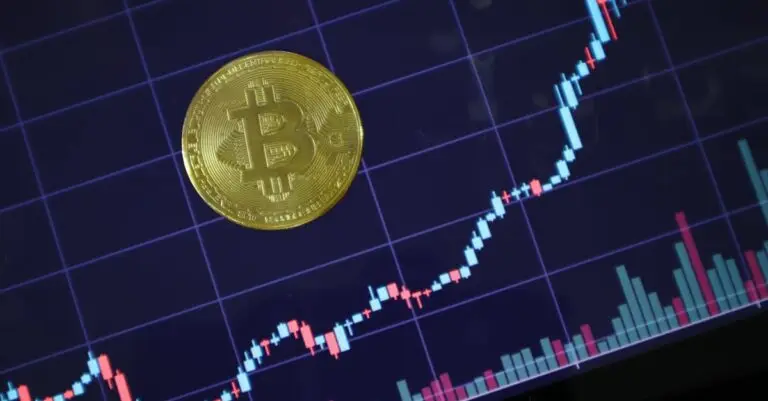
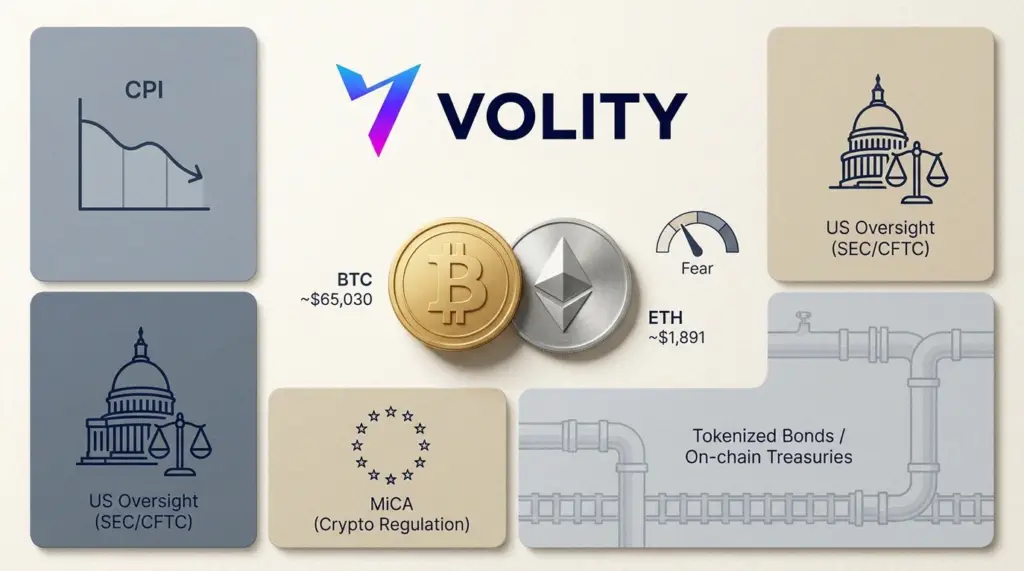
Bitcoin steadied near $65,030, up more than 4 per cent over 24 hours. Ether traded around $1,891, gaining roughly 6.5 per cent. However, the mood still looked cautious rather than euphoric. The Fear and Greed Index moved only from 22 to 25, leaving the market in plain old fear.
That restraint matters. Traders bought the cooler US inflation print, yet they did not chase every small-cap token in sight. Bitcoin dominance held near 55.5 per cent, which shows money still prefers the majors. Meanwhile, the usual speculative corners remain lively, but they no longer define the whole tape.
Macro backdrop
June CPI gave crypto exactly what it wanted. Headline inflation undershot expectations, while the monthly reading declined for the first time in six years. Core CPI was flat month on month. The market trimmed fears of another Federal Reserve rate increase.
Bitcoin reacted quickly and pushed into the $64,000 to $65,000 area. Still, sellers appeared near that familiar ceiling. The move looked less like a breakout and more like a market testing whether relief has legs.
July has also started to fit an old seasonal script. A weak June often gives way to a stronger July for bitcoin. However, history offers a map, not a guarantee. The stronger dollar, Treasury yields and ETF flows can still rewrite the route by Friday afternoon.
Trend watch
The technical argument remains unresolved. Bulls want sustained daily closes above the low $60,000s. If they get them, models point towards a possible grind into the high $60,000s, with $73,000 as the optimistic July target.
Yet bears still have a clean objection. If bitcoin loses the mid $50,000s, chart watchers will start talking about the low $40,000s again. That would require a decisive break, not a noisy wick during thin trading.
For now, the better description is simple: panic has faded, complacency has not returned. That is often a healthier place than the shouty middle of a rally. Meanwhile, ether’s ability to hold above $1,800 gives the broader market some useful ballast.
By the numbers
- $65,030 – recent bitcoin price, after a gain of more than 4 per cent.
- $1,891 – recent ether price, up about 6.5 per cent.
- 55.5 per cent – bitcoin dominance, showing capital still favours large tokens.
- 25 – Fear and Greed Index reading, still in fear territory.
- $2 billion-plus – Avalanche’s reported on-chain real-world asset total after its Bridgetower deal.
Regulation hardens
While traders study candles, lawmakers are drawing the plumbing. In Washington, “crypto week” has pushed three digital asset bills into the centre of the fight. The most important effort would split oversight between the SEC and CFTC.
That split sounds dry. However, it decides which tokens trade like commodities, which face securities rules, and which venues can list them. Stablecoins get their own lane too, as Congress tries to define reserves, redemption and supervision.
Banks, exchanges and token issuers are not treating the drafts as theatre. They are reading them like business plans. A small phrase in a bill can decide whether a product survives, moves offshore or gets rebuilt from scratch.
Europe is applying pressure from another side. MiCA’s licensing deadline has turned into a hard test for crypto firms serving EU customers. More than 80 per cent of firms still lack the required CASP licence, leaving them exposed to a sharp legal edge.
Meanwhile, Asia is choosing its own vocabulary. Japan is moving closer to treating crypto as a financial product. South Korea is working to fold digital assets into state asset management law. In both places, governments are no longer pretending crypto sits outside the portfolio.
Institutions move from talk to plumbing
The more durable story sits away from meme charts. Traditional finance keeps building tokenised rails, and it is doing so with far less noise than crypto Twitter prefers.
The UK has used HSBC’s Orion platform for its first digital sovereign bond. That matters because government debt sits at the centre of global collateral markets. If sovereign bonds can move on digital rails, the experiment has left the conference stage.
Avalanche also strengthened its real-world asset push through a multi-billion-dollar arrangement with Bridgetower. Its on-chain RWA tally now stands above $2 billion. The chain is pitching itself as infrastructure for yield-bearing assets, not only speculative tokens.
Tokenised US Treasuries tell the same story. Their market now sits in the mid-teens of billions of dollars. That gives crypto investors a bridge between DeFi liquidity and old-fashioned fixed income. It also gives fund managers something they can explain without apologising for a dog mascot.
Products compete for the front door
Exchanges no longer want to be simple spot venues. They want the customer’s wallet, brokerage account, payments app and stablecoin balance in one place.
- Prediction markets: On-chain venues are growing quickly, with one major US exchange product reaching a $100 million annualised run rate in only two months. However, regulators are already pushing back in Europe and the United States.
- Stablecoins: The UK and US are moving towards compatible rules for dollar-pegged tokens. Banks, meanwhile, want fewer loopholes for non-bank issuers.
- Super apps: Binance is working towards a platform that blends payments, share trading and stablecoins. If it works, exchanges become financial front doors.
This shift changes the investment question. The market is no longer just asking which token rises fastest. It is also asking which platform owns the daily financial habit.
Token mechanics matter again
Supply is back in focus. BNB Chain has completed another large quarterly burn, reducing supply towards the low hundreds of millions. Ripple has also cut RLUSD stablecoin supply by about 20 per cent from its peak.
Those moves are not decorative. Burns can tighten float, support confidence and signal discipline. However, they cannot fix weak demand by themselves.
Unlocks create the opposite pressure. Several projects face fresh vesting releases, including launchpad-linked tokens with multi-year schedules. Traders now ask a blunt question: will new supply sit in treasuries, or will it hit exchanges?
Equity investors are making similar judgements. Ark Invest has added nearly $14 million of exposure to a major stablecoin issuer while trimming a retail brokerage position. That trade favours on-chain dollar rails over older retail trading pipes.
Retail still brings the smoke
The retail end of the market remains messy. A launchpad outage raised an awkward question for a $226 million meme-token ecosystem: what happens when the machine that created liquidity disappears?
Separately, a hacked brand-linked social media account helped trigger a six-figure exploit in a meme asset. The lesson was familiar but still expensive. In crypto, marketing channels often become security risks.
Security concerns now extend beyond social engineering. Long-term allocators are studying quantum risk, since future computing advances could threaten older cryptographic assumptions. That does not create a trade for Thursday morning. However, it belongs in serious due diligence.
Key takeaways
- Respect the levels: Bitcoin needs sustained strength above the low $60,000s to keep bulls in control.
- Watch ETF flows: Macro helped this bounce, but spot fund demand will decide its depth.
- Track licences: MiCA and US bills may shift liquidity towards compliant venues.
- Study supply: Burns, unlocks and vesting cliffs can overpower good narratives.
- Look at rails: Tokenised Treasuries, bonds and stablecoins now shape the institutional trade.
Crypto is still volatile, strange and occasionally reckless. Yet Wednesday’s market had a different feel. Prices mattered, of course. But regulation, tokenised assets and payment rails mattered just as much. That is what a maturing market looks like, even when it still wears trainers to the boardroom.
Related coverage on Volity
- How to Avoid Crypto Scams: A Beginner Safety Checklist
- How to Choose a Trading Platform: A 10-Point Checklist
- Demo vs Live Trading Account: A 7-Step Checklist Before You Go Live
- How to Size a Trade: Position Sizing and Risk Per Trade for Beginners
- Risk-Reward Ratio Explained: How to Set It and Why It Matters
- ETF vs Index Fund: The Difference and Which to Pick