Crypto’s stress test: outflows, exploits and faster money
November 16, 2026 – Crypto markets began the week under pressure, with prices falling and leverage unwinding sharply.
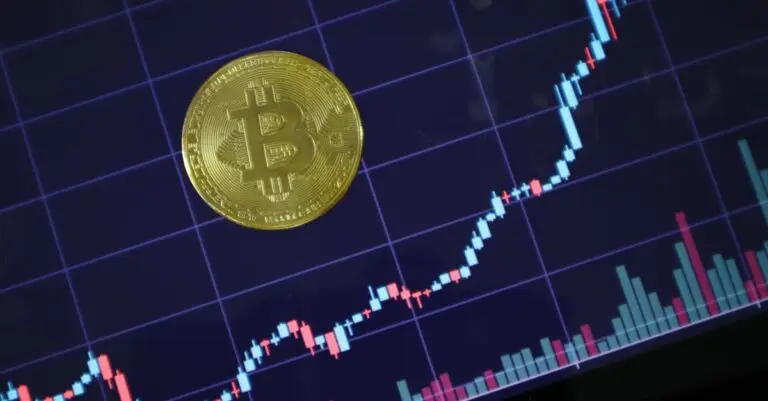
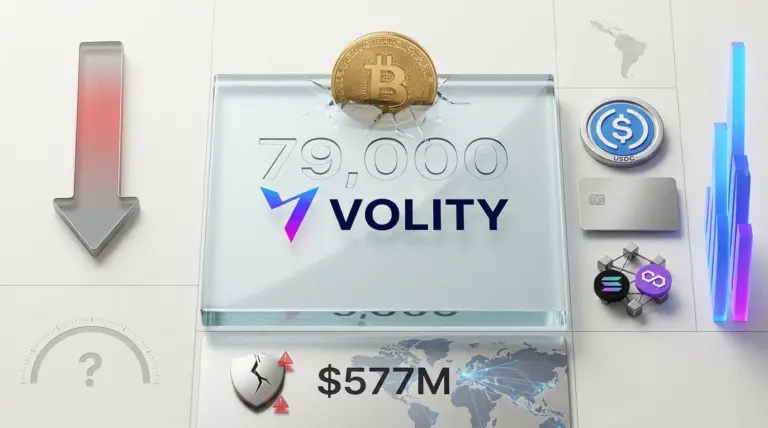
Bitcoin traded in the mid-$60,000s after losing about 15% over the past week. Meanwhile, roughly $1.7 billion of futures positions were liquidated within 24 hours.
Most forced closures involved bullish positions. That matters because liquidations can turn an orderly retreat into a fast, mechanical sell-off.
Ether traded near $1,800, while Solana and XRP recorded steeper weekly losses. As risk appetite weakened, traders moved away from smaller and less liquid tokens.
Institutional buyers step back
The clearest change has come through US spot Bitcoin exchange-traded funds. Those funds recorded about $2.1 billion in November net outflows.
Redemptions continued for seven consecutive trading sessions. Their combined assets also slipped below $100 billion.
That remains a sizeable pool of capital. Yet ETF flows have become an important measure of marginal demand since their January 2024 launch.
Bitcoin products lost an estimated $1.07 billion during the latest week. Ethereum funds shed $398.85 million, while Solana products lost $32.05 million.
XRP funds recorded $19.13 million of weekly outflows. Although these figures do not capture every crypto trade, they show institutional caution spreading.
Solana has faced particular strain. SOL hit a four-month low as its ETF category posted its second-largest weekly withdrawal on record.
Still, Solana products retain positive cumulative inflows. Some investors appear to see the fall as a retreat from risk, rather than a lasting rejection.
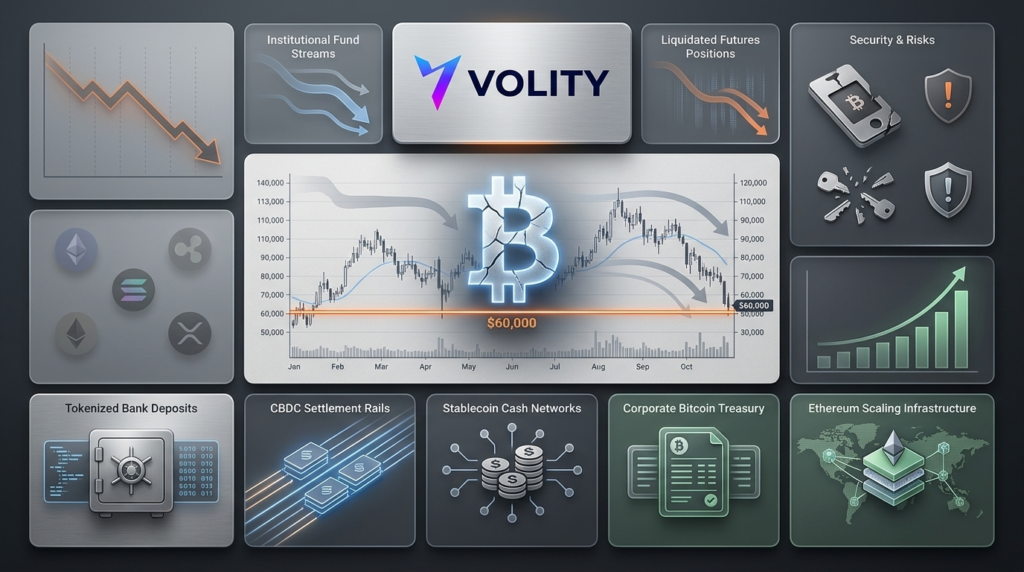
Bitcoin’s $60,000 area now commands traders’ attention. A decisive break could trigger further selling from leveraged accounts and nervous holders.
A rebound, however, would need fresh spot demand. Short sellers covering positions would offer only a temporary lift.
Security risk returns to the foreground
Falling prices were not the industry’s only problem. Lighter, a crypto trading platform, suspended withdrawals after a suspected $15.5 million exploit.
The episode arrived during a run of breaches involving exchanges, wallet providers and outsourced service firms. Each case has revived questions about basic controls.
South Korea’s Coinone said a breach at its customer-support contractor may have exposed passwords, identity records and wallet addresses.
The exchange said its trading and wallet systems were not directly compromised. Even so, customer-support databases can offer attackers an easy route into users’ accounts.
Trezor also found three Safe 5 hardware wallets containing hidden implants. The devices had been sold through a reseller.
The company released firmware designed to block the implants. It also cut back its reseller network.
Hardware wallets reduce online theft risks, but they do not remove supply-chain risks. Buyers should use authorised sellers and initialise wallets themselves.
Recent Solana incidents delivered a similar lesson. Exposed debug logs reportedly gave attackers access to private keys from hundreds of wallets.
Affected users later received refunds. Yet repayment does not solve the underlying failure in software design and operational oversight.
Payments infrastructure keeps moving
Market prices look defensive, while payments projects continue to expand. DBS and JPMorgan are preparing round-the-clock tokenised deposit transfers between Singapore and the United States.
Singapore’s central bank and Germany’s Bundesbank have also tested cross-border CBDC settlements using zero-knowledge proofs. Such systems aim to verify transactions without revealing unnecessary data.
The commercial prize is not necessarily a new global currency. Instead, banks want faster settlement, tighter liquidity management and fewer reconciliation delays.
Cosmos Labs and Peersyst are exploring CBDC and instant-payment infrastructure in Honduras. Meanwhile, Toss plans Ethereum, USDT and USDC wallets for its 30 million users in South Korea.
Solflare and MoneyGram are expanding USDC cash withdrawals across more than 170 markets. That links digital-dollar balances to familiar physical cash networks.
These projects face compliance and operational hurdles. Still, they move blockchain technology closer to financial plumbing, where reliability matters more than spectacle.
Regulators narrow the room for error
Hong Kong is expected to introduce a crypto bill before year-end. The measure could reshape rules for exchanges, custodians and token issuers operating in the city.
Washington faces a slower timetable. Lawmakers are weighing the CLARITY Act alongside nominations for the Securities and Exchange Commission and Commodity Futures Trading Commission.
Firms can see the policy direction, but they lack the final rulebook. That uncertainty affects where companies launch products and hold customer assets.
Brazilian central-bank officials have warned that stablecoin transfers can facilitate money laundering without proper controls. Their focus now extends beyond payment speed.
Authorities increasingly want to know who controls transactions, how customers are identified and whether transfers leave adequate records. For stablecoin issuers, that raises compliance costs.
Platforms are nonetheless blending traditional securities with blockchain rails. Bitget has launched an earn product linked to tokenised S&P 500 and Nasdaq-100 ETFs.
Ondo is promoting stock-backed loans without interest charges. Borrowers, however, surrender part of their potential upside.
That is not free financing. It resembles selling a slice of a future gain in exchange for cash today.
Corporate buyers face a harsher market
H100 selected Coinbase Prime and Deribit for a planned $226 million Bitcoin treasury strategy. Strategy and Strive have also indicated further purchases.
Corporate accumulation can cushion prices during weak periods. Yet it makes the market more sensitive to borrowing costs and corporate balance-sheet stress.
Companies buying into declines can support Bitcoin. Those forced to sell may deepen a downturn.
Ethereum developers are debating changes to reduce gas costs and improve proof verification. Vitalik Buterin has supported proposals including EIP-8037 and leanPCS.
Those are infrastructure stories, not immediate trading catalysts. Yet Ethereum’s longer-term case rests on scaling without weakening decentralisation.
What traders are watching
- Bitcoin: The $60,000 level remains the market’s nearest major test.
- ETF flows: Renewed net inflows would offer stronger evidence of returning demand.
- Leverage: Further liquidations could amplify any break below key support.
- Stablecoins: Contracting supply suggests thinner liquidity across crypto markets.
- Security: Platform and wallet failures remain capable of moving sentiment quickly.
Crypto is sending two different signals. Speculative money is retreating, while settlement infrastructure continues to spread.
The first signal will shape this week’s prices. The second will help decide which networks remain useful after the selling stops.
Related coverage on Volity
- How to Avoid Crypto Scams: A Beginner Safety Checklist
- How to Choose a Trading Platform: A 10-Point Checklist
- Demo vs Live Trading Account: A 7-Step Checklist Before You Go Live
- How to Size a Trade: Position Sizing and Risk Per Trade for Beginners
- Risk-Reward Ratio Explained: How to Set It and Why It Matters
- ETF vs Index Fund: The Difference and Which to Pick