Investing in financial products involves risk. Losses may exceed the value of your original investment.
Crypto market volatility is a core topic for traders in 2026. The complete guide follows.
The cryptocurrency market rolls through recent months battered, buzzing, and divided, with volatility, innovation, and regulatory friction all marching in lockstep. Traders are wracked with fear, prices churn, and even the strongest coins are not immune. Yet, far from stalling, the sector surges with invention-cloud mining booms, new ETF products debut, and talk of a decentralized internet intensifies. Here’s today’s most relevant news, coupled with guidance for investors needing clarity in the market fog.Volatility snapshot: Bitcoin leads a nervous selloff
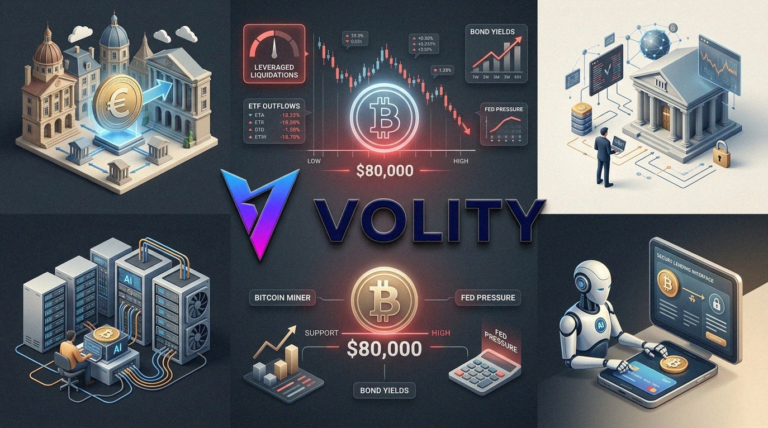
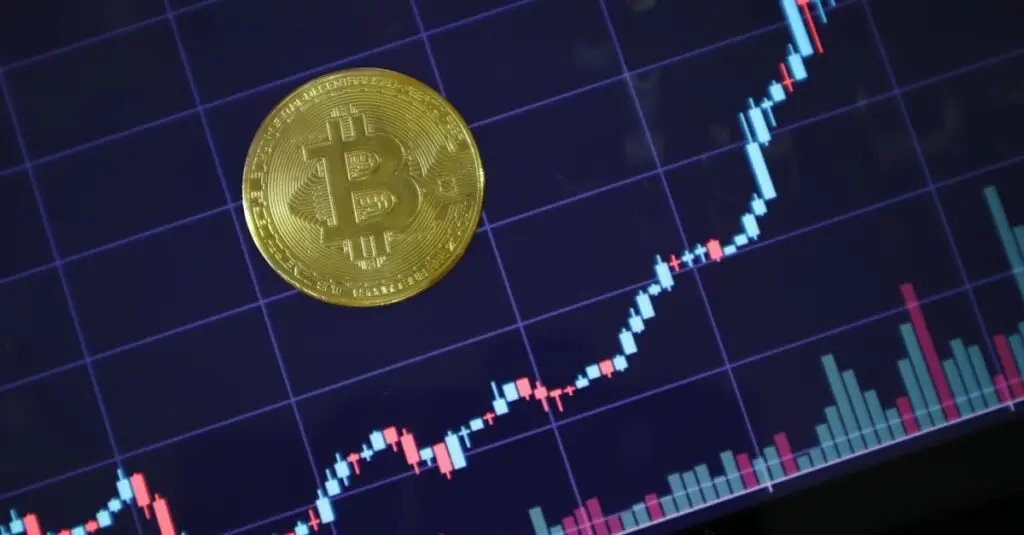
The cryptocurrency market woke to high drama: Bitcoin broke below the $90,000 floor, while Ethereum, Solana (SOL), and XRP tumbled in parallel, triggering over $1 billion in liquidations in a single day. The Crypto Fear & Greed Index dropped to extreme lows, signaling a frightened and oversold market. Technical analysts are split-some foresee a rebound, others caution that critical support levels have failed and winter is ahead.Pi Network: a coin at a crossroads
The most unorthodox star today is Pi Network, which is pressing for a breakout moment. Three factors have stoked expectations:- Rising on-chain activity: Network transaction counts are climbing, with social media and crypto communities speculating that ecosystem adoption is finally materializing after years in “testnet” limbo.
- Chart patterns: Market watchers spot a double bottom, often taken as a sign of possible reversal from bearish trends.
- Looming token unlocks: Major token releases-usually bearish-might also prove bullish if pent-up demand outpaces selling pressure.
Cloud mining: democratizing or dividing the market?
Mining is back in headlines, but not in the way it was before. Instead of lumbering rigs and noise, cloud mining-led by platforms like Eden Miner and Mint Miner-has become the retail investor’s entry point. No hardware, no daunting technical set-ups; users rent computing power remotely to earn crypto, including Bitcoin and XRP. The appeal is clear:- Accessibility: Entry is cheap and simple, meaning beginners can try mining with only a smartphone or web account.
- Transparency and security: The newest platforms emphasise clear pricing, no hidden fees, and dashboards that track mining rewards in real-time.
- Environmental emphasis: Eden Miner, for one, claims its mining is powered entirely by clean energy.
Institutional maneuvers: ETFs, global expansion, and regulatory news
- Solana’s new ETF: Asset manager VanEck launched a Solana ETF, opening fresh routes for institutional and retail exposure, though the token price paradoxically slipped upon the news.
- KuCoin goes Down Under: The exchange pushes into Australia, choosing Sydney for its new headquarters and tapping regional talent.
- AMINA Bank nabs a Hong Kong license: Opening doors for institutional crypto services in Asia’s financial hub, another sign of regulatory evolution in the East.
- White House and IRS: The U.S. executive branch is reviewing rules that could compel offshore crypto reporting, stoking debate on privacy versus oversight.
Feature: why the latest AWS outage has supercharged calls for decentralization
When Amazon Web Services (AWS) ground to a halt, much of the digital world shuddered with it-a stark reminder that Web2’s centralized backbone can be a single point of failure. This incident caught the eye of Web3 advocates, who argue that a decentralized web isn’t just desirable-it’s essential. Decentralized hosting and blockchain infrastructure are being touted as antidotes to systemic fragility, though scalability and usability remain limitations for now.Trading signals for the cautious and the brave
- Bears dominate sentiment: Current market mood is risk-off, as reflected by “Extreme Fear” on the prevailing sentiment meters.
- Technical ceilings and floors: Pi Network’s next key levels stand at $0.2168 (support) and $0.2598 (resistance). A breakout above or below these lines could jolt momentum.
- Cloud mining as hedge: For those exhausted by erratic price action, cloud mining offers a different risk profile-lower entry, more stability, but capped upside and unique platform risks.
What to watch next
- Token unlock events on Pi Network, which may bring surprise volatility.
- Further macro ripples from the ongoing regulatory tug-of-war in the U.S., Europe, and Asia.
- The next wave of exchange expansions as major players surge into new geographies.
- Cloud mining boom-or-bust: Will transparent platforms take hold, or will the market succumb to “too good to be true” schemes?
- Innovations in decentralized internet services as outages and cyber risk raise the bar for trust and resilience.
For more on this topic see our deep-dives on Cryptocurrency Market News: Bitcoin, Ethereum and Stablecoin Trends, Pi Network Testnet Success: Why Crypto Prices and Optimism Rose, and Crypto Market Today: BTC Range, ETH Risk, BNB Drawdowns.
For more on this topic see our deep-dives on Ethereum ETFs and the USDC Welfare Pilot Reshaping Finance, Tokenization Explained: XRP ETF Dynamics, Staking ETPs and Real-World Assets, and China’s Blockchain Green-Assets Push: A Crypto Investor Guide.
What our analysts watch: Three lenses dominate our reading of the equity tape. Sector rotation tells us where capital is moving (defensives versus cyclicals, value versus growth).
Earnings revisions show whether analyst expectations are catching up to or trailing reality. Real yields and the dollar set the discount rate that valuation multiples respond to.
When earnings estimates rise faster than the index price and real yields stabilise, the setup tends to favour patient longs.
Frequently asked questions
How much money do I need to start trading stocks?
Many regulated brokers now allow account opening with no minimum deposit and offer fractional shares for as little as $1. A practical starting balance for a long-only beginner is $500 to $2,000, enough to diversify across a handful of positions without paying meaningful percentage spreads. The FCA publishes investor education resources worth reading before opening an account.
What is the difference between stocks, ETFs, and CFDs?
A stock is direct ownership in a company. An ETF is a basket of stocks (or other assets) traded as a single security. A CFD (contract for difference) is a leveraged derivative that tracks the underlying price without conferring ownership. Each has different cost, tax, and risk profiles. ESMA imposes leverage caps on retail CFDs in the EU and UK.
How do I choose a trustworthy broker?
Verify regulation with a tier-one authority (FCA in the UK, CySEC in Cyprus, BaFin in Germany, ASIC in Australia, or your local regulator). Check segregated client funds, negative-balance protection, transparent fees, and a clean disciplinary record. Avoid any platform offering guaranteed returns or pressuring deposits. The FCA Financial Services Register is free to search.
Should I day-trade or invest long-term?
Most retail accounts that day-trade lose money over time. Long-term passive investing in diversified index ETFs has historically delivered competitive returns with far less effort and lower stress. Active day-trading can work, but it requires capital, an edge proven over hundreds of trades, and the time to monitor positions intraday. Start passive; layer active only after the basics are durable.
Related guides
- Bitcoin explained
- Cryptocurrency trading
- Crypto trading platforms
- Best crypto investments
- Risk management
What Volity Editorial watches: The Volity research desk separates volatility into two regimes. The first is liquidation-driven: funding stretches one way, a price shock unwinds it, realised vol prints high for a session, and the tape resets. The second is regime-shift volatility, where ETF flows reverse, macro liquidity tightens, and the multi-week trend changes. Confusing the two produces oversized losses, because the playbook for noise (fade the move) destroys capital when a regime is actually breaking.
Volity analyst FAQ
Why is the crypto market so volatile compared to stocks?
Crypto trades 24/7 across fragmented venues with thinner orderbooks than major equity indices, and a much larger share of the float sits in leveraged perpetual-swap positions. That structure converts modest spot moves into cascading liquidations within minutes. The BIS working paper on crypto market structure documents how the leverage stack amplifies headline-driven moves far beyond what equity markets experience under similar news.
How should investors react to a Bitcoin selloff?
The first move is to name the regime: liquidation flush, ETF outflow, or macro derisking. Each implies a different response. A liquidation flush typically retraces within days; an ETF outflow stretches across weeks; a macro derisk lasts quarters. The CoinDesk markets dashboard aggregates the live signals (funding, flows, dominance) needed to triage which regime is actually unfolding.
Is Pi Network a credible asset to hold through volatility?
Pi Network sits at the speculative end of the spectrum: thin liquidity, evolving listing status, and a token-economics design that has yet to face a full bear cycle. Holders treating it as a portfolio anchor are taking single-asset risk far above what is appropriate for any non-major. Volatility cuts harder on the thin end of the orderbook. The Investopedia cryptocurrency primer frames why illiquid altcoins behave differently in stress.
Does cloud mining reduce exposure to crypto volatility?
Cloud-mining contracts convert price exposure into operational exposure: hash difficulty, electricity costs, and contract counterparty risk. The volatility does not disappear, it migrates. When BTC drops, mining revenue drops faster because the network adjusts difficulty with a lag and fixed costs persist. Cloud mining is a compounding-volatility product dressed as a yield product, not a hedge against drawdown.
External references
- BIS working paper on crypto market structure
- CoinDesk markets dashboard
- Investopedia cryptocurrency primer
Quick takeaways
Here is what matters most for this story.
- Markets price news the moment it lands, often within milliseconds.
- Central banks, geopolitics, and earnings releases drive the largest moves.
- Therefore, the trader's edge is reading positioning, not the headline.
Read on for context, data, and what changes next.
Volity operates a trading platform and also publishes educational and analytical content about trading. The content on this page is for educational purposes only and should not be considered financial advice. Volity may benefit commercially when readers open trading accounts through links on this site.
Our content is produced and reviewed under documented editorial standards; see our comparison and review methodology.