Investing in financial products involves risk. Losses may exceed the value of your original investment.
Tether profits bitcoin is a core topic for traders in 2026. The complete guide follows.
Crypto news digest: senate bans bets, tethers record quarter, bitcoin stalks $80,000
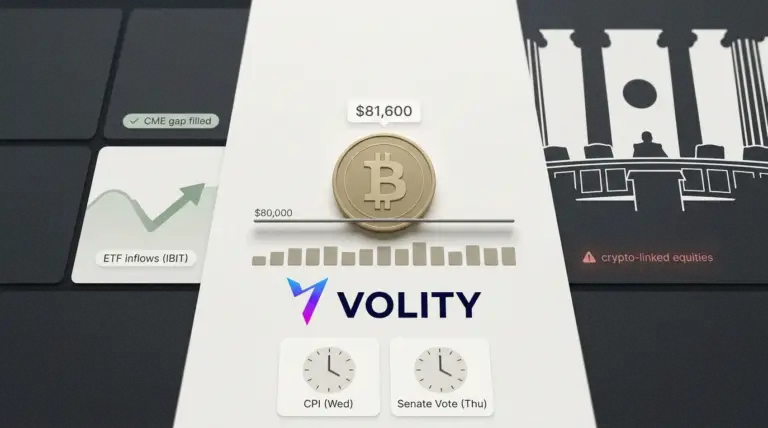
Bitcoin spent Friday leaning on $78,000 and staring at $80,000, as traders priced a quieter geopolitical tape and a friendlier Washington. Meanwhile, senators voted to keep themselves out of prediction markets, and Tether posted another set of numbers that will make rivals wince. Elsewhere, the regulatory calendar tightened, XRP got an institutional tool upgrade, and venture money looked a bit tired.
Washington draws a line on prediction markets
The US Senate unanimously passed a ban that bars senators and their staff from trading on prediction markets. The politics are straightforward, however the market impact is subtle. That flow was never huge, yet its symbolism mattered, because it blurred the line between public power and private wagers.
Meanwhile, the CLARITY Act remained the industry’s near term obsession. Ripple’s chief executive, Brad Garlinghouse, said he still expects progress in May, despite earlier timing slips. Attention now clusters around a scheduled SEC roundtable and a Senate markup pencilled in for the week of May 11. The window narrows after May 21, so lobbyists and lawyers are counting days rather than weeks.
In a separate move, President Trump’s new retirement order opens 401(k) plans to crypto and other alternative assets. That matters because retirement platforms are slow, sticky pools of money. However, plan sponsors tend to be cautious, so any inflows will likely arrive in steps, not a rush.
Stablecoin legislation stayed messy. Banks pushed back on parts of the GENIUS Act framework, while Agora chased a federal charter, signalling that the fight is shifting from theory to market structure.
Tether prints $1.04bn, again proving size is a moat
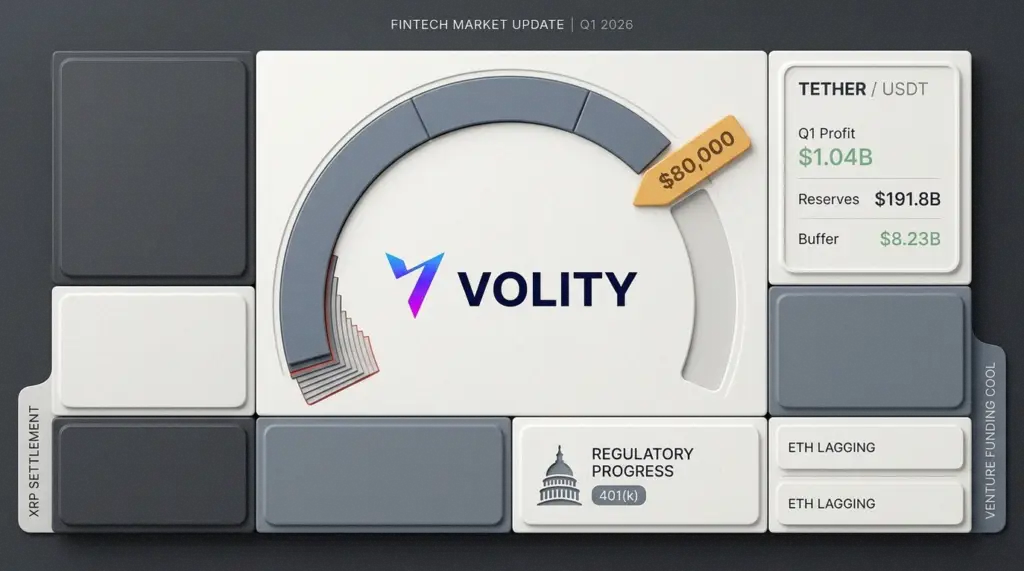
Tether reported $1.04 billion in profit for the first quarter of 2026. Total reserves stood at $191.8 billion, while its reserve buffer hit a record $8.23 billion. Those numbers reinforce USDT’s grip on crypto plumbing, especially as trading venues and cross border payments lean harder on stablecoins.
Yet the same scale that builds confidence also draws scrutiny. Reserve composition and the buffer trajectory will remain the easiest tells for traders watching risk appetite.
Bitcoin rallies on calmer headlines, leverage returns
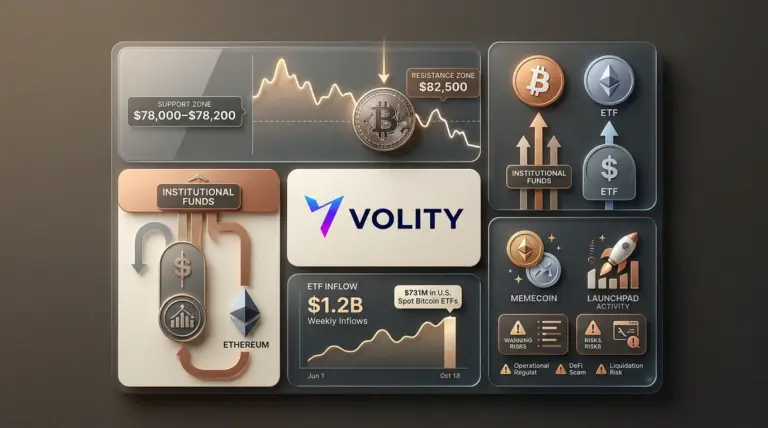
Bitcoin reclaimed $78,000 after Iran sent a peace proposal via Pakistan, easing immediate war premium. Open interest rose about 6%, as traders re levered into futures for a push through $79,000 to $80,000.
That positioning cuts both ways. If spot clears $80,000 with volume, systematic buyers can amplify the move. However, if price stalls, the same leverage can turn into forced selling, particularly across perpetuals.
Ethereum hovered near $2,305, with liquidation risk building below the market. One widely watched estimate pegged roughly $874 million of long liquidations clustered nearby. BTC strength without ETH follow through may start to look more like a beta trade than a broad risk on wave.
- Key trades: Huang Licheng positioned a $14.5m BTC long and a $23.3m ETH long.
- Corporate style bet: Tom Lee’s BitMine disclosed a $508m ETH stake, with holdings reported above 5m.
- Miners: Riot’s first quarter highlighted continued mining pressure, while it kept leaning into AI data centre growth.
XRP gets an institutional rail, while Ripple kills the fairy tales
Coinbase launched XRP TAS, positioning it as the first altcoin with institutional settlement tooling of this kind on the venue. Meanwhile, Ripple locked another 700 million XRP into escrow, keeping supply management front and centre. XRP traded around $1.38.
Just as important, Ripple’s chief technology officer, David Schwartz, pushed back on recurring claims about guaranteed price outcomes and supposed “switches” that can reprice the asset. A former CTO also dismissed the viral $10,000 XRP assertions. That sort of housekeeping rarely moves price today, yet it matters for the next cycle’s uninformed money.
DeFi is still building, but venture looks choosy
Crypto venture funding slipped to $659 million in April, the lowest monthly total since 2024. However, big cheques did not disappear. 137 Ventures raised $700 million for themes spanning AI agents and space.
In DeFi, Mantle’s plan for a 30,000 ETH loan on Aave, about $78 million, moved towards a governance vote. DeFi United’s TVL rose above $314 million. Meanwhile, Curve pushed a new angle on distress, using bad debt pools to turn losses into tradable claims.
Coinbase also flagged its CUSHY fund, aimed at bringing on chain credit to institutions ahead of the second quarter. Elsewhere, SBI added BTC, ETH and XRP rewards to Visa cards, a reminder that distribution often matters more than product elegance.
Elsewhere: altcoin tape and global regulators
- Pi Network: Protocol 23 lands May 11, with full smart contracts promised.
- Bittensor: TAO pushed above $260 as technical traders watched for continuation.
- Solana: downside levels around $75 returned to charts amid a bearish MACD read.
- BNB: $600 support sat in focus as pattern watchers turned cautious.
Overseas, Brazil blocked crypto use in official cross border payments. Korea’s Bithumb avoided a suspension, while WHITE TECH joined Croatia’s first MiCA approved firms. In China, a court barred companies from using AI to replace workers purely to cut costs, which landed as an odd footnote for AI token traders.
AI meets crypto, again
OpenAI ended Microsoft exclusivity, moving to sell models via AWS and Google Cloud as well. MoonPay launched an AI native debit card with a Mastercard stablecoin rail aimed at “agents”. The Pentagon tapped Nvidia, Microsoft and AWS for classified AI work, while Pete Hegseth argued that Bitcoin can counter China “secretly”.
Finally, Minneapolis Fed president Neel Kashkari cooled expectations cuts, citing war driven inflation risk. Crypto’s next leg up may still need either softer inflation prints or a cleaner rush of risk appetite.
By the numbers
- BTC: around $78,000, with $80,000 as the obvious magnet.
- ETH: about $2,305, with long liquidation risk cited near $874m.
- Tether Q1 profit: $1.04bn.
- Tether reserves: $191.8bn total, $8.23bn buffer.
- Crypto VC April: $659m.
Key takeaways
- Watch BTC open interest into $80,000, because leverage can flip the tape fast.
- Track the May 11 Senate markup week, since CLARITY timing now matters as much as content.
- Tether’s buffer is the cleanest stress gauge, so note any sudden changes in the next attestations.
- ETH lagging BTC can signal a narrower, more fragile rally.
- VC slowing does not kill upside, yet it often trims liquidity for smaller caps.
For more on this topic see our deep-dives on QQQ Momentum and Tech: How Gold and Bitcoin Shape Risk Sentiment, Bitcoin and Ethereum: Peace Talks and the Quantum Computing Trade, and European Banks and Stablecoins: What MiCA-Era Crypto Means for BTC.
For more on this topic see our deep-dives on Crypto Market Update: Bitcoin, Ethereum and Altcoin Volatility Explained, Crypto Market Turmoil and the XRP ETF: Investment Insights, and Stablecoins, DeFi Hacks and Bitcoin: Reading the Crypto Risk Map.
What Volity Editorial watches: Three Tether tells matter most when sizing crypto risk. First, the quarterly buffer line, because it is the cleanest stress gauge for a $191 billion footprint.
Second, USDT chain distribution shifts (Tron versus Ethereum versus Solana), which signal where short-term venue liquidity is being parked. Third, primary market mints into a falling Bitcoin tape, since they often precede squeeze setups rather than confirm bottoms.
When all three line up cleanly, the BTC tape tends to grind higher on thin volume rather than print clean breakouts.
Frequently asked questions
What is a stablecoin attestation, and why does it move Bitcoin?
A stablecoin attestation is an independent accountant report on the assets backing tokens like USDT or USDC, typically published quarterly. It matters for Bitcoin because USDT is the dominant settlement asset on offshore venues. A clean attestation reinforces venue liquidity, while any whiff of reserve concern compresses risk appetite quickly. The Bank for International Settlements has published research on the systemic role of stablecoin reserve composition.
Does Tether mint USDT to pump Bitcoin?
No. USDT is minted in response to authorised purchaser demand, typically from market makers and exchanges that need settlement balance. The visible correlation between mints and BTC strength comes from inflow timing, not directional manipulation. The International Monetary Fund has flagged that stablecoin issuance metrics are useful as a real-time crypto-flow proxy rather than as a direct price input.
How are stablecoin issuers regulated?
Regulation is fragmenting by region. The EU’s MiCA regime imposes reserve, redemption, and transparency requirements on euro and dollar stablecoins distributed in Europe.
The UK is finalising a stablecoin regime under the FCA. In the US, the GENIUS Act framework continues to be debated, with banks pushing back on parts of the bill.
Volity’s public footprint is licensed via UBK Markets under CySEC 186/12, with Saint Lucia and Cyprus entities behind the wider group.
What is the practical risk if Tether wobbles?
A USDT depeg below $0.99 typically triggers a chain reaction: forced rebalancing on perpetual venues, wider spot spreads on offshore exchanges, and a temporary flight to USDC and US Treasury bills. Practitioners track the FATF guidance on virtual asset service provider standards as a directional input on supervisory mood, since coordinated AML pressure can compress stablecoin flows independent of attestation quality.
Related guides
Volity operates a trading platform and also publishes educational and analytical content about trading. The content on this page is for educational purposes only and should not be considered financial advice. Volity may benefit commercially when readers open trading accounts through links on this site.
Our content is produced and reviewed under documented editorial standards; see our comparison and review methodology.