Investing in financial products involves risk. Losses may exceed the value of your original investment.
Stablecoins defi hacks is a core topic for traders in 2026. The complete guide follows.
Crypto digest: bitcoin eyes breakout, stablecoins surge, and hackers run wild
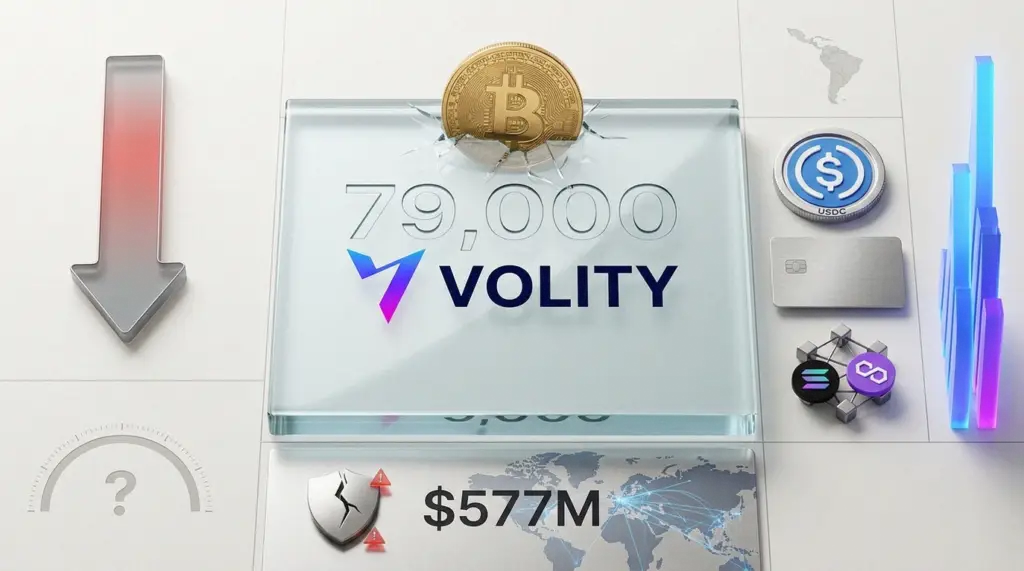
Risk is creeping back into crypto, although it feels more like grit than glee. Short squeezes popped across majors, and fresh AI payments projects gave traders something new to punt. However, bitcoin still cannot clear $79,000, as ETF outflows and fresh Federal Reserve noise keep buyers cautious. Meanwhile, stablecoins are expanding like scaffolding across payments, and hackers keep treating decentralised finance as an open till.
Market snapshot
Bitcoin traded around $78,000 late Friday, pinned under a level that has become a visible line in the sand. After a 46-day drain in leveraged positioning, this week’s wipeout reset funding and thinned froth.
A clean break above $79,000 could pull sidelined risk back in quickly. Yet the tone stays jumpy, because policy chatter has returned to the centre of the screen.
Traders heard fresh split notes around the Fed’s path, and Jerome Powell’s stay-put stance did not help the “cut soon” camp.
Ethereum had the more complicated tape. Exchange data flagged rebound risk, which typically reads as “don’t chase”.
Still, whales continue to signal long-term intent. Tom Lee’s Bitmine staked $508 million of ETH, and holdings now sit above 5 million ETH, a number large enough to make liquidity watchers swallow hard.
Meanwhile, ecosystem builders pushed new “guild” style programmes to funnel developers into applications, although this is a slow-burn catalyst.
XRP traders latched onto a rare three-cycle support pattern, which some chartists treat as a high-conviction floor. However, the mood around price targets stayed febrile. Ripple’s CTO emeritus poured cold water on the $10,000 talk, while conference chatter leaned into “reserve asset” narratives that tend to travel faster than evidence.
Elsewhere, Solana’s chart threatened a slide towards $75 on a bearish MACD setup, while BNB tested support near $600. Dogecoin ran hot again as whale activity hit a six-month high. Broader risk assets helped at the margin, as Alphabet’s surge improved the feel for anything with a growth label.
Stablecoin explosion
The most grounded “adoption” story this week was not bitcoin buying. It was stablecoins eating their lunch in everyday commerce, particularly in Latin American purchases. Visa’s stablecoin pilot now shows $7 billion in volume across nine chains, including Base and Polygon. Meanwhile, Meta is paying some Facebook creators in USDC routed via Solana and Polygon, a notable pivot given the firm’s Libra faceplant four years ago.
Tether underlined its scale with $1.04 billion of first-quarter profit and $191.8 billion of reserves. The stablecoin trade is no longer just crypto plumbing. It is becoming a corporate treasury and payments story. Bakkt is pivoting further into stablecoins after its DTR deal, while Japan’s SBI is dangling BTC, ETH and XRP rewards tied to Visa cards.
AI and payments collide
Payments firms are also racing to give AI agents real money rails. MoonPay rolled out an AI-native debit card with Mastercard, designed for stablecoin spending without the usual friction. Meanwhile, Tether-backed Oobit launched an “AI agent card” pitched for autonomous USDT purchases, which is either the future of commerce or a compliance migraine. OKX also pushed an agent payments protocol, signalling that the next fight may be less about blockspace and more about who controls the transaction layer.
In the background, Washington keeps wiring up its own compute stack. The Pentagon signed fresh deals with Nvidia, Microsoft and AWS for classified AI work. The AI theme now has a defence and procurement tailwind, and that tends to ripple into risk appetite even in crypto.
Regulation and geopolitics
On Capitol Hill, the CLARITY Act is being framed as a last serious shot at a broad crypto rulebook this session. Meanwhile, the Senate moved to bar members from prediction markets, a small but telling sign of how fast lawmakers are turning defensive about “betting” infrastructure. The CFTC, facing roughly 20% staff cuts, is deploying AI tools to review applications, which may speed paperwork yet add a new black-box layer for firms trying to comply.
Geopolitics stayed loud. U.S. authorities seized $500 million of Iranian crypto in “Operation Economic Fury”, and President Trump ordered an Iran briefing as bitcoin slipped to April lows at one point. Meanwhile, the dollar weakened as ceasefire expectations unwound, stirring the usual cross-asset feedback loop into crypto.
Abroad, Brazil blocked crypto use in regulated cross-border payments, while South Korea’s Bithumb avoided a suspension. In Europe, White Tech secured Croatia’s first MiCA nod, and W Group expanded with MiCA authorisation, which continues to pull licensing gravity towards the EU rulebook.
Japan consolidates, hacks dominate
In Japan, SBI is circling a Bitbank takeover, and Japan Exchange Group is preparing for a crypto ETF debut. Meanwhile, South Korea’s Shinhan Card is testing Solana-based stablecoin payments, another reminder that rails matter more than slogans.
Security, however, remained the day’s bleak headline. TRM Labs data showed North Korea-linked hackers accounted for 76% of 2026’s $577 million in crypto thefts so far. Carrot protocol shut down after a Drift-related breach crushed its TVL, while Syndicate Labs reported a $380,000 loss and promised reimbursement. Polymarket added Chainalysis monitoring to address insider-trading concerns, which is a sign that “onchain transparency” still needs offchain policing.
By the numbers
- BTC: ~$78,000, with $79,000 as the near-term trigger level
- ETH: $508 million staked by Bitmine; holdings above 5 million ETH
- Visa stablecoins: $7 billion volume across nine chains
- Tether: $1.04 billion Q1 profit; $191.8 billion reserves
- Theft: $577 million stolen; 76% tied to North Korea-linked actors
Key takeaways
- Watch $79,000 on bitcoin, because a break could flip positioning fast.
- Track stablecoin volumes as a leading signal for real-world usage and chain fee demand.
- Expect policy headlines to move majors, as traders re-price rate paths and enforcement risk.
- Treat AI payments launches as optionality, but price the compliance backlash.
- Keep stops honest in DeFi, because security shocks still arrive without warning.
For now, bitcoin has a simple job. It must prove it can trade above $79,000 without a bailout from macro. Meanwhile, stablecoins are doing the unglamorous work of becoming the market’s real engine.
For more on this topic see our deep-dives on Bitcoin, Solana and AI Tokens: How Crypto Narratives Shift the Tape, Bitcoin, Trade Fears and the Fed Chair Race: Reading Policy Risk, and Bitcoin Rewards, Ethereum at $4,000 and the Trends Driving Crypto.
For more on this topic see our deep-dives on Crypto Market Update: Bitcoin, Ethereum and Altcoin Volatility Explained, European Banks and Stablecoins: What MiCA-Era Crypto Means for BTC, and Crypto News: Cardano Midnight Mainnet and Binance Prediction Markets.
For more on this topic see our deep-dives on Cryptocurrency Market News: Bitcoin, Ethereum and Stablecoin Trends, Crypto Investment News: Grayscale Staking ETFs, XRP Surge and BTC Inflows, and Crypto Funding Climbs as Major Scam Recoveries Expose Industry Risks.
What our analysts watch: Three reads convert the layered risk map into a position thesis rather than a headline reaction. The 79,000 dollar trigger versus the 75,000 dollar magnet (Bitcoin pinned under 79,000 dollars after the deleverage reset is the diagnostic that the leverage cohort has been cleared and the next move is spot-led; a clean break on volume resolves the range upward, while a daily close below 75,000 dollars opens the path toward the deeper accumulation reference closer to 72,000 dollars).
The stablecoin volume as the leading adoption signal (Visa 7 billion dollars, Meta USDC creator payouts, SBI Visa rewards together represent payments-rail integration that historically precedes the next leg of crypto market expansion by six to nine months; the structural read is that stablecoin integration is the leading indicator while Bitcoin price is the lagging confirmation). The North Korea hack-share concentration (76 percent of 2026 thefts tied to one actor cohort is the diagnostic that the structural attack surface concentrates at the bridging and protocol layer rather than across the broader ecosystem; the disciplined response is to underweight bridge-dependent and TVL-concentrated DeFi positions during the active campaign cycle).
The BIS quarterly review on payments and stablecoin infrastructure covers the cross-jurisdictional payments-rail context, the FATF virtual asset guidance documents the AML and DPRK-actor framework that anchors the threat profile, and the CoinDesk live coverage tracks the integration and security cycle. Volity offers BTC, ETH, and major altcoin CFD execution under CySEC oversight via UBK Markets (licence 186/12), with entities in Saint Lucia and Cyprus.
Frequently asked questions
Why is stablecoin volume the leading signal rather than headline Bitcoin price?
Because stablecoin volume measures real payments activity and balance-sheet treasury usage, both of which carry six-to-nine-month lead times on the directional crypto cycle, while headline Bitcoin price reflects the consensus risk-asset positioning at the current moment. Visa expanding stablecoin volume to 7 billion dollars across nine chains and Meta paying creators in USDC are payments-rail integrations that historically precede broader institutional crypto allocation cycles by multiple quarters. The structural read is that the stablecoin integration tape (volume growth, chain expansion, corporate adoption) is the leading allocator signal, while Bitcoin price action is the confirmation lag. The disciplined sizing framework weights the layered signal rather than reacting to single-asset price moves.
What does the Bitmine 508 million dollar staked ETH position reveal about institutional positioning?
It reveals that institutional crypto positioning is migrating toward yield-bearing exposure inside the Ethereum complex rather than concentrating in non-yielding Bitcoin spot allocation, which is the structural shift that explains the 79,000 dollar Bitcoin pin and the relatively constructive Ethereum tape. The 5 million-plus ETH holdings figure across the institutional cohort is the threshold at which liquidity watchers begin to factor structural absorption into ETH price modelling, which is the same dynamic that supported the 2024 Bitcoin spot ETF accumulation cycle. The structural read is that the institutional crypto bid is intact but bifurcated, with the marginal allocator decision moving toward yield-bearing exposure rather than pure Bitcoin spot.
How should traders interpret the CFTC AI-tools deployment alongside the 20 percent staff cuts?
The right framing is that the deployment compresses the application backlog while introducing a new black-box review layer for firms trying to comply, which has two opposite effects on the risk surface. The constructive effect is that registered futures-commission-merchant and DCO applications process faster, which speeds the institutional-product launch cycle (perpetual-futures listings, hedged ETF structures). The constraining effect is that the AI-review layer introduces a non-deterministic compliance cost that firms cannot model in advance, which raises the cost of speculative-product applications. The structural read is that the regulator-side automation accelerates compliant-product flow while compressing the speculative-edge product flow, which favours the larger institutional venues at the margin.
It changes it meaningfully for bridge-dependent and TVL-concentrated DeFi positions, while leaving the broader DeFi index relatively intact. The structural pattern is that DPRK-linked actor campaigns concentrate on protocols with single-bridge dependencies, multi-signature concentration, or undisclosed admin-key exposure, which is a profile that the larger blue-chip DeFi tokens (Uniswap, Aave, Lido) do not match. The disciplined sizing response is to underweight smaller-cap protocols with the at-risk profile during the active campaign cycle and to maintain or expand exposure to the blue-chip subset that has cleared the structural-attack threshold. Treating the entire DeFi category as binary risk is the most common error; the threat surface is concentrated rather than uniform.
Related guides
Volity operates a trading platform and also publishes educational and analytical content about trading. The content on this page is for educational purposes only and should not be considered financial advice. Volity may benefit commercially when readers open trading accounts through links on this site.
Our content is produced and reviewed under documented editorial standards; see our comparison and review methodology.