Quick answer
AI capex is the massive capital expenditure that tech companies are pouring into AI infrastructure like data centers, chips and power to build and run AI models. This boom drives demand for chipmakers and energy but raises questions about returns and power limits. For traders, AI capex shapes the outlook for tech stocks, chipmakers and energy markets.
Investing in financial products involves risk. Losses may exceed the value of your original investment.
The market narrative is loud. Your controls need to be louder.
Megacap tech now drives much of the index return. By early 2025, the top 10 S&P 500 companies made up nearly 40% of the index-matching or even exceeding the dot-com era [1].
Meanwhile, the July U.S. jobs report added just 73k payrolls. More importantly, it cut 258k jobs off the May-June total via revisions. That was enough to change both the rate-cut debate and the discount rate in portfolio models [2].
At the same time, AI has turned data-centre build-outs into one of the fastest-growing power loads in the world. In 2024, these sites used around 415 TWh of electricity, and demand is still rising fast [3]. Hyperscale facilities often need 100 MW+ connections. Therefore, power-not GPUs-is becoming the real limit [4]. Multiple forecasts now expect a doubling of global data-centre power demand by 2030 [5].
Trade policy is adding extra strain. In 2024, the U.S. expanded Section 301 tariffs to cover semiconductors, batteries, and more [6]. Then, in August 2025, Washington broadened these measures across several partners. As a result, tech supply chains face higher costs and more uncertainty [7].
The capex wave is real-and lumpy
For broader exposure ideas, see our AI crypto guide, DePIN infrastructure, and asset allocation strategy.
- Alphabet lifted 2025 capex guidance to ~$85bn, citing servers and new data centres [8].
- Meta projected $66-72bn in 2025, including finance leases for AI infrastructure [9].
- Microsoft is keeping to its ~$80bn AI-focused plan, although the pace will slow [10].
- Amazon has a ~$100bn capex target, mostly for AWS and custom chips [11].
Capex this large becomes a macro force. It shapes utility demand, industrial output, semiconductor orders, and even land use for data centres. It also creates single-name risk. If one hyperscaler delays spending, the effect can ripple through several supply chains at once.
Why “pattern matching” still meets physics – and P&L
Large language models are powerful pattern matchers. However, they scale only until they hit limits in data, compute, and energy.
This is not just theory. In 2021, Bender and colleagues warned about the declining returns from ever-larger models [13]. In contrast, the 2020 “scaling laws” convinced many that bigger always meant better [14]. Now, even leaders like Yann LeCun say new architectures will be needed for the next leap forward [13].
For investors, the lesson is clear: do not price perpetual high returns only on model size. Instead, demand proof of unit economics, a data advantage, and stable access to power.
A practical playbook for CIOs and PMs
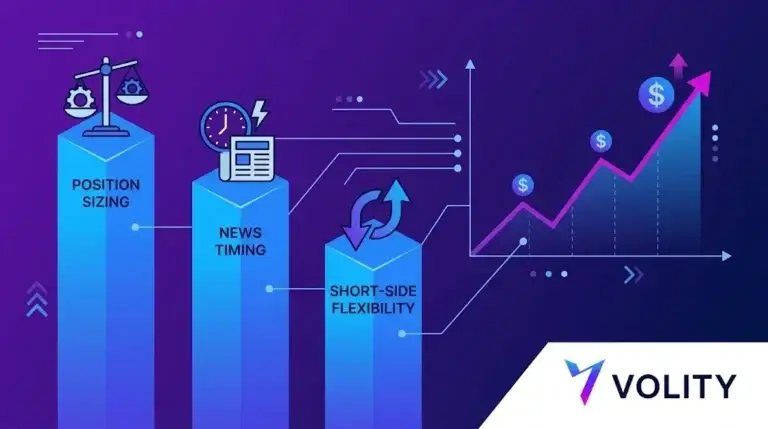
1) Position sizing for concentration risk
Set clear limits on megacap exposure within your mandate.
Scenario test a 20-30% drop in AI leaders if capex slows or power delays appear.
Include tariff shocks in these tests to model higher import costs.
Balance exposure by combining cap-weighted holdings with equal-weight or mid-cap names [1].
2) Make power a diligence item-not an ESG box-tick
Ask partners for interconnect dates, power purchase terms, and backup plans.
Model project delays based on grid access, cooling needs, and water supply [3][4][5].
3) Translate tariff risk into real numbers
Map your costs to tariff lines.
Quantify landed-cost changes and how much you can pass to customers.
Plan re-sourcing timelines before policy changes hit [6][7].
4) Watch for capex discipline signals
Track: revenue per capex dollar, accelerator use, cash conversion, and AI monetisation speed.
Listen to guidance language-Alphabet’s $10bn increase, Meta’s $66-72bn range, Microsoft’s slowing pace, Amazon’s ~$100bn plan all carry signals [8][9][10][11].
5) Keep a contracyclical asset sleeve
Central banks stayed net gold buyers in Q2 2025 despite a slower pace [12].
Size allocations according to your liquidity needs and mandate.
Signals that matter
- Grid updates: approvals or deferrals near data-centre sites [3][5].
- Tariff calendars: USTR notices and partner responses [6][7].
- Capex cadence: quarterly raises or cuts in spend plans [8][9][10][11].
- Labour data: payrolls and revisions like July’s +73k/−258k [2].
Bottom line for 2H25
AI capex is a powerful tide. However, energy limits and trade policy form the shoreline that will define its reach.
Therefore, reward firms that convert spending into cash returns-not just model launches. In addition, diversify away from any single narrative by blending exposure across market caps and regions.
Volity
Volity gives investors the tools to act on this playbook with institutional-grade execution and access to global markets-where any volume finds agility. The platform offers professional and reliable trading with effortless, affordable, and transparent access across asset classes.
References
[1] By early 2025, the top 10 S&P 500 companies made up nearly 40% of the index.
[2] BLS: July 2025 payrolls +73k; May-June net revisions −258k.
[3] IEA estimate: data-centre electricity ≈ 415 TWh in 2024.
[4] IEA: large hyperscale DCs often require 100 MW+ connections.
[5] IEA: global DC demand could double by 2030.
[6] USTR: 2024 expansions to EVs, batteries, semiconductors.
[7] 1 Aug 2025: U.S. tariff actions widened to more partners.
[8] Alphabet Q2 2025: capex guidance ≈ $85bn.
[9] Meta Q2 2025: $66-72bn capex (incl. finance leases).
[10] Microsoft FY25: ~ $80bn AI capex, slower growth.
[11] Amazon 2025: ~$100bn capex.
[12] WGC: central banks net gold buyers, Q2 2025.
[13] Bender et al. (2021): “Stochastic Parrots” critique.
[14] Kaplan et al. (2020): Scaling laws for neural models.
By Volity Editorial, Volity research desk.
What our analysts watch: Three reads anchor a serious AI-cycle equity view that filters the louder narrative. Capex-to-operating-cash-flow ratio across the hyperscaler cohort tells you which balance sheets are absorbing the build versus levering for it; the inflection point is when the ratio crosses 60 percent for two consecutive quarters. PJM and ERCOT interconnection-queue throughput against announced data-centre demand reveals where the genuine grid bottleneck is, which is now the binding capex constraint rather than chip availability. And free-cash-flow yield on the picks-and-shovels names against the long Treasury yield separates structurally-priced compounders from late-cycle momentum trades that re-rate on the next macro shock.
Frequently asked questions
How big is the AI capex wave actually, in audited 2025 numbers?
Calendar-year 2025 reported capital expenditure across the four largest U.S. hyperscalers ran above $300 billion, with mid-2025 quarterly run-rates suggesting calendar 2026 will land higher again before any cyclical pause. The Federal Reserve Finance and Economics Discussion Series hosts working papers that put the capex surge in macro context against historical investment cycles. The structural read for allocators: capex of this scale typically pulls forward two to three years of demand for power equipment, advanced packaging, and grid services, and the order books at the picks-and-shovels suppliers are the cleanest leading indicator.
What does the power-and-grid constraint actually look like in 2026?
U.S. interconnection queues at PJM and ERCOT now hold multi-gigawatt aggregations of data-centre demand, with backlogs that exceed the rolling four-quarter approval throughput. Investopedia coverage of data-centre economics walks through the cost structure, with a clean primer on how power is now the dominant marginal cost. The practical implication for equity selection: names that own or contract long-dated power capacity at sub-grid tariffs trade at meaningful premium multiples, and that premium has held through multiple quarterly resets.
How should retail traders size AI-cycle CFD exposure under EU rules?
The ESMA product intervention framework for retail CFDs sets the EU baseline for risk warnings, leverage caps (5:1 on individual equities, 20:1 on major indices), negative-balance protection, and standardised disclosure. The CME also publishes equity-index volatility regime data that institutional desks use to size positions across the AI-correlated basket. Volity, accessed via UBK Markets and supervised by CySEC under licence 186/12, lists liquid equity-index and single-stock CFDs with segregated client funds and standardised retail disclosure.
Related guides
- Best AI stocks for investment
- Stocks investing for beginners
- Best stock trading platforms in Europe
- Best trading platforms
- Risk management
Volity operates a trading platform and also publishes educational and analytical content about trading. The content on this page is for educational purposes only and should not be considered financial advice. Volity may benefit commercially when readers open trading accounts through links on this site.
Our content is produced and reviewed under documented editorial standards; see our comparison and review methodology.