Investing in financial products involves risk. Losses may exceed the value of your original investment.
You have probably seen it happen before. A stock that everyone bets against suddenly skyrockets. Headlines explode. Social media buzzes. Traders scramble to buy in or cut losses. Prices soar higher and higher, until the momentum crashes just as fast.
So, what exactly is it and why does it happen? How can you spot it early? Most importantly, how do you navigate it wisely? Let’s discuss everything in detail.
While understanding Short Squeeze is important, applying that knowledge is where the real growth happens. Create Your Free Forex Trading Account to practice with a free demo account and put your strategy to the test.
What is a Short Squeeze?
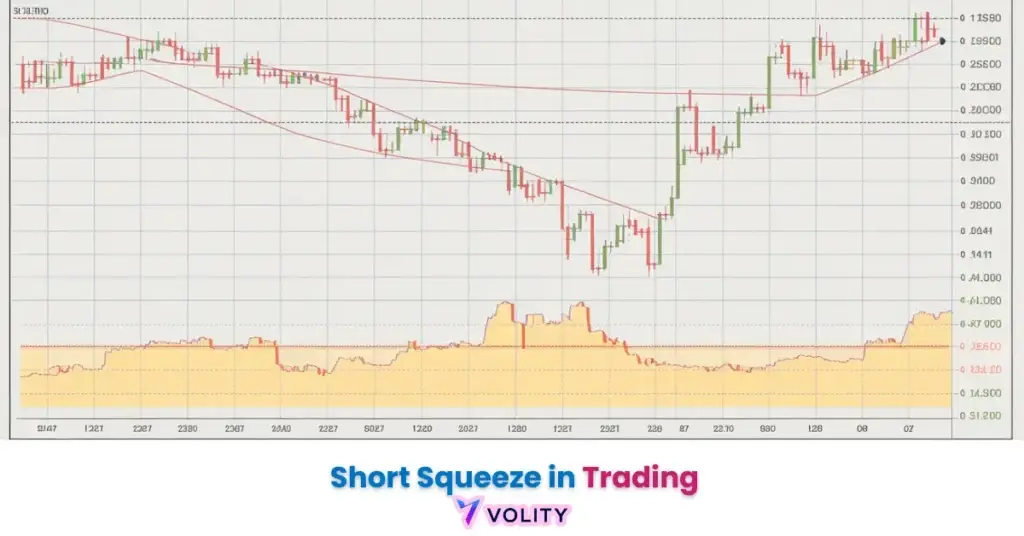
Let’s say you bet against a stock, expecting it to drop, but instead, it shoots up. Panic sets in. You scramble to buy back shares before losses spiral out of control and so does every other short seller. The rush to exit fuels an unstoppable price surge. That’s a short squeeze.
Short squeezes create some of the most dramatic price moves in stock market history. They don’t just shake up individual traders, they send shockwaves through entire markets.
Here are a few real-time examples of Short Squeeze:
- GameStop (GME) – 2021: A group of retail traders on Reddit turned the tables on Wall Street. Value investor Michael Burry had quietly held GameStop well before that squeeze. Hedge funds had bet heavily against GME, but a coordinated buying frenzy forced them to cover at massive losses. The stock soared from under $5 to over $120 in weeks (CNBC, 2021).
- Volkswagen (VW) – 2008: Porsche secretly built its stake in VW, leaving short sellers trapped. When the truth came out, demand exploded. VW briefly became the world’s most valuable company at €999 per share (Financial Times, 2008).
- Tesla (TSLA) – 2020: Tesla was the most-shorted stock in early 2020. As profits improved and S&P 500 inclusion rumors spread, the stock surged 400%. Short sellers lost over $40 billion trying to fight the rally (Bloomberg, 2020).
How Does a Short Squeeze Work?
For the underlying mechanics, see our deep dive on short selling.
A short squeeze starts with short sellers, but it ends with chaos:
1. Short Sellers Take Positions
Short sellers bet against a stock by borrowing shares and selling them at the current price. They expect the price to drop so they can buy back shares later at a lower price, return them to the lender, and pocket the difference.
For instance, a trader shorts a stock at $50 per share. If it drops to $30, they buy back at a profit of $20 per share. But if the price rises, losses can pile up quickly.
2. Unexpected Buying Pressure Hits the Market
A short squeeze begins when unexpected demand drives the stock price higher instead of lower. This demand can come from:
- Positive news (strong earnings, new product launches, regulatory approvals).
- Technical traders spotting a breakout and jumping in.
- Retail traders banding together to push prices up (as seen in GameStop 2021).
Let’s suppose that a stock with a high short interest suddenly gets an upgrade from a top analyst. Investors rush to buy, driving the price up 20% in a day.
3. Short Sellers Panic and Start Covering
As the stock price rises, short sellers face increasing losses. Since they must eventually return the borrowed shares, they rush to buy back shares to close their positions. This adds even more buying pressure to the stock.
- Margin calls force traders to buy back shares if they can’t cover their losses.
- Stop-loss orders automatically trigger buy orders as prices hit pre-set levels.
Suppose that hedge fund shorted a stock at $50, expecting it to fall. But as it hits $80, losses grow. They buy back shares to prevent further damage, which fuels the price surge.
4. The Price Spikes Further as Momentum Builds
As short sellers scramble to exit, more traders pile in. Some join the rally purely to profit from the squeeze. The rapid price surge creates a self-reinforcing cycle.
- High-frequency traders (HFTs) and algorithms detect the movement and amplify the trend.
- Options traders buy call options, adding fuel to the fire.
- Media coverage attracts even more buyers.
For instance, GameStop (GME) in 2021 saw its stock price jump from $20 to $120 in days, partly due to forced short covering and retail buying momentum.
5. The Squeeze Ends, But When?
A short squeeze doesn’t last forever. Prices eventually stabilize or crash when:
- Buying pressure fades as new investors hesitate to enter.
- Fundamentals don’t justify the new price level.
- Regulators or brokers intervene (as seen when brokers restricted GME trading in 2021).
For example, Volkswagen (VW) in 2008 surged to €999 per share during its short squeeze. But after short sellers were forced out, the stock fell by over 50% in days.
Ready to Elevate Your Trading?
You have the information. Now, get the platform. Join thousands of successful traders who use Volity for its powerful tools, fast execution, and dedicated support.
Create Your Account in Under 3 MinutesWhat Triggers a Short Squeeze?
Penny stocks are squeeze magnets, see how to trade penny stocks for the volatility setups that often trigger them.
A short squeeze happens when unexpected buying pressure forces short sellers to cover their positions. The following can trigger it:
1. Positive News
- Strong earnings reports
- New product launches
- Regulatory approvals
- Major investor endorsements
Tesla (TSLA) surged 400% in 2020 after profitability improved and S&P 500 inclusion rumors spread.
2. High Short Interest
- A large percentage of a stock’s float is shorted.
- Short sellers are heavily betting against the stock.
GameStop (GME) in 2021 had over 100% short interest, which sets the stage for a massive squeeze.
3. Sudden Buying Pressure
- Retail traders coordinating on social media.
- Institutional investors taking long positions.
- Hedge funds closing shorts to limit losses.
Volkswagen (VW) in 2008 saw Porsche increase its stake, triggering a rush of short covering.
4. Margin Calls on Short Sellers
- Brokers force short sellers to buy back shares if losses exceed their limits.
- Forced buying accelerates the squeeze.
Hedge funds shorting GME in 2021 faced billions in losses, leading to mass short covering.
5. Call Option Activity (Gamma Squeeze)
- Traders buy call options, forcing market makers to hedge by buying shares.
- This additional buying pushes the stock price higher.
GameStop (GME) in 2021 saw heavy call option buying, amplifying the squeeze.
Why Do Short Sellers Get Squeezed?
Okay, if you are a short seller, you expect the stock to drop. You borrow shares, sell them, and plan to buy them back later at a lower price. But what if the stock surges instead? Your losses grow fast. The higher it climbs, the more pressure you face. At some point, you must buy back shares to exit. That’s when things spiral out of control.
Your broker won’t wait forever. Short selling requires margin, and brokers demand collateral. If the stock rises too much, they issue a margin call. You must either deposit more funds or buy back shares immediately. Melvin Capital lost $6 billion shorting GameStop in 2021 because brokers forced it to close positions (CNBC, 2021). That rush to cover only fueled the price surge.
Finding shares to buy back isn’t always easy. If too many traders bet against the stock, demand outweighs supply. There aren’t enough shares to go around. Institutional block trade volume
can intensify these shortages. Large transactions executed off-exchange often absorb remaining liquidity, worsening the squeeze and driving prices sharply higher.
Volkswagen’s stock hit €999 per share in 2008 because short sellers couldn’t find shares to exit their trades. Hedge funds lost billions (Financial Times, 2008).
Options trading makes things worse. If traders buy call options in large volumes, market makers must hedge by buying shares. This extra demand pushes the stock even higher. GameStop’s 2021 squeeze intensified as retail traders loaded up on call options (Wall Street Journal, 2021).
So, as a short seller, you face unlimited risk. Price surges force you to buy back shares, adding to the rally. Limited supply and options activity make it worse. If you don’t manage risk, the market will do it for you, at a price you won’t like.
How to Identify a Potential Short Squeeze?
- Look for high short interest above 20%, which signals strong bearish bets and squeeze potential.
- Watch out for high days to cover, as a longer exit time increases short-covering pressure.
- Check if short interest exceeds 10% of float, since limited available shares can trap short sellers.
- See if the RSI drops below 30, as oversold conditions may attract buyers and force short covering.
What are the Risks of a Short Squeeze?
- Rapid price crashes can follow a squeeze, leaving late buyers with heavy losses.
- High volatility makes it difficult to enter or exit trades at the right time.
- Unlimited losses for short sellers can wipe out accounts if prices keep rising.
- Margin calls force short sellers to buy back shares, increasing financial pressure.
- Liquidity issues may prevent traders from exiting positions quickly.
- Emotional trading leads to poor decisions as fear and greed take over.
- Regulatory actions like trading restrictions can suddenly halt momentum.
How can Traders Respond to a Short Squeeze?
Okay, so you’re in the middle of a short squeeze. Prices are skyrocketing, panic is spreading, and emotions are running high. What do you do? Stay calm. A short squeeze is dangerous for you if you are unprepared, but if you understand the game, then you can navigate it wisely.
First, recognize the signs early. A stock with high short interest, rising momentum, and increasing volume is a red flag. If you’re shorting, ask yourself, can you afford the risk if the price explodes? Never hold a short position without an exit plan. If the stock starts moving against you, set stop-loss levels and respect them.
If you’re caught in a squeeze as a short seller, cut losses quickly if needed. Pride kills portfolios. The market doesn’t care about your thesis. If price action pattern tells a different story, listen. Many hedge funds thought Beyond Meat (BYND) in 2019 was overvalued, yet short sellers lost over $800 million as the stock surged 840% within months (Reuters, 2019). The best traders know when to walk away.
If you’re looking to profit from the squeeze, move with caution. Yes, short squeezes create explosive rallies, but they also create brutal crashes. Momentum can vanish in an instant. Take partial profits on the way up. Don’t get greedy. AMC Entertainment (AMC) in 2021 surged over 2,500%, but within months, it lost 70% of its peak value (Bloomberg, 2021). Those who held too long saw their gains wiped out.
Avoid chasing late. If a stock has already surged 300% in days, ask yourself, who’s left to buy? The moment short sellers are gone, demand dries up. Be the one who sells to the desperate latecomers, not the one buying at the peak. KaloBios Pharmaceuticals (KBIO) in 2015 soared 10,000% in days, but once the squeeze ended, it crashed 80% within a week (CNBC, 2015).
Lastly, control your emotions. Fear and greed drive short squeezes. The best traders stay rational while others panic. Have a plan, stick to it, and never risk more than you can afford to lose.
Turn Knowledge into Profit
You have done the reading, now it is time to act. The best way to learn is by doing. Open a free, no-risk demo account and practice your strategy with virtual funds today.
Open a Free Demo AccountFinal Thoughts
A short squeeze is a rapid, self-reinforcing price surge caused by short sellers rushing to buy back shares. This sudden demand pushes prices higher, trapping the ones who bet against the stock and rewarding those who anticipated the move.
Just know that a short squeeze can either be an opportunity or a disaster, the difference lies in how you respond. If you’re shorting, always manage risk and have an exit strategy.
If you’re trading a squeeze, recognize that momentum fades fast, and greed can turn profits into losses.
FAQs
What our analysts watch: Three numbers frame any short-squeeze setup. Short interest as percent of float (anything over 20 percent is squeezable; over 40 percent is rare and explosive). Days-to-cover ratio (short interest divided by average daily volume), which estimates how long it would take shorts to exit if forced. Borrow fee, which when it spikes signals shares are scarce and shorts are paying punitive carry just to maintain position. When all three light up alongside a positive catalyst (earnings beat, regulatory win, M&A rumour), conditions for a squeeze are present.
Related guides
- Stocks investing for beginners
- Best stock trading platforms in Europe 2026
- Contracts for difference trading
- Day trading
- Risk management in forex trading
Volity operates a trading platform and also publishes educational and analytical content about trading. The content on this page is for educational purposes only and should not be considered financial advice. Volity may benefit commercially when readers open trading accounts through links on this site.
Our content is produced and reviewed under documented editorial standards; see our comparison and review methodology.