Investing in financial products involves risk. Losses may exceed the value of your original investment.
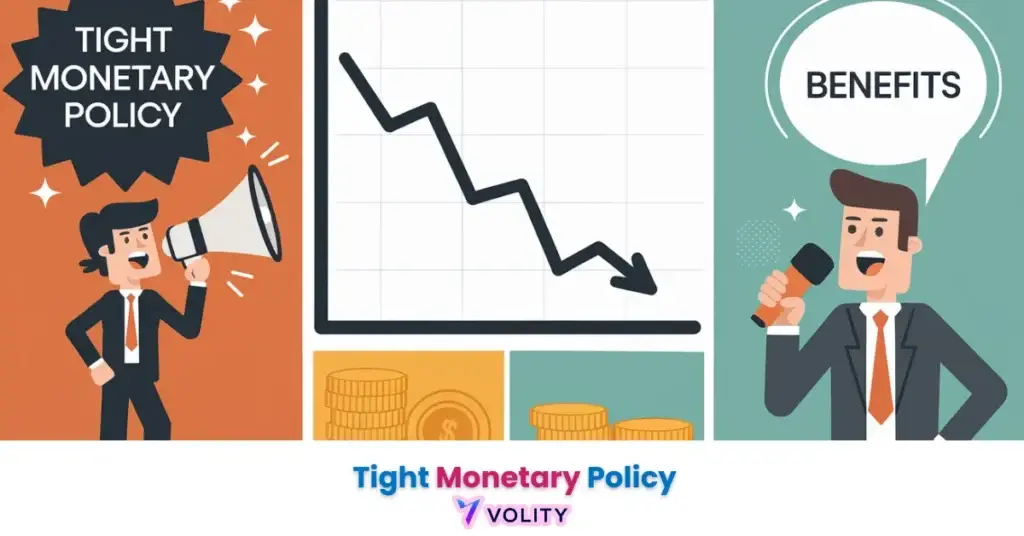
Tight monetary policy controls inflation and slows down an economy that is growing too fast. If the economy heats up, central banks step in to stabilize it. They do this by raising interest rates. Higher rates make borrowing more expensive. As a result, people and businesses borrow less.
Central banks also use other tools to tighten the money supply. See, they can sell government bonds or increase bank reserve requirements. These actions make money harder to access. Does that mean spending decreases? Yes. Higher costs discourage both consumer spending and business investment.
Tight monetary policy is important when inflation becomes a problem. It keeps prices in check. But, without this control, inflation could spiral out of control. The challenge is balancing inflation control with economic growth.
You can see that too much tightening can lead to job losses and slower growth. But, central banks use this policy to maintain long-term stability. Have you ever wondered how central banks decide when to tighten?
While understanding Tight Monetary Policy is important, applying that knowledge is where the real growth happens. Create Your Free Forex Trading Account to practice with a free demo account and put your strategy to the test.
By Alexander Bennett, Volity research desk.
What our analysts watch: Three transmission series reveal how tight policy is actually biting versus how tight the official rate looks. Real policy rate, deflated by core PCE or core CPI, separates nominal hawkishness from genuine restriction. Bank lending standards, captured in surveys like the ECB Bank Lending Survey and the Bank of England Credit Conditions Survey, show whether credit is reaching households and corporates. And the inverted yield curve, particularly the 10-year minus 3-month spread, signals how the bond market is pricing the policy stance against the growth and inflation outlook. The combination is far more informative than the headline rate.
Frequently asked questions
Why do central banks tighten policy?
The primary motive is to bring inflation back to target, since unanchored inflation expectations damage long-run growth and undermine central-bank credibility. The Bank of England’s monetary policy framework sets out the inflation-targeting approach that drives tightening decisions, and the same logic applies to the ECB, the Federal Reserve, and other major inflation-targeting central banks. Tightening that lags inflation entrenches expectations; tightening that overshoots imposes unnecessary recession risk; the Fed and the ECB are calibrated to balance both errors.
How does tight policy move FX and equities?
Tighter policy tends to support the home currency through higher real-rate differentials, while pressuring rate-sensitive equities and high-multiple growth names through both discount-rate and growth-expectation channels. The IMF World Economic Outlook tracks the cross-country macro and financial transmission of policy stance, and the empirical pattern across the 2022 to 2024 cycle confirmed all of these channels with unusually clean signal.
What is quantitative tightening and how does it differ from rate hikes?
Quantitative tightening is balance-sheet runoff or active asset sales that withdraws reserves and lifts longer-dated yields, a complement to policy-rate hikes rather than a substitute. The Bank of England explainer on quantitative tightening documents how a central bank runs down its balance sheet. Used together, rate hikes work through the short end and QT works through the term premium, which gives a central bank two distinct levers to calibrate the overall stance.
Understanding Tight Monetary Policy
Tight monetary policy slows down economic activity. Central banks raise interest rates to make borrowing expensive. Higher rates discourage both consumers and businesses from borrowing. Do you notice higher rates on your loans or credit cards when interest rates rise? That’s a direct result of central banks’ actions.
Central banks also sell government bonds. If you are selling bonds, it reduces the amount of money circulating in the economy. Less money means less spending. It helps lower inflation by curbing demand for goods and services.
You can see reserve requirements can also change. If central banks raise the reserve requirement, banks have less money to lend. This reduces the amount of money circulating in the economy, further controlling inflation.
How does all this affect you? Higher interest rates make it more costly to borrow. You might delay buying a house or car. Businesses might slow down investments or hire fewer people. Can you see how this might slow economic growth?
Tight monetary policy aims to prevent runaway inflation. However, too much tightening can hurt the economy. Growth may slow, and unemployment can rise. Central banks need to strike the right balance. In fact, too little tightening leads to inflation, but too much can cause a recession. Do you think it’s easy to find that balance?
How Does Tight Monetary Policy Work?
Tight monetary policy slows down economic activity. Central banks raise interest rates to make borrowing expensive. Higher rates discourage both consumers and businesses from borrowing. Do you notice higher rates on your loans or credit cards when interest rates rise? That’s a direct result of central banks’ actions.
- Central banks also sell government bonds. Selling bonds reduces the amount of money circulating in the economy. But, less money means less spending. It helps lower inflation by curbing demand for goods and services.
- Reserve requirements can also change. If central banks raise the reserve requirement, banks have less money to lend. This reduces the amount of money circulating in the economy, further controlling inflation.
- How does all this affect you? Higher interest rates make it more costly to borrow. You might delay buying a house or car. Businesses might slow down investments or hire fewer people. Can you see how this might slow economic growth?
- Tight monetary policy aims to prevent runaway inflation. However, too much tightening can hurt the economy. Growth may slow, and unemployment can rise. Central banks need to strike the right balance. Too little tightening leads to inflation, but too much can cause a recession. Do you think it’s easy to find that balance?
Key Tools Used in Tight Monetary Policy
The opposite stance is quantitative easing, same toolkit, opposite direction.
Central banks use a few key tools to tighten the economy. Interest rates are the most common tool. If the central bank raises rates, borrowing becomes more expensive. Consumers and businesses borrow less, which slows down spending.
1. Interest Rates
Central banks raise interest rates to control the economy. Higher rates make borrowing more expensive. People and businesses borrow less. As borrowing decreases, spending and investment slow down. If fewer people borrow, demand for goods and services drops. Can you see how this helps reduce inflation?
2. Open Market Operations
Open market operations are another tool central banks use. Central banks sell government bonds to decrease the money supply. If bonds are sold, money leaves the economy. Banks have less money to lend. This reduces the overall credit available to the public.
3. Reserve Requirements
Central banks can also raise reserve requirements. Banks must hold a higher percentage of deposits as reserves. This limits the amount of money banks can lend out. If lending decreases, the money supply tightens even more. Would you agree this is a direct way to reduce economic activity?
Ready to Elevate Your Trading?
You have the information. Now, get the platform. Join thousands of successful traders who use Volity for its powerful tools, fast execution, and dedicated support.
Create Your Account in Under 3 MinutesWhy Do Central Banks Implement Tight Monetary Policy?
Tight monetary policy slows down the economy. Central banks raise interest rates to make borrowing expensive. Higher rates reduce borrowing and spending. As a result, demand for goods and services falls.
Do you notice how your loan payments increase when rates rise? Businesses also feel the impact. Financing costs rise, which makes them hesitate to invest. They may delay projects or hire fewer people. As businesses slow down, economic growth weakens. This could lead to job losses. Would you agree that fewer jobs affect the economy?
Unemployment might rise as a side effect. As businesses cut back, they reduce their workforce. These shifts in economic indicators, such as inflation, GDP growth, and job data, are often the first visible results of a tighter monetary stance, helping analysts gauge its macro impact.
On the other hand, tight monetary policy helps lower inflation. If demand drops, prices stabilize. The currency becomes stronger. A stronger currency makes imports cheaper. Tightening controls inflation and ensures long-term stability.
Tight monetary policy keeps the economy in balance. It prevents runaway inflation and market instability. But applying it too much can lead to a slowdown. Do you think central banks always get the balance right?
The Effects of Tight Monetary Policy on the Economy
Tight monetary policy has a significant impact on the economy. Central banks raise interest rates to make borrowing more expensive. If borrowing costs rise, consumers and businesses cut back on spending. This reduces the demand for goods and services. Can you see how this slows down inflation?
Businesses also face higher costs. If loans become expensive, businesses delay investments. They may also hold off on hiring. Fewer investments and job cuts slow economic growth. Do you notice how businesses slow down when interest rates go up?
As a result, unemployment may rise. If businesses reduce hiring or lay off workers, fewer people earn wages. This lowers overall spending, which weakens the economy. How do you think this affects consumer confidence? Tight monetary policy helps reduce inflation. Less demand for goods and services means prices stop rising so quickly. A higher interest rate strengthens the currency. A stronger currency makes imports cheaper and keeps inflation in check. However, prolonged tightening can also trigger market corrections as investors adjust valuations to account for reduced liquidity and higher capital costs.
Overall, tight monetary policy aims to maintain stability. It prevents inflation from spiraling out of control. However, it can also slow growth and increase unemployment. No doubt, striking the right balance is key. Do you think central banks manage that balance well?
Examples of Tight Monetary Policy in Action
- Tight monetary policy has been used in various economic situations. Central banks around the world raise interest rates to control inflation and prevent economic instability. You can see its effects in actions taken by the Federal Reserve, the European Central Bank, and the Bank of England.
- In the U.S., the Federal Reserve raised interest rates several times after inflation surged in 2022. The goal was to reduce inflation, which had reached its highest level in 40 years. How do you think these rate hikes affected the economy? Borrowing became more expensive, which slowed consumer spending and business investment. As a result, inflation pressure eased.
- The European Central Bank also raised interest rates in 2022 to fight rising inflation. Higher rates aimed to curb excessive price increases in the Eurozone. Businesses and consumers faced higher borrowing costs, leading to reduced demand. Did you notice how the cost of loans increased during this time?
- In the U.K., the Bank of England took similar measures. As inflation hit 6%, the bank increased its key interest rates. Higher rates reduced spending, but they also slowed economic growth. This is the challenge of tightening policy. It controls inflation but can also make the economy slower.
- Tight monetary policy affects global economies. Central banks use it to maintain stability. But they must carefully manage its effects. Too much tightening can lead to economic slowdowns. The full impact of such policies is often confirmed through lagging indicators like employment rates and output data, which reveal results months after rate hikes take effect.
Turn Knowledge into Profit
You have done the reading, now it is time to act. The best way to learn is by doing. Open a free, no-risk demo account and practice your strategy with virtual funds today.
Open a Free Demo AccountBenefits and Challenges of Tight Monetary Policy
| Benefits | Challenges |
| Controls Inflation | Slows Economic Growth |
| Reduces the risk of runaway inflation. | Increased borrowing costs can lead to a slowdown in consumer spending and business investment. |
| Stabilizes Prices | Increases Unemployment |
| Helps keep prices stable and predictable. | High borrowing costs may lead businesses to cut back on hiring or lay off workers. |
| Strengthens Currency | Reduces Economic Confidence |
| A stronger currency helps reduce the cost of imports. | Higher interest rates may create uncertainty, affecting consumer and business confidence. |
| Encourages Saving | Potential for Financial Instability |
| Higher interest rates can motivate people to save rather than spend. | A sudden tightening of the money supply can lead to financial market volatility. |
Conclusion
Tight monetary policy can reduce inflation. Central banks raise interest rates to make borrowing expensive. If borrowing costs rise, spending decreases. See, this slows demand and helps lower inflation.
However, tight monetary policy has its downsides. It can slow economic growth. Higher borrowing costs also lead to job cuts and lower investments. Have you noticed how businesses hold off on expansion when borrowing gets more expensive?
Tight monetary policy works best when inflation is high. It controls price increases and stabilizes the economy. However, too much tightening can harm the economy. It may lead to a recession. Central banks need to find the right balance.
Is it always the right tool? It depends on the situation. But, too little tightening won’t curb inflation, and too much can damage growth. What’s your take on this? Should central banks focus more on controlling inflation or supporting economic growth?
FAQs
What our analysts watch: Three lenses dominate our reading of the equity tape. Sector rotation tells us where capital is moving (defensives versus cyclicals, value versus growth). Earnings revisions show whether analyst expectations are catching up to or trailing reality. Real yields and the dollar set the discount rate that valuation multiples respond to. When earnings estimates rise faster than the index price and real yields stabilise, the setup tends to favour patient longs.
Frequently asked questions
How much money do I need to start trading stocks?
Many regulated brokers now allow account opening with no minimum deposit and offer fractional shares for as little as $1. A practical starting balance for a long-only beginner is $500 to $2,000, enough to diversify across a handful of positions without paying meaningful percentage spreads. The UK FCA publishes investor education resources worth reading before opening an account.
What is the difference between stocks, ETFs, and CFDs?
A stock is direct ownership in a company. An ETF is a basket of stocks (or other assets) traded as a single security. A CFD (contract for difference) is a leveraged derivative that tracks the underlying price without conferring ownership. Each has different cost, tax, and risk profiles. ESMA imposes leverage caps on retail CFDs in the EU and UK.
How do I choose a trustworthy broker?
Verify regulation with a tier-one authority (FCA in the UK, BaFin in Germany, ASIC in Australia, CySEC for EU passporting). Check segregated client funds, negative-balance protection, transparent fees, and a clean disciplinary record. Avoid any platform offering guaranteed returns or pressuring deposits. The FCA Financial Services Register is free.
Should I day-trade or invest long-term?
Most retail accounts that day-trade lose money over time. Long-term passive investing in diversified index ETFs has historically delivered competitive returns with far less effort and lower stress. Active day-trading can work, but it requires capital, an edge proven over hundreds of trades, and the time to monitor positions intraday. Start passive; layer active only after the basics are durable.
Related guides
- Foreign exchange market
- Forex trading for beginners
- Stocks investing for beginners
- Best forex trading strategies
- Risk management
Volity operates a trading platform and also publishes educational and analytical content about trading. The content on this page is for educational purposes only and should not be considered financial advice. Volity may benefit commercially when readers open trading accounts through links on this site.
Our content is produced and reviewed under documented editorial standards; see our comparison and review methodology.




![How to Invest in Precious Metals: [Gold, Silver]](https://volity.io/wp-content/uploads/2024/12/Invest-in-Precious-Metals-like-gold-768x402.webp)