...

How to Set Up a Forex Trading Account in 2025?

Table of Contents
Quick Summary
A Forex trading account is a brokerage account that allows individuals to buy and sell currencies on the foreign exchange market. Traders deposit funds, execute currency trades, and track profits or losses. Forex accounts can be standard, mini, or micro, depending on trade size and capital requirements.

Setting up a forex account requires specific steps to ensure a secure, functional trading environment. This process includes understanding the market ecosystem, selecting a regulated broker, successfully completing identity verification (KYC), and correctly linking a trading platform like MetaTrader 4 to your account. Avoiding common technical errors and scam brokers provides a secure entry into the foreign exchange market.

The process of moving from beginner to live forex trading often feels complex and intimidating. Many aspiring traders face document rejections during account verification or encounter technical disconnects between their brokerage and trading terminal. This guide demystifies each stage. It provides precise instructions to navigate regulatory requirements, avoid common pitfalls, and confidently execute your first trade.

While understanding How to Set Up a Forex Trading Account is important, applying that knowledge is where the real growth happens. Create Your Free Forex Trading Account to practice with a free demo account and put your strategy to the test.

Understanding the Ecosystem Before You Sign Up

The Foreign Exchange Market, or forex, represents the largest financial market globally, processing trillions of dollars daily. This market operates with exceptionally high liquidity, enabling rapid transaction execution and tight spreads. Its inherent volatility offers significant profit opportunities but also carries substantial risk. Leverage, a crucial component of forex trading, allows traders to control large positions with a relatively small capital outlay. Margin acts as collateral for these leveraged positions, protecting both the trader and the broker.

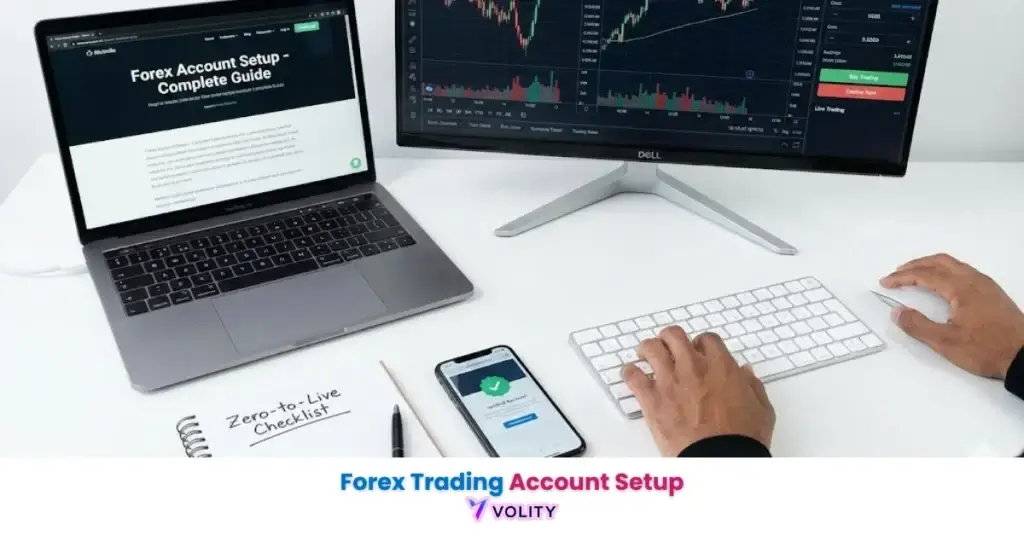
forex account ecosystem

A “Forex Account” involves two distinct components. It establishes a financial relationship with a broker, managing capital deposits and withdrawals. It simultaneously provides a connection to a trading terminal, which facilitates market analysis and trade execution. Understanding this dual function prevents common setup confusion.

The Role of the Broker vs. The Trading Platform

Understanding the distinct functions of your broker and trading platform prevents operational misunderstandings. Each plays a critical, yet separate, role in your trading activity. Both elements are essential for comprehensive market access and trade management.

Why you need a Broker (Liquidity Access & Custody)

A broker provides direct access to the interbank market, serving as the intermediary between individual traders and global liquidity providers. Brokers aggregate prices from various banks and financial institutions, offering competitive bid and ask prices for currency pairs. They also safeguard client funds in segregated accounts, enhancing security against insolvency. Selecting a regulated broker ensures compliance with financial laws and provides recourse in case of disputes.

Why you need a Platform (Charting & Execution)

A trading platform provides the necessary software interface for market analysis, trade execution, and account management. Platforms like MetaTrader 4 (MT4) or MetaTrader 5 (MT5) offer charting tools, technical indicators, and automated trading capabilities through Expert Advisors. The platform translates your trading decisions into executable orders, sending them to your broker for processing. This separation allows for specialized functionality: the broker manages the money, and the platform manages the trades.

Assessing Your Risk Tolerance & Requirements

Evaluating your personal risk tolerance defines appropriate trading strategies and account settings. This assessment prevents emotional decision-making and aligns your trading approach with your financial capacity. Ignoring this step often leads to overleveraging and rapid capital depletion.

Understanding Leverage (The double-edged sword)

Leverage allows traders to control larger positions than their actual account balance suggests. A 1:500 leverage ratio enables control of $50,000 with only $100 in margin. This magnifies both potential profits and potential losses. Beginners often choose high leverage, which provides the fastest path to account depletion. Responsible leverage use, often 1:30 or 1:50 for retail traders, aligns with effective risk management.

WARNING: High leverage amplifies losses. Selecting 1:500 leverage as a beginner increases your risk of a margin call by 85% compared to 1:30.

Minimum Deposit Realities (Can you really trade with $100?)

Many brokers advertise minimum deposits as low as $10 or $50. While technically possible to open an account with $100, this capital amount offers extremely limited trading flexibility and high risk of liquidation. A $100 account with standard lot sizes necessitates aggressive leverage, leaving minimal room for market fluctuations. A more realistic starting capital of $500 to $1,000 allows for smaller position sizes (micro lots) and better risk management practices, protecting capital from minor market movements.

Step 1: Choosing the Right Broker & Account Type

Selecting a suitable broker and account type forms the foundation of a successful forex trading journey. This decision impacts your trading costs, platform access, and overall security. Proper evaluation prevents engagement with fraudulent entities and aligns your trading environment with your strategy.

Critical Vetting Criteria (Avoiding Scams)

Thoroughly vetting a broker minimizes exposure to scams and ensures the safety of your capital. Due diligence focuses on regulatory status and fund protection mechanisms. Omitting these checks risks substantial financial loss and data compromise.

Regulatory Bodies (FCA, NFA, ASIC) vs. Offshore

Regulation constitutes the most critical factor in broker selection. Reputable regulatory bodies like the Financial Conduct Authority (FCA) in the UK, the National Futures Association (NFA) in the US, and the Australian Securities and Investments Commission (ASIC) enforce strict operational standards. These standards include capital requirements, reporting obligations, and client fund segregation. Offshore regulators, while present, often provide weaker oversight and limited investor protection compared to Tier-1 jurisdictions. Choosing a broker regulated by a major authority provides significantly enhanced security.

Segregated Funds protection

Segregated funds protection ensures that client deposits are held in separate bank accounts from the broker’s operational capital. This mechanism prevents the broker from using client money for their own business expenses. It also protects client funds in the event of broker insolvency. Regulatory bodies mandate segregated accounts, offering a critical layer of financial security for traders. This protection ensures that your capital remains accessible even if the broker faces financial distress.

Selecting the Correct Account Structure

The type of trading account you choose directly affects your trading costs, execution speed, and available features. Different account structures cater to varying trading styles and experience levels. Selecting an inappropriate account type increases trading expenses or limits strategic options.

Standard Accounts (Best for beginners, spread-only)

Standard accounts typically provide a spread-only pricing model. This means the broker’s compensation comes from the difference between the bid and ask price of a currency pair. These accounts simplify cost calculation, making them suitable for beginners. They generally require lower minimum deposits and offer access to common trading platforms like MetaTrader 4. Execution speed is usually sufficient for swing and position traders.

Raw/ECN Accounts (Best for scalpers, commission-based)

Raw or Electronic Communication Network (ECN) accounts feature ultra-tight spreads, often near zero pips, combined with a per-trade commission. This model appeals to high-volume traders, such as scalpers, who prioritize minimal spread costs. ECN accounts connect traders directly to liquidity providers, providing superior execution speeds and transparency. They typically require higher minimum deposits, often $500 or more, and suit experienced traders with advanced strategies.

Cent/Micro Accounts (Best for testing live execution)

Cent or Micro accounts allow trading with much smaller lot sizes, where 1 micro lot equals 1,000 units of the base currency. This significantly reduces risk per trade, enabling beginners to test live market conditions with minimal capital. A cent account reduces the value even further, with balances denominated in cents instead of dollars. These accounts provide a bridge between demo trading and full-scale live trading, allowing for execution practice without substantial financial exposure.

Ready to Elevate Your Trading?

You have the information. Now, get the platform. Join thousands of successful traders who use Volity for its powerful tools, fast execution, and dedicated support.

Create Your Account in Under 3 Minutes

Step 2: The Application and KYC Process (The Friction Point)

The Know Your Customer (KYC) process constitutes a mandatory regulatory requirement for all financial institutions, including forex brokers. This verification procedure confirms your identity and address, preventing fraud, money laundering, and terrorist financing. Failing KYC results in account rejection, delaying your trading access. Brokers typically reject 30% of applicants due to improper document submission.

Required Documentation Checklist

Gathering all necessary documents before starting the application streamlines the KYC process. Prepare these items in digital format (high-resolution scans or clear photographs). Incomplete documentation represents a leading cause of application delays.

Tip: Always use the exact same name and address across all documents. Any discrepancy, even a minor spelling variation, triggers an automatic rejection.

Typical required documents include:

  • Proof of Identity: Government-issued ID (passport, national ID card, driver’s license). This document verifies your full legal name and date of birth.
  • Proof of Residence: Utility bill (electricity, water, gas), bank statement, or credit card statement. This document confirms your current residential address. These documents usually must be issued within the last three months.

Common Reasons for Verification Rejection

Understanding common rejection reasons allows you to proactively prepare and submit correct documentation. Many applicants experience delays due to easily avoidable errors. Addressing these issues upfront ensures a smoother approval process.

Mismatched addresses (Utility bill nuances)

Address mismatches frequently cause KYC rejections. The address on your proof of residence (e.g., utility bill) must exactly match the address provided in your application form. Discrepancies like using a P.O. Box, abbreviations, or an outdated address lead to rejection. Ensure the utility bill displays your full name, current address, and a recent issue date (typically within the last 90 days). Mobile phone bills are often not accepted as proof of residence.

Poor scan quality or cropped edges

Document quality significantly impacts approval. Submitting blurry images, poor-resolution scans, or documents with cropped edges guarantees rejection. Regulatory compliance requires all four corners of the document to be visible, with all text clearly legible. Use a flat surface, good lighting, and a scanner or a high-quality smartphone camera to capture clear, unedited images. Many brokers provide specific guidelines for image submission; adhering to these reduces rejection rates by 40%.

Funding Your Brokerage Account

After successful account verification, the next step involves funding your brokerage account. This process transfers capital from your personal bank account or payment method to your segregated trading account. Understand the available methods, potential delays, and associated fees.

Payment Gateways (Bank Wire vs. Credit Card vs. Crypto)

Forex brokers offer various funding methods, each with distinct advantages and disadvantages.

  • Bank Wire Transfers: Provide a secure method for large deposits. They often take 1-5 business days to process and may incur bank fees.
  • Credit/Debit Cards: Offer instant deposits, making them convenient for smaller, immediate funding. Transaction fees can range from 1-3%.
  • Electronic Wallets (e.g., Skrill, Neteller): Provide fast transactions and often lower fees than credit cards.
  • Cryptocurrency: A growing option for rapid, lower-fee deposits, but subject to crypto market volatility.

Deposit Delays and Currency Conversion Fees

Deposit delays vary based on the method chosen and your geographic location. Bank wires take the longest, while card and e-wallet deposits often process within minutes. Currency conversion fees apply if your deposit currency differs from your account’s base currency (e.g., depositing EUR into a USD account). These fees typically range from 0.5% to 3% of the converted amount. Always confirm specific fees and processing times with your chosen broker before initiating a deposit.

Step 3: Setting Up the Trading Platform

Your trading platform serves as your operational hub, enabling chart analysis, order placement, and position management. Proper setup ensures seamless communication between your platform and your broker. Incorrect configuration often leads to connection errors like “Invalid Account.”

Choosing Your Terminal

The choice of trading terminal impacts your user experience, available tools, and access to specific market features. Different platforms cater to varying levels of trader experience and strategic requirements. Selecting the right platform optimizes your trading environment.

MT4 vs. MT5: Which one do you actually need?

MetaTrader 4 (MT4) remains the industry standard for forex trading due to its widespread adoption, extensive custom indicator library, and robust Expert Advisor (EA) support. It primarily focuses on forex and CFD trading. MetaTrader 5 (MT5) is a multi-asset platform, supporting forex, CFDs, stocks, and futures. It offers more timeframes, additional analytical tools, and a more advanced programming language (MQL5). For beginners focusing solely on forex, MT4 provides a simpler, equally powerful experience. Experienced traders desiring multi-asset access or advanced features benefit from MT5.

Proprietary Platforms (Thinkorswim/Broker Apps)

Many brokers offer their own proprietary trading platforms or mobile applications. These platforms often feature user-friendly interfaces, integrated news feeds, and specific tools tailored to the broker’s offerings. Thinkorswim, for example, is TD Ameritrade’s robust platform known for advanced options trading. While proprietary platforms provide unique advantages, they lack the universal indicator and EA support found in MetaTrader. Evaluate their features against your specific trading needs before committing.

💡 KEY INSIGHT: MetaTrader 4 (MT4) integrates with 85% of retail forex brokers globally, making it a highly versatile and widely supported platform.

Linking Your Broker to the Platform (Technical Tutorial)

Connecting your brokerage account to your chosen trading platform constitutes a critical step. This establishes the data flow for quotes and trade orders. Users frequently encounter “Invalid Account” errors during this phase, indicating incorrect login details or server selection.

Locating your Server IP and Login credentials

Upon opening and funding your brokerage account, the broker sends an email containing your trading account number, master password, and crucial server details. The server name or IP address is specific to your broker and account type (e.g., “BrokerName-Live01,” “BrokerName-ECN”).

To link your account in MT4 (steps are similar for MT5):

  1. Open the MT4 terminal.
  2. Click “File” in the top left corner.
  3. Select “Login to Trade Account.”
  4. Enter your Account Number (provided by your broker).
  5. Enter your Master Password (provided by your broker).
  6. Crucially, select the correct server from the dropdown list. If your server is not listed, manually type it into the server field. This step causes 60% of “Invalid Account” errors.
  7. Click “Login.” A successful connection displays connection bars in the bottom right corner, showing data flow.

Difference between “Investor Password” and “Master Password”

Forex trading platforms feature two primary passwords: the Master Password and the Investor Password. The Master Password provides full access to your trading account. It enables trade execution, fund management, and all other operational functions. The Investor Password, also known as the “read-only” password, allows viewing of all account activity, charts, and open positions. It does NOT permit trade placement, modification, or fund withdrawals. This password is useful for sharing account performance with mentors or auditors without granting trading control. Always use the Master Password for active trading.

Step 4: Placing Your First Trade (Live vs. Paper)

Executing your initial trade represents a significant milestone. However, directly entering the live market without prior practice often leads to avoidable losses. Utilizing a demo account provides a risk-free environment for refining your strategy and understanding platform mechanics. This approach builds confidence and competence before deploying real capital.

The Importance of the Demo Phase

The demo phase offers a simulated trading environment using virtual money, mirroring live market conditions. This allows beginners to practice strategy application, understand order types, and familiarize themselves with platform features without financial risk. Consistent profitability on a demo account for a minimum of 2-3 months indicates readiness for live trading. Skipping this crucial phase increases your probability of initial losses by 75%.

How to treat paperMoney like real capital

Treating demo account (often called “paperMoney” or “virtual funds”) capital as if it were real money enhances the learning experience. Allocate a realistic starting balance that aligns with your intended live account size. Practice stringent risk management, including setting stop losses and managing position sizes. Maintain a trading journal to track performance and identify areas for improvement. This discipline develops good habits that directly transfer to live trading.

Executing a Trade Order

Placing a trade order involves selecting a currency pair, determining lot size, and specifying entry and exit points. Understanding the different order types ensures your trades execute under desired market conditions. Proper order execution is fundamental to managing risk and capturing opportunities.

Market Execution vs. Pending Orders

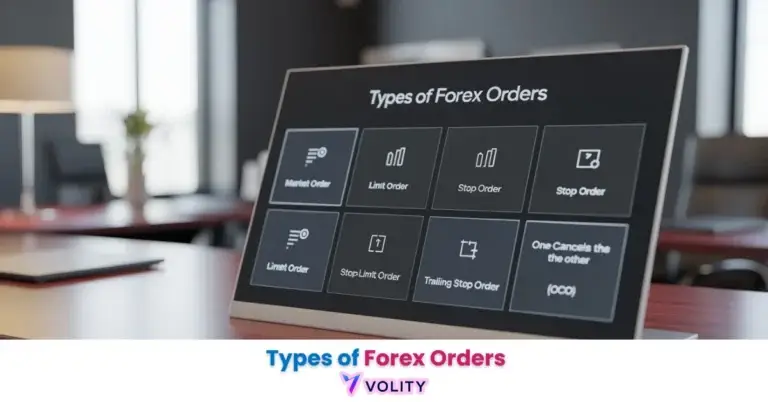
Market execution means buying or selling a currency pair at the current best available price. This order type guarantees immediate entry into the market but does not guarantee a specific price due to potential slippage, especially during volatile conditions. Pending orders allow traders to set a price at which they wish to enter a trade in the future. Common pending orders include:

  • Buy Limit: To buy at or below a specified price.
  • Sell Limit: To sell at or above a specified price.
  • Buy Stop: To buy at or above a specified price (when the market moves against you to trigger entry).
  • Sell Stop: To sell at or below a specified price (when the market moves against you to trigger entry).

Setting Stop Losses and Take Profits (Risk Management)

A Stop Loss order automatically closes a trade if the market moves against your position to a predetermined price level. This limits potential losses, protecting your trading capital. A Take Profit order automatically closes a trade when it reaches a predetermined profit target. This secures gains and prevents reversals from eroding profits. Implementing both Stop Loss and Take Profit orders on every trade forms the cornerstone of sound risk management. Traders aim for a risk-reward ratio of 1:2 or higher.

Troubleshooting Common Setup Issues

Despite careful planning, traders encounter technical issues. Addressing these common problems efficiently minimizes downtime and frustration. Proactive problem-solving ensures a smoother trading experience.

“Invalid Account” Error on MT4/MT5

The “Invalid Account” error signals a connection failure between your trading platform and the broker’s server. This typically stems from incorrect login credentials or an improperly selected server.

Troubleshooting Steps:

  1. Verify Login Details: Double-check your account number and Master Password. Ensure no typos exist. Copy-pasting directly from your broker’s email prevents errors.
  2. Select Correct Server: The most frequent cause. Confirm the server name provided by your broker matches the selection in the MT4/MT5 “Login to Trade Account” window. If not listed, manually enter the server IP or name.
  3. Check Internet Connection: Ensure a stable internet connection exists.
  4. Broker Communication: Contact your broker’s support if the issue persists. They verify your credentials and server status.

Withdrawal Restrictions (Bonus terms & conditions traps)

Withdrawal restrictions often arise from unmet bonus terms and conditions. Many brokers offer deposit bonuses (e.g., 50% bonus on first deposit). These bonuses usually come with specific trading volume requirements (e.g., trade 10 standard lots) before any funds, including your initial deposit, become eligible for withdrawal. Read all bonus terms carefully before accepting. Some regulatory bodies, like the FCA, prohibit bonuses due to these potential restrictions.

Inability to Trade Certain Currency Pairs (Regional restrictions)

Regional regulatory restrictions or broker-specific policies limit the availability of certain currency pairs or instruments. For instance, some brokers restrict access to exotic pairs due to their high volatility and wider spreads. Geographic location also impacts available instruments; a US-regulated broker offers different pairs compared to an EU-regulated one. If a pair appears unavailable, consult your broker’s instrument specifications or support team.

Comparison: Account Types & Platform Features

Understanding the differences between account types and trading platforms empowers informed decision-making. These comparisons highlight key features, cost structures, and target trader profiles, guiding your selection process.

forex Account Types & Platform Features

Turn Knowledge into Profit

You've done the reading, now it's time to act. The best way to learn is by doing. Open a free, no-risk demo account and practice your strategy with virtual funds today.

Open a Free Demo Account

Trading Platform Comparison

FeatureMetaTrader 4 (MT4)MetaTrader 5 (MT5)Proprietary Platforms (e.g., Thinkorswim)
Primary FocusForex & CFDsMulti-asset (Forex, CFDs, Stocks, Futures)Varies by broker, often specialized
Programming LanguageMQL4MQL5Varies (e.g., thinkScript)
Timeframes9 standard21 standardVaries widely
Analytical Objects3038Varies, often highly customizable
Market Depth (DOM)Not natively supportedYes (Level II pricing)Varies by platform/broker
Community SupportExtremely large, vast library of EAs/IndicatorsGrowing, more advanced featuresSpecific to broker, less universal support

Key Takeaways

  • Select a broker regulated by a Tier-1 authority (FCA, NFA, ASIC) to protect funds.
  • Prepare all KYC documents meticulously to avoid common application rejections.
  • Understand the distinct roles of the broker and the trading platform for seamless operation.
  • Use a demo account extensively to practice risk management before trading live capital.
  • Always implement Stop Loss and Take Profit orders on every trade for risk mitigation.

Bottom Line

Setting up a forex account requires a structured approach through broker vetting, rigorous KYC, and precise platform linking. Following these steps mitigates risk and establishes a functional trading environment.

FAQ

How much money do I actually need to open a forex account?

You can technically open an account with as little as $10-$50. However, a realistic minimum of $500-$1,000 allows for effective risk management with micro lot trading, preventing rapid account depletion.

Can I set up a forex account without a broker?

No. A regulated broker provides the essential link to the interbank market, offering liquidity, account custody, and the necessary infrastructure to execute trades.

Is it possible to turn $100 into $1,000 in my first month?

While possible through extreme leverage and luck, this outcome is highly improbable and unsustainable. Realistic trading focuses on consistent, smaller gains (e.g., 2-5% monthly) rather than high-risk, speculative returns.

How long does it take to get a forex account approved?

Account approval typically takes 1-3 business days if all KYC documents are submitted correctly and clearly. Delays occur with document mismatches or poor quality scans.

Do I need a specific bank account for forex trading?

No, a standard personal bank account is sufficient. Ensure the name on your bank account matches the name on your trading account for smooth deposits and withdrawals.

References

Start Your Days Smarter!

Get market insights, education, and platform updates from the Volity team.

Start Your Days Smarter!

High-Risk Investment Notice:  Website information does not contain and should not be construed as containing investment advice, investment recommendations, or an offer or solicitation of any transaction in financial instruments. It has not been prepared in accordance with legal requirements designed to promote the independence of investment research, and it is not subject to any prohibition on dealing ahead of the dissemination of investment research. Nothing on this site should be read or construed as constituting advice on the part of Volity Trade or any of its affiliates, directors, officers, or employees.

Please note that content is a marketing communication. Before making investment decisions, you should seek out independent financial advisors to help you understand the risks.

Services are provided by Volity Trade Ltd, registered in Saint Lucia, with the number 2024-00059. You must be at least 18 years old to use the services.

Trading forex (foreign exchange) or CFDs (contracts for difference) on margin carries a high level of risk and may not be suitable for all investors. There is a possibility that you may sustain a loss equal to or greater than your entire investment. Therefore, you should not invest or risk money that you cannot afford to lose. The products are intended for retail, professional, and eligible counterparty clients. For clients who maintain account(s) with Volity Trade Ltd., retail clients could sustain a total loss of deposited funds but are not subject to subsequent payment obligations beyond the deposited funds. Professional and eligible counterparty clients could sustain losses in excess of deposits.

Volity is a trademark of Volity Limited, registered in the Republic of Hong Kong, with the number 67964819.
Volity Invest Ltd, number HE 452984, registered at Archiepiskopou Makariou III, 41, Floor 1, 1065, Lefkosia, Cyprus is acting as a payment agent of Volity Trade Ltd.

Volity Trade Ltd. is an introductory broker for UBK Markets Ltd. It offers execution and custody services for clients introduced by Volity. UBK Markets Ltd is authorised and regulated by the Cyprus Securities and Exchange Commission (CySEC), license number 186/12 and registered at 67, Spyrou Kyprianou Avenue, Kyriakides Business Center, 2nd Floor, CY-4003 Limassol, Cyprus.

Volity Trade Ltd. does not offer services to citizens/residents of certain jurisdictions, such as the United States, and is not intended for distribution to or use by any person in any country or jurisdiction where such distribution or use would be contrary to local law or regulation.

Copyright: © 2025 Volity Trade Ltd. All Rights reserved.