Wall Street’s Trading Ideas Under the Microscope
Wall Street has entered one of those fidgety stretches where every ticker seems to carry a story.
However, a story is not a trade. Over recent sessions, investors have been offered AI angles, earnings drifts, short-seller shocks, energy pivots and familiar tech reversals. Some ideas have weight. Others are little more than ticker confetti.
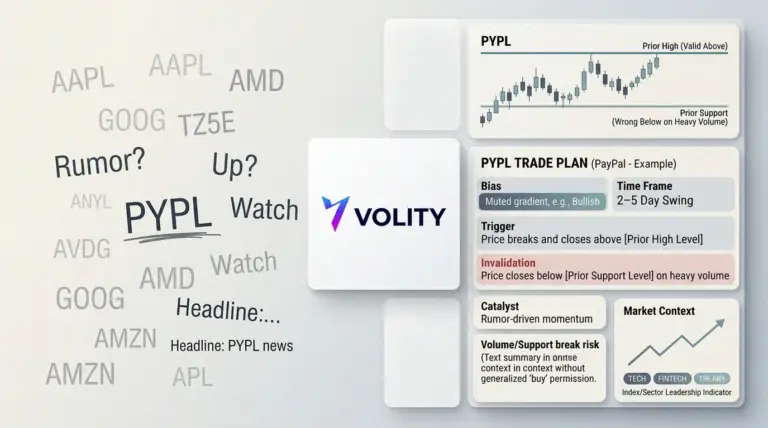
For traders, the distinction matters. A good trading idea needs a catalyst, a level, a time frame and a reason to admit defeat. Without those, even a smart headline can become an expensive habit.
Event Trades Still Offer the Cleanest Edge
Short-seller reports, earnings reactions and asset sales remain useful grounds for active traders. Still, they work best as volatility events, not grand investment theses.
T1 Energy (TE) fits the classic post-report pattern. A short-seller piece hits, the stock drops on heavy volume, then traders wait for the second act. Sometimes institutions keep selling quietly. Sometimes shorts overreach and trigger a sharp squeeze.
TE is not a stock to marry. It is a tape-reading exercise. Traders should watch failed bounces, bear flags and any flush that quickly reclaims the prior low. Volume will matter more than opinion.
Webull (BULL) and Deckers Outdoor (DECK) sit in a different camp. Earnings arrived, but the market gave no clear verdict. That flat response does not kill the trade. Instead, it delays it.
Often, institutions digest guidance slowly. Meanwhile, portfolio managers compare results with rates, consumer demand and broader risk appetite. Until BULL or DECK breaks cleanly from its post-earnings range, both remain watchlist names.
Applied Digital (APLD), Plug Power (PLUG) and Conduent (CNDT) show the gap between headlines and reality. APLD fell despite upbeat AI news. PLUG landed a project win without much follow-through. CNDT popped on an asset sale.
That mixed tape is useful. If the move holds and builds on rising volume, momentum traders get a continuation setup. However, if the stock fades and fills the move, mean-reversion shorts gain the cleaner hand.
Momentum Trades Need Proof, Not Applause
Once the news lands, traders face the harder question. Is the move beginning, or is it already tired?
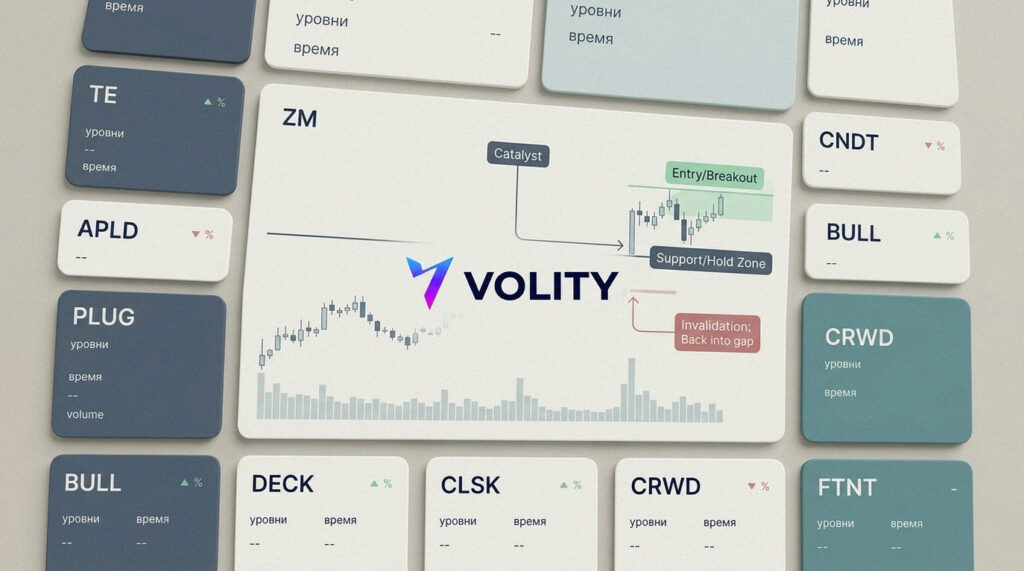
Zoom Communications (ZM) offers one of the cleaner bullish cases in the current flow. The company delivered a double beat, raised guidance and announced a fresh buyback. More important, the stock reacted well.
That combination gives traders a clear map. If ZM holds its earnings gap and breaks recent highs on strong volume, continuation buyers have a reasonable setup. However, a fast move back into the gap would weaken the case quickly.
CleanSpark (CLSK) looks more combustible. Bitcoin leverage, AI language and hedge-fund interest have helped lift the shares roughly 37 percent in a month. That kind of move attracts both trend followers and opportunistic shorts.
Still, timing becomes unforgiving after such a run. Bulls need a controlled pullback or sideways base, preferably on shrinking volume. Bears need a failed spike, an intraday lower high and clear selling pressure.
For longer-term investors, CLSK remains speculative. It may be a trade on crypto infrastructure, AI capacity or both. Yet it is not a quiet way to buy durable AI exposure.
CrowdStrike (CRWD) and Fortinet (FTNT) present the mirror image. Both sit inside high-quality, high-expectation cybersecurity. However, rich valuations can punish holders when momentum cracks.
Shorting these names requires patience. Traders need confirmed support breaks on real volume. They also need tight risk limits, because one analyst upgrade can spark a violent intraday reversal.
Ai Remains the Main Portfolio Argument
The AI trade has not disappeared. Instead, it has broadened and become harder to trade with one ticker.
Nvidia (NVDA) still anchors the global compute story. Yet “central to AI” is not a trade trigger. Traders need price levels, volume confirmation and a broader semiconductor tape that supports the move.
Meanwhile, the more interesting discussion has moved into Asia. TSMC (TSM), Samsung, MediaTek and regional hardware suppliers offer picks-and-shovels exposure beyond the largest U.S. names.
China-related demand adds another layer. Export controls can limit Nvidia’s access, while local hardware and server vendors may gain share in specific markets. Lenovo and other regional players could benefit if domestic AI build-outs accelerate.
However, this is a portfolio basket, not a quick flip. Investors should think in sleeves – semiconductors, foundries, memory, servers and power infrastructure. Single-stock hero trades carry unnecessary execution risk.
Energy and Materials Offer the Quieter Counterweight
While AI takes the oxygen, energy and materials still provide usable portfolio ideas.
Chevron (CVX) remains a conservative long candidate if oil firms and energy relative strength improves. Upside targets near 10 to 12 percent do not create a trade by themselves. Still, they fit a constructive backdrop for large integrated energy.
Meanwhile, dividend names such as Olin (OLN), Avient (AVNT) and Greif (GEF) offer a different profile. Yields above 3 percent can help investors who want cyclical exposure without leaning fully into mega-cap technology.
For day traders, these names may feel dull. However, portfolios often need dull parts. In choppy markets, income and valuation can steady performance while hotter trades cool.
Weak Ideas Still Need a Spine
Some ticker chatter remains too thin to trade. Financial names including PNNT, PRAA and JCAP have circulated with loose “could move” arguments. That is not enough.
Traders need a credit-cycle catalyst, rate sensitivity, earnings revisions or a technical breakout. Without those, the names belong in a notebook, not in an order ticket.
The same applies to quick-fire “final trade” style mentions in IBM, ServiceNow (NOW), Alcoa (AA) and Netflix (NFLX). They may reflect sentiment. However, sentiment without valuation or chart context rarely offers an edge.
IBM’s quantum partnership narrative, for instance, may become meaningful over time. Still, without numbers, margins or timing, it remains a headline rather than a plan.
Related coverage on Volity
- Stock Watchlist: Nvidia (NVDA) AI vs Weak Cyclicals
- Crypto Daily: Ripple vs XRP, Fed Banking Squeeze, FBI Sting
- Green Tape Trap: NVDA, CCL & SOFI Trades to Watch
- Crypto Market Today: Bridge Hacks, MiCA, Solana ETF Bid
- Bitcoin Below $80k as ETF Flows, Tokenised Treasuries Grow
Key Takeaways
- Best continuation setup: ZM, if it holds the earnings gap and clears recent highs.
- Highest-volatility watches: TE, APLD, PLUG and CNDT, where reaction matters more than news.
- Speculative momentum: CLSK, after a roughly 37 percent monthly rise, needs disciplined entries.
- Potential shorts: CRWD, FTNT and overheated CLSK, only after confirmed breakdowns.
- Portfolio diversifiers: CVX, OLN, AVNT, GEF and Asian AI hardware baskets.
The better trade ideas in this market share one trait. They give traders a way to be wrong quickly.
That is the real filter now. Headlines can start the conversation, but levels decide the trade. In a crowded tape, the edge belongs to those who separate movement from mere noise.