Crypto Daily: Bitcoin Nerves, ETF Exits and Prediction Markets Under Fire
Crypto is not short of money today. It is short of calm.
The global market value has climbed back to about $4.13 trillion, up roughly 2.8% in 24 hours. Still, bitcoin is trading like a market with one eye on the Fed and the other on the exit.
BTC briefly pushed above $120,000 this week before turning choppy. Meanwhile, spot ETF flows have flipped negative, and bitcoin dominance has started leaking toward larger altcoins.
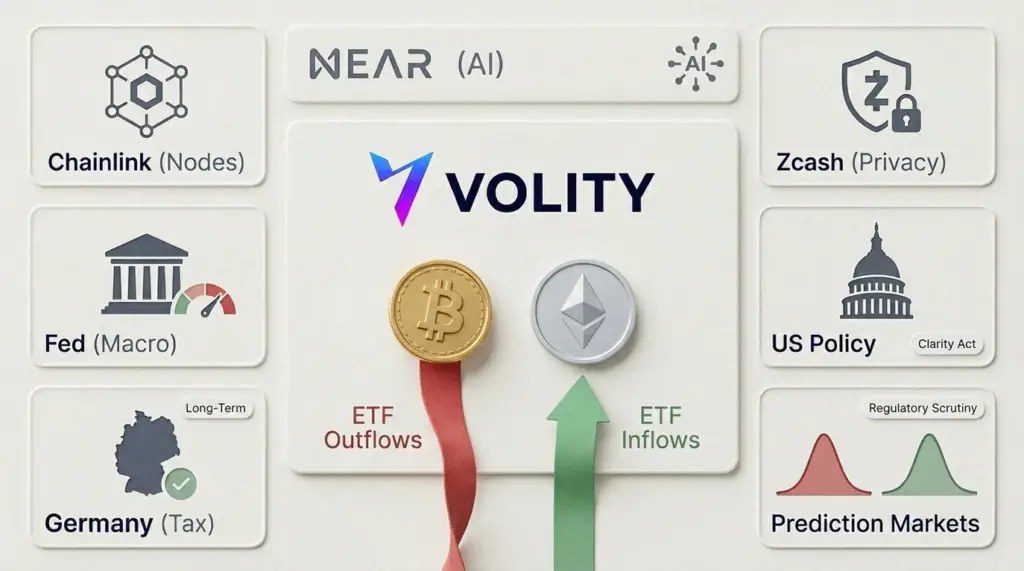
Ethereum looks steadier. New Ether ETFs pulled in about $2.85 billion over the past week, helping ETH hold the centre of the institutional conversation. However, the more interesting rotation is happening below the headline names.
Chainlink, NEAR and Zcash have all drawn fresh attention. Therefore, the market’s tone has shifted from meme-coin theatre toward infrastructure, privacy and settlement plumbing.
Bitcoin Pressure
U.S.-listed spot bitcoin ETFs have recorded about $1.26 billion in net outflows over the recent streak of down days. That is not fatal. Yet it changes the tape.
Earlier this year, ETF demand looked like a one-way vacuum for available supply. Now, fund redemptions are adding visible sell pressure at exactly the wrong moment.
However, sentiment indicators have swung hard toward fear. That often matters more than the outflow number itself. Once a bad headline becomes common knowledge, markets usually ask a different question: who is left to sell?
The liquidation map adds another layer. Roughly $1.29 billion in leveraged long exposure sits below $73,800. If bitcoin revisits that area, forced selling could accelerate quickly.
For traders, this sets up a clean but uncomfortable range. A move higher could squeeze shorts and rebuild confidence. Conversely, a macro shock could send BTC into a liquidation pocket before spot buyers return.
- Upside trigger: ETF outflows slow, shorts cover and BTC retakes momentum levels.
- Downside trigger: BTC breaks toward $73,800 and leveraged longs begin to unwind.
- Risk signal: funding rates stay positive while spot demand weakens.
MicroStrategy also returned to the conversation. Michael Saylor has said a partial bitcoin sale in 2026 is “not unlikely”. That single phrase hit harder than most macro notes.
For years, the company has acted as a leveraged bitcoin proxy. Therefore, even a modest future sale would matter beyond the coins involved. It would test whether the market views corporate bitcoin as treasury management or performance art.
Bulls can still frame this as maturity. After all, balance-sheet assets can be sold, hedged and rebalanced. But in a thin market, a MicroStrategy distribution would become a liquidity exam.
Macro Strain
The macro backdrop has turned less friendly. Fed Governor Christopher Waller warned that renewed inflation pressure could force policymakers back toward rate increases.
That was enough to rattle risk assets. High-beta equities softened, crypto wobbled and the old liquidity trade looked less forgiving.
Meanwhile, inflation expectations near 4.8% have put bitcoin’s “digital gold” pitch back on trial. If prices are hot but BTC trades like a leveraged Nasdaq cousin, allocators will notice.
Gold has also slipped below $4,500 an ounce after its record run. At the same time, Kevin Warsh has been sworn in as Fed chair with bitcoin hovering near $77,400.
The symbolism is tidy. Still, the trading question is simpler. If Warsh leans hard against inflation, crypto’s next two years may depend more on real yields than block rewards.
Policy Moves
Washington is inching toward a more defined crypto rulebook. The Clarity Act remains the centrepiece, because it attempts to draw lines between securities, commodities and everything in between.
That distinction is not academic. Tokens that land in the commodity bucket could trade with lower regulatory discounts. Meanwhile, assets caught in securities uncertainty may remain hard for institutions to hold.
Grayscale has already pointed to four altcoins it sees as likely winners under the emerging framework. Representative Tom Emmer has pushed back on concerns that the bill masks a crackdown. Senator Cynthia Lummis has argued it can end years of ambiguity.
However, the market will not wait for perfect legal language. Capital usually moves first toward tokens with cleaner perceived status, deeper liquidity and credible institutional custody.
Germany delivered a different kind of signal. Lawmakers blocked a proposal to remove bitcoin’s favourable tax treatment. For now, BTC held longer than one year keeps its tax edge for German investors.
That helps keep Germany in the friendlier European camp. It may also influence where family offices book long-term crypto exposure.
In the United States, Nashville has pushed a bitcoin reserve bill into law for certain local entities. The sums may be small at first. Yet municipal adoption keeps the reserve-asset argument alive below the federal level.
Prediction Markets
Prediction markets are facing their sharpest political test in years. Kalshi and Polymarket both lost state-level gambling appeals, tightening the pressure around event-based trading.
Polymarket also faces congressional scrutiny over markets tied to sensitive information. That strikes at the platform’s pitch as a cleaner expression of crowd expectations.
For traders, these platforms remain useful sentiment screens. Odds on bitcoin reaching $150,000 by year-end, monthly closing ranges and election outcomes all help map consensus.
However, legal risk can distort the signal. If U.S. growth slows or migrates offshore, liquidity may fragment. Then pricing becomes less reliable exactly when traders most want a real-time read.
Kalshi has responded by launching an advocacy group backed by a former Trump aide. The aim is clear: turn prediction markets from a regulatory nuisance into a recognised derivatives category.
If that works, the sector could gain a formal policy lane. If it fails, the on-chain version may live mostly outside the United States.
Altcoin Rotation
Chainlink has quietly become one of the cycle’s more important infrastructure stories. Its CCIP stack now secures about $110 billion in value.
That figure matters because serious institutions dislike fragile pipes. Oracles and cross-chain messaging systems are boring until they break. Then they become the whole market.
As a result, LINK fits the “toll road” trade. In later bull-market phases, capital often rotates from pure beta into systems that collect fees from activity elsewhere.
NEAR has gained about 21% as traders chase AI-adjacent infrastructure names. The token is also trying to reclaim the $3 level, with trend followers watching a possible golden cross.
Zcash is taking a different route. Its NU7 upgrade package targets gains of up to 300% in speed. Privacy alone no longer carries the argument. Performance now has to come with it.
Platforms and Pipes
Robinhood’s crypto business is showing strain. Chief Operating Officer Tanya Denisova has left after a reported 47% drop in crypto revenue.
The lesson is uncomfortable for retail platforms. The 2021-style flood of casual order flow is not returning in the same shape. Users are more selective, more fee-aware and more comfortable on-chain.
Meanwhile, OKX has struck a deal with ICE to bring round-the-clock oil futures into crypto market structure. Bitget has launched 5x perpetuals tied to pre-IPO SpaceX exposure.
Together, those products show the border between crypto and traditional markets getting thinner. For sophisticated desks, that creates new macro trades. For regulators, it creates another retail leverage problem.
By the Numbers
- $4.13 trillion: estimated global crypto market capitalisation.
- $1.26 billion: recent net outflows from U.S. spot bitcoin ETFs.
- $1.29 billion: leveraged long exposure clustered below $73,800.
- $2.85 billion: weekly inflows into new Ether ETFs.
- $110 billion: value secured by Chainlink’s CCIP stack.
Related coverage on Volity
- Zoom (ZM) Earnings Gap in Focus
- Bitcoin Today: Germany Crypto Tax Break, Oil Trading
- Stock Watchlist: Nvidia (NVDA) AI vs Weak Cyclicals
- Crypto Daily: Ripple vs XRP, Fed Banking Squeeze, FBI Sting
- Crypto Market Today: Bridge Hacks, MiCA, Solana ETF Bid
Key Takeaways
- Bitcoin: ETF flows and the $73,800 liquidation zone matter more than slogans.
- Ether: ETF demand remains a clear relative-strength signal.
- Altcoins: infrastructure names are attracting more serious capital than meme trades.
- Policy: Clarity Act positioning could reprice several large tokens.
- Prediction markets: useful sentiment tools now carry growing U.S. legal risk.