Oil, yields and the vanishing safe haven
Markets began Monday in an awkward formation, with few places left to hide.
Stock futures fell, Treasury prices weakened and precious metals sold off. Meanwhile, crude oil and government borrowing costs kept climbing.
S&P 500 futures fell 0.46% in early trading. Nasdaq-100 futures lost almost 1%, while Dow futures slipped 0.38%.
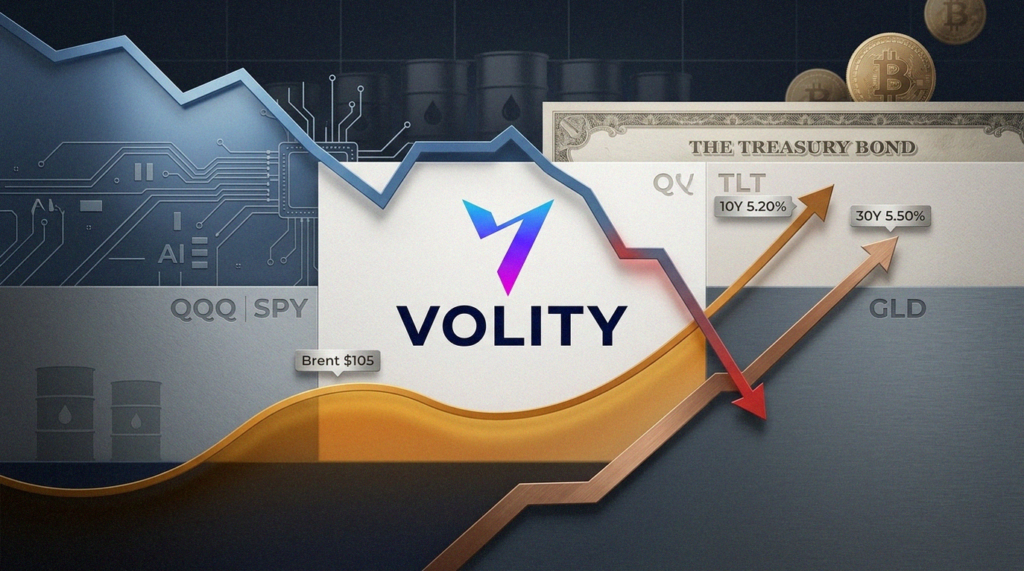
Brent crude traded above $105 a barrel. The 10-year Treasury yield hovered near 5.20%, while the 30-year yield approached 5.50%.
Those moves have revived a market regime investors thought had largely passed. Inflation fears are returning just as liquidity looks less forgiving.
The 10-year yield now sits near levels last seen in 2007. The 30-year yield is pressing against territory last tested in 2004.
Higher yields hurt existing bonds because their fixed coupons become less attractive. They also reshape how investors value corporate earnings.
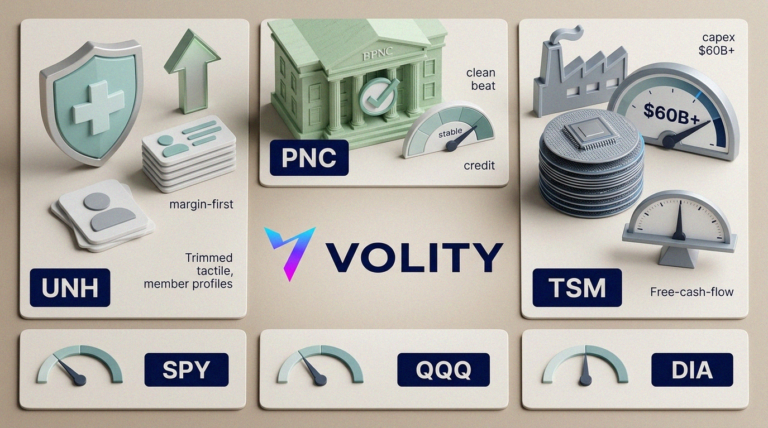
That valuation adjustment lands hardest on technology shares with profits further into the future. QQQ therefore looks more exposed than SPY.
The clean relative trade remains Nasdaq weakness against the wider market. Yet traders should avoid chasing an already weak opening print.
If yields rise and technology breadth deteriorates, QQQ underperformance has a solid macro basis. If yields settle, that case weakens quickly.
Defined-risk put spreads offer more control than outright short positions. The market has punished complacency, but it can still reverse violently.
Gold and Bitcoin fail the safety test
Gold’s fall has made the session even more uncomfortable. Spot gold dropped more than 3%, despite persistent geopolitical tension.
Silver fell faster, showing that liquidation has overtaken traditional safe-haven demand. A stronger dollar and higher real yields explain much of the move.
Gold may still protect portfolios over longer periods. However, the first sharp dip rarely guarantees a durable buying opportunity.
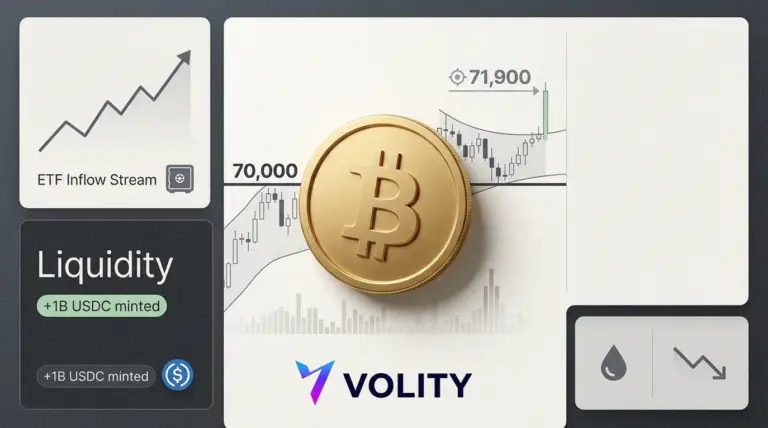
Bitcoin delivered a similar message. The cryptocurrency traded towards the low-$82,000s after heavy leveraged liquidations.
Tens of thousands of positions reportedly closed during the previous 24 hours. That is high-beta price action, not defensive behaviour.
Until liquidity conditions improve, traders should treat Bitcoin as a risk asset. Its correlation with speculative technology may matter more than its inflation narrative.
- Brent crude: Above $105 a barrel
- 10-year Treasury yield: Around 5.20%
- 30-year Treasury yield: Near 5.50%
- Nasdaq-100 futures: Down almost 1%
Company stories need price confirmation
SCHMID Group has a tangible company-specific catalyst. The equipment maker disclosed a repeat order exceeding €37 million.
Its year-to-date order intake has reached €81.6 million. That provides more substance than the usual premarket speculation.
Still, reports linking its glass-substrate technology with Nvidia, AMD and Intel remain unconfirmed. Traders should separate a possibility from booked revenue.
Strong volume after the opening bell would make any advance more credible. A sharp gap followed by fading demand would send the opposite signal.
SK hynix faces a more complicated calculation through its Solidigm subsidiary. Solidigm is reportedly considering a United States listing.
The offering could value the storage business at up to $150 billion. It could also raise as much as $15 billion.
Shareholders may question ownership dilution and capital allocation. Yet a separate listing could unlock value and fund expansion.
The useful signal will be SK hynix’s performance against other memory shares. A reflexive short based solely on the report looks premature.
SNDK still offers a persuasive long-term artificial-intelligence infrastructure argument. Short-term conditions, though, remain unfriendly to bottom-fishing.
NAND demand may improve with data-centre investment. Rising yields and weak semiconductor breadth can still overwhelm that fundamental story.
A more disciplined entry would require a reclaim of the prior day’s high. Improving chip breadth and lower Treasury yields would strengthen the setup.
NU may also see headline-driven volatility around a possible Monzo acquisition. Reports have put a potential price near $13 billion.
The figure alone reveals little about shareholder value. Investors need financing details, expected dilution, regulatory terms and integration costs.
LCID remains a harder fundamental story. Fleet expansion in Europe may help sales, but it does not solve cash burn.
Production execution, deliveries and fresh financing remain the central markers. A modest premarket gain would not change that assessment.
PLUG carries the sharpest balance-sheet concerns among the group. Executive turnover and insider sales deserve scrutiny, but neither proves misconduct.
Cash consumption, access to capital and potential dilution will decide the equity’s path. Put spreads remain safer than uncovered shorts in distressed names.
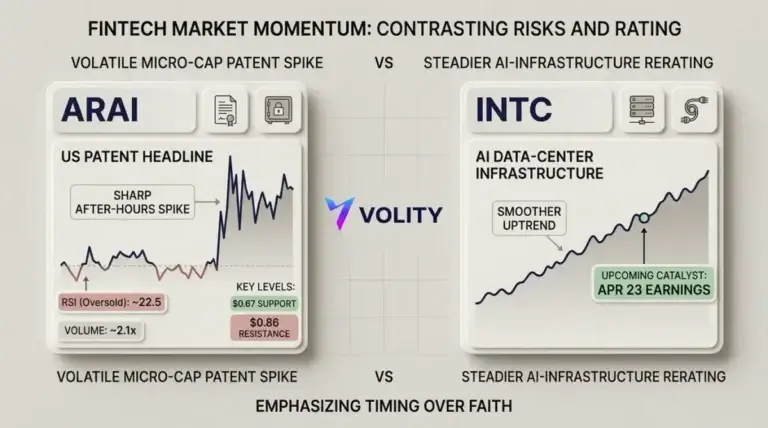
NETSOL Technologies belongs in the event-risk column before its earnings call. Results, guidance, contract news and cash flow matter more than anticipation.
What traders should watch
Oil is lifting inflation expectations, while yields are repricing duration risk. Technology shares are absorbing the pressure most directly.
Fourth-quarter seasonality may eventually assist risk assets. For now, it remains background noise beside crude and Treasury-market stress.
- Wait for the opening volatility to settle before entering new positions.
- Watch whether QQQ continues lagging SPY after cash trading begins.
- Track Brent crude and the 10-year yield together for inflation signals.
- Demand price confirmation before buying SNDK or other weakened chip shares.
- Use defined-risk structures for bearish PLUG trades.
TLT and GLD remain watches rather than obvious buys. Both need yields and price action to stop setting fresh lows.
Patience is not inactivity when stocks, bonds, gold and Bitcoin all weaken together. It is risk management in plain sight.
Related coverage on Volity
- What Is a P/E Ratio and How to Use It
- Fundamental Analysis in Stock Trading: A Working Definition
- Growth Investing vs Value Investing: Which Style Fits You?
- Fractional Shares Explained: How to Start Investing With $50
- How to Start Stock Trading: A 2026 Beginner Guide
- Dividend Investing for Beginners: How to Start