Market Radar: AI Hardware, China Risk and the Crowded Growth Trade
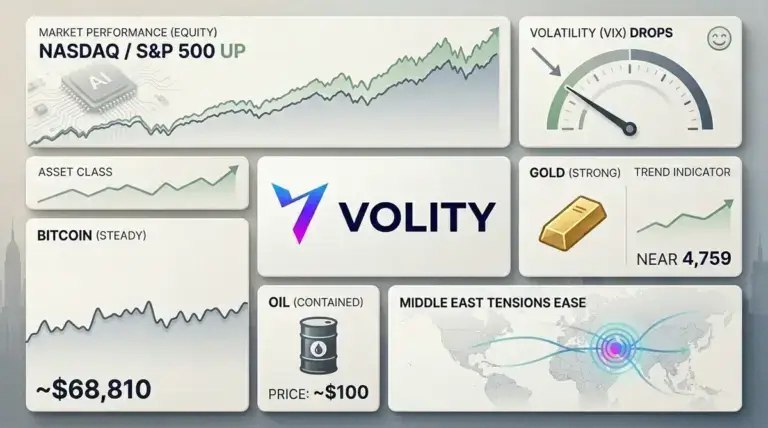
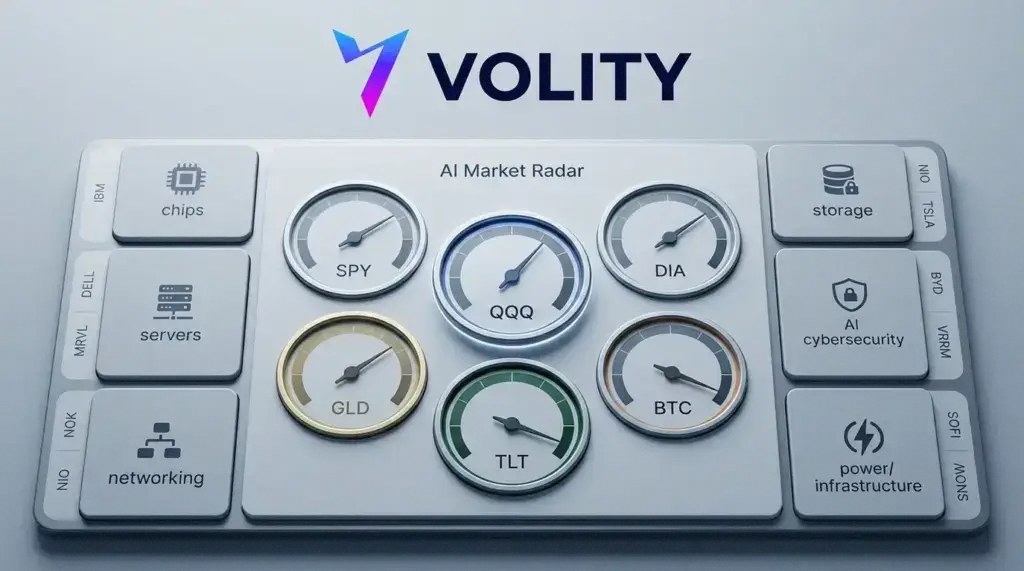
Today’s tape starts with the usual six dials: SPY, QQQ, DIA, GLD, TLT and BTC. Together, they show whether investors want duration, safety, leverage, or simply a quiet corner.
For now, the market still treats artificial intelligence as the main current. However, the trade has split into second acts. Chips are no longer the whole story. Servers, networks, storage, cybersecurity and power-hungry infrastructure now pull capital too.
That shift matters for traders. When the AI basket rises together, momentum rules. When it fragments, stock selection returns quickly, and weak holders learn fast.
By the Numbers
- IBM: roughly $15 billion discussed across quantum and cybersecurity investment over time.
- NOK: recently pushed to fresh 52-week highs before cooling.
- TSLA and BYDDY: back in focus as the global BEV leadership debate tightens.
- VRRM: repricing follows the loss of a key Avis contract and guidance reset.
- MRVL: remains tied to AI data-centre connectivity and hyperscaler spending signals.
Big Picture: Macro Still Has the First Vote
SPY and QQQ remain the cleanest read on institutional appetite. Meanwhile, DIA helps separate broad-market strength from Nasdaq-heavy enthusiasm.
TLT deserves close attention. If yields push higher, richly valued software and long-duration growth can wobble. However, if bonds catch a bid, the premium-multiple trade often breathes easier.
GLD gives a different warning light. Persistent gold strength can signal caution, inflation nerves, or geopolitical hedging. Gold strength alongside equity strength needs careful interpretation.
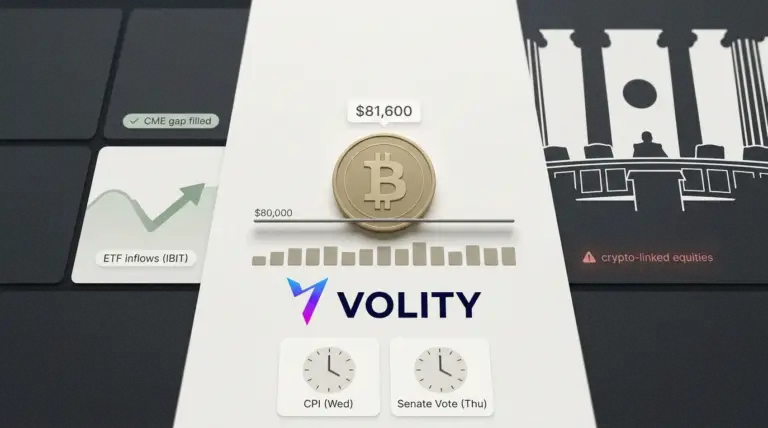
BTC remains the fastest risk barometer. It also feeds into crypto-adjacent equities, fintech names and speculative small caps. When Bitcoin moves hard, related tickers rarely stay asleep.
IBM: Patient Capital, Not Scalp Bait
IBM trades less like a meme-era technology stock and more like a corporate spending proxy. Management’s focus on quantum computing and cybersecurity supports a multi-year story, not a one-session chase.
Still, the narrative has weight. Enterprise buyers keep spending on security, automation and data infrastructure. As a result, IBM can attract buyers during rotations away from pure momentum.
For traders, the tell is relative performance. If IBM holds firm while hotter AI names fade, defensive tech money may be rotating. However, a dull tape after strong macro data suggests the market wants faster growth elsewhere.
Dell and Marvell: the AI Supply Chain Broadens
DELL sits in the heart of the AI server argument. Demand for AI-optimised hardware has improved its market standing. Yet the stock has already run, which makes new headlines trickier.
Fresh AI commentary could trigger another squeeze. However, even a mild hint of slower orders may invite profit-taking. Watch Dell against the SOX and other infrastructure names.
MRVL remains one of the cleaner reads on AI data-centre connectivity. Bullish analyst commentary has kept attention on its revenue mix and margin potential. Still, crowded trades punish disappointment quickly.
Compare Marvell with NVDA, AVGO and AMD. If MRVL outperforms on flat chip tape, investors may be rewarding company-specific demand. If it lags on strong sector days, expectations may already be full.
Nokia: Breakout or Breather
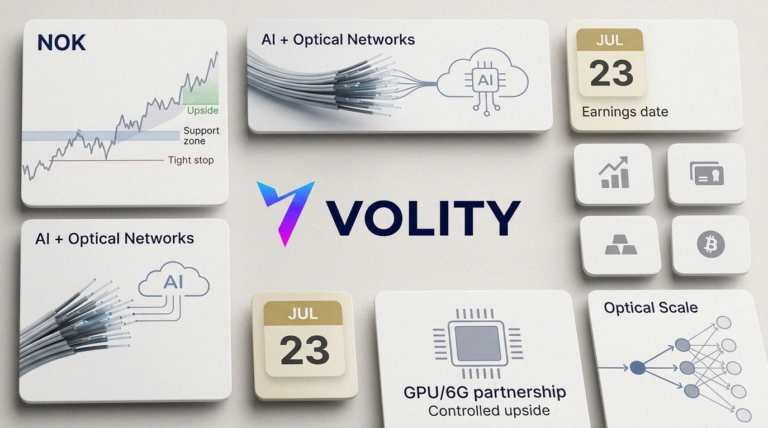
NOK has cooled after setting new 52-week highs. The move reflected enthusiasm around network infrastructure and AI-related data-centre buildout.
Now the tape must prove sponsorship. Higher lows near the breakout area would suggest patient accumulation. Conversely, a clean break back through support opens the door to mean reversion.
This is not a stock that always gives dramatic signals. Volume matters. A dull pullback can be healthy. A heavy pullback on rising volume says something else.
China Risk: Nio and the EV Scoreboard
NIO remains a liquid expression of China risk, EV demand and regulatory mood. Company fundamentals still matter, but macro headlines often drive the first move.
Traders should watch China ETFs, currency moves, commodity sentiment and sector-wide EV pricing news. Meanwhile, weak policy signals can quickly overwhelm company-specific optimism.
TSLA and BYDDY are again framed by the global BEV share tug-of-war. Tesla remains the high-beta US vehicle for options-heavy flows. BYD offers a cleaner read on Chinese manufacturing strength and export pressure.
Price cuts, delivery data and market-share releases can move both names. However, the reaction often matters more than the headline. Strong buying after bad news shows positioning may already be washed out.
Verra Mobility: Contract Shock Becomes Price Discovery
VRRM has moved from growth story to repricing story. The loss of a key Avis contract changed the market’s assumptions, while the long-term guidance reset deepened that shift.
Now traders must decide whether the downgrades did enough damage. If the stock stabilises near prior support, special-situation buyers may appear. However, repeated failed bounces would show institutions still exiting.
Short interest, intraday liquidity and block trades matter here. So does behaviour around the first hour’s range. A weak open that closes firm often tells a different story from a simple red day.
SoFi and Bitcoin: Fintech Gets a Crypto Layer
SOFI added a US dollar stablecoin feature, which pushes the stock further into crypto-adjacent fintech. The feature does not rewrite the business overnight. Still, it can change who watches the name.
If Bitcoin firms, SoFi may catch incremental attention. However, stablecoin functionality also raises familiar questions about regulation, compliance and customer behaviour.
The market will want evidence. Engagement data, deposit trends and product adoption would matter more than announcement sparkle. Until then, SOFI may trade partly on BTC’s mood.
Cybersecurity: Sentinelone Aims for Momentum Status
S, SentinelOne’s ticker, has drawn fresh bullish attention around endpoint protection and AI-assisted security. It sits in the higher-beta corner of cybersecurity.
That makes volume the first test. A breakout without depth can fail quickly. However, bid absorption and strong options activity can precede larger swings.
Track it against CRWD and PANW. If the group firms together, sector appetite is improving. If SentinelOne moves alone, the trade may be narrower and less durable.
Snowflake: AI Promise Meets Valuation Discipline
SNOW remains a bellwether for high-multiple software. Its recent AI narrative has improved the growth story, but the valuation still leaves little room for soft consumption trends.
Conferences, product events and macro data can all move the shares. Meanwhile, any hint of slower cloud spending may hit the stock harder than lower-multiple peers.
The core question is simple. Are investors paying for visible AI monetisation, or merely for the hope of it?
Rare Earths and Smaller Caps: Policy Risk Cuts Both Ways
MP and USAR remain tied to rare earths, legal headlines and US-China supply-chain arguments. These names can gap violently on court developments or trade-policy chatter.
That creates opportunity, but also uneven liquidity. Position sizing matters more than conviction. In thin products, being right late can still be expensive.
WTTR and MCHB have fresh analyst coverage on the board. For less-followed names, new research can create awareness and liquidity. However, the key test arrives after the first pop.
YSG also sits on the speculative screen after capital-raising activity. Thin liquidity can exaggerate both rallies and reversals, especially around brand speculation.
Downgrade Watch: Read the Close, Not Just the Cut
BSX, GPS and EQR carry notable downgrade pressure. The opening gap will matter, but the close will matter more.
If institutions sell steadily into the day, the downgrades may start a longer repricing. However, a firm close after early weakness suggests the bad news was already known.
For GE, positive aerospace and defence chatter keeps the stock on quality momentum screens. Compare it with industrials and defence ETFs after major headlines.
QXO and JOBY remain media-sensitive story stocks. Their moves can be sharp, but follow-through needs real volume after the broadcast bump fades.
Related coverage on Volity
- Stock Morning Note: SNOW, CRM, NOK Setups
- Bitcoin Holds £70k? Options Expiry, ETFs & PCE Risk
- Stock Watchlist: NVDA AI Mood, APPS Surges
- Bitcoin Price: BTC Eyes $82,100 as Banks Back Crypto
- APLD $7.5bn AI Deal as NVDA Reads Risk-On Mood
Key Takeaways
- AI remains the main theme, but traders should separate chips, servers, networks and software.
- Rates still control multiples, so TLT deserves a place beside QQQ on every screen.
- China ADRs need cross-asset confirmation, especially from FX, ETFs and EV pricing signals.
- Post-downgrade names can reverse if the close rejects the opening weakness.
- Small-cap catalysts require discipline, because liquidity often disappears when it matters most.
The core liquidity basket remains SPY, QQQ, AAPL, MSFT, NVDA, GOOGL, META and TSLA. When those names move together, the rest of the market usually follows. When they split, traders should lower their assumptions and watch the tape carefully.