Tech sets the pace as headlines move the tape
The Nasdaq remains the market’s front runner, and traders are still taking their cues from large technology shares. Lower weekly jobless claims have helped keep the growth trade intact. However, the cleaner signal is not macro optimism. It is relative strength.
QQQ continues to act as the main scoreboard for risk appetite. Meanwhile, the familiar AI cluster – NVDA, AMD, META, MU, IBM, CRM and PLTR – is drawing most of the intraday attention. Buyers want breakouts to hold above prior highs, VWAP and opening range levels. Sellers, however, are waiting for the first failed push in the leaders.
That makes this a reaction tape, not a forecast tape. If Nvidia and its peers keep making higher lows, the broader market can absorb plenty of noise. However, a sharp reversal in those names would quickly change the mood across growth, software and semiconductors.
Space deal gives rocket lab a larger orbit
Rocket Lab has put the space sector back on the trading desk after agreeing to buy Iridium Communications. The cash-and-stock transaction values Iridium at about $8 billion, or $54 a share. The structure includes $27 in cash and Rocket Lab equity, with the stock portion governed by a collar-based exchange ratio.
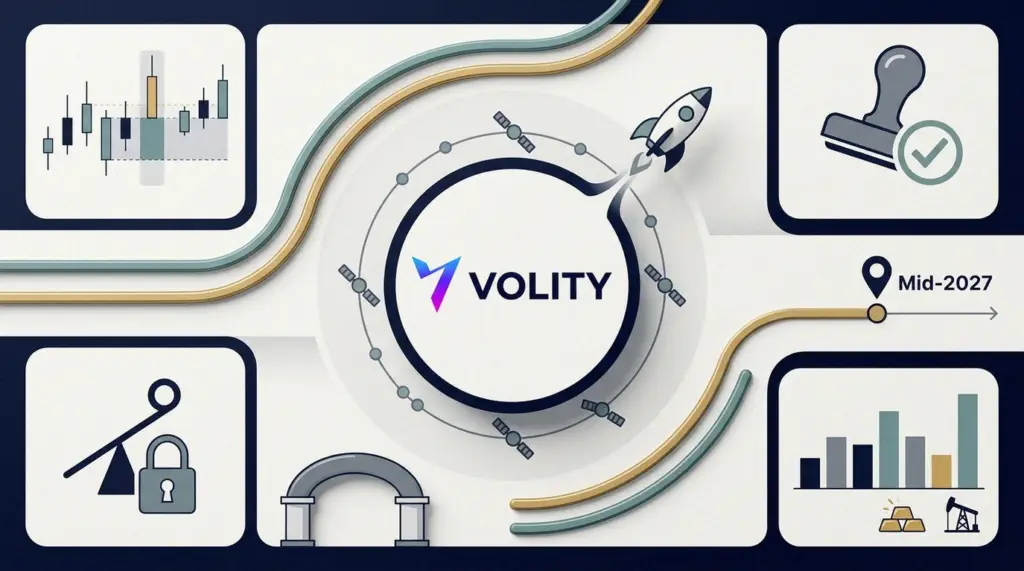
The financing has also become part of the story. Deutsche Bank and Wells Fargo are backing the deal with a $3.6 billion, 364-day senior secured bridge loan. The companies expect the transaction to close in mid-2027, subject to shareholder and regulatory approvals.
RKLB and IRDM are trading less on distant strategy and more on immediate deal mechanics. Traders are debating dilution, leverage and the long wait before completion. Meanwhile, the stocks must digest gaps, spread behaviour and any fresh comments on financing.
For Rocket Lab, the prize is obvious. Iridium brings a communications network, recurring revenue and a larger role in space infrastructure. Still, investors will ask whether a fast-growing launch name can absorb a very different business without losing its premium story.
Software feels the pressure from ai cost cutting
IBM is facing a more awkward version of the AI trade. The pressure comes not from a rival product launch, but from customer behaviour. Starbucks is said to spend about $400 million a year on software and is developing internal AI tools to cut that bill.
That effort targets reliance on large vendors, including Microsoft and IBM. However, the market is not pricing an overnight revenue shock. Instead, it is testing a slower question. What happens when big companies use AI to renegotiate the software stack?
IBM shares are now a useful sentiment gauge for legacy enterprise technology. If buyers defend support, investors may treat the Starbucks story as isolated. However, a decisive break lower would invite questions across software and consulting names.
The read-across matters because budgets are tight. Chief information officers still want AI, but they also want fewer invoices. Vendors selling long contracts and complex bundles may face harder conversations in 2026.
Meta builds, palantir glows
Meta has returned to the centre of the AI infrastructure trade. The company has broken ground on a Canadian data centre and launched Muse Image, an AI image product. Neither headline changes this quarter’s earnings on its own. Together, however, they reinforce Meta’s place in the spending race.
META now serves as a live test for megacap participation. If the stock joins Nasdaq strength, traders will read that as confirmation. If it lags while QQQ rises, rotation inside technology may already be under way.
Meanwhile, Palantir is catching another wave of brand heat. XTEND’s chief executive described PLTR as a “dream AI partner” for defence and security platforms, ranking it ahead of higher-profile names. The comment did not come with a contract value. Still, it fits the stock’s favourite narrative: AI, defence and urgent government demand.
That halo can help PLTR on strong tape days. However, valuation remains the tripwire. Momentum buyers may chase strength, but even small disappointments can hit high-multiple shares hard.
Memory trade challenges the gpu giants
Semiconductors remain the heart of the AI market. Yet the debate is broadening beyond GPUs. Micron is increasingly pitched as the cheaper AI memory play, even after a rally of roughly 700 percent from prior lows.
The logic is simple. If NVDA, AMD and other chip leaders look stretched, investors may seek exposure through memory. High-bandwidth memory demand gives MU a direct AI link, but at different valuation markers.
However, cheapness rarely drives rotation by itself. Traders want proof on the tape. MU needs to outperform on strong semiconductor days, and it needs to hold up when the group cools.
Otherwise, the rotation argument may fade quickly. If the AI complex sells off together, memory will not look like a hiding place. It will look like another high-beta door in the same crowded room.
Oil and gold regain their hedge appeal
Geopolitics has pushed commodities back into the conversation. Oil traders are again attaching a risk premium to Gulf tensions and possible supply disruption. That shift has lifted attention across USO, XLE, XOM, CVX, OXY, HAL and SLB.
Still, this is not a simple crude-up trade. Intraday moves remain tied to headlines, inventory data and production signals. Energy equities may move unevenly, even when oil prices rise.
Gold is sending a quieter message. GLD has gained more than 1 percent while equities remain broadly supported. That combination suggests investors are adding hedges without abandoning risk assets.
For cross-asset traders, the signal deserves respect. If gold keeps climbing while equity volatility stays calm, portfolios are not panicking. However, they are paying for protection against geopolitical and policy mistakes.
Biotech event risk hits ionis and astrazeneca
Ionis and AstraZeneca are dealing with a classic biotech setback. Their Phase 3 eplontersen trial in ATTR-CM missed its primary endpoint. Secondary measures and safety data looked more favourable, but the main efficacy miss controls the first reaction.
IONS and AZN now face model revisions and pipeline questions. Traders will watch the size of the opening gap, then the second-hour follow-through. If buyers appear quickly, the market may preserve some value for the programme.
However, weak secondary demand would signal deeper concern. Sympathy moves across related cardiovascular and rare-disease names could follow, especially in smaller biotech shares with single-programme risk.
Rumours pile up, but discipline matters
Not every headline deserves the same capital. Talk of a Tesla-SpaceX merger linked to a notional $1.77 trillion catalyst remains speculative. Without a formal transaction, TSLA belongs in the rumour-driven bucket.
Meanwhile, chatter around Warner Bros-related M&A litigation and a roughly $110 billion media transaction points to volatility, not certainty. Spread traders may find opportunity there. However, ordinary directional traders face a noisy setup with legal and timing risk.
Smaller mentions around Envue Medical’s AI navigation platform, LEVI and AZZ also need verification before action. Liquidity, ticker clarity and a concrete catalyst matter more than a lively headline.
By the numbers
- $8 billion – indicated value of Rocket Lab’s Iridium transaction.
- $54 a share – headline value for Iridium holders.
- $3.6 billion – bridge loan backing from Deutsche Bank and Wells Fargo.
- Mid-2027 – expected closing window for the space deal.
- $400 million – estimated annual Starbucks software spend under scrutiny.
Key takeaways
- Stay anchored to QQQ and AI leaders before trusting broader index strength.
- Treat RKLB and IRDM as event-driven trades until financing questions settle.
- Watch IBM for signs that AI cost cutting spreads into enterprise software.
- Use GLD and energy stocks as live gauges of geopolitical hedging.
- Separate confirmed deals from rumour flow, especially in TSLA and media names.
The market’s common thread is clear. Headlines are setting the route, but price action is checking the map. Traders who respect levels, liquidity and follow-through have the better odds in this tape.
Related coverage on Volity
- What Is a P/E Ratio and How to Use It
- Fundamental Analysis in Stock Trading: A Working Definition
- Growth Investing vs Value Investing: Which Style Fits You?
- Fractional Shares Explained: How to Start Investing With $50
- How to Start Stock Trading: A 2026 Beginner Guide
- Dividend Investing for Beginners: How to Start